First aired June 28, 2026
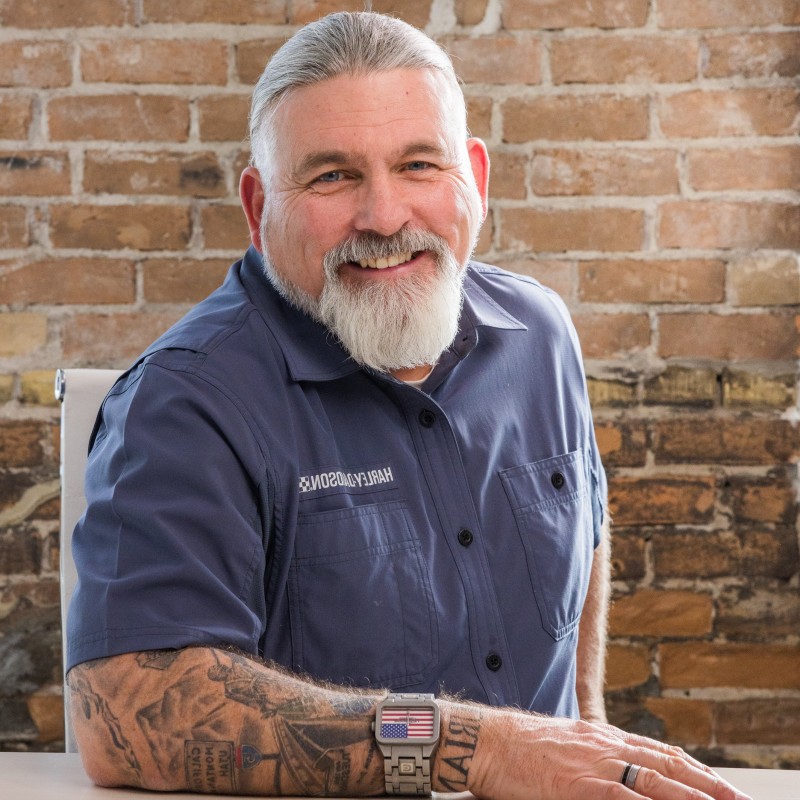
My guest this week has a word for himself I’d never heard before: “entrepreholic.” Over 39 years, Chris Shurian has built, operated, bought, broken, and resurrected companies in remodeling, construction, manufacturing, real estate development, foreign investment, hospitality, restaurants, and retail. He’s also survived cancer and finished two Ironmans. And in 2008, when the economy crashed, he was so extended, so “all in, all in, all in,” as he puts it, that he spent the next two years meeting with his banker once a week just to survive it.
We talk about what it actually felt like to launch out on his own the first time (scary, but young enough that the stakes felt low), the mindset that got him through the 2008 collapse (he sold his boat and his Corvette for cash instead of losing them to the bank, because he’d paid cash for his toys in the first place), and why he now believes setting boundaries isn’t a personal luxury for entrepreneurs, it’s a core business strategy. Chris also shares the “work to live” question that reframed his whole career, and why four focused hours in his office can outperform someone else’s fourteen.
If you’re building something and starting to feel like the business owns you instead of the other way around, Chris’s story of setting his own hours from day one, and watching his business and his customers adapt to it, is worth the whole episode.
Watch this episode
In this episode
- Why “life balance isn’t a luxury, it’s a core business strategy” for entrepreneurs
- The mindset shift that turned “scared” into “excited” for Chris during the 2008 financial collapse
- Why paying cash for the boat, the Corvette, and the cabin saved Chris’s family when the bank came calling
- How setting one firm boundary (a standing day off, a closed office door) trains your business and your customers to respect it
- Why entrepreneurs who “jump ship” too early into a new opportunity often sabotage the one that’s already working
- The life balance wheel exercise Chris still uses with his coaching clients today
Timestamps
- (00:01) Welcome and guest intro: meet self-proclaimed “entrepreholic” Chris Shurian
- (01:58) The word “entrepreholic,” and why it’s different from “serial entrepreneur”
- (04:57) What launching out on his own for the first time actually felt like
- (06:54) The fence-building side hustle that turned into a contracting career
- (09:50) Bartering, visibility, and getting your work seen
- (13:11) Building a remodeling empire, and the year everything grew too fast
- (14:59) Neuroplasticity: reframing “scared” as “excited”
- (17:23) The 2008 crash: two years of weekly meetings with the banker
- (18:09) Why paying cash for the boat and the Corvette saved the family
- (20:08) Imposter syndrome as a coach, and the value of hard-won experience
- (24:30) Where Chris lost his own boundaries: jumping ship on the main business too early
- (28:20) “Do you live to work, or do you work to live?”
- (33:50) Where to find Chris and his coaching
About Chris Shurian
Chris Shurian is a self-proclaimed “entrepreholic” who has spent 39 years building, operating, breaking, and resurrecting companies in remodeling, construction, manufacturing, real estate development, foreign investment, hospitality, restaurants, and retail. In his own words: “I’ve won big, lost big, survived cancer, finished two Ironmans, and I still show up with the enthusiasm of a guy launching his very first venture.” He now coaches business owners and entrepreneurs, drawing on decades of building, losing, and rebuilding.
Learn more at Chris’s website, or connect with him on LinkedIn.
Favorite quotes
“I’ve won big, lost big, survived cancer, finished two Ironmans, and I still show up with the enthusiasm of a guy launching his very first venture.” —Chris Shurian
“I am absolutely a work to live kind of guy.” —Chris Shurian
“I can get more done in four hours in my office than some people get done in two or three days.” —Chris Shurian
Resources mentioned
- BootstrapsAndBattleScars.com: Chris’s platform, coaching, and podcast
- Chris Shurian on LinkedIn
- The life balance wheel, an exercise Chris uses with coaching clients to spot where their life is out of balance
Related episodes
- Setting Boundaries for Well-Being and Success: more on why boundaries drive success instead of limiting it
- Entrepreneurial Success: Habits of a Maverick: another entrepreneur’s take on the habits that make the long game possible
- Vision and Heart: One Entrepreneur’s Journey: another founder’s road through building, losing, and rebuilding
Subscribe & connect
If this episode gave you something to sit with, follow Phoenix and Flame so you never miss an episode: all apps in one place, or jump straight to Apple Podcasts, Spotify, Amazon Music, or YouTube. And if it moved you, leave a review; it’s the easiest way to help another listener find the show.
Learn more about Phoenix and Flame, connect with Dana, and listen to more episodes here.
Read the full transcript
[Dana] (00:01)
Welcome, friends, whether you’re out on a walk, running errands, or relaxing at home, it’s wonderful to connect with you. Joining us today is Chris Shurian. Over 39 years, Chris has, listen to this, built, operated, bought, broken, and resurrected companies in remodeling, construction, manufacturing, real estate development, foreign investment, hospitality, restaurants, and retail. And Chris says — this is going to be great — “I’ve won big, lost big, survived cancer, finished two Ironmans, and I still show up with the enthusiasm of a guy launching his very first venture.”
[Chris] (00:42)
Wow, that’s impressive.
[Dana] (00:59)
Chris, welcome to Phoenix and Flame.
[Chris] (01:02)
Thanks, Dana, I love the introduction — I mean, it’s me, I wrote it, it’s my bio. So yeah, that was awesome. I like that you read it with enthusiasm. I really appreciate that.
[Dana] (01:11)
Well, I think we need to stop and really recognize what’s going on here, because I’m interested in the life story behind the words, and that explains so much, and there’s even more to talk about. You’ve built, operated, bought, broken, resurrected companies — wow. So where do you want to begin? I’m going to give you some grace, and you can pick wherever you’d like to start talking about your life journey, and we’ll weave together back and forth to collect all the pieces so my listeners and viewers can get a really good feel for you, Chris, and what that journey was like.
[Chris] (01:58)
Yeah. Well, I probably have to start with explaining that a lot of people say they’re serial entrepreneurs, or lifelong entrepreneurs. Well, I coined this term — I don’t think I made it up, but I coined the term for myself, entrepreholic. I’m a literal entrepreholic. Anyone who’s an entrepreneur is probably sitting there going, oh yeah, I know exactly what that is. And I’ve always —
[Dana] (02:15)
I’ve never heard that before, I love that!
[Chris] (02:26)
I’ve worked for myself for a long time. In the 39 years I’ve been providing for me and my family, I’ve only worked four of those years for other people. At some point you have an “entrepreneurial seizure,” like Michael Gerber used to say, and you feel like, I can do it myself, I can do it better. But the challenge, for me, is doing one thing, getting good at it, and then all of a sudden there’s an opportunity that pops up. In the beginning, that opportunity was something that worked well with what I was doing, so I’m like, well, let’s do this. And then another opportunity, let’s do this. At one point, in 2002, 2008-ish, I had four companies we were running, fifty employees — that’s not big, but for me it was pretty accomplished, I felt accomplished, I was having success. But that’s when the old economic recession hit. There’s a story there. So being an entrepreneur, or a serial entrepreneur, that’s just how I end up in these places — I see an opportunity, I think I’m pretty smart, I think I can go make it happen, and I go after it, and it’s been fun. How deep do you want me to get into this 2008-09 experience? I don’t know if you want me to roll into that or dig a little deeper.
[Dana] (03:54)
Well, I already have questions, because I’m putting myself in the role of my listeners and viewers, and I’m thinking if there’s someone who would really like to be an entrepreneur, they feel it in their soul, they feel it in their gut, but they’re scared, because it takes courage, it takes guts, it takes grit, it takes all kinds of things to be an entrepreneur.
[Chris] (03:57)
We have questions.
[Dana] (04:23)
What did it feel like for you, truthfully, honestly — the good, the bad, the ugly — to launch out into that space, where sometimes it feels like jumping off a cliff and figuring out the parachute on the way down? What were all the things you were feeling, and what words of wisdom or encouragement might you share with someone —
[Chris] (04:39)
Yeah.
[Dana] (04:53)
— who feels that they want to do that, but they’re scared to death?
[Chris] (04:57)
Yeah, I’ve done it several times, and depending on the phase of life you’re in, it’s a different experience. The first time I did it, I was young, married, renting, didn’t have a lot of overhead, didn’t have a lot of bills to pay. So when I quit my job and decided to go into construction on my own, it was a little bit — even though it was super scary — my monthly obligations were pretty minimal, and I didn’t know any better, so you kind of go into it like, whatever. My wife also had confidence that I was a hard worker, that no matter what, I could hustle and make things happen. I could just go do whatever I needed to do to make money. My very first truck for my company — this is probably forty years ago — my uncle had this old Ford truck. We used to help my uncle out around his property a lot, and he called me up and found out I was doing my own thing, and asked if I’d do some work for him. I said, great, in fact I’ll trade you for that old truck, because I didn’t even have a work truck at the time. So knowing I was a hard worker, that I could hustle, I was kind of the guy who just made things happen, and I never said no to anything. If someone said, hey, can you come build a closet for me in my house? Sure, let’s do it, I’d figure it out, I’d go. We didn’t have YouTube University back then, Dana — it was like, go find a book and figure this stuff out. And then I had a neighbor who said, hey, I live in a condominium association and they’re making us replace all the fences around our backyard, can you come over on the weekend and help me do that?
[Dana] (06:39)
I know.
[Chris] (06:54)
Sure, let’s do it. So I went over, we tore down his fence and built a new one, and next thing you know, all the neighbors are coming up saying, hey, can you build my fence too, because I have to get a white fence too. So then I became this really — sorry, pardon the language — kick-ass fence builder. I learned how to build fences, how to do it quick — I could tear down a fence, build it, and walk off the job in one day. So in the beginning, I didn’t know any better, my monthly commitment was little —
[Dana] (07:08)
Mm-hmm.
[Chris] (07:23)
— and I just knew I could hustle and make it happen. But later in life, when I did it again, it’s like, okay, now I’ve got a family, a home, obligations, truck payments, mortgage payments. Then it’s a little different, and you’re starting a business more specific to what you’re doing, whether it’s a restaurant, or a new real estate development, or foreign investment — a whole different beast, a whole different obligation. The fear is different, but —
[Dana] (07:47)
Mm-hmm. Mm-hmm.
[Chris] (07:52)
— it all comes down to, I had confidence in my ability to make it happen. I knew I was going to be able to pay the bills, that somehow money would show up, that I could support my family. For me it was all about this mindset thing — knowing you can do it, having confidence in your ability, and knowing I was going into an area where I controlled it, and things worked out. And they always did.
[Dana] (08:18)
I love that, really honoring how you feel about yourself, and like you said, your frame of mind was huge. I also heard a couple of things, but I wanted to bounce over to facing adversity, like when you talked about when the economy tanked, because you mentioned broken, resurrected — so I want to know the whole thing. But what I also heard you say for people starting out is bartering — if you don’t have cash for something, you can barter, it doesn’t matter if you don’t have cash money, you have other talents, other skills you can use to trade. And also getting it out there — when you were doing the fencing, if people get out there and do what they’re good at, other people see it, and that’s going to grow, other people are going to go, my gosh, could you do that for me? So whatever it is an entrepreneur is doing, do it well and get it out there where other people can see it. When you’re working with different businesses, the visualization is different, the marketing is different — if you’re building a fence, you’re right out there for everybody to see, but in the financial world, that’s a bit different in terms of being able to get your ability out there. So share what happened when the economy went down and everything was going, and then it wasn’t.
[Chris] (09:50)
Yeah. So in ’07, ’08, we were doing pretty well. I was a general contractor, we specialized in high-end custom remodeling — we really focused on remodeling when I got into construction, which I enjoyed. I felt like if I could bring a level of professionalism to an industry that had a reputation for not being professional, I’d have something. So I would answer phone calls, return phone calls, show up on time, clean up the job site. People were astonished when I’d call five minutes before my appointment and say, hey, I’m running a couple minutes late — I could hear this silence on the other end, like, well, you’re a contractor, I figured you’d be late. So I figured if I could bring a level of professionalism into the remodeling world, I’d have an advantage, and it worked, and it grew, and we had so much business — we won awards, we were the Utah State Remodeler of the Year, the Western Region Remodeler of the Year. We really had great success. Then people approached me who wanted me to build them homes because they knew I was really good at remodeling, so we started a custom home division and built beautiful custom homes, multi-million dollar homes for people. And then I thought, well, we do a lot of cabinet work, let’s open a cabinet shop. So we built this really awesome manufacturing facility, built super high-end custom cabinets — we called it custom furniture because it was that nice. We ended up building cabinets for contractors in California, Washington State, and Oregon — we were doing some very high-end work. Then another opportunity: we did a lot of electrical work, and one of my key employees’ brother-in-law was an electrician, and I thought, why not, let’s start our own electrical company, do our own electrical work, service work for all our past customers. It was a great model, we were doing really well. During that time I was also doing real estate development — I could buy a piece of raw dirt today, and tomorrow someone would offer me double the price, it was ridiculous, it wasn’t sustainable. I built a spec home in late 2007 because I knew I could sell it. When the economy crashed, I was pretty extended — I’d bought land, built a spec home, was doing a huge remodel on my own personal home, I was just out there. I’ll tell you, part of this is, I’m very optimistic and very persistent, so when the economy started to crash — I am so persistent that I’ve persisted myself into some pretty deep corners I’ve had a hard time getting out of. When I hear grumblings of the economy getting weird, my mind doesn’t say, ooh, tap the brakes. My mind says —
[Dana] (12:49)
I’m picking that up about you, Chris.
[Chris] (13:11)
— great, let’s go, let’s keep going. So when the economy crashed — now don’t get me wrong, I did a lot of things right that helped me survive it — but I was also super out there, I leveraged everything. So next thing you know, I spent the next two years, probably once a week, with my banker, talking about how we’re going to get out of some of these little pickles. I sold the cabinet shop, I closed —
[Chris] (13:41)
— well, I sold the electrical company, and the construction company, the remodeling and new construction, I basically called my general manager and superintendent and said, hey, we’re in survival mode, you guys take this and go provide for your family. So I was fortunate in that way, but when you’ve just bought a couple million dollars worth of land and you’re supposed to build homes on it and homes aren’t selling, no one’s buying anything, that hurt. The bank was very interested in that. And then you build a multi-million dollar spec home with a construction loan, and all of a sudden the bank’s like, well, Chris, your house isn’t selling, what are you going to do now? So it was pretty exciting.
[Dana] (14:29)
We’re going to pause right here, because what I’m laughing about is actually neuroplasticity — because what someone else might interpret as scary, you define as exciting. And I wanted to bring that up, because that has a big deal with how we perform in the world, how we experience the world.
[Chris] (14:41)
Oh, yeah. Mm-hmm.
[Dana] (14:59)
There was a research experiment where somebody tried to do karaoke, and it scared her to death — she was in a psychology course, would go to a karaoke bar near her college, and it terrified her. They were trying to do an experiment and learned how fear and nervousness are so similar to excitement in our body.
[Chris] (15:16)
Mm-hmm.
[Dana] (15:26)
And with neuroplasticity, the theory is that if you can redefine it as excitement, tell yourself “I’m excited” rather than “I’m freaking scared to death,” your brain will shift and you’ll have a different outlook on it. It’s amazing. So I had to laugh, because that’s what I heard you doing — in a situation that would have terrified someone else, you used the word excited.
[Chris] (16:05)
That’s how I think. It’s funny, yeah.
[Dana] (16:09)
But it’s good, it’s a very positive thing.
[Chris] (16:13)
Well, I think it’s early on, when I first started adulting and had different jobs, did sales — man, I was always tracking down that positive stuff. Cassette tapes, Dana, you might remember what those are — I had the Tony Robbins tapes, whatever that thing was, I’d listen to those every day. Zig Ziglar —
[Dana] (16:31)
Mm-hmm, I do.
[Chris] (16:41)
I can still remember his voice in my mind. I was always feeding my mind with positivity, because being in sales was almost like door-to-door — I was cold calling, every night I’d get this book full of phone numbers and just call people. That’s a hard thing to do, so I programmed my mind, fed it full of “you can do whatever you want to do, and whatever your mind can conceive, it can achieve.” So when I came to that point where things were falling apart, probably the biggest blow to my ego was that I had built something cool, we were very visible, very recognizable in my community because of a lot of other things we did — we gave back a lot to the community, I got a lot of press, a lot of great PR. So for me to be failing in my business was crushing to my ego, as you can imagine. Financially, I did a lot of things right — I made money and I bought things. I had a houseboat on Lake Powell, a boat, classic cars, a cabin in the mountains. But fortunately, I paid cash for those items. So when I needed money to provide for my family —
[Dana] (17:45)
Mm-hmm.
[Chris] (18:09)
— I could sell my boat for half price and I had cash. My friends were selling their boats trying to pay off the bank, and they couldn’t sell them to get the bank paid off. But fortunately — a life lesson for entrepreneurs — the fact that I paid cash for the toys helped me tremendously. It was sad to see the boat get pulled down the road, sad to see the Corvette get loaded on a flatbed and shipped off — I think a guy in North Carolina bought my Corvette. But the fact that I had that was like a savings account, like a rainy day fund, and it saved my bacon, gave me time to figure out what was next after those exits. I was very fortunate that way.
[Dana] (18:56)
So Chris, you sound like you make a lot of really good financial choices, you have an excellent, nice business mind, and you’ve made choices, and you’re such a hard worker, and you’re out there busting your hump doing all the things. You’re someone that someone from the outside would look at and go, well, he’s just got it all, right?
[Chris] (19:22)
Yeah.
[Dana] (19:23)
He’s got the boats and the Corvettes and the big houses. And one of the things I love to do on Phoenix and Flame is find how we can connect with one another and say, we’re much more alike than you realize. So I’m wondering, from your experience going through these things, one of the things we talk about on Phoenix and Flame is, what was the fire that burnt you to the ground? Something you experienced, being transparent about your journey — because it sounds like financially you’re just on fire, you’re really good at that kind of thing, but we all know life’s journey takes some twists and turns.
[Chris] (20:08)
Yeah, and that’s funny, Dana, because I look at myself in the mirror and think I suck at things like that. I look at businesses, I beat myself up a little bit. I can look back — now I don’t live in regret, I have this really great blessing, this ability to not live in regret, I look at everything that happened to me in the past as part of who I am, and I like who I am, and here I am. So I don’t look at regret at all, but I can certainly look back and say, okay, had I done this different, there would have been a different outcome — and it usually, believe it or not, revolves around finances. Even though I did some things right, like paying cash for my boat, I was making a lot of money and I wasn’t really thinking for the future. If I were to go back, I’d say I could have slowed my roll a little bit, turned down the volume just a little, and put more money away to plan for a rainy day. But for me, in my mind it was just all in, all in, all in. So yeah, you say that and I laugh, because I don’t feel that way about myself, but I’ve done a lot of things right. Sometimes I look in the mirror and have this imposter syndrome — I look at myself like, who am I to be coaching these people who are probably even more successful than I am or ever was. But the fact of all my experiences, it’s amazing how I’ve been involved in a lot of different things, and no matter the industry, if I’m sitting across the table from some business owner, entrepreneur, founder who’s having challenges, I can see things differently, I see things maybe they can’t see. So I really do have great value to add, and I have to convince myself that, you know what, I do add value. I’ll get off the phone with some of my clients and think, wow, that was pretty good, I actually had some — I could see them taking notes, their eyes lighting up like, yeah, yeah, that’s a good idea. So it’s an interesting dichotomy of sorts. See, there’s a big word right there, I have no right using big words like that, I must have heard it somewhere on your podcast.
[Dana] (22:31)
Ha ha ha ha! Oh, very funny, Chris. So I’ve got another question for you.
[Chris] (22:42)
Okay, and I didn’t really answer your last question, but let’s see if I can answer the next one.
[Dana] (22:46)
Well, you’re not wrong, but I think as I’m listening to you answer, and I’m hearing what you’re saying — because I also deal with a lot of high performers, which you’d fit into, and you coach people who fit into that category. If you think of high performers and the role of boundaries, because as human beings, even someone with a lot of energy —
[Chris] (23:01)
Mm-hmm.
[Dana] (23:17)
— we only have 24 hours in the day, only so much energy. And what I’ve learned about people who are high performers — I’m one of them, you’re one of them — we draw people to us like a moth to light, because you get out there, you’re good at what you do, you’re excited about what you do, and other people want you on this project, want you to lead this, want you to be the president of this, would you do this for me? So if high flyers aren’t able to practice boundaries along the way, they’re going to be like Icarus flying too close to the sun — sooner or later their wings are going to melt and they’re going to go plummeting to the ground. So my question to you is, maybe from personal experience, or someone you’ve talked to — where do you see the need for boundaries, or where have you run into a personal experience where, looking back, not with regret but from observation, you could have set boundaries in a different way, could have allocated time differently, and had a better outcome?
[Chris] (24:30)
Yeah, that’s a great question. I think I’ll actually answer this one for you, Dana. My challenge has been, because of my entrepreneurial tendencies, I’m quick to get something started and get rolling, and if I see an opportunity I’ll go after it. If I were to go back, I’d say, again, I’d slow that down a little bit, turn down the volume —
[Dana] (24:36)
Hahahahah
[Chris] (25:00)
— and probably make sure that whatever my main focus was, my main business that was really the primer of everything going on around it, I would have made sure that was more stable before I stepped out and diverted my attention to something else. That’s happened to me a couple times in my career, where I didn’t have boundaries, didn’t say, okay, I have to make sure this is absolutely working before I go over here and do that. That’s probably where I was a little quick to jump ship, and all of a sudden not only did my main contracting business suffer, but now I’m over here worrying about the cabinet shop, the electrical company, the development, all these other things. That would be my advice to my younger self — slow it down a little bit, don’t be in such a rush, focus on what you’ve got and make it great. I have a client right now who, when I first met him and started talking about what he was doing, man, I was looking in the mirror — he’s a contractor, and all of a sudden he wants to do this, wants to do that. So when he asked me to help him, the first thing I did was really get into understanding his business, and I was able to share that story and experience with him and say, look, let’s focus on this, let’s focus on the main thing. You can be super successful, super happy, and make a lot of money just doing one thing, you don’t have to cast your net over here and over here. So I helped him focus on that, and we set a couple of these other projects aside. Those are the boundaries I’d refer to in answering your question — entrepreneurs sometimes have a tendency to jump ship a little early, and sometimes it’s really great to focus on one thing, build momentum, and make sure that thing’s rock solid before you start looking at other stuff.
[Dana] (26:55)
That’s fantastic, and it leads to my next question. I hear stories of people where, if someone isn’t in a relationship and is just 100 percent focused on their business, that’s amazing, they’re going 80 hours a week, that’s what they want to do, nothing else going on. But most people I run into are married or have a partner and kids. So where do you see that boundary between those two platforms? Because I’ve seen people who are rock stars at work, but then they come home and they’re actually siphoning more from their personal life than is healthy. Their marriage is suffering, their relationship with their children is suffering, and then they start suffering at work because they know the relationships are suffering. It goes vice versa too — how someone functions at work impacts how they experience their home relationships, and how they experience their home relationships impacts how they function at work. It feeds back and forth, and when people don’t know how to set those healthy boundaries, sometimes one brings the other down. What has been your experience with those different platforms and boundaries?
[Chris] (27:57)
Yeah, that’s a great topic, I love talking about this. It’s life balance, right? Years and years ago I had two experiences that really pointed me in the direction I’ve gone. One, I read a book years ago that talked about how the American way is you build your business, build, build, build, work, work, work, retire — either from your job or you exit — and then you go enjoy life. And they pointed out very clearly that that’s such a broken model, because what happens with your health, if you don’t have health when you get to that age, what if you don’t have an exit, what if you lose your spouse, what if your kids aren’t around by the time you want to enjoy life? That book talked about focusing on life at the moment, enjoying life at the moment, not waiting to enjoy it later — that had a big impact on me. And then I was at a leadership seminar in Virginia, at a Ritz-Carlton, in a group setting, and the presenter asked this question: do you live to work, or do you work to live?
[Chris] (28:18)
That resonated with me, I thought about it for a minute, but I am absolutely a work to live kind of guy. So for me, it’s been easy to prioritize time away from work. There were times I would just work four days a week, because I knew I wanted that three-day weekend every week, and I did it. It’s amazing how the company, your business, will work around that if you set that boundary and say, hey, by the way, I’m off every Friday, don’t call me — the business can do that, it evolves to be that way. If you tell your business, hey, I’m going to Hawaii for a week, and I do it every six months, you know what, it works, it happens. For me it was very important — I coached my kids in sports, never missed games, took weekends, we went up to the cabin, we went to Lake Powell. I focused, my life balance was really good at the time, because I set that boundary and said, this is how it’s going to be. And if you set it from the beginning, nothing changes. I think a lot of entrepreneurs, a lot of business owners, feel like they need to be the hardest working person in the room, the first one there, the last one to leave —
[Dana] (30:37)
Mm-hmm. Mm-hmm.
[Chris] (30:49)
— they’ve got to work seven days a week because they have to prove a point to their employees, “try and keep up.” You know what, if that works for you, it works for you, but that’s just not who I was. So I built my business around, hey, I’m going to work as hard as you guys are, but quite honestly, Dana, I can get more done in four hours in my office than some people get done in two or three days, because when I sit at that desk, I am hammered down, I focus, I close my door, don’t bother me. That’s just how I’m programmed. I think boundaries are super important for young entrepreneurs, or anyone at this stage — you make that commitment, you set that boundary, and I guarantee your business will work around it. Even your customers will figure it out — they know, but once you open the door to them calling you at two in the morning, or on Saturday, or Sunday, once you open that door, it’s hard to close it. But once you establish it upfront —
[Dana] (31:44)
Yep.
[Chris] (31:47)
— and say, look, I am here for you, but if the house is on fire, call me. If you wake up in the middle of the night and think, oh geez, I don’t think the paint color is right, you know what, we’ll figure that out in the morning, I’m not going to answer your call. So those boundaries are important, especially with life balance. I’m a huge fan of life balance. Remember the old days, Dana, the life balance wheel? That’s old school, and I talk to a lot of guys who are coaching and —
[Dana] (31:58)
Yeah. Mm-hmm. Yep.
[Chris] (32:14)
— mentoring like I do, and they think that’s so antiquated. I’m like, are you kidding? I get that thing out, let’s sit down, let’s do our life balance. And it’s telling — you do the wheel, you measure yourself, and all of a sudden you have a flat tire on this side. Great, you’ve identified it, let’s set some goals, let’s do some things to fix it. That’s an exercise everyone should do regularly, because it’s huge.
[Dana] (32:39)
Well, what you’re describing — and I’ll wrap us up here because we’re about out of time, and I want people to be able to get access to you — what I hear you describing is the recipe for the long game. People can go just like crazy and not be balanced, and they’ll look great for a while, until they don’t, until they’re on my couch, because I’m a psychotherapist, right?
[Chris] (33:03)
Mm-hmm. Oh, there you go. Yeah, yeah.
[Dana] (33:09)
And I’m not making stuff up, they’re on my couch on FMLA because they’re having panic attacks, and I hear all the backstory, because it’s safe for them to be honest, it’s confidential and safe. And I’m hearing all the backstories of what it’s really like in their life, and yeah, they might look like a rock star for a while, but if they don’t have the boundaries, if they don’t have the balance, then it’s not going to —
[Chris] (33:16)
Mm-hmm.
[Dana] (33:38)
— that’s not the long game. So what I’m hearing you describe is, if you want to play the long game, want to be around here five, ten, fifteen, twenty more years doing what you love, then you better set the boundaries and you better have some balance. Chris, this is amazing, I know my listeners and viewers are going to want to access you. Where do they go, is there a website, a link, we’ll put this in the show notes.
[Chris] (33:50)
Absolutely. So we have this fancy new website on the inner web, maybe you’ve heard of it, the inner web, I think it’s going to stick around for a while — bootstrapsandbattlescars.com. That’s my whole platform, Bootstraps and Battle Scars. I’m easy to get ahold of, love to talk to people, I do a little podcast too, just started a few months ago, so there’s links to that on there. But yeah, bootstrapsandbattlescars.com.
[Dana] (34:10)
Ha ha ha ha ha! Fabulous. Chris, I feel like we could have probably talked easily another 30 minutes, digging into different areas of your life. I appreciate you coming and spending your time with me, sharing your wisdom, your experiences, your life journey with me and my listeners. Thank you very much. Now, guys, I know you have heard multiple things today that you’re thinking, wow —
[Chris] (34:38)
All right. Thanks, Dana.
[Dana] (34:58)
— I know my best friend needs to hear what Chris had to say, I have a coworker, a family member who needs to hear what Chris says. So take this podcast episode, copy and paste it, send it in a text, send it in your email, put it on your favorite social media sites so we can build our Phoenix and Flame community and let people know: you are not alone. I hope the rest of your day is fantastic. I’m Dana, on Phoenix and Flame.
Are your work boundaries supporting you—or quietly draining you?
Take my free Work Boundaries Quiz and find out where you stand.