First aired June 21, 2026
Picture a hand-written sign taped to a bus stop in Japan: “I’m 87, I don’t have a family. Would some family take me?” No one answered. He died a couple of months later. That story, from my guest this week, is the starkest snapshot I’ve ever heard of what loneliness researcher Dr. Anthony Silard calls a global epidemic, and the twist is who it’s hitting hardest: not the oldest of us, but the youngest.
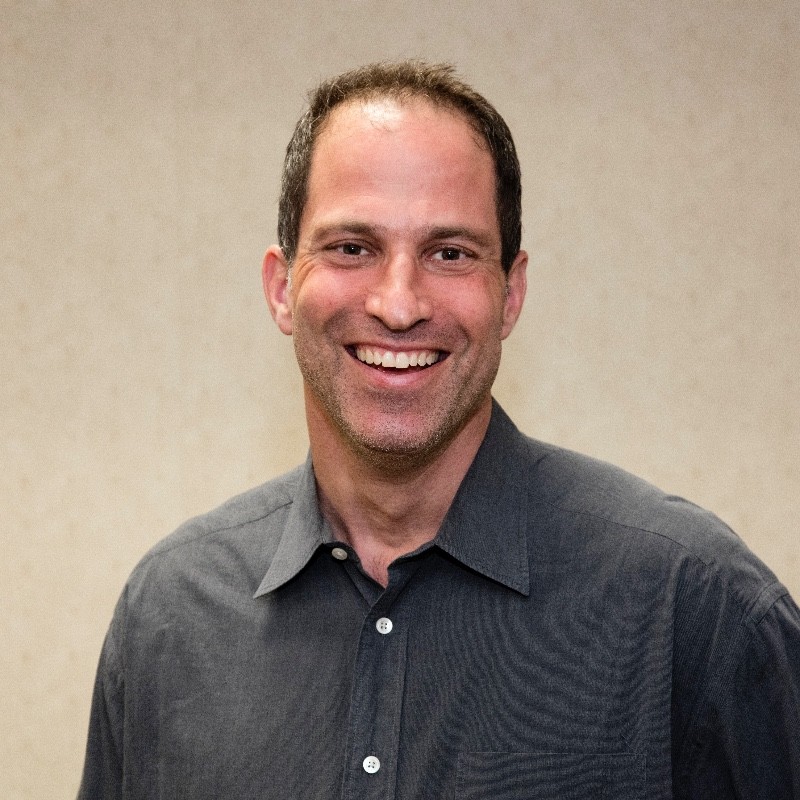
Anthony is a professor of Leadership and Organizational Psychology and an internationally recognized authority on relationships, emotional intelligence, and personal transformation, and he’s the author of the new book Love and Suffering: Break the Emotional Chains that Prevent You from Experiencing Love. We get into the real difference between loneliness (which he calls the trash) and solitude (the treasure), his four-plateau model for moving toward love, and why parents need to be their kid’s “emotion elevator” instead of handing over a screen every time a feeling gets hard. Anthony also makes the case, backed by his own research, for ditching “forgive and forget” for good: forgiveness is something you do for yourself, trust is something you decide about the relationship, and they are not the same choice.
If you’ve ever wondered whether you’re lonely or just alone, or you’ve been calling resentment “forgiveness” without realizing it, this conversation hands you the language for both.
Watch this episode
In this episode
- Why today’s loneliest generation isn’t the oldest, it’s the youngest, and what’s driving it
- The real difference between loneliness (trash) and solitude (treasure), and how to move toward the second
- Why “forgive and forget” is bad advice, and what to do instead: forgive and remember, lightly
- The difference between forgiveness (for you) and trust (for the relationship), and why you can have one without the other
- What it means to be your child’s “emotion elevator,” and what happens when that job gets outsourced to a screen
- Why comparing yourself to everyone else on your bus is quietly making loneliness worse
Timestamps
- (00:01) Welcome and guest intro: meet Dr. Anthony Silard, author of Love and Suffering
- (01:49) Why Anthony studies loneliness: his own early experience with it
- (03:14) The exponential rise in loneliness since the first iPhone
- (06:15) The loneliness epidemic by the numbers: the Cigna study, the UK’s minister for loneliness, and the 87-year-old’s sign
- (09:34) Loneliness vs. solitude: trash and treasure
- (12:14) Why today’s loneliest generation is the youngest, not the oldest
- (16:58) Being your child’s “emotion elevator,” and the conversational duet
- (23:01) The decline of empathy, and the truth about the “self-absorption” myth
- (27:30) Why “forgive and forget” is bad advice
- (28:27) Forgiveness vs. trust: two different decisions
- (31:14) Where to find Anthony and his free books
About Dr. Anthony Silard
Dr. Anthony Silard is a professor of Leadership and Organizational Psychology and an internationally recognized authority in relationships, leadership, emotional intelligence, relational healing, and personal transformation. He earned his doctorate at IESE Business School in Barcelona and is one of the two most-published researchers on loneliness in organizations, alongside Sarah Wright in New Zealand. He’s the author of Love and Suffering: Break the Emotional Chains that Prevent You from Experiencing Love (2025) and the previous book Screened In: The Art of Living Free in the Digital Age, and he coaches CEOs and senior leaders at companies including Toyota, Apple, Google, and Boeing.
Learn more at Anthony’s website, or grab his two free books, “The Myth of Happiness” and “The Myth of Friendship.”
Favorite quotes
“Loneliness is a negative distressing emotion associated with being alone. Solitude is a positive strengthening emotion associated with being alone.” —Dr. Anthony Silard
“Resentment is what you feel while the other person’s out dancing.” —Dr. Anthony Silard
“Trust is necessary for relationship development.” —Dr. Anthony Silard
Resources mentioned
- Love and Suffering: Break the Emotional Chains that Prevent You from Experiencing Love, Anthony’s book on his four-plateau “love progression model”
- Screened In: The Art of Living Free in the Digital Age, Anthony’s previous book on screens and relationships
- Two free books: “The Myth of Happiness” and “The Myth of Friendship,” available at TheArtOfLivingFree.org
- The Cigna loneliness study (2018 and 2020) cited on the rise in adult American loneliness
Related episodes
- Beyond Forgive and Forget: The Real Secret to Letting Go: a deeper dive into exactly the forgiveness-vs-trust distinction Anthony draws in this episode
- Curiosity: The Bridge to Connection: more on what it actually takes to move from isolation to real connection
- Vulnerability, Authenticity, and Connection: An Interview with Coach Lee Hopkins: another conversation on what genuine connection requires
Subscribe & connect
If this episode gave you something to sit with, follow Phoenix and Flame so you never miss an episode: all apps in one place, or jump straight to Apple Podcasts, Spotify, Amazon Music, or YouTube. And if it moved you, leave a review; it’s the easiest way to help another listener find the show.
Learn more about Phoenix and Flame, connect with Dana, and listen to more episodes here.
Read the full transcript
[Dana] (00:01)
Welcome, friends, whether you’re out on a walk, running errands, or relaxing at home, it’s wonderful to connect with you. Joining us today is Anthony Silard. Anthony is a professor of Leadership and Organizational Psychology and the author of Love and Suffering: Break the Emotional Chains that Prevent You from Experiencing Love. That book was released this past April, a year ago in 2025. Anthony is an internationally recognized authority in the fields of relationships, leadership, emotional intelligence, relational healing, and personal transformation. Dr. Silard, welcome to Phoenix and Flame.
[Anthony] (00:57)
Thank you, Dana. Love your show, and I appreciate you inviting me on.
[Dana] (01:01)
This is going to be a good one. Now, you like to focus on things such as loneliness, resentment, depression, anxiety — these are large issues. Being a psychotherapist myself, I see a lot of patients, I’ve had a private practice for eighteen years, so I know these are huge issues. But I’m kind of wondering, how did this all start for you? Because clearly we have a lot of stuff we can dig into, and we will, but I really like to get to know my guests — how did you get interested in these things? Explain a little about your education and why you chose that.
[Anthony] (01:49)
That’s a really good question, Dana. Some people ask me, hey, why don’t you focus on positive emotions, why don’t you focus on happiness and joy and enthusiasm? And those interest me as well. I think probably where this comes from is there’s a saying: we teach what we most need to learn. I think I had some traumatic experiences when I was very young that brought me a little closer than I would have liked to loneliness, and that led to my intrigue with it — why people become lonely, what we can do about it, especially given that I wasn’t anticipating this astronomical increase in loneliness we’ve had these past two decades. It wasn’t that I was looking to do research on depression or anxiety — it’s more that as I got into loneliness, into relationships, and tried to understand what creates what I call CMSRs, compassionate, meaningful, sustainable relationships, I started realizing that a lot of people are not experiencing those, and they’re experiencing a tremendous amount of loneliness, depression, and anxiety. That’s really where the intrigue came from.
[Anthony] (03:14)
So I did my doctorate at IESE Business School in Barcelona, focusing on emotion and leadership, with a real emphasis on loneliness. I’m now working with Sarah Wright in New Zealand — she and I are the two researchers who’ve published the most in this area, around loneliness in organizations. That really came from seeing what’s happening in the world now. Ever since Steve Jobs unveiled the first iPhone at the Macworld Convention in his black turtleneck in San Francisco in 2007, and then the release of the first Android phone a year later, we’ve seen this exponential increase in loneliness, depression, and anxiety. For the first time in US history, instead of it being the rare exception that a college student has a mental breakdown and sees a mental health counselor at some point in their four years, it’s actually the norm — over fifty percent are seeking mental health counseling during their four years. This has just been a real cause for pause for me, a real questioning. Because of the suffering I experienced myself, especially when I was young, it became a natural outgrowth for me to become passionate about why we become lonely and what we can do about it.
[Dana] (04:47)
Loneliness is a huge deal. And I love the way you were able to create something — like you said earlier, we usually create what we need in the world, and I’m no different. They call me the Queen of Boundaries, and there’s a very good reason for that, I’ve got the story behind that too. So I think that makes us very relatable. The research is fantastic, it’s necessary and needed, and there’s also the human component: why would someone want to hear what you have to say, with everyone out there talking about loneliness or depression or anxiety? You wrote a book, so I’m wondering, especially — let’s just focus on loneliness for a moment, because these are big broad strokes, and I’m thinking about people listening to this podcast or watching it on YouTube who are feeling one of these things. If they’re feeling exceptionally lonely and their life is suffering because of it, what is it that you want them to know? What do you want to say to them right now? They’re listening, and they’re suffering. What do you want to say?
[Anthony] (06:15)
Well, I would say if you’re suffering from loneliness, first of all, know that you’re not alone. It’s increasingly common, and I think a lot of this has to do with how often we’re on our screens — typing into our phones instead of talking in person. I remember when I did my doctorate, I became good friends with a Scottish engineer doing his two-year MBA in Barcelona, and he said in those two years he did not have a single phone call with another student — everything was textual, through WhatsApp and texting and instant messaging. For these reasons, loneliness is just skyrocketing. So the first thing I would say is, in knowing you’re not alone, consider that in the United States alone, a Cigna study came out in January 2018 that found forty-three percent of adult Americans were lonely, based on the UCLA loneliness scale. Two years later, in January 2020, that percentage had leaped to sixty-one percent — this is before the pandemic. So over three in five adult Americans, lonely. In the UK, former Prime Minister Theresa May hired a minister for loneliness — this was on the heels of a study that found eight million British people were lonely, and — I’m not making this up — British children spend less time outside than prison inmates. That’s a global phenomenon. In Japan, one group of citizens in our global economy that I really don’t see as particularly dangerous is Japanese senior citizens, seventy-five and over. Well, they’ve actually been incarcerated at four times the rate of fifteen years ago. A lot of people are like, how could that happen? It’s happening because they’re going to the corner store and taking a small bag of rice, or a pack of gum, so that they can get arrested and go to jail — because at least in prison there are people to talk to, at least there’s a community, at least you feel detected, acknowledged. There was a sign an 87-year-old Japanese man put up at a bus stop in Japan that went viral. It said, “I’m 87, I don’t have a family, would some family take me?” No one responded, and he passed away a couple of months later. So, loneliness is really not something you want in your life. The physical consequences are you die younger — not you specifically, but on average, people die younger. A recent meta-analysis found the effects of being lonely are similar to smoking fifteen cigarettes a day for your health. If you cut yourself, the wound takes longer to heal if you’re lonely than if you’re not. And then there are the psychological effects: lower self-esteem, being less able to cooperate with others, more burnout, and so forth.
[Dana] (09:23)
That is fascinating.
[Anthony] (09:34)
So what all this is to say — if you’re lonely, what do you do? Let me distinguish between loneliness and solitude. Loneliness, the way I define it, is a negative distressing emotion associated with being alone. Solitude is a positive strengthening emotion associated with being alone. Just as one person’s trash is another person’s treasure, being alone is trash for some people and treasure for others. You want to move it toward being your treasure. So what I recommend if you’re feeling lonely is to take an inner detour. Don’t just go out and spend more time with people right away, because actually some of the loneliest people are in a crowd. Loneliness isn’t about being with or without others — it’s not about being alone, it’s about feeling alone, and you can feel alone in a group even more so than when you’re actually physically alone, especially if you’re not values-congruent with the people in that group. So if you take some time out and think about how you’re showing up in relationships — that’s really what my new book, Love and Suffering, is all about. How do we show up in relationships? How can we make our relationships more meaningful? Again, what I call CMSRs — compassionate, meaningful, sustainable relationships — where we feel connected with others, our relationships feel meaningful, and our relationships endure.
[Dana] (11:13)
You know, as I’m listening to you describe the relationship characteristics, I’m thinking about generational differences — Gen X experiences versus millennial versus Gen Z. A lot of the younger Gen Z crowd, I’ve heard from them that they’re struggling to find people, to find a partner who’s aligned with their values, with all the influence of social media, it’s a big deal. I was wondering if you’d run into differences with love, connection, loneliness, and the ability to connect across different generational experiences.
[Anthony] (12:14)
Excellent question, Dana. Yes, definitely. One of the main differences is our younger generation. First we have to understand that when we think about loneliness, we often think about people like that 87-year-old leaving that sign at the bus stop out of desperation — we think about older people being the loneliest. Say you’re in your sixties, seventies, eighties — I’m fifty-eight, so I’m almost there — your friends are dying, maybe you’ve retired and you’re not meeting people through the workplace, which has increasingly become a place for socialization, so you’re feeling lonely. Traditionally, the oldest people have always been the loneliest. But the Cigna study had a really chilling finding: the loneliest people today are not the oldest, they’re the youngest. It’s really Gen Z, the millennials, the youngest generation, because they’re essentially growing up without what I would call an emotion elevator in their parents. The role of parents, as far as I’m concerned, is to be an emotion elevator — you want to elevate your children so they’re not stuck at the base level of emotions, acting out whatever they feel with no emotion regulation. You want to help your children get into that elevator and go up to a more elevated state where they can think about their emotions, think about what they’re experiencing, and regulate that experience. We have two kids, twelve and nine, and you have these conversations with your kids all the time — for example, hey, I know you weren’t happy when your best friend got a bigger piece of cake than you did at the birthday party, but if you make a big deal out of that and throw a tantrum, what’s your best friend going to think? She’s going to think you don’t really care about her, it’s just about what you’re going to get. So regulating that disappointment, that frustration — Jenny Radesky, a professor in Massachusetts who wrote the screen-use guidelines for the American Academy of Pediatrics, I interviewed her for my previous book, Screened In: The Art of Living Free in the Digital Age, about how our screens affect us and our relationships. She shared with me what she calls the “conversational duet” — this continual back-and-forth call and response between a child and their primary caretaker, where the parent helps the child understand what they’re experiencing so the child can have a more elevated response to daily events. A lot of young people’s parents have essentially abdicated that responsibility to carry out their part in the conversational duet, to be the emotion elevator. As a result, a lot of children today grew up with, “You’re feeling some difficult emotions? Here, why don’t you play with your iPad, why don’t you get on the phone for a while.” They’re outsourcing emotion regulation to the electronic babysitter, which is not a good mentor for children. There are a lot of studies that have found children from lower-income families, where parents are working two or three jobs, are often having the most difficulty with grades, making friends, and a whole host of other dysfunctional behaviors, because they’re not having those dinners at home with their parents as often, not spending as much time with them, and not getting the emotion elevator they need. The irony is it’s not just low-income kids — even middle- and high-income —
[Anthony] (16:58)
— people have just become increasingly busy. Not just men, also women, who’ve gone to the workplace en masse — for the first time in US history, over fifty percent of managers are women now, and women have gone to the workplace, justifiably so, so they wouldn’t have to feel under the thrall of often very insensitive men. But men have not moved to the home. They haven’t picked up that caretaking. So no one’s doing the caretaking — children are suffering, young people are suffering. So if you’re experiencing loneliness and you’re in a younger generation, know you’re not alone. In terms of how you can find the right person: one, the inner detour I already mentioned. Two, I think of James, a young guy who came to see me — I do a lot of leadership, executive, and life coaching. He’d slept with a few women, felt really guilty about it, was having trouble meeting the right person. What I found with James, the same thing I find when I’m coaching CEOs, senior leaders of Fortune 500 companies like Toyota, Apple, Google, Boeing — it always comes down to the same thing. The challenges someone’s having are because there’s someone in their life they haven’t forgiven. A lot of young people today are resentful toward their parents for being so inaccessible for the reasons I just shared. In James’s case, there was a lot of that — his mother wasn’t really there for him, she was so busy all the time, and he felt all this resentment. If you look at the etymology of resentment, it comes from “re,” meaning again, and “sentire,” to feel — resentment is to feel anger again and again and again until you become paralyzed. That’s what happened to James. I helped him work on his resentment. Some of the strategies I share in Love and Suffering — because the book has four plateaus on a love progression model I call it, to move toward love: acceptance, forgiveness, gratitude, and love. Each of those plateaus has an obstacle that has to be overcome. You overcome suffering to reach acceptance, resentment to reach forgiveness, judgment to reach gratitude, and what I call incarceration to reach a state of love. This is based on a lot of case studies, like James’s, and others —
[Anthony] (19:53)
— put together with some of the latest psychological studies on these different states. So with James, and this is what I would recommend to your listeners —
[Dana] (20:02)
Anthony, that’s fantastic — it’s like, wow, I’m thinking of comments and questions I want to ask. Because you’re giving such amazing information, and I’m imagining if I was a listener, it’s just like, let’s slow it down just a little bit so we can absorb a little bit more of what you’re saying. When you think about people who are lonely, and we’re rewinding back to the emotional elevator — you made a comment about a child who has emotions and is sent to a screen. Sometimes I also see people who aren’t teaching kids any coping strategies at all — “whatever you feel, you can just feel it” — so they’re allowed to scream and holler and throw things around, with no emotional elevator to bring them up. So I’m wondering, for someone raised without that guidance, and then they’re trying to form relationships with people, what are your thoughts on the role of self-absorption? Because I see people having a hard time connecting with others, like everyone, or the vast majority, seem to be incredibly focused on themselves. It reminds me — years ago I was in a public speaking class in college, and they talked about a dialogue versus a “dual-log,” people just talking at one another, waiting for the other person’s mouth to stop moving so they can say whatever they want, not processing what the other person is saying at all. I see that a lot out in the world, people not really connecting. What’s your experience with that, and your thoughts on this pandemic of self-absorption, how it’s creating loneliness and obstructing connection?
[Anthony] (23:01)
You’re right on target with that, Dana. There have actually been a number of studies on how empathy is declining, especially in the younger generation — Jean Twenge’s work and others have found that both cognitive empathy (also called perspective-taking, putting yourself psychologically in someone else’s shoes, what we traditionally think of as empathy) and affective empathy (also called empathic concern, feeling what others feel) have declined by about forty percent over the last couple of decades. In terms of self-absorption, yes, I do see an increase, but we also have to be aware that Dale Miller at Stanford did research on what’s called the “norm of self-interest,” the idea that people are self-interested. There have been studies showing that if you give someone twenty dollars and say, go buy something for yourself, versus another group where you say, go buy something for someone else with this money, and then you check via a neurological study, hooking up sensors to see what’s going on in their brains — the prefrontal cortex, the executive functioning center, where you can see when people are experiencing more of a dopamine surge — they actually experience more of a dopamine rush when they buy something for someone else than when they buy something for themselves. So what a lot of people don’t realize is, yes, we’re seeing this huge increase in self-absorption, but a lot of it is coming from the fact that we’re on our screens so often, and when you look at the decline of empathy, a lot of it’s attributed to that. We spend so much time on social media, on our phones, that we start to see other people as less interested in us, so why should we be interested in them? For example, when you send an email or text message — this is Chris Byron’s research at Georgia State — when someone receives that message, if you intended it to be emotionally positive, it’s received as emotionally neutral.
[Anthony] (25:49)
Whereas if you send it intending it to be emotionally neutral, it’s usually received as emotionally negative. So there’s a negative downward pull over the emotional part of our relationships, which I think leads to people becoming more self-absorbed.
[Dana] (25:56)
Interesting. Well, I had another question for you about forgiveness — I appreciate the effort you’ve put into looking at the role it plays in our relationships. As someone who’s focused a lot on boundaries over the years, it’s interesting, the difference between forgiveness and permission, because it’s one thing if someone did something in the past, you had a relationship, they did something, and there can be some forgiveness of that, it’s not happening today. You mentioned resentment and its origin, and we can work past that, and it’s wonderful you’re helping people let go of some experience they had as a child that’s not continuing. I’m wondering what your thoughts are on similar relationships where someone did X, Y, Z in the past and they’re still doing these things — they’re not willing to turn away from particularly dysfunctional patterns, and yet they want forgiveness, but it isn’t really forgiveness they want, they want permission to keep doing this dysfunctional thing. What are your thoughts on the role of forgiveness when you’re dealing with someone like that?
[Anthony] (27:30)
It’s interesting — I think in many ways Love and Suffering is a very countercultural book, because I look at these myths we’ve been force-fed all our lives around forgiveness, and why we shouldn’t accept those. For example, we’re taught “forgive and forget.” Well, let me ask you this: if you’re walking at night and you fall into a ditch, I kind of like to remember the location of the ditch for when I’m walking in the future. So “forgive and forget” is actually a pretty horrible idea. I think much more useful is forgive and remember, but remember lightly. Don’t put a hundred Post-its all around your room reminding you of what happened. Don’t develop a poem about it that you recite to yourself every Saturday night.
[Anthony] (28:27)
It’s kind of like each person is a file you put into a file cabinet — they have all the nuances of who they are that you want to know, so you know how to deal with them in the future. So I really like the way you distinguish between forgiveness and permission — that’s kind of from the purview of the perpetrator, right, they want forgiveness and then they want permission to continue what they’re doing. From the purview of the victim, what I do is distinguish between forgiveness and trust. Forgiveness and trust is similar to permission, but from the other side. Forgiveness is necessary for personal development, because if you don’t forgive someone, you become stuck, paralyzed with resentment. Resentment is what you feel while the other person’s out dancing, right — you’re there kind of cowering in your room, seething with all this anger that multiplies over time, and that’s resentment, whereas the other person isn’t even thinking about it. So resentment is not a good idea, we need to go to forgiveness just so we can become unstuck, so we can move forward in our lives. So forgiveness is necessary for personal development. What I write in Love and Suffering, though, is that trust is necessary for relationship development. That’s something different. If you want to continue the relationship with another person, that’s where trust comes in, and trust comes from accountability and credibility — okay, they’re accountable, I know they say they’re not going to do this again, I believe that’s actually the case, because of their credibility, based on some of the soul-searching they’ve done after what happened and what they’ve been telling me.
[Anthony] (30:19)
I really believe they’re not going to perpetrate this action, whatever it was, another time. Credibility and accountability come together to form predictability, which is really the foundation of trust — I predict they are going to be able to change their ways. So that’s the thing: you can forgive someone, but it doesn’t mean you’re going to trust them, that you want a continued relationship with them.
[Dana] (30:45)
I love that. That’s wonderful, I love the components you’re bringing into play — very applicable, understandable, and practical. Our time is about over, but I want to make sure our listeners and viewers know exactly where to go to get more access to you. I have a website — correct me if I’m wrong — theartoflivingfree.org?
[Anthony] (31:14)
Yes. If your listeners, you guys out there, men and women, boys and girls, go to theartoflivingfree.org and then slash freehappinessandfriendshipbooks, well, first of all, I’d love it if you buy Love and Suffering — all the proceeds go to nonprofit education programs in Africa and Latin America. But times are difficult now, so whether you buy Love and Suffering or not, I’d like to offer you two free books: The Myth of Happiness, how your definition of happiness creates your unhappiness, and The Myth of Friendship, how your misunderstandings about friendship keep you lonely. A lot of the themes we talked about here today. Just go to theartoflivingfree.org/freehappinessandfriendshipbooks, put in your email, you get a confirmation email, and once you confirm it in your inbox, you get the download links. I hope you’ll enjoy them.
[Dana] (32:13)
Those books sound fabulous. When it starts with “the myth of,” I love that, because that says you’re going to jump right in there and be real about something. We live in the real world, not in some kind of abstraction, and anytime something starts with “the myth of,” I’m like, okay, I’m on board, they’re going to be honest about this. That sounds exciting. Anthony, thank you so much for spending your time and your wisdom and your energy with me this morning on Phoenix and Flame. Thank you very, very much.
[Anthony] (32:52)
Thank you, Dana. You’ve been a wonderful host, and I really appreciate you having me on your show.
[Dana] (32:57)
Now listeners and viewers, know that you have heard multiple things today from Dr. Anthony Silard that make you think, oh my gosh, I know a best friend, I know a coworker, I know a family member who needs to know what he said. Take this episode, copy and paste it, send it in text, send it in email, post it on your favorite social media sites so we can grow our Phoenix and Flame community and let people know: you are not alone. I hope your day is going great, I hope the rest of your day is fantastic. I’m Dana, on Phoenix and Flame.
Are your work boundaries supporting you—or quietly draining you?
Take my free Work Boundaries Quiz and find out where you stand.