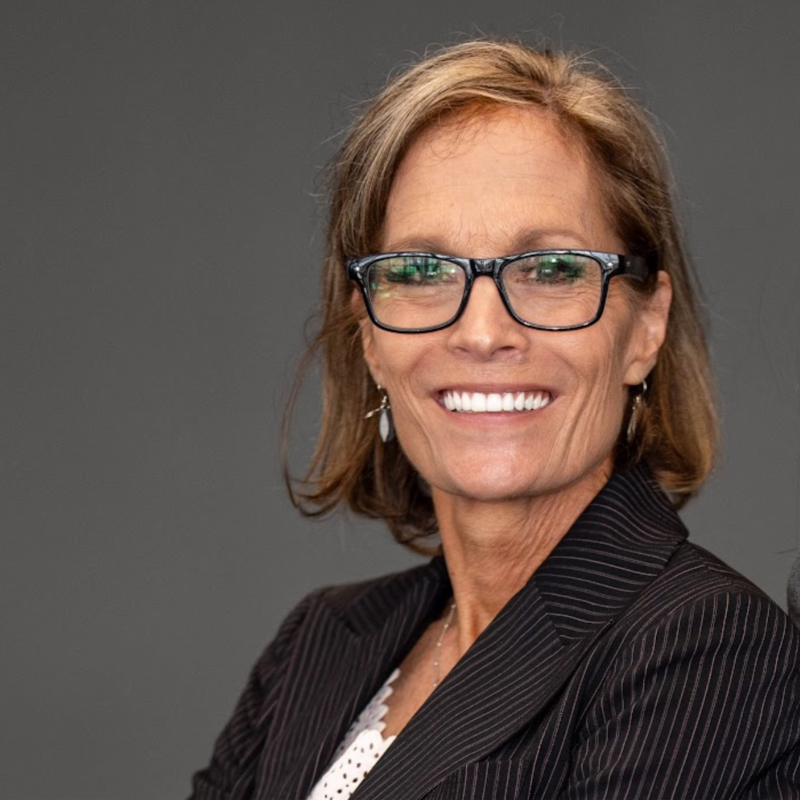
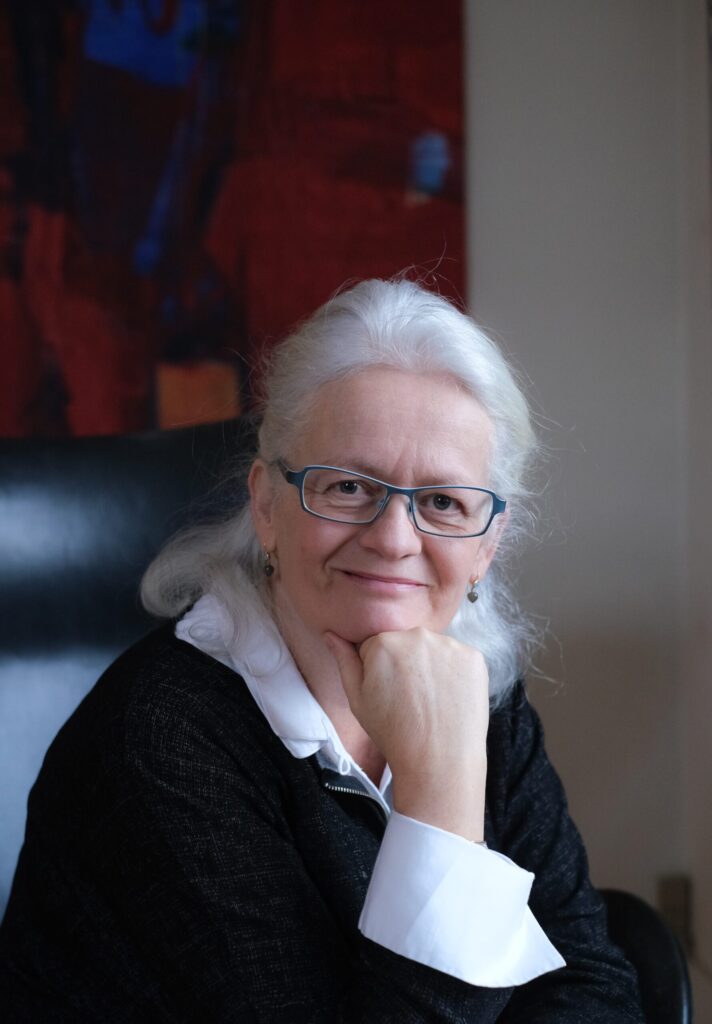
First aired February 23, 2025
Close your eyes for a second. Go ahead, really do it. Mette Reebirk asked me to try this live on the show, and within a breath there was a voice in my head going, “this is weird, I hope this doesn’t last too long.” Then a second voice: “come on, be positive, she has a plan.” Then Mette asks the real question: who’s the one watching those two voices argue? That’s the whole episode in miniature. We have around 60,000 thoughts a day, she says, coming and going like clouds, and you do not have a single feeling, not anxiety, not shame, not anger, that wasn’t created by a thought you believed to be true for a moment.
Mette is an author and executive coach who’s spent over two decades helping experienced leaders question their thoughts and free themselves from anxiety. Seven years ago, after decades in senior leadership (president of an investment-attraction organization, international director at a university, and director of corporate relations at another), she got fired, not for the first time in her career, and started her own consultancy from scratch, not entirely sure what she had to offer once the company logo was gone. What she found, working with laid-off executives who “on paper had everything” and still felt hollow, became the foundation for the thought-questioning work she teaches today.
We get into why you’re not actually meeting the person in front of you, you’re meeting your own story about them, how that single insight can defuse a bad boss, a messy teenager’s room, or a marriage fight, and why the only thing you ever really lose when you let go of a false belief is the story itself.
Watch this episode
In this episode
- Why you don’t have a feeling or emotion that wasn’t created by a thought, and how to catch the thought before it becomes a stress spiral
- The “who’s watching the two voices” trick for noticing your own mental chatter instead of getting swept up in it
- Why meeting someone else is really meeting your own story about them, and how that reframes conflict with a difficult boss, spouse, or teenager
- How Mette got fired, not for the first time, and had to rebuild her entire sense of self once the corporate brand behind her name was gone
- Why letting go of blame doesn’t mean tolerating bad leadership, it means dealing with one thing (the bad leader) instead of a whole story about them
- A simple body-based check (“can I be 100% sure that’s true?”) for questioning a belief the moment you feel it land in your stomach or your chest
Timestamps
- (00:01) Welcome and intro: meet author and executive coach Mette Reebirk
- (01:53) Two decades in senior leadership, then getting fired, not for the first time
- (02:18) Starting a consultancy from scratch and traveling to China not knowing what she had to offer
- (04:28) What Mette saw headhunting laid-off executives: success on paper, insecurity underneath
- (08:36) The two-voices exercise: noticing the watcher behind your own thoughts
- (09:48) Why every feeling you have was created by a thought you believed
- (13:03) Why letting go of an old story can feel like losing the stone in your shoe
- (14:03) “You need to look behind”: what keeps people blaming a bad boss instead of dealing with one
- (19:48) Meeting the story instead of the person, and what that means for diversity and difference
- (24:41) The clothes-on-the-floor experiment: what changed once she stopped calling it “disrespectful”
- (27:50) The body check: noticing a racing heart or a stomach knot as your cue to question a belief
- (34:12) Where to find Mette: her book and LinkedIn
About Mette Reebirk
Mette Reebirk is an author and executive coach based in Copenhagen, Denmark, who has spent more than two decades helping experienced leaders question their thoughts and free themselves from anxiety. Before starting her own consultancy, she held senior leadership roles including president of an organization set up to attract investment to Copenhagen, international director at a university, and director of corporate relations at another. She has a new book on questioning the thoughts we believe to be true.
Connect with her on LinkedIn.
Favorite quotes
“You do not have a feeling or an emotion that has not been created by a thought. So whenever you feel anxious, afraid, angry, shameful, it’s created by a thought you, in a very short moment, innocently believed to be true.” —Mette Reebirk
“When we meet the other person, we don’t really meet the other person. We meet the story, our own story about the other person. That means that actually we meet ourself.” —Mette Reebirk
“The only thing that we can lose is a story. The only thing we can lose is the story.” —Mette Reebirk
Resources mentioned
- Mette Reebirk’s new book on questioning our thoughts to find freedom from anxiety (exact title not stated clearly on air; see reviewer notes)
- Mette Reebirk on LinkedIn
Related episodes
- The Power of Intuition in Personal Growth: Winnie Rodgers on listening to the body instead of the mind, a natural companion piece to Mette’s work on questioning the mind’s stories.
- “Sigh, See, Start”: The ShouldStorm Antidote: another framework for catching and reframing the automatic thoughts that drive our stress.
- Your Logical vs. Subconscious Mind: Who’s Really in Control?: more on the machinery behind the thoughts Mette teaches us to question.
Subscribe & connect
If this episode gave you something to sit with, follow Phoenix and Flame so you never miss an episode: all apps in one place, or jump straight to Apple Podcasts, Spotify, Amazon Music, or YouTube. And if it moved you, leave a review; it’s the easiest way to help another listener find the show.
Learn more about Phoenix and Flame, connect with Dana, and listen to more episodes here.
Read the full transcript
[Dana] (00:01)
Welcome friends, whether you’re out on a walk, running errands, or relaxing at home, it’s wonderful to connect with you. Joining us today is Mette Reebirk. She is an inspiring author and executive coach. She’s dedicated over two decades to helping experienced leaders realize their true potential and free themselves from anxiety. She has a new book about how life force comes from questioning your thoughts, and it reveals how we can set ourselves free by questioning what we believe to be true. Mette, welcome to Phoenix and Flame.
[Mette] (00:47)
Thank you. Thank you so much.
[Dana] (00:51)
This is amazing, I can’t wait to get talking with you, there’s so many questions. Now, go ahead, you have done so much, and with my background in psychotherapy, I love what you’re doing, and I love the way you’re encouraging people to question the narratives, where they came from, what they’re doing to us right now. So I would like to learn a little bit more about you first, because I understand you started with a bachelor’s degree in economics.
[Mette] (01:23)
Actually, I have a bachelor degree, I have a couple of masters, so I have a lot of paper on a lot of stuff. Yeah, I’m from Denmark and I live in Copenhagen. I have a family, I have three kids, they’re grown up, I have two grandchildren. I’m married to a very lovely husband who is an organist…
[Dana] (01:33)
Well, tell us about yourself, tell us where you come from, let’s get to know you.
[Mette] (01:53)
…he plays the organ in a church. I have been working, I’m 60 years, I’ve been working for many years, and seven years ago I got fired. It was not the first time I got fired.
[Dana] (02:10)
Well, tell us if that sounds interesting, I usually, when I talk, there’s interesting stories behind our little journey in life, there are the experiences, all of the experiences, even at the time it feels like a negative thing, but when we look back, sometimes not so much. And I’m very interested in what we learn and all those twists and turns.
[Mette] (02:18)
Yes. Okay, when I got fired, I was so fed up with corporate, so I decided to start on my own, not really knowing what to offer. But I got a little money, because I was fired in a not-very-polite way, so I used the money to get someone to make me a website. And communication, it’s so easy, you can write so many lovely words and it looks great, but what is it actually? So, my first customer was a huge, very, very big Chinese company that had me come and inspire them how to create a research park that could attract startups from Scandinavia. So I traveled to China, a little worried actually, because normally I had always been hired in huge companies, and suddenly it was just me, Mette Reebirk, Incorporated, all by herself. And I started to think, what is it actually that I have to offer? But actually they were very thrilled. And then, when you start up a company, you need to find out what is it actually that will be your, what is it that people want to buy? And especially when it’s a startup, you need to also be a little pragmatic. So I was approached also by a headhunter who asked me if I wanted to become a headhunter, and I said, okay, three days a week, I can do that. So I did that on the side also.
[Mette] (04:28)
And then I got to see that, first of all, it was a very boring job, but I met a lot of leaders on all levels that had been laid off. And I got to see that regardless of how much they had achieved, they were not very sure of themselves, they were not very happy, and they were insecure about whether their dad would be proud of them. And I started to wonder, how come? Because on paper, they had everything. And then I also started to think about, what is it, me, Mette, going, what’s my thinking? And then I became very curious about thoughts and emotions, feelings, and what comes first.
[Dana] (05:31)
Let me pause you for just a moment, because I’m really tracking what you’re saying and I already have questions and comments and I’m going to try to weave those in. The first thing I’m wondering is, when you mentioned being in corporate and getting kind of tired of that and wanting to move on, I’m interested in your position, what you did in the corporate world first, that you were kind of launching from, and then also what your experience was when you mentioned how frightening or scary or anxiety-ridden it was when you’re not part of a company, when you’re just by yourself. And that speaks to a lot of people, like myself and you, that are entrepreneurs and we kind of launch out on our own and we don’t have a big company that’s backing us, and that is a very different experience. So what was your corporate experience? I’ve talked to people, for example, that were in HR and different departments in corporate before they launched out and became an entrepreneur. So what was your experience there, and then what was it like for you going out on your own?
[Mette] (06:37)
Yeah, I’ve done a lot of different things, but always in a leader position. I’ve been president, I’ve been director of a huge organization set up to attract investments to Copenhagen. I have been international director at a university, I’ve been at another university, I’ve been director for corporate relations.
[Mette] (07:08)
Different leadership positions, but always, you know, having a huge organization kind of backing me, I maybe had grown into this belief that my personality was a little lined with the company I worked for. And suddenly, without this…
[Dana] (07:09)
A lot. You…
[Mette] (07:36)
…brand behind me, it was just me, Mette. But then I learned that actually they didn’t buy into the company, they bought into what I had to bring to the table, that means what I have in between my ears and in my heart, right? So…
[Dana] (07:57)
Yes.
[Mette] (08:02)
And that had been kind of a false belief that had guided me, until that point when I got to see that maybe it was just a story I told myself and believed to be true, until I discovered that it was just a story.
[Mette] (08:32)
So, you know, it’s, and that is what we do all the time. If I ask you to close your eyes, and maybe also your listeners, just for a short moment, try to close your eyes…
[Dana] (08:36)
Mm-hmm.
[Mette] (08:52)
…or can you open them again? And then I’m pretty sure that there was a voice in your head saying, oh, this is weird, I don’t hope that this will last too long because my listeners, they don’t like it. And then there’s another voice maybe telling you, ah, come on, be positive, she has a plan. And then, to recognize that those two have something going on, there must be a third one watching those two, and what’s going on in your head. Thoughts, it’s just, we have around 60,000 thoughts a day, coming or going, it’s like clouds on the sky, they come and go. But sometimes we kind of hang on to some of the thoughts.
[Dana] (09:37)
Mm-hmm. Mm-hmm.
[Mette] (09:48)
And you do not have a feeling or an emotion that has not been created by a thought. So whenever you feel anxious, afraid, angry, shameful, it’s created by a thought you, in a very short moment, innocently believed to be true. And the moment you find out that this is just a thought, I don’t need to believe it, the feeling you have, the stressful feeling you have, will leave your body. But the body is amazing, it’s the most incredible app ever, ever, ever invented, because it tells you all the time about the quality of your thinking.
[Dana] (10:46)
Mm.
[Mette] (10:47)
But then, before you get to know this, you actually believe the opposite of what is the truth. Because it feels, you have this problem in your stomach, your heart beats, and you start to sweat, and then you think, okay, this is so tangible…
[Dana] (11:16)
Mm-hmm.
[Mette] (11:16)
…it must be true, what I’m thinking.
[Dana] (11:19)
Absolutely. Well, and what you’re describing is right down to a T of cognitive behavioral therapy, that everything starts with a thought and that produces a feeling, which then produces our action. And you’re just right down the line talking about that. And you were talking about how we hold our thoughts, which are feelings, in our bodies, and something that I tend to do is I’ll hold my stress in my shoulders…
[Mette] (11:25)
Okay.
[Dana] (11:49)
…and it will feel like concrete. Or you know that temperature when something is so cold it feels hot, or something is so hot it feels cold, right at that line? Sometimes that’s what my shoulders feel like, right at that line between freezing and super hot and you can’t figure out which it is. And I think it’s really interesting, the work that you’re doing with businesses and with people, helping them look behind the curtain…
[Mette] (11:59)
Yeah. Yes.
[Dana] (12:19)
…and figure out, what is it that you believe, what’s causing your anxiety that’s in turn causing the feelings, and in turn causing these bodily sensations. It’s the real deal.
[Mette] (12:32)
It’s definitely the real deal. But sometimes, even though you may get it, or intellectually understand it, it can be difficult to let go of it, because it has grown into how you believe you to be, your personality. It’s my story, it’s my story, my trauma, traumas.
[Dana] (12:58)
Mm-hmm. Mm-hmm.
[Mette] (13:03)
So when we let go of that, some people can feel even more naked, so that they, you know, they get used to having this stone in the shoe, and without that stone, it can feel maybe even more… and there’s also another thing here, is that the only one who can hurt me is actually myself. So when we see that, we also need to let go of blaming others, our boss, our spouse, our kids, our friends, our whatever, the politicians, because…
[Dana] (13:57)
Do you find that to be common, when people are just shifting blame and they have a hard time understanding what you’re saying, that they are the ones that are harming themselves?
[Mette] (14:03)
Yeah, you need to look behind. Also, there’s a lot of, I think you may have the same problem in the US, that a lot of people become stressed in their workplaces because of bad leadership, and there’s a lot of bad leadership. But actually, even a very, very awful leader, it depends on how you react upon what’s on your plate. And if you let go of this blaming thing, and you still have this very, very bad leader, you only have one thing to deal with, and that’s a bad leader. And maybe you can even teach him, maybe you can even help him, or you can use your energy finding another job. But if you also have to entertain a story about how he shouldn’t, or try to change him or try to control him or her, it’s not going to work.
[Dana] (15:29)
Well, let me ask you this, because I absolutely, 100% on board with what you’re saying, and I’ve seen it with so many people, stories that I’ve heard people say things like, assuming the boss was male, “well, he hates me, he thinks I’m stupid, he doesn’t think I’m doing a good job.” So they create this whole narrative that is impacting their, but that’s in their own mind, really, that’s the narrative, that’s what they’re choosing to believe about the boss, and that’s impacting how they interact with him. You say to let go, what have you found to be most helpful with your clients, if they want to let go and they understand intellectually that they need to let go, but they’re having a hard time actually letting go of that narrative, that stone in the shoe that they’ve had for a long time, maybe they’ve never lived a life without that particular narrative and they don’t know how to let it go, what would you suggest to those people?
[Mette] (16:31)
You know, when we meet the other person, we don’t really meet the other person, we meet the story, our own story about the other person. That means that actually we meet ourself.
[Mette] (17:01)
When I blame my boss about this and that, he doesn’t like me, do I like myself? He finds me not smart enough, do I find myself smart enough? And then when we get that, and we can start to listen differently to the other person, then maybe we also get to that point where we can listen and hear that actually the boss, he’s actually not very secure, he’s very, very insecure, and actually he also looks very tired. So instead of taking it on to define something in me in that specific moment, then maybe I can approach him and say, okay, I really get it, there’s so much on your plate, and, you know, today in the afternoon I have an hour where, if I can help you, let me know. And now I’m going to make two cups of coffee, because I think maybe you need a good cup of coffee.
[Dana] (18:27)
That’s a wonderful thing, how empathetic and compassionate we can be in those places, that would change the whole dynamic between two people.
[Mette] (18:35)
Yeah, and it’s about one thought. So when we don’t know it, we take everything in and we make it ours. And that is actually a huge problem, and that is also why so many wars start, and so many misunderstandings, we are so busy blaming.
[Mette] (19:08)
And actually, when we don’t need to blame anyone any longer, then we start to listen in a different way, and we start to look in a different way.
[Dana] (19:21)
I love that. I want to ask you something, you said something a few moments ago that I thought was really interesting and profound. You said when we meet someone else, we’re actually meeting ourselves. And then when you went on to describe it, it was basically how we project our own beliefs about ourselves and about the other person onto that other person. So I was thinking about how we’re struggling…
[Mette] (19:44)
Always.
[Dana] (19:49)
…with trying to be more diverse. We’re trying to be more open to diversity, to have a platform to create more diversity. And sometimes that means meeting someone that is not like us. And so when we’re meeting someone, I’d like to hear your thoughts on how that narrative, and how we’re meeting someone else, we’re kind of meeting ourself, which is basically our assumptions we’re making about the other person, because we really don’t know them yet, we’re just meeting them. So all that’s happening in our mind, all those thoughts that you’re mentioning, are actually our own beliefs. We don’t really know this person yet. So how do you see that impacting businesses’ attempts to be more diverse and include more diversity, which means meeting and working with people that we are not like?
[Mette] (20:30)
It’s going to take a long time, because actually, each of us needs to get a feeling about what it’s all about. When we believe that we are actually meeting the other one as an individual, and then we don’t know, we haven’t yet realized that we are meeting ourselves…
[Dana] (20:45)
Mm.
[Mette] (21:13)
…the reaction that we would think, now he or she will do like this and that, and then nothing happens, or something else happens, and then maybe some people will take it very personally and say, this is not very respectful, or they must be stupid, or I don’t know, a lot of things that we get…
[Dana] (21:40)
Right. Right.
[Mette] (21:43)
…put together. So when we can empty our head and meet the other one…
[Dana] (22:02)
That.
[Mette] (22:02)
…then we can be curious. And we don’t need to be afraid that now they are going to validate us, because we don’t validate them any longer, we are just there, show me. Because when you are afraid, it’s very difficult to be curious. And…
[Dana] (22:21)
I like that. Empty our minds and be curious. Mmm.
[Mette] (22:31)
A lot of people, they are afraid all the time.
[Dana] (22:35)
And when we’re afraid we get defensive, and so we’re definitely not…
[Mette] (22:38)
Yeah, and we don’t, we are not aware of it. Actually, we are mentally on cruise control almost all the time, but we don’t know it. And it’s very difficult to change anything if you don’t know that it could be done differently.
[Dana] (22:59)
That seems to be what you’re doing, is trying to help people really be aware, to get off cruise control and be more aware of those thoughts that they’re having.
[Mette] (23:06)
Yeah. But to do that, I can write a book and you can read the book and it sounds good and right and everything, but you also need to be curious about where things lead you. It’s not enough to understand a sentence, we can all understand a sentence, but you also need to have this little thing extra…
[Dana] (23:38)
Mm-hmm.
[Mette] (23:45)
…that way you can look at, where does it lead me. I read this, okay, I’m not my thoughts, I’m not my emotions, feelings, I have thoughts, I have feelings, okay, and then be silent for a little moment and say, how does that come up in my life? Now I get it. For instance, kids, teenagers, they don’t clean up after themselves, they just throw their clothes here and there and everywhere. And then you and I can tell them, now you have to do, I’m not going to do it for you, you have to pick up your clothes and put them nicely together in the closet.
[Dana] (24:24)
Yes.
[Mette] (24:41)
But nothing changed, it goes on. And then I can maybe say, okay, that is not very respectful, and I can be very upset, angry, and… until I get the idea that, okay, without this story, it’s not very respectful, what’s the problem, who wants it removed? It’s me. And maybe do they actually see it? Because if it’s on the floor and they just go over it, they don’t see it. When you don’t see anything, it’s very, very difficult to find it. So when you start to become aware of what’s going on, and then, okay, I stopped being so, always yelling, and spending a lot of energy doing that, and that didn’t really become me either, what happened?
[Dana] (25:28)
Right.
[Mette] (25:52)
They started to pick up their own clothes. So a better world starts with each of us questioning, becoming aware of what is it that we are telling ourselves about reality.
[Dana] (25:55)
Really?
[Mette] (26:18)
And the only thing that we can lose is a story. The only thing we can lose is the story.
[Dana] (26:28)
Mm-hmm. I really resonate and appreciate everything that you’re saying. You had something in your bio, a quote of yours, you said, “you’re not afraid, you believe you are.” And that reminded me of a quote from Epictetus that says, “people are not disturbed by things, but by the view they take of them.” And that seems to be exactly what you’re saying.
[Mette] (26:59)
Yeah, and it’s so simple, it’s so simple that you may even think that if it’s so simple, there’s something missing, but it isn’t, it is so simple.
[Dana] (27:15)
So how do you, what do you find is the best way to encourage people to slow down enough to capture their thoughts? Because we’re kind of on cruise control and we’ve been in these patterns sometimes our whole lives, we’re unaware of what all is going on, it’s like white noise now. What has worked best for you in terms of helping people to slow down enough to capture these thoughts…
[Dana] (27:45)
…that are impacting their beliefs that are impacting their lives so much.
[Mette] (27:50)
Become aware of their body. If they have a heart that is beating too fast, or a stomach problem, the moment they can feel, okay, what was it I was thinking in that specific moment, I felt this and that, he didn’t say good morning, my boss this morning, have I done something wrong, can I be 100% sure that that is correct, 100%, maybe not, okay. So in that moment where you start to question a small belief that you became aware of because of something in your body, then you are on the right track.
[Dana] (28:45)
I love that, and that absolutely resonates with my platform, which is boundaries. It’s understanding the difference between our own thoughts and feelings and assumptions, things that are going on within our own mind and heart, versus someone else on the other side of the fence, in their yard, what they’re thinking and feeling and doing, and understanding that difference. We make assumptions about, oh, he’s thinking this, he’s feeling this, well, we don’t know that though, do we, because we can’t read their mind.
[Mette] (29:15)
No, no, and actually, people are not very concerned about you. They are so busy in their own little bubble, thinking and making up stories. So whatever you do, if you’ve forgotten to button something or your hair is not totally perfect, they couldn’t care less.
[Dana] (29:25)
Yep. I agree with you. I have had so many patients in my office that are so tangled up with what other people are thinking about them, but what they don’t realize is exactly what you said, other people are so wrapped up in their own stuff, they don’t notice anybody else. And so everyone’s so wrapped up, we just realize, no one’s looking, because they’re too concerned about their own self.
[Mette] (29:41)
Yeah. You’re home safe. And actually, it is funny and it is crazy, because we spend so much energy in something that is totally crazy.
[Dana] (30:08)
That’s it! Oh my gosh. And what’s the point in it? Because if you follow it through, you look at it like a book you’re turning the pages of, it’s like, okay, worst case scenario, this other person looks at you and thinks your hair looks funny, okay, and? It’s like, yeah.
[Mette] (30:36)
And then maybe it’s because her hair looks funny. Because again, we do not meet the other one where the other one is, we meet the other one through the story about the other one, that means that we meet ourselves.
[Dana] (30:49)
That’s it. Oh my gosh. And our agency, our power, is in owning our own story and being able to step back and find that freedom of curiosity. And when you were describing that, it made me think of little children when they’re out on the playground, because we were talking about diversity earlier and how what you’re describing helps us be open to differences in people, people that are not like us. And when you look at little children on the playground playing, they don’t say, they’ll walk up to someone who doesn’t look like them and say, hey, I’m Henry, what’s your name? And they’ll say, my name’s Fred, okay, you want to play? Sure. And they run off, and they just have this curiosity, and they’ll look at something from a point of curiosity, and they don’t have all those preconceived…
[Mette] (31:32)
Don’t complicate life!
[Dana] (31:41)
…preconceived beliefs and narratives that we end up creating later in life because of our stories. What I’m hearing you say is that we have the platform and the right, and I could argue the responsibility, to question our stories.
[Mette] (31:56)
Especially if it hurts us.
[Dana] (32:00)
Yes.
[Mette] (32:08)
All people, we are here to have a happy life, we are not here to have a painful life, we are here to find happiness. And happiness is actually where we are in the moment. And life is created by a lot of different small moments, but actually we are not very often there, either we are in yesterday or in tomorrow, and none of that exists. So what exists is you and me here. And the next small moment will be created upon this small moment we had, you and I.
[Dana] (32:44)
Right. I love that, that’s mindfulness, just being in the moment. Something I’ve said to people before, and I said some might perceive my next comment as somewhat morbid, but I find it refreshing, is that none of us knows if we’re even going to be alive five minutes from now. We hope we are, but if we don’t know if we’re going to be alive five minutes from now, why not just sink into the moment, exactly what you were just describing. Be…
[Mette] (33:24)
Now we are alive.
[Dana] (33:26)
We are alive right now and with one another right now, what’s gonna happen five minutes from now is irrelevant. That’s what I heard you say, and just give ourselves permission to sink into the moment and absorb it and appreciate it, because therein lies peace and happiness.
[Mette] (33:28)
Mm. And another funny little thing is that we are so busy also trying to think about problems in the future, regardless of whether it will turn out to become a problem. But all problems tend to be solved in the present moment. I cannot fix a problem that maybe or maybe not will emerge tomorrow. I need to wait until it is actually a problem, and then in that moment I will take care of it.
[Dana] (34:12)
Yes. Yeah, that’s excellent, that’s excellent. I appreciate you so much, and your energy and your wisdom and your time and your experience that you are so wonderfully sharing with myself and my listeners. Now, what I have for how my listeners can get more of you, of course I’m going to put your book in the show notes, but I have your LinkedIn profile, is there another website, or do you want them to go to the LinkedIn profile? Okay, then I will put that in the show notes so they can go there to connect with you more and find out more. Thank you so, so much for coming and spending your wonderful time with me and my listeners. Thank you.
[Mette] (34:59)
Thank you. Yeah. LinkedIn. Wonderful. Always. Thank you too.
[Dana] (35:22)
Guys, I know you have heard so many things today that you’re thinking, not only is it such a blessing to you, but you have a friend or a coworker or a family member that you’re thinking, I know just the person that needs to know exactly what Mette just said on this podcast episode. Take the link of this podcast episode and copy and paste it in text and email, put it on your favorite social media platforms so that we can grow our Phoenix and Flame community and spread Mette’s word on what to do with your thoughts and to take them captive and change those narratives. I hope that you are having a wonderful day and that the rest of your day goes fantastically. I’m Dana on Phoenix and Flame.
Are your work boundaries supporting you—or quietly draining you?
Take my free Work Boundaries Quiz and find out where you stand.