
First aired November 23, 2025
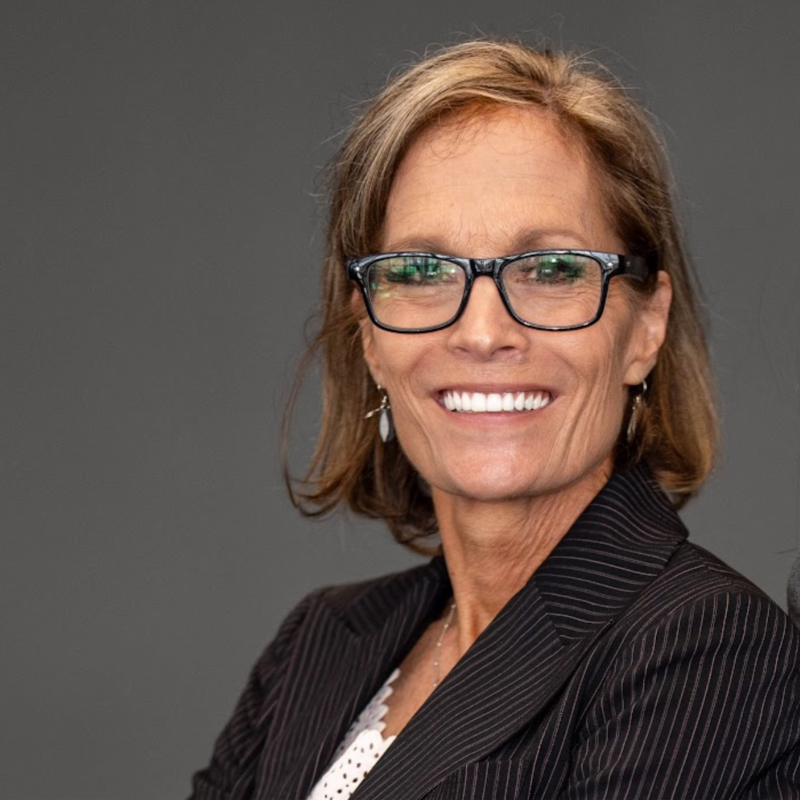
“We want a wife too.” That’s the joke Heather Powers and her girlfriends at work used to make: someone at home scheduling the appointments, running to the dry cleaners, keeping the household Tetris moving so they could focus at the office. Heather has spent almost 19 years as a working mom in Washington, D.C. management consulting, and during the pandemic she found herself sitting with three schedules at once (hers, her son’s, her daughter’s), making sure everybody logged on to virtual school at the right time. That’s when it crystallized for her: the traditional 9-to-5 wasn’t built for the way most families actually run.
Heather grew up the daughter of a construction worker and a teacher in rural New Hampshire, moved to D.C. for what she calls “this mythical thing” called corporate life, and climbed to an executive role at one of the large management consulting firms, all while raising two kids. She’s since founded The Power Lane, a consultancy that helps organizations and individuals accelerate toward their goals, and written a book by the same name making the business case for why working mothers are exactly who companies need right now.
We get into the corporate return-to-office fight Heather helped win for flexible work, why she thinks negotiating with a toddler prepares you for anything a boardroom can throw at you, and the very specific way she wants you to start asking for what you actually need at work.
Watch this episode
In this episode
- Why “we want a wife too” is the joke working moms make, and what it reveals about who’s actually doing the invisible labor at home
- How the pandemic crystallized Heather’s mission to advocate for working parents, three overlapping school schedules at a time
- Why project management, budgeting, and negotiation are skills parenting already taught you for free, and how to name them in a job interview
- The return-to-office fight Heather helped her organization win by refusing to accept a one-size-fits-all mandate
- Why staying quiet about what you’re juggling at home trains your employer to assume you have none of it
- How to actually make the ask at work instead of hoping someone eventually notices what you’re carrying
Timestamps
- (00:01) Welcome and intro: meet Heather Powers, founder of The Power Lane
- (01:54) From rural New Hampshire to nearly 30 years in Washington, D.C. management consulting
- (05:08) Finding the courage to leave home, and “you can’t be what you can’t see”
- (08:44) Founding The Power Lane, and why working moms became her focus
- (09:38) How the pandemic (and three overlapping school schedules) crystallized her mission
- (10:32) Winning the fight against a one-size-fits-all return-to-office mandate
- (11:57) The supervisor pushback that became her real turning point: “we are all at breaking points”
- (14:46) “We want a wife too”: the invisible labor working parents carry, and why it’s cultural, not just personal
- (19:34) Why leaders and companies have to change, and how to actually make the ask for what you need at work
- (22:19) The superpowers working moms build: project management, time management, negotiation
- (26:36) Heather’s book, The Power Lane, and the business case for hiring working mothers
- (29:54) What Heather would say to a mom who’s discouraged and afraid right now
- (31:07) Heather’s offer: a free 30-minute consultation for the first 17 listeners who reach out
About Heather Powers
Heather Powers is the founder and CEO of The Power Lane, a consultancy that guides organizations and individuals to accelerate toward their business and revenue goals. After almost 19 years as a working mother in Washington, D.C. management consulting, including time as an executive at one of the large firms in the industry, she now writes and speaks on building workplaces that actually work for working parents. She’s the author of the book The Power Lane.
Learn more at Heather’s website, or connect with her on LinkedIn.
Favorite quotes
“You can’t be what you can’t see.” —Heather Powers
“If you can negotiate with a toddler about eating vegetables, you can pretty much handle anything in a boardroom.” —Heather Powers
“We want a wife too, right? We want that woman at home or somebody at home to be scheduling the appointments.” —Heather Powers
Resources mentioned
- The Power Lane by Heather Powers: her book making the business case for working mothers in the workforce
- HeatherLanePowers.com: Heather’s website
- Heather Powers on LinkedIn
Related episodes
- Navigating Perimenopause in the Corporate World: more on the corporate structures that weren’t built with women’s real lives in mind.
- From Adversity To CEO: Victoria’s Path to Leadership: another working woman’s climb into leadership, and what she had to unlearn along the way.
- Setting Boundaries for Well-Being and Success: more on the boundary-setting Heather describes doing with her own calendar and workload.
Subscribe & connect
If this episode gave you something to sit with, follow Phoenix and Flame so you never miss an episode: all apps in one place, or jump straight to Apple Podcasts, Spotify, Amazon Music, or YouTube. And if it moved you, leave a review; it’s the easiest way to help another listener find the show.
Learn more about Phoenix and Flame, connect with Dana, and listen to more episodes here.
Read the full transcript
[Dana] (00:01)
Welcome friends, whether you’re out on a walk, running errands, or relaxing at home, it’s wonderful to connect with you. We have a really special guest with us today. I’m going to take a moment to explain a little bit about my connection with Heather Powers. Heather and I both are in a group called Mic Drop Academy. We applied and were accepted into this fabulous group of amazing, intelligent, strong, powerful, entrepreneurial women. And I have gotten to know Heather through this process. We are in this group together trying to build our keynote, the keynote side of our business so we can take our passion and our knowledge and our experience and our wisdom and all the things and take them out. to serve others with that information. And it has been a privilege to be able to interact with Heather and get to know her. And I’m so excited for you all to get to know what Heather is all about and what she’s bringing into the world. Heather, welcome to Phoenix and Flame.
[Heather] (01:14)
Thank you so much, Dana. What a kind introduction.
[Dana] (01:17)
This is fabulous. Now, normally I like go into some of the bio and I can do that, but I’ve already talked a lot. oh So I would like really to give you some space because who better to introduce yourself than you to tell us, gosh, what, because you have so many really uh interesting and important accomplishments and how you, know, what you’ve done, where you are right now. And then we’ll just kind of weave around and asking questions about your background and why you got interested in that and all the things. So tell us, tell the listeners, who’s Heather Powers? What have you done? What’s your place in the world right now?
[Heather] (01:54)
Yeah, thank you. So I grew up in rural New Hampshire, which is important only because the life I have now is nothing I could have imagined back then. Small town, one of just a few kids in school. so corporate to me was this mythical thing. After college, after a year or so in New Hampshire, I was like, let’s go explore the big city. And I haven’t left. So I’ve been here in Washington, DC for almost 30 years now and went right into management consulting, uh which it has been a great experience and really fit my interests and sort of my personality. uh It’s always been federal contracting. So my clients have always been federal agencies. And that has been fascinating, tied into my political science degree in some fashion. ah In there, I grew from an individual contributor like most of us do, know, sort of get your feet wet, into like a team lead and then moved up the ranks over the years and uh became an executive at uh one of the large management consulting firms. And that was a great, great training ground. Along the way, I had a couple of kids and started to balance that working mom and working professional uh personality and sort of the dichotomy of the two. I knew I wasn’t ever going to be a stay-at-home mom, both for personal reasons, sort of professional goals. My husband would have been very anxious as well about not having that income. But I thought I could do it. And I was really, really lucky to have some great women role models and mentors really along the way, sort of modeling how they did it. And I’m like, I can do it too. And so I have for the last almost 19 years, which is…
[Heather] (03:47)
I can’t, it’s hard to think I’ve got a 19 year old. Yeah, so that’s sort of my quick background of uh figuring out my professional goals and then weaving that into being a working mom as well.
[Dana] (03:50)
Oh wow. Oh my gosh. I love this. So a couple things have already coming to my mind and I’m just going to toss them out and answer them as you would like and kind of weave that together. The first one is I’m imagining you being in New Hampshire and being a young, you know, girl. And I’m curious, like if we have any young women that are listening, my first question to you is how do you feel? What encouraged you? What gave you the courage? to make that move because there might be somebody listening that is from a smaller area and they do have some cravings to do something, but they’re scared. So my first question is how did you find the courage to do that and what were some of those experiences along the way? And the other is the mom guilt. At some point we’re gonna need to get into the mom guilt about the moms are trying to work because the family needs the income, but there’s also the children and… all the things and all the plates that are spinning and how does that happen? So start wherever you would like, because those are two questions that I really, really want to hear your input on.
[Heather] (05:08)
Yeah, no, thank you. And I appreciate that because I do think it’s really important. ah I remember hearing years ago, someone say, you can’t be what you can’t see. And I was like, oh, that’s so true, right? And I grew up the daughter of a construction worker and a teacher. And so I really knew that sort of education field. And I wasn’t as interested, sorry, in the sort of the dirt work. But I understood that, you having been around it my whole life. And I just knew that I didn’t have the patience to be a teacher and I just like the office environment intrigued me, but I wasn’t going to find that certainly in Northern New Hampshire. And even in my internship and then working in state government, you know, I got a taste of it, but I was like, and honestly, the trigger for me was I worked for the governor at the time and he chose not to run again. I was like, I cannot tie my career to a politician. Like that’s just not going to work with my personality. So I’m going to have to find something that’s not tied to an election cycle. And so how do I do that? And at the time, I had a friend of a friend of a friend who was here in DC. And she’s like, well, come down and visit. And so I did. And I’m like, oh, this seems manageable. And so then about three months later, she’s like, we have an opening if you’re interested. And about that time, I learned that I wasn’t going to have a job come November. I was like, OK. So I really took it as a, I don’t have any real responsibilities, right? I was out on my own. I, of course, had school loans and things like that, but I didn’t have kids. I didn’t have a partner. I was like, let’s try it. Let’s give it a couple of years. I can figure it out. If I don’t like it, I know I can always go back. a little bit of the, didn’t know what I didn’t know. I didn’t know to be nervous. didn’t know to be ah sort of innocence of youth, if you will. ah
[Dana] (07:00)
Yes.
[Heather] (07:01)
But I came down and honestly, I was here for a few years and I was, enjoyed everything I learned, enjoyed the work, was getting my hands around what management consulting is, working closely with the federal government. And that was all fascinating. But I was about to leave and then like many stories go, know, met my future husband. So stayed.
[Dana] (07:24)
Got it, got it. So really I’m hearing everyone’s path is different. And so just taking one step at a time and realizing, you know, kind of like an experiment. you want to reach out and try something, if you don’t, if you get out and you don’t like it, if you can’t handle it, then just switch gears. You can come back, you can start back at square one, do whatever you’d like to do. But at least like you said, expose yourself to something, see different things. I really like that. What did you say you can’t?
[Heather] (07:34)
Yes. Yes. Yes.
[Dana] (07:53)
B which you can’t see. Wow that’s really that’s that’s something right there.
[Heather] (07:55)
Yes. Yeah, because even, you know, again, avid reader and uh I read about, you know, working in an office. I was lucky to have a cousin, you know, nearly a decade older who worked in an office, very different from my background, but uh sort of had a sense of it. uh And I was like, let’s try it, right? Worst case, I can always do something else. And I’ve really tried to use that. uh It’s funny, I was literally just talking with one of my children about that. Make a decision, try it, right? Worst case, you don’t like it. best case you do and you’re set off down a path but nothing is forever and so try it uh you know something good will happen you’ll learn something about yourself at the very least.
[Dana] (08:44)
That’s fabulous. I love that so much. So you had this wonderful corporate experience. mean, right now you’re founder and CEO of the Power Lane, know, consultancy guides organizations and individuals to accelerate toward their business and revenue goals. You have come so far and your passion seems to be really for the working moms. they’re trying to, and that is such a huge presence out there. Women who are smart and powerful and motivated and they’ve got these amazing kids that they love and they also have all these wonderful career aspirations. So what got you kind of veering toward that particular interest so much?
[Heather] (09:38)
Yeah, so again, having been a working mom for nearly 19 years now and having lived it, it’s been a passion of mine. And I will say it really crystallized during the pandemic. you know, tough, tough period for everyone. ah For parents, especially it was challenging if you had kids at home uh of any age, really, you know, I have friends who kids in college and then toddlers. we would often say, oh gosh, we have a middle schooler and a high schooler. We’re kind of lucky. Well, every kid was impacted, right? And I do remember sitting not far from where I am now with three schedules, right? My schedule for the day, and my son’s schedule, and my daughter’s schedule, and literally making sure they were logging on to virtual schooling at the right time. Did you get on science? Have you gotten into the math class? And we did that for 18 months or more.
[Dana] (10:12)
Yeah.
[Heather] (10:32)
And then when they go back to school, you know, have a whole new set of stressors. ah So I, at that point, was a fairly senior in the organization and had a little more say and influence than other moms and really tried to use it. And so I did a few different things. ah At one point, the organization, which at that point was like 30,000 people, was trying to work through uh return to office guidance. And I was pretty adamant that it couldn’t be a blanket. everyone back in the office. We were not going to snap back to February 2020 ways of work. We couldn’t, right? Too much had changed. And so was very lucky to do a study uh for the organization and really help the chief people office make a decision. And ultimately, and it’s still in place, they decided to uh sort of delegate that to the teams and the accounts to decide what worked for them and their clients. which I just think was the absolute right thing to do ah because many of us were working remotely and it worked fine and our clients were remote. And so why would we go to an office and all of the sort of things that are required of that when it wasn’t necessary? ah So that was a big point. then another uh sort of a year or so later, ah similar, was uh getting
[Dana] (11:32)
Uh huh.
[Heather] (11:57)
I say chastise for lack of a better word, but chastise by my supervisor at the time for not pushing the team hard enough. And those were literally his words. And I said, I don’t know how we can push them any harder. We are all at breaking points. Like at this point, it’s a couple of years in, we are exhausted. We’re doing the best. And we were meeting our metrics. Like we were meeting all of our team goals, our account goals. And for him to say that, I was like… we have got to change the culture, the structures that we worked in because we’re burning out and something has to change. So that was the sort of real click for me to say, we’ve got to do something different. And ah I like to think that given my background and my experience, I can have a voice and I can have an experienced voice that has both been that leader who is trying to get the work done, trying to have a team, trying to support the team.
[Dana] (12:39)
Thanks.
[Heather] (12:53)
as well as the mom understanding, oh my gosh, I’ve got orthodontic visits to schedule in, right? The random, I’m sick, can you come get me mom? You know, those calls as well. And so I can appreciate both sides. And I’m hoping that that sort of experience can help inform changes for everyone.
[Dana] (13:13)
Absolutely. I just love everything the way you’re describing all of this. I would like to think, you and I know there’s lots of different people out there. There’s lots of different personalities of dads and moms, and there’s lots of different dynamics of families. But if we can stereotype for just a moment, okay, in general, I think I’m safe to say that in general, um the moms are the expectation on the mothers is different. And I know I’ve had a lot of dads and a lot of guys on my podcast and they carry a different burden, a different level of expectation that is hard for them as well. But I think when you think about a family dynamic, for different reasons, it seems to be that the majority of the expectations for the childcare, whether the
[Heather] (13:53)
Yes.
[Dana] (14:08)
children are in preschool, whether, like you said, whether they need to get braces, whether they need, they’re sick, whether, you know, all the things, a lot of it seems to land on the mom. And so you have the mom trying to work and also trying to deal with all these other things as well. And that is another level of frustration and another level of um
[Heather] (14:16)
Right.
[Dana] (14:37)
Just complication. What did you see and what was your experience as you were building up your passion for this area?
[Heather] (14:46)
Yeah, no, you said it really, really well. And it’s cultural. there’s, I still catch myself, right? Oh, let me reach out to the mom to coordinate. Dad’s just as capable, right? Of even uh play date or whatever you need to coordinate. ah And even in the, say 14, 15 years of having kids like in preschool and school and coordinating with their parents, I’ve seen a shift and I’ve tried to be intentional about, don’t just send those class emails to moms. send them to both parents. Because we do have dads who are the primary caregiver or stay at home dads even. And so not trying to assume what the home life and how things are shared because it can be different. Another story we were just talking about the other day, that idea of we, my girlfriends and I at work would say, We want a wife too. We want that woman at home or somebody at home to be scheduling the appointments and running to the dry cleaners and all that stuff that we fit in uh in some way. Now, I would be remiss not to say that my husband and I were not equal partners and we would sometimes take the lead on things, but I could not have done it without him.
[Dana] (15:41)
Alright! uh
[Heather] (16:06)
And so we would often have those conversations like who’s scheduling the gutter cleaning, right? Or who’s running the car to the maintenance uh this month or this period. And you just have to have that communication. there were certainly in my early career, a lot of men who didn’t have to worry about that because they had someone at home taking care of the kids, the house, the household. And uh most of the women who were working didn’t.
[Dana] (16:19)
Mm-hmm.
[Heather] (16:35)
part of a dual income family and really balancing it in some form or fashion. Never completely balanced, right? Something was always out of whack, yeah, that was what we did. And so I think the more we can talk about it and the more we can say, let’s not assume uh any parent is balancing a lot. the more we can uh really have those intentional conversations and not assume, she’s going to take the leave because she’s the mom. Well, maybe not, right? Like, maybe she’s going to strive forward and, you know, dad or another caregiver is going to step in so she can. So that’s.
[Dana] (17:10)
Mm-hmm. Heather, you’re just hitting so many nails on the head. One of the things I hear you talking about are expectations. I think if we look back decades ago, kind how all this played out, you had like in the 50s, like back when the dinosaurs were roaming the earth, had uh dads would go out, moms would stay home. So it was expected. The roles were very clear. But then, about 1960s and 70s, a lot of the women started going into the workforce, but yet the expectation of who was going to do all the stuff they were doing before. So they still were doing all the home stuff plus their jobs. And in many ways, it never really got reassessed. And so it just kind of morphed. And here we are in 2025.
[Heather] (18:09)
Yes. Yes.
[Dana] (18:23)
And I think what I’m hearing you say is huge is communicating that if somebody’s listening and you’re frustrated with what’s going on and the dynamics, because let me tell you something, I’ve been on the other side of a situation like this where someone would do something and they’ve been doing it and they trained me that they would do it, right? We train people what to expect from us. That’s a boundary. That’s a boundary thing. If somebody expects a certain thing from us, it’s because we’ve trained them to expect that.
[Heather] (18:46)
Yes.
[Dana] (18:52)
So I’ve been on the flip side of that where someone was doing something because they always did it and they weren’t telling me how they were feeling about it, which was not happy. And then all of a sudden they’re angry at me. It felt all of a sudden. It wasn’t all of a sudden. They were what I call hold and blowers. They hold, hold, hold, and then they blast it all out all of a sudden. And the communication, it’s like sometimes…
[Heather] (19:02)
Right. Yeah, yeah, no, few of them.
[Dana] (19:18)
our partner, think they should just know or they should figure it out, but sometimes they don’t know. And if we have carried all of this for so long, you know, so if we want it to change, what I’m hearing you say is communication is key.
[Heather] (19:34)
Yes, yes. that’s, we were talking about this the other day in the mic drop around, it’s sort of the dual hat, right? Like uh I see a lot of working moms or a lot of thought leaders out there now and there’s a, you leaders have to change, corporations have to change. And absolutely, right? Because there are expectations that are just outdated. There are cultural norms that need to be. revisited, perhaps changed. ah But I also think it’s incumbent on us, right? Like as a woman who’s been in corporate America 30 years, ah we were the ones to mold and adapt and not really challenge the status quo because we were nervous about losing our position, uh even our job. ah We now have a bit more authority than we realize. And if we don’t say, like, that’s not going to work for me or even just raise awareness of what you’re dealing with outside of what they see and what they do, not even just outside the office, but outside their work with you, they’re not going to know that their expectations should change. And so what I try to do with women, coach and when I speak to women’s groups, it’s really, how do you make the ask? Or how do you even make them aware of what you’re balancing at home? So one of the expectations that I think is pretty common is that leave. Who’s going to take leave when the child needs something or ah coordinates the daycare drop-off or pick up or child, whatever. Who’s going to do that? It tends to default to the mom. And we talk a lot about it when the kids are young, ah even right after the kids uh start when we start the family with children. But I will say I’ve taken more leave with middle school and high school kids than I did when we were dealing with ear infections and fevers and whatever that you have more consistently with toddlers and elementary school kids. Because again, orthodontic visits, the college visits, the move in and move out, all of that stuff takes time. But if you’re not sharing that at work, they have no idea that you’re also balancing that at home. And being able to say, gosh, that would be wonderful. I’d love to be part of that project. I’d love to be, you know, drive that meeting, whatever it is. I just, this week doesn’t work for me or this day is not gonna work. Then they can start to realize, oh, I’m assuming she’s available Monday through Friday, you eight to five. And that’s just not the case for most of us, moms, dads, really any employee.
[Dana] (22:19)
You know, I’d really like to hear you chat about basically how I view superhuman powers that moms have because of the very reasons that you’re pointing out, because we have learned how to have cognitive flexibility. We’ve learned how to multitask. We’ve learned how to compartmentalize because we are dealing with so much and we have to deal with it. so it’s different from someone who They’re just kind of, and I don’t want to, I feel like I’m about to say something pejorative, but it’s sort of like Monday through Friday, eight to five, same, same, same, same, same, same, right? Yeah, someone like that might be able to show up at the same time every day, day after day, but yet they’re not developing all of these strategies that moms have to develop that they in turn are going to bring into these.
[Heather] (22:58)
Right, right.
[Dana] (23:14)
projects they are going to bring into their teams that are these amazing qualities. I’d really love to hear you talk about that because I feel like we’re like super beings. uh
[Heather] (23:17)
Yes. Yes, yes. And I think that’s an important point of those skills that you develop and hone as a parent, or really any caregiver, are very translatable into the workplace. so, know, project management is the first one I think of, that sort of schedule management, you know, the Tetris of my work responsibilities, care responsibilities. Like, you’re literally slotting things in, right? ah
[Dana] (23:45)
That is so good.
[Heather] (23:52)
So those are big ones. think time management, you there’s a study uh by the Federal Reserve of uh professional uh parents, actually professionals, and they looked at uh not an insignificant number of people and said that the findings were the most productive employees were not just moms, but moms and dads of two or more kids. And it was largely because of the skills we’re talking about, right? They have to be. They have to be very focused in the time they’re at work, and then they’re very focused and present when they’re home with the children or outside the office. The time management, the project management, the communication skills. I would often joke and say, if you can negotiate with a toddler about eating vegetables, you can pretty much handle anything in a boardroom. You don’t have anything on a two-year-old. ah The uh budget management, those are… uh things that not everyone gets experience with in their uh work life. But if you’re managing a household budget with whether you are paying for daycare or childcare, which are through the roof or aftercare or summer camps or sports clinics or any of the other thousands of thousands of things. Yes. Yes. Yes. so you are your
[Dana] (24:58)
Mm-hmm. The cheerleading outfits, the dancing outfits, it just goes on and on.
[Heather] (25:14)
practicing those skills at home and then you can apply them very readily at the office. And so I encourage uh moms, caregivers to think about it that way because again, the work world might not have offered that opportunity to you, but you can bring it in. You still have the skill. You’ve just applied it perhaps to a PDA budget versus the account budget.
[Dana] (25:19)
Mm-hmm. Absolutely, and to have that confidence to know this is what I know how to do. I can compartmentalize, I can multitask, can do the communication, negotiation, like breathing. Because it’s like breath, because we’ve done it so much, we don’t have to stop, we don’t have to go take a class on it, we don’t have to read a book about it, we don’t have to do this, that, because we’re just so natural about what.
[Heather] (25:44)
Yes. Yeah, yes. Yes.
[Dana] (26:05)
about doing all these things. And what I’m hearing you say is bringing that, pairing that with confidence to go into the workplace to say, this is what I have to offer. It’s pretty awesome and it’s amazing. And the impact that’s going to have on your team and your department is going to be pretty amazing. So let me, I want to make sure that we take a little bit of time because you’ve got this amazing book that you have written called The Power Lane.
[Heather] (26:15)
Yes.
[Dana] (26:36)
And it’s all about working women and what they provide to our workforce, our economy. So tell us about your book.
[Heather] (26:44)
Yeah, thank you so much. I’m really excited about it. It’s really meant to kind of capture a lot of what we’ve talked about. the, you when I was first thinking about it and putting together the outline and what would I do, there was a lot of like, wow, there’s so many books on moms. There’s so many books on, you know, women in the workplace. Do we need another one? I was like, well, yeah, it’s still a problem. So yes, I think we do. And I tried to,
[Dana] (27:08)
Yeah
[Heather] (27:13)
shape this to be really a business case because I think we again have a lot of conversations around it. We understand that it’s important to have the diverse perspectives, the different way of looking at things that moms and women bring to the workplace. But we’re at a time, which is quite different from when I entered the workforce, in that there are more jobs than there are people to fill the jobs. And so if that’s not a confidence booster for the moms going, Can I translate these skills back into the workplace? Absolutely. Because leaders are looking for people with skills who can hit the ground running. And really they’re looking for people to fill their roles and there aren’t enough out there. So women are at a great period in history where they’re needed. And to your earlier point, they’re skilled, they have professional goals and ambitions. Oftentimes it’s just these perceptions or the scheduling or the expectations that are out of alignment between the mom or the worker and the organization or the leader. So let’s communicate about that. And from a leader perspective, it’s a bit of a wake up call to say, you’re not gonna hit your quarterly or your monthly revenue targets or your business goals if you don’t have the people you need to do the work. And so assuming that women are too difficult, or moms have too many challenges to bring them into the workplace, you’re just really shooting yourself in the foot. Because many points we’ve made over this conversation, they have the skills, they have the desire to work, they might just need a little flexibility on the schedule or a little flexibility on when they get that work done before the kids get up or after the kids go to bed. Oftentimes that’s a great time and they’re willing to do it because they stepped out to… you know, transfer them from school to a soccer practice or something.
[Dana] (29:08)
Oh my gosh, this is awesome. I’m so excited for the listeners, the working moms out there to grab your book and just really take some time and avail themselves of your wisdom. So speaking of listeners, since we just have just like maybe a couple more minutes, I’m wondering what words of wisdom, if you imagine someone listening and she’s She’s a mom, she’s trying to work, she’s discouraged. Maybe she’s anxious, maybe she’s afraid, you know, all the things. And what words would you have for her? What message would you have for her if she’s listening right now?
[Heather] (29:54)
Yeah, so number one is you’re not alone. uh Regardless of where moms are in their journey, uh we’ve all been there at some point, feeling like we’re the only one who can’t get it together, that uh our kids don’t go to school looking perfect or don’t have the perfectly packed home lunch, things like that. We’ve all been there, so you’re not alone. ah And second would be reach out, because I’m sure there’s a mom in your community Certainly there’s a mom online who can help reinforce that message and maybe help you brainstorm on how to get through whatever the situation is you’re dealing with right now. The second is that if you want to work, there are organizations that need your skills. And so don’t uh limit yourself by thinking your current schedule or your current caregiving responsibilities are gonna prohibit you from working.
[Heather] (30:53)
There are ways that we can work through that. I’m happy to brainstorm with anyone around that. again, given the environment we’re in, your skills are needed and we can figure out a way to get you back into the workforce or into the workforce if that’s the case.
[Dana] (31:07)
Okay, that’s awesome. Now, do you want me to read off the lovely offer? So, guys, this is amazing. Heather is offering for the first 17 people who connect with her after listening to this podcast, she’s giving him a complimentary 30-minute consultation.
[Heather] (31:14)
Please, if you’d like to.
[Dana] (31:33)
You can connect on LinkedIn or direct message her, send her an inquiry through their website, which her website, by the way, is HeatherLanePowers.com. So I know that you’re going to want to get a hold of Heather. So that’s how you get a hold of her. And the first 17 gets a complimentary 30 minute consultation. I’d be all over that. That’s how, how thoughtful and generous of you, Heather, to do that. I
[Heather] (32:00)
Thank you. I learned so much from these conversations, so it’s a little selfish.
[Dana] (32:06)
Oh my gosh. And you bring a good point. We’re just, helping one another. We are all helping one another. We’re all on this journey. Thank you for spending your time and your energy and your effort to come here on Phoenix and Flame with me and my listeners and helping us. Thank you very much. Listeners, I know you have heard multiple things that Heather said today that you’re thinking, oh my gosh, I have…
[Heather] (32:25)
Thank you, I really appreciate it.
[Dana] (32:34)
a best friend, I have a coworker, I have a family member that needs to hear exactly what Heather Powers has to say. Take this podcast episode, copy and paste the link, send it in text, send it in email, put it on your favorite social media sites so we can grow our Phoenix and Flame community to communicate to people you are not alone. I hope you’ve had a wonderful day. I hope the rest of your day goes fantastic. I’m Dana on Phoenix and Flame.
Are your work boundaries supporting you—or quietly draining you?
Take my free Work Boundaries Quiz and find out where you stand.