First aired October 18, 2026
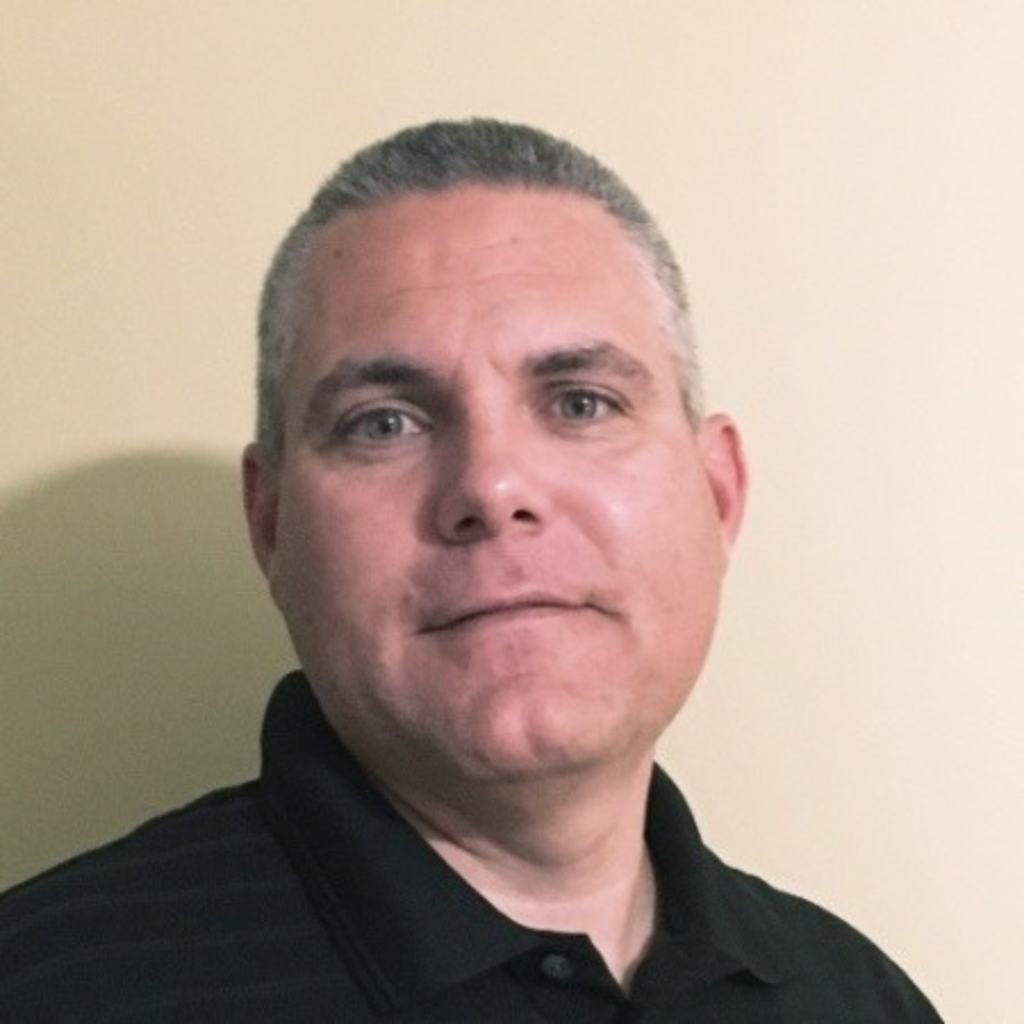
Timothy Ernst has spent more than three decades in HR, organizational development, and leadership development, and he didn’t get there the way most people do. He started out in broadcast journalism, found his calling in organizational development, and went on to learn the business the hard way: working the assembly line at Whirlpool and jumping into a hole with a shovel on construction sites, just to see the job through his people’s eyes.
That perspective shaped his belief that HR has to earn its seat at the table, and it’s the thread running through his upcoming book, Systems Over Slogans: How Leaders Build Cultures That Perform, Adapt, and Endure, and a second book on leveraging HR as a strategic partner.
We talk about what to do when you’ve spoken up for two years and nothing has changed, the difference between a manager who listens and a leader who truly hears, why turnover among your best people is the clearest measure of culture, and why AI is a powerful tool but never a replacement for people.
Watch this episode
In this episode
- Why HR earns its seat at the table by understanding how the business really runs, from operations to the P&L, instead of staying stuck in handbooks, policies, and paperwork
- How Tim learned the work by standing shoulder to shoulder on the assembly line at Whirlpool and grabbing a shovel on a construction site
- Why leaders get more from veteran superintendents by leveraging them for their minds and not their backs, and how duplicating that knowledge keeps it in-house
- The difference between listening and truly hearing, and why humility and owning your mistakes are what make a leader approachable
- Why turnover, especially among high-potential employees, is the clearest measure of your culture, and how quiet quitting starts when trust is missing
- What to do when you’ve spoken up and nothing has changed, including how to ask your manager “can you take a risk?” when there is no HR department
- Why AI is a tool and not a replacement for people, and the five connected systems behind a healthy organizational culture
Timestamps
- (00:01) Welcome and guest intro: meet Timothy Ernst, an HR and organizational development leader with 30+ years of experience
- (02:58) Getting into HR “backwards”: from broadcast journalism to organizational development
- (04:27) The mentor who took him under his wing, and a “PhD level education in human emotion” at Whirlpool
- (06:20) Why HR needs a seat at the table: learning how the business really runs
- (07:57) How HR is viewed, and the pain points of working in HR
- (09:04) Tactical vs. strategic HR: creating a safe space, and why that alone isn’t enough
- (10:26) Keeping veteran knowledge in-house by leveraging superintendents for their minds, not their backs
- (12:48) “I’ve spoken my words for two years and nothing has changed”: what do you do?
- (14:54) Listening vs. hearing, and the humility leaders need
- (16:51) Daily management systems: what happens when nobody’s watching
- (18:18) Leading virtual teams and building trust through intentional check-ins
- (19:53) Burnout, belonging, and quiet quitting
- (21:21) Why turnover among high-potential employees is the clearest measure of culture
- (23:59) What HR and leaders can do: play to strengths and give stretch assignments
- (26:56) No HR department? Ask your manager: can you take a risk?
- (28:01) Dana’s “yards” model of boundaries
- (29:27) AI in the workplace: a tool, not a replacement
- (33:14) Keeping your own voice in an AI-assisted world, and Tim’s book Systems Over Slogans
- (35:17) Where to find Timothy Ernst and his books
- (37:53) Why Systems Over Slogans is different: communication, conflict, and five connected systems
About Timothy Ernst
Timothy Ernst is an HR, organizational development, and leadership development professional with more than three decades of experience at the intersection of people, operations, and business strategy. He began in broadcast journalism, found his way into organizational development at Western Kentucky University, and went on to work at Whirlpool and in the construction industry, where he made a point of working alongside crews to see the job through their eyes. He is writing two books: Systems Over Slogans: How Leaders Build Cultures That Perform, Adapt, and Endure, and a second on leveraging HR as a strategic partner.
Connect with Timothy on LinkedIn and follow him there for updates on his books.
Favorite quotes
“There is a very big difference between listening and hearing.” —Timothy Ernst
“They’ve quit on the job, they just forgot to tell you.” —Timothy Ernst
“You’re never going to know that until you take that risk and ask the question.” —Timothy Ernst
Resources mentioned
- Systems Over Slogans: How Leaders Build Cultures That Perform, Adapt, and Endure: Timothy’s upcoming book on culture; follow him on LinkedIn for release updates
- Timothy’s second book on leveraging HR as a strategic partner: currently in progress
- Timothy Ernst on LinkedIn
Subscribe & connect
If this episode gave you something to sit with, follow Phoenix and Flame so you never miss an episode: all apps in one place, or jump straight to Apple Podcasts, Spotify, Amazon Music, or YouTube. And if it moved you, leave a review; it’s the easiest way to help another listener find the show.
Learn more about Phoenix and Flame, connect with Dana, and listen to more episodes here.
Ready to find your own voice on stage? Dana’s a big fan of Mic Drop Academy, a public speaking and group coaching program built for women. Watch the free webinar, join a workshop, or dive into the bootcamp to build the confidence to speak up and be heard. (These are affiliate links — Dana may earn a commission at no extra cost to you.)
Read the full transcript
[Dana] (00:01)
Welcome, friends. Whether you’re out on a walk, running errands, or relaxing at home, it’s wonderful to connect with you. Joining us today is Timothy Ernst. Timothy has worked for more than three decades at the intersection of human resources, organizational development, leadership development, and business strategy. But then he became fascinated with a question: why do some organizations achieve sustainable success while others struggle, even though all of them have access to similar resources, technology, and opportunities? Tim, welcome to Phoenix and Flame.
[Tim] (00:56)
Thanks for having me, Dana. I really appreciate it.
[Dana] (00:59)
This is amazing. Now, guys, I ran across Tim on LinkedIn because, as we’ll do, I’m wanting to support high performers and burnout and all the things, so I’m trying to connect with people. What happens on LinkedIn, for those who don’t know, is that it can be a fabulous place, and sometimes you run into folks who, I don’t know, are dry. They have good words, good descriptions, but then when you try to make a connection and create a relationship to get something to happen, there’s just not a lot there. Either they’re not interested or, to be brutally honest, and that’s what we’re like on Phoenix and Flame, they’re just really boring. It’s like you fall asleep talking to them, all right?
So Tim and I, that’s not what happened. I found him on there and thought, my gosh, I love what he stands for. I love his supportive people, which we’re going to get into. Then we reached out and had a connection call, and we really had fun, we laughed, we had a good time, and we talked about stuff that really mattered, because I could tell from Tim, and we’re going to unpack it here, that he was willing to go there, address the real things, and say the words.
I really don’t have a lot of patience for people who aren’t willing to go there and address the real issues, because as a therapist, I hear about these real issues in my office. This is where people really live, and if we can’t talk about it, we’re wasting time as far as I’m concerned. So, Tim, I’m very glad to have you on Phoenix and Flame. I like to create space at the beginning of the podcast for my guests to decide: do you want to start at the beginning? Why HR? Or do you have a story you want to jump right into? We’ll go wherever you want to go.
[Tim] (02:58)
Well, I like to tell people that I got into the HR space backwards. I’m one of these guys who knew exactly what he wanted to do when he graduated high school. I went into college and jumped into broadcast journalism, radio and TV news. By my junior year, I was thinking, there has got to be more to life than dealing with everyone’s tragedies. The media back then is definitely not the media that it is today, with this whole “if it bleeds, it leads” mentality. It really wore on me.
In April, before my May graduation at Western Kentucky University, they asked me, “Hey, do you want to come back and work on your master’s degree? We feel like you’ve got a lot of things you can teach us, and we still feel like we have things we can teach you. And by the way, we’ll pay you to teach.” Real life or stay in school? I’ll stay in school.
I very quickly learned why I was there. I found a class in training and organizational development, and this is where I say I got into HR backwards: I went in through the OD side of things. I learned how to connect. I used a lot of the knowledge and skill I had developed in the broadcast field, and started doing safety videos, stuff like that.
I ran across Dr. Randy Caps, the head of the Department of Communication and Broadcasting. One of his largest customers, through his consulting business, was the Whirlpool Corporation, and he asked me if I would come and work for him. He took me under his wing.
[Dana] (04:44)
Was that Whirlpool you said? Okay. Gotcha.
[Tim] (04:48)
Right. Randy took me under his wing, and I can honestly say that when I look back at my career, there are individuals I can point to and say, I am where I am because they made me a better version of me. Randy really lit that flame. At Whirlpool, after about five years of moving a 53-year-old manufacturing facility from a management-based organization to a team-based organization, I really got a PhD-level education in human emotion.
You learn how to answer questions and how to deal with issues. I have a phrase I’ve always said when it comes to confronting issues: I’m going to light my hair on fire, I’m going to strip down naked, and I’m going to run right through the middle of it. I know that’s rather visual and rather blunt.
[Dana] (05:40)
Imagery.
[Tim] (05:42)
But when it comes to confronting issues, I feel like people are afraid: “I’m going to say the wrong thing, I’m going to do the wrong thing.” I think part of that is just because we’ve become such a litigious society. But I knew that if I wanted to keep my hand in training and the OD field, in this part of the country, in the Kentucky area, you have no choice but to go into the human resources side of the business. So I have always gone into HR with what I’m going to say are my eyes wide open. I look at HR through the lens of operations, and I think that’s an important piece.
I’m writing a second book now on leveraging HR as a strategic partner, and one of the things I point out is that HR really needs to have a seat at the table. Well, how do you get that seat at the table? You have to understand how the business works, how the business runs, the financial success. You have to understand the P&L. I’m very fortunate in my career in that I’ve had leaders who said, “Go and learn.” So when I was at Whirlpool, I would go out and work on the assembly line. I stood shoulder to shoulder. I learned through the eyes of what the men and women went through on a daily basis.
When I worked in construction, I would put on steel-toe boots, my hard hat, and my hi-vis vest, and jump in a hole and grab a shovel. People looked at me like I had two heads. But for me, it was about seeing it through their eyes. You’ve heard the expression “walk a mile in a man’s moccasins.” It’s more than that. It’s truly about experiencing what they go through day in and day out. And trust me, when you’re standing in a hole, or moving a heavy item that’s over half a million pounds in the hot summer or the cold winter, it gives you a perspective you wouldn’t otherwise have.
[Dana] (07:57)
I’m thinking of a couple of questions, and you can take them in whichever order you would like. One of them is, from your experience, how do you believe people view HR? You could answer from different angles: am I talking about the C-suite, or about employees? From your experience, how has HR been viewed? That’s one question. And number two, and they dovetail together: what have you experienced are the pain points of being in human resources? What are the areas that are the thorn you can’t quite get pulled out of your side, that you’ve noticed repetitively? It’s not just one business situation; it’s an HR experience that seems to go across, and other HR people you’ve talked to speak of the same thing. Those are two different questions, but they’re related.
[Tim] (09:04)
So I had the privilege of working for a family road construction business. They’ve been around for over 25 years, and I helped that organization grow beyond their own expectations and learned a lot from that family. It was while I was there that I really started to understand that, in my past, HR was always viewed as tactical. What do I mean by that? You write the handbooks, you create the policies, you do all the hiring, you do all the firing. HR was one of those places you only went when you either A) had a problem or B) were in trouble. I’m not a fan of that.
I always had this philosophy: look, you’re going to have good days, you’re going to have bad days. I would rather you come into my office, shut the door, and drop every F-bomb under the sun. My only request was that at the end of that, you say, “Tim, thanks for listening, I feel so much better,” then open that door and leave, and I will never say another word to you. I wanted to create a safe space, a place where, if people needed to come and talk, I could just listen and lend an ear. And I think that viewpoint creates an issue, meaning that HR is just tactical.
I think where HR really needs to separate itself, and in the organizations that have a very healthy and strong culture, HR is more strategic. What I mean by that is they’re looking at: do we have our aces in their places? From a longevity perspective, when we’re looking at turnover, what are we going to do with our superintendents who have been there for 30 years and have a lot of experience? Unfortunately, when they leave, that knowledge goes with them.
One of the things I’ve tried to do is recognize there’s still a lot of value there. Whether it’s creating a training school or doing training on site, I bring a lot of those superintendents in and leverage them for their minds, not for their backs. Why am I leveraging them for their minds? They’ve got 30 and 40 years of experience. I want that knowledge and skill to stay in-house. So what I’m trying to do is duplicate in those team members the knowledge that superintendent has. How great would it be if you were able to duplicate yourself in five, six, seven people? That’s five, six, seven people who now have that knowledge.
It’s easy to say that if I had three superintendents and put them in front of me, all three would approach a problem differently. There’s not a problem with that, especially if there’s no wrong way to solve the problem. What if all three of those superintendents taught seven people how to solve the same problem? Every one of those individuals gets a different perspective. They get to pick the one that really resonates with them, their style, their methodology.
And I think, again, that’s where HR really needs to go. That’s how HR gets a seat at the table: by being more strategic. You can live in both worlds in HR. You can be strategic and you can be tactical. One of the things you’re going to find is that if you’re living on the tactical side all the time, you’re too busy to be strategic. There’s a balance you have to carefully walk.
[Dana] (12:48)
Well, I hear you describing wonderfully a lot of solutions, and working with people and training so that more people can know the wisdom and share it around. Being a therapist, I hear the other side of things, where employees might be able to come talk. You mentioned earlier that they would come in and you might give them an amazingly safe place to speak and share their frustrations. But at some point, and I’m sure you would agree, there has to be change.
Because the conversations I’m hearing are from people who say, “Yes, I’ve said all the words.” They say, “Dana,” because I’m the Queen of Boundaries, so I’m talking to them and saying it’s your responsibility: if you have a frustration, if you’re having an experience at work that is really annoying you, if you’re being taken advantage of by a coworker, if you feel like you have too much work on your plate, you can’t do it all, you’re not a robot, you’re having panic attacks, all these things, you have to speak up, because other people just don’t magically know what you’re thinking and feeling. That’s part of boundaries. And they tell me, “Dana, that sounds great, and it is great. I did speak my words. I’ve spoken my words for two years, and nothing has changed.”
So for those listeners out there, or viewers on YouTube, who might be one of those individuals, and who want us to get real, to say something they’re experiencing: what are they supposed to do? Maybe they work for a business that has an HR department, maybe it doesn’t. If they work for a place that does have an HR department, what should they do? And what if they work somewhere smaller, a hometown business, with no HR department? How do they advocate for themselves when they’ve talked themselves to death and nothing is changing?
[Tim] (14:54)
So, last-case scenario is, “Hey, I’m not a match, I’m not a fit here,” and they find themselves putting their resume out there. They speak with their feet. In a lot of organizations I’ve worked in, when you look at turnover, for me it’s, okay, why did that turnover occur? There are a couple of things I’ve generally found. In some cases, my manager listens. That’s fine, but does he hear you? And there is a very big difference between listening and hearing. Listening is just the act of sound: the sound waves go into the ear, they stimulate the cilia, they go into the cochlea. When leaders actually hear you, they’re listening with their mind and their heart. But I think in order for leaders to do that, there has to be a level of humility.
In psychology, they use the analogy of peeling the onion. I’m not saying people have to know all of your deep, dark secrets; it’s not about that. But people have to know that, just like them, you make mistakes. One of the things I’ve done is, look, when I make a mistake, I own it. And if it’s a mistake that involves my team, I talk to my team about it. “Hey, guys, this is what I did. This is what I did wrong. This is what I should have done, and here’s what I’m doing to try to correct it.” By doing that, you put yourself in the position of allowing yourself to be human.
I’m going through a rewrite on a book on organizational culture, and there are five things I’ve found that are interconnected and really work together to create a healthy organizational culture. One of those is what I call daily management systems. What’s a daily management system? It’s the things that happen when nobody’s watching. How do you present yourself? How do you act? How do you speak? What words do you choose, and in what manner do you speak them? It’s how you represent yourself within that organization.
It’s one thing to be one way when you’re in front of a group of people, or if you’re an executive around a group of executives. But when those executives aren’t there, when you’re wearing a company logo, flying their flag, walking down the hall, what is that like? Are you out of character? If you see something wrong, do you say something? In the manner in which you say it, do you lose your temper, raise your voice? Do you demand things? I don’t do that. I have conversations with people. I ask. I set some expectations, but I don’t set expectations that I’m not willing to follow myself. And I think that’s one of the big differentiators we’re seeing in business today, since COVID.
I saw this early, even pre-COVID, but since COVID it seems to have gotten worse: organizations have become scattered. You see more and more people working from home, and this camera and their computer is how they connect with people. I think it’s harder for leaders today to keep that camaraderie with their team when this is the method they have. I was talking to a manager the other day and I said, “I understand you’re managing people virtually. How many times do you do a check-in, just to see how they’re doing, how they’re working, how things are going? Do they need anything?” It’s one of those calls that basically says, look, what’s going on with you is more important right now. How can I help you? He goes, “I never do that.” I said, “I’ll bet if you start doing it, the first time you do it, they’re going to raise an eyebrow: what are they up to? The second time you do it…”
[Dana] (19:20)
Yeah. Ulterior motive. What do they want?
[Tim] (19:24)
Well, you haven’t established trust. That’s the key. You have to have that trust there. And I think the second time you do it, the third time, the fourth time you do it with intent, people start to see, “Hey, they really are trying to connect. They really are trying to be different. They really are trying to make me feel like I’m part of a bigger process.” And honestly, I think that’s the thing that’s missing.
[Dana] (19:53)
And I don’t have the statistics with me right at the table, but statistics show that people will tolerate quite a bit of unrest, of upset, if they feel like they are connected, if they feel like they belong. One of the things we had talked about before was that when people start to get burnt out, they disengage. They pull away. I see it in my mind like two train cars on a track, and they just decouple. They just start moving apart. They’re not connected.
[Tim] (20:27)
There’s a term for that now that they use in business. It’s called quiet quitting. It’s people who are still there, still occupying a space. They’ve quit on the job, they just forgot to tell you. So by not establishing trust early on, that’s what happens. You make a great point, Dana. Team members will stay and put up with more when they feel like they’re part of the process, when they feel the organization has their best interest at heart, or that the organization is going to help them grow and develop. If they just feel like, “Hey, the only reason I’m here is to do ABC, XYZ. I come in, I go home, I collect a paycheck. There’s nothing else for me,” they’re going to start looking.
If you want to know how strong your culture is, what’s your turnover like? And it’s not just turnover, but how many key employees, or high-potential employees you’ve identified, are leaving. I think if you start to identify where those high potentials are, and the turnover at that level, it’s going to say a lot about your culture.
[Dana] (21:46)
Well, that’s amazing, and it’s so true. I’m wondering how you see the role of HR in helping leaders see what’s going on, because I see scenarios where leaders allow team members to become overwhelmed. There’s a layoff by attrition going on, they’re getting more and more things put on their plate, and they’re told, “Just figure it out.” People can do that to a point. You have amazing people and they will take on more, they’ll figure out how to work smarter, not harder. But you put them in a vice like that, and some people are amazing at what they come out with, but everybody has a limit, because we are not cyborgs. We are human beings.
So I’m wondering what you see as the role of HR in helping leaders with this, because if these people get burned out and they quit, it costs a lot of money. Research indicates that if you have an intermediate-level corporation of about a thousand employees, it costs them approximately five million dollars a year to restaff and retrain employees who have left because they’re burnt out, they’re overwhelmed, they don’t feel heard, they don’t feel connected.
So what do you see? Because I know right now, the people listening to this podcast, there’s going to be a percentage of them walking this path. They might be at work on a lunch break, they might be listening on the way home, or walking on a weekend, and their life is this, and they’re frustrated. I’m wondering what you see as the role of the HR department, and also, if they’re working for a place that doesn’t have a department, what they can do. How do you train, how do you communicate with leaders so that they don’t end up leaving? Because that costs more money.
[Tim] (23:59)
Yeah. Let’s start with your first question. What role can HR play? For me, I work with leaders all the time, and it’s funny: when you work in the construction industry, or the heavy haul industry where I am now, you always think of leaders, foremen, and superintendents as these gruff guys. I have never worked around a group of people who had such a desire to do the right thing, but at the same time they’re so conflict avoidant. Part of that is that when they grew up into this profession, typically it was their grandfather who did it, their father who did it. It gets passed on as a generation. Even my generation, I’m a Gen Xer by birth, we were taught to rub dirt in it, don’t cry, get over it.
I think today it’s, no, you’ve got to understand that when you’re talking about people, the entire package means emotions are going to be involved. That’s part of being human. We’re not cyborgs. When I work with my team, or with new leaders, what I always say is, okay, you have to get work done as a leader, and your team helps you get that work done. My recommendation is: listen, guys, here’s what I need, here’s by when I need it, how you get it there is totally up to you. I’m available if you have questions, if you get stuck, or if you want to bounce something off me. Then you allow people to bring their strengths to the table. If you’re a leader and you’ve got an established crew and you know how that crew works, you give them assignments that play into those strengths.
If you have an employee who says, “Look, I really want to grow,” okay, let’s talk about what growth looks like. Then I might give them stretch assignments, maybe something they’ve never really done before. I’m going to give them a chance to try it, and then we use that as a coaching opportunity. Sit down with them: “Here are the things you did that were absolutely spot-on, fantastic. I noticed you struggled here. Let’s talk a little bit about that. Let me share with you where I struggled when I first started doing this, and some things I did to work through it.” So again, I go back to: be human, peel that onion, share your successes, share your failures. People are not robots. If you can assign tasks that play into people’s strengths, I think you’re going to win. But in order to play into their strengths, you’ve got to get to know your people. There’s no other way around that.
You had a second question in there: what happens if you’re in a smaller organization, you don’t have HR, and you really need to talk to your manager? This is where I’m going to ask the question: can you take a risk? Why that question? When I go and talk to my manager, it’s about, “Hey, this is what I’m doing today. This is where I see my path, the direction I’m going. How does that align with your vision for me? And what are some things we can do together to ensure I’m going from A to B, B to C, C to D?” Maybe the path I’ve envisioned for myself is a little different from the path my manager has envisioned for me. You’re never going to know that until you take that risk and ask the question.
[Dana] (28:01)
I like that. That aligns right with the way I teach boundaries. I teach it in terms of yards. In our yard are our thoughts, feelings, and actions. Then there’s a property line, and our neighbors’ thoughts, feelings, and actions are in their yard, and we’re not responsible for those. But we do have a responsibility for our own, and to present those to people in a respectful way. When we know that, that’s a fabulous thing.
Now, I wanted to ask before we finish today: you’re focusing on people. You had something in your bio about how growth, innovation, customer service, leadership, or culture all require people. Your emphasis has been on supporting people, supporting the person, and organizations grow when people grow. You’ve really championed the person. So I’m wondering how you’ve seen, and how you anticipate, AI impacting the person’s experience at work, what they’re anticipating might be coming down the pike, how that might impact them, and the fears and all of that.
[Tim] (29:27)
So, Dana, I think you’re probably reading my mind. When you started asking that question, I had a devilish grin on my face. Why? Let me answer that with another question. When organizations say, “We want to grow, we want to be more profitable, we want to expand our offerings, we want to increase production, we want to build faster,” how are we going to do that? The answer is simple: people. Bottom line, everything every organization wants to do involves people.
I read all these articles saying AI is going to replace this and AI is going to replace that. To some degree, yes, I think it will. However, AI is a tool. AI will go out, scour the internet, and gather all of the information, but it still takes people to translate what AI has produced. AI is never going to put in a footer, dig a foundation, or raise a building. AI might teach you a smarter way to do it, but it still takes people to execute that.
In manufacturing, you’ve got all these Kanban systems, push, pull, and it’s all based on inventory. Is it just in time? Is it this? Is it that? AI may be able to sharpen that so you don’t have so much inventory on hand. If you go to a small parts warehouse, or a warehouse where items are stored, that makes accountants sweat. The reason it makes accountants sweat is that’s money sitting there, and if that money is not on a dryer or a car or whatever you’re building, it’s a cost. You don’t recoup that cost until it goes onto whatever is going out, and then you don’t recoup it until you sell it. That’s how that wheel works. AI might make you better at how you run your small parts warehouse, because you can take all this data and throw it into AI, and AI is absolutely phenomenal at crunching complex data. But at the end of the day, it still takes people to execute.
[Dana] (32:03)
Yeah, your points are spot-on, and I have an example to support what you just said. I’m a podcaster, obviously, and people will approach me wanting to guest on my podcast. What AI has done is give some interesting individuals a way to communicate themselves through email messaging. If I just go off their message, I’d think, my gosh, this is amazing. But once I dig in and find the profile, find the person, listen to their podcast episodes and that kind of thing, I find out their personality, the way they are, how they appear on a podcast is very different from what was represented to me in the message, because they were using an AI tool. So it can be used as a tool, but at some point you’re going to be person to person, and you have to really watch out for that.
[Tim] (33:14)
In about 90 days, I’ll have a book that’s going to be available. It’s called Systems Over Slogans: How Leaders Build Cultures That Perform, Adapt, and Endure. It’s really through the lens of, hey, look, I’ve been in this industry for 30 years, and these are some things I’ve seen. I’ve got stories throughout the book, and I always tell people that the names were changed to protect the guilty. Unfortunately, you also have to change the names to protect the good people, because you never know how people are going to react.
A lot of this is my experience, stuff I’ve written, a lot of what we’re talking about here today. I was playing around one day, wondering what would happen if I dropped this into ChatGPT, how it would make it pretty. And it did. It made it pretty. It wasn’t my voice. It wasn’t me. That’s where I go back to your original question about AI: AI is a great tool. If you want to write an email, man, it can write a flowery email that sounds professionally written, but does it have your voice? Can it help you solve problems? It can. But you still have to execute. AI cannot execute for you. You have to do that yourself.
It’s a great tool, like your Outlook calendar, your email, your iPhone, or Android if you’re an Android user. All of these things have a place. All of these things are tools. They all help us become better, stronger, faster versions of ourselves. But at the end of the day, this iPhone is an inanimate object. It’s just going to sit there until I pick it up. I push buttons, I do with it what I need to do. AI is no different.
[Dana] (35:17)
This has been such an interesting conversation, and I know there are people listening who are thinking, “I’m walking that, I’m experiencing that.” You mentioned a couple of books, so I want to make sure that people who are listening and watching know how to find them. Tim, where do they go?
[Tim] (35:37)
So right now I’m going through rewrites, so they’re not publicly available. Like I said, in about the next 90 days, Systems Over Slogans: How Leaders Build Cultures That Perform, Adapt, and Endure should be available. My goal is to get this published sometime toward the end of summer, beginning of fall. I’ve started writing a second book on HR as a strategic partner. I’m about halfway through that book, and realistically I think it probably won’t be ready until next year.
The reason I say that is that when you do a rewrite, all of my spare time right now is spent making this the best version it can be. One of the reasons I’m being so meticulous and methodical with this is that I’ve been blessed. I have stood on the shoulders of giants. I am where I am today because people took a chance on me. I didn’t write a book because I’m looking for fame and fortune. I wrote a book because I had this knowledge that I gained through trial and error. I really wanted to get this out there to share with executives, with HR practitioners, with those folks who really want to make a difference in their organization.
I’ve told other people, when this thing is ready, my social media is going to light up, because I’m going to put it out there. I’m going to stand on the highest mountain. I’ll even reach out to you, Dana, and let you know, “Hey, this thing is available, here it is,” because, again, this is something I really want to share with you.
[Dana] (37:21)
So let me ask you, and I know our time is up and we’ve gone a little bit over, but that’s okay, it’s my podcast, I can do that if I want to. Here’s my last question to you about your book. I imagine there are a lot of books out there about HR. Why should someone pick yours? What is going to make your book different from all the other HR books out there that cover all the fancy words, the multisyllabic words, da da da da da? Why should they pick yours?
[Tim] (37:53)
Well, Systems Over Slogans, the book on culture, really highlights all the things we’ve talked about: the importance of communication, the importance of having a healthy mission, vision, and values, and how you use that as the lens for how you make decisions. I worked with a great construction company, and not only did they have a mission and core value statements posted on their wall, every meeting we talked about it. It was in action. We closed meetings with it. We lived it, we breathed it. It was the lens through which we did what we did. That’s an example of how you use that.
It was interesting, because I reached out to several people who have influenced me and said, “Hey, would you mind reading this and telling me what you think?” I got feedback from Molly. Molly said, “Hey, this is great, but you skirted the issue. You didn’t really talk about it, and that’s conflict.” And I’m like, my God, you’re right. In healthy organizations, conflict is okay. You have to have that in a healthy organization, but how you manage it is important. So chapter seven is all on conflict. We talk about generational differences, and then there are these five systems you’ll hear me refer to. I’ve already talked about one of them, daily management. The others are recruitment systems, promotion systems, onboarding systems, and performance systems. All five of those work like a cog, and when all the wheels connect and all of the wheels turn, the machine works beautifully. But at the bottom, what makes all this stuff go? People, not AI.
[Dana] (39:40)
That’s it. We are definitely aligned with that: people are what make everything go around. Tim, thank you so much for sharing your time, your wisdom, and your experience with me and with Phoenix and Flame listeners and viewers today. Thank you very, very much.
[Tim] (40:06)
Dana, thanks for having me. I really appreciate it.
[Dana] (40:08)
Hey, guys, I know you’ve heard multiple things today that made you think, “I have a friend, a coworker, a relative who really needs to hear this conversation between Dana and Tim.” Take this episode, copy and paste the link, send it in a text or an email, and post it on your favorite social media sites, so we can grow our Phoenix and Flame community and let people know you are not alone. I’m Dana. I hope you’ve had a great day. I hope the rest of your day is fantastic. This is Phoenix and Flame.
Are your work boundaries supporting you—or quietly draining you?
Take my free Work Boundaries Quiz and find out where you stand.