First aired August 20, 2023
Her dad’s funeral was on a Wednesday. Her divorce was finalized on a Friday. Same week. That’s the kind of week that should flatten a person, and it’s exactly what Rebecca Whitman was navigating when her financial planner looked at her across his desk and said, you’ve lost your dad and your marriage, and you’re having your best financial year ever. You’re coming in here looking radiant and healthy. Write a book. So she looked at her own life to figure out why she was still standing, and found her answer in what she now calls the seven pillars of abundance: spirituality, fitness, emotions, romance, mental, social, and financial.
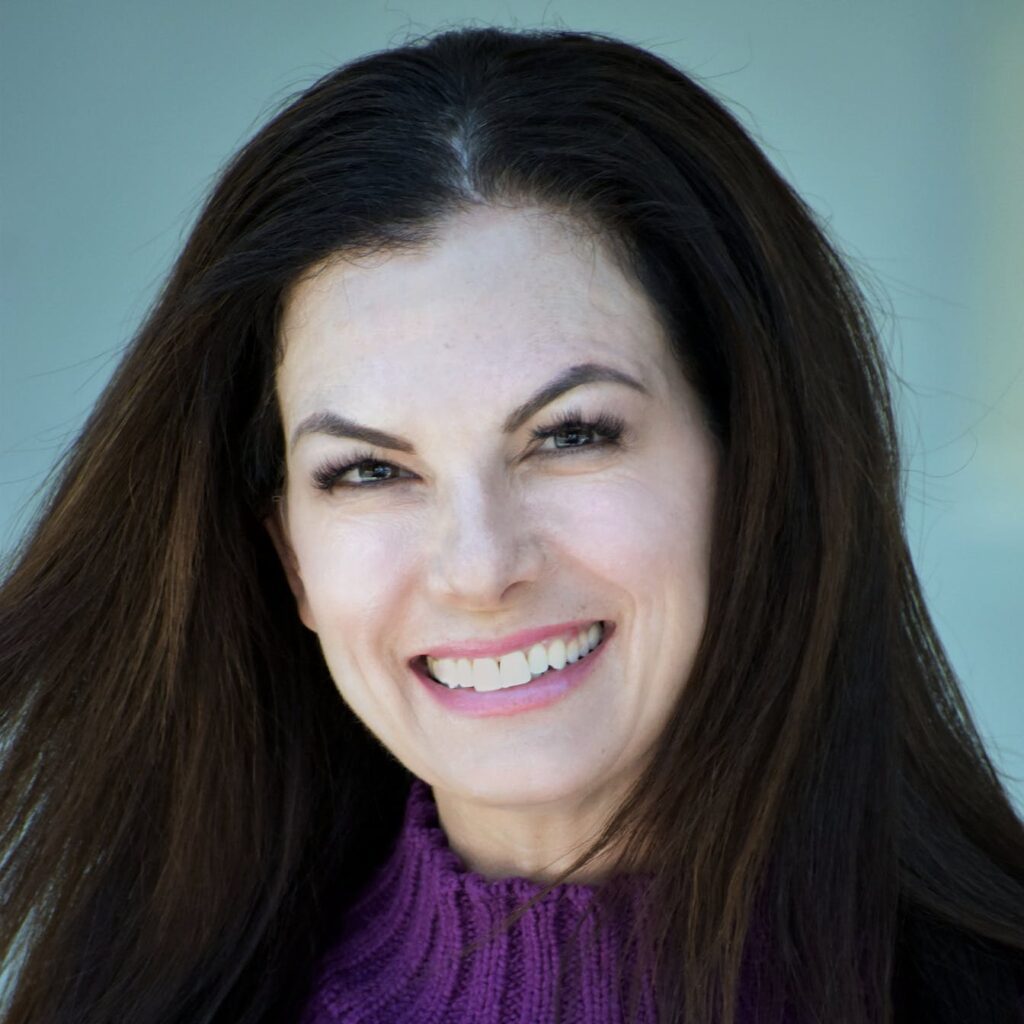
Rebecca graduated with honors from Princeton, had small parts on shows like Friends and CSI, and eventually built a life coaching practice on the one thing she never expected to master: resilience. She’s the author of three international bestsellers, was named Life Coach of the Year by the International Association of Top Professionals, and hosts the Balanced Abundant podcast. Now she mentors burned-out women to leave toxic relationships and magnetize their soulmate, and on this one we dig into why one or two pillars always lag behind the rest, how to build real faith in an area of life that scares you, and why your “no” never needs a justification.
By the end, you’ll have Rebecca’s rules for building a life (and a love life) where every pillar is doing its share of the work.
Watch this episode
In this episode
- The seven pillars of abundance that helped Rebecca stay standing the week her father died and her divorce finalized
- Why borrowing confidence from your strongest pillar can help fix the one that’s falling apart
- How to build real faith in your finances (even in commission-only work) instead of white-knuckling every paycheck
- Why “no” doesn’t need a justification, defense, or explanation
- The seven pillars of attraction: Rebecca’s dating rules for magnetizing a soulmate instead of settling
- Why setting boundaries with someone who’s struggling is an act of love, not abandonment
Timestamps
- (00:01) Welcome and intro: meet life coach Rebecca Whitman
- (01:42) The seven pillars of abundance, and how they came to be
- (04:57) Why one or two pillars always lag, and how to borrow strength from the pillar that’s working
- (07:25) Faith in your finances: how belief, not more money, changes the picture
- (11:02) The three toughest pillars: fitness, romance, and finance
- (12:05) Body positivity, aging, and refusing to be “thrown out to pasture” at 50
- (20:51) Why you don’t owe anyone an explanation for your boundaries
- (23:24) The Humpty Dumpty truth: nobody else can put you back together
- (25:53) What to say to someone who isn’t ready to get help
- (29:43) The seven pillars of attraction, and how to magnetize your soulmate
- (32:00) Where to find Rebecca and her free Abundance Journal
About Rebecca Whitman
Rebecca Whitman graduated with honors from Princeton University and now mentors burned-out women to leave toxic relationships and magnetize their soulmate at any stage of life. She’s the author of the international bestsellers Phenomenal Feminine Entrepreneurs, Business Life Universe, and How to Make a Six-Figure Income Working Part Time, was named Life Coach of the Year by the International Association of Top Professionals, and hosts the top 5% globally ranked Balanced Abundant podcast.
Learn more at RebeccaElizabethWhitman.com, or find her free Abundance Journal and current offers on her link tree.
Favorite quotes
“When you set a boundary, don’t justify, defend, or explain yourself, because you get to own your no’s and own your boundaries.” —Rebecca Whitman
“Don’t do anything out of fear, obligation, or guilt.” —Rebecca Whitman
“When you have these seven areas of life in alignment, you are balanced, beautiful, and abundant.” —Rebecca Whitman
Resources mentioned
- RebeccaElizabethWhitman.com: Rebecca’s website
- Rebecca’s link tree: her free Abundance Journal, courses, and offers, including her seven pillars of abundance program
- Phenomenal Feminine Entrepreneurs, Business Life Universe, and How to Make a Six-Figure Income Working Part Time: Rebecca’s books
Related episodes
- Healing From Narcissistic Abuse: more on recognizing and leaving the relationships Rebecca coaches women out of.
- Journey To Success: Eradicating Stress with Lori Saitz: another guest whose framework starts with getting honest about your values and where your calendar actually goes.
- Trauma Impact: From Codependency to Self-Mastery: for more on the self-worth work behind Rebecca’s “own your no” philosophy.
Subscribe & connect
If this episode gave you something to sit with, follow Phoenix and Flame so you never miss an episode: all apps in one place, or jump straight to Apple Podcasts, Spotify, Amazon Music, or YouTube. And if it moved you, leave a review; it’s the easiest way to help another listener find the show.
Learn more about Phoenix and Flame, connect with Dana, and listen to more episodes here.
Read the full transcript
[Dana] (00:01)
Welcome to Phoenix and Flame. I’m Dana, and this is my podcast on pushing through and transforming even when you feel like a pile of ash. Well, today we have an amazing guest with us. I’m so excited. Her name is Rebecca Whitman, and I’m going to tell you a little bit about Rebecca. She mentors burned out women to leave toxic relationships and magnetize their soulmate at any stage of life. Rebecca graduated with honors from Princeton University, and she is the author of international bestselling books, Phenomenal Feminine Entrepreneurs, Business Life Universe, and How to Make a Six-Figure Income Working Part Time. She was selected as Life Coach of the Year by International Association of Top Professionals, and she hosts the top 5% globally ranked, Balanced Abundant podcast. Rebecca, welcome to Phoenix and Flame.
[Rebecca] (01:07)
Thank you Dana, it’s great to be here.
[Dana] (01:10)
So happy to have you. Now you have a philosophy, the seven pillars of abundance, which I really am interested in, and being a psychotherapist, I can see the backstory of all of these different areas. So I’m just going to kind of back away and let you sort of explain what your seven pillars are and how they came to be, and sort of the backstory of how you got to be in this place where you’re trying to mentor women in these toxic relationships.
[Rebecca] (01:42)
Absolutely. Well, I never set out to be a life coach. It totally blows my mind that I was rated Life Coach of the Year by International Association of Top Professionals. I didn’t know I’d be a published author or anything like that. I actually moved to Los Angeles 20 years ago to pursue my childhood dream of being an actress, and I didn’t realize how hard it would be. I had small parts on big shows like Friends, CSI, and 24, and I had a lot of time to study with great spiritual teachers, people like Michael Beckwith, Wayne Dyer, Abraham Hicks, Marianne Williamson, and through studying these principles and learning about the law of attraction, I was able to make six figures working part time. The one area of my life that I really could not figure out was my love life. I had bad relationship after bad relationship, lots of heartbreak. And when I was 41, I finally forced a marriage. I basically forced a square peg into a round hole. I was miserable in the marriage. I filed for divorce after three years. And as my marriage was unraveling, my dad was dying, and it all culminated in one week, where my dad’s funeral was on a Wednesday and my divorce was finalized on a Friday. And in my last conversation with my dad, he said, Rebecca, I want you to write something. I don’t care if it’s a book, an essay, a magazine article, or a blog. So a few months later, I’m sitting in my financial planner’s office, and he’s like, Rebecca, you’ve lost your dad and your marriage, yet you’re having your best financial year ever. You’re coming in here looking radiant and healthy. I think you should write a book and teach women how you did it. So I was like, absolutely. So I looked at my life, and why I was so resilient is I was dividing my life into seven key areas: spirituality, fitness, emotions, romance, mental, social, and financial. And when I was focused on having a level 10 life in all of these seven areas, I was resilient. Of course I felt my feelings and felt the pain of loss, but I did not fall apart. My health didn’t fall apart. My finances didn’t fall apart. My relationships with women didn’t fall apart. So I call these areas my seven pillars of abundance. And when you have these seven areas of life in alignment, you are balanced, beautiful, and abundant.
[Dana] (04:23)
That’s amazing. And I’m thinking about these seven pillars, and frequently I will see a patient that will come to see me that is doing quite well at work. They’re doing quite well in maybe some of those pillars, but then other ones not so great. They could be a rock star at work, but their wheels are totally falling off their vehicle in their romantic relationships. So what is your suggestion, from your experience, how were you able to get all of these pillars in balance?
[Rebecca] (04:57)
Well, there’s always one or two that are not as high functioning as others. And that’s totally normal. That’s why someone would hire a therapist or a coach. Like myself, the two areas that I felt like were lacking were my romantic life and my emotional life. And all these pillars of life are intertwined. So my emotions were negative, bitter, jaded and cynical. So guess what? In my romantic life, I attracted guys who would make me feel negative, bitter, jaded, and cynical about men. It’s interesting, I think of them as seven spokes of a bicycle wheel. When one or two of the spokes is off, everything is thrown off, and when everything is working, it just spills in. And what I tell my clients, if they have one area where they’re really excelling, like for myself, I was excelling in my financial life but not so much in my romantic life, I thought about what ways of being and what I was doing in my financial life that’s successful. And one of them was, I just was not worried about it. I just had faith that even though I was in all-commission sales, that I would be provided for, that there’d always be plenty of money, that I’d always be taken care of.
[Rebecca] (06:19)
And I didn’t have that faith at all in my romantic life. If somebody didn’t return a text, it would be like a stage five alarm. So I just tried to duplicate what I was doing in the area of my life that was working the best into the area that was working the worst.
[Dana] (06:38)
Got you. So first of all, I like the idea of faith. So how did you have that in the financial realm? Because that is something I hear people talking about, that they don’t have that faith. So I’m imagining listeners hearing you say that, wondering, okay, if I were to start there, how did Rebecca have faith in that area, that she would, the money would be there, that it was always going to support her?
[Dana] (07:08)
Especially if you have single women that are just kind of relying on their own income and feeling a little insecure, kind of unsteady on their pins about that. How did you have faith there, in order to be able to transfer it over to another pillar?
[Rebecca] (07:25)
Well, that comes from having my first pillar, and these pillars are in order of importance for my life, and the first pillar is spirituality. So I have a great morning practice where I write in a journal, I read from spiritual literature, I pray, I meditate. And for some reason, I had faith in my financial life because I had been working in all-commission sales for 25 years, and I’ve just seen through time that even though I started at zero every week, it always just worked out. Also, I think it helped that my parents were affluent. So I just refused to worry about money, which is interesting because my dad worried about it a lot. He was a gambling addict, and he would change his behavior based on if he won or lost at poker. I just think it’s a choice. Just deciding that you are going to have faith that you are going to be taken care of in your finances. I like to say that God didn’t bring me this far to drop me on my head. And if I look back on situations where I felt anxiety, I can look back and know that I’m going to be okay. And most financial anxiety is fear about the future. If we look at the moment that we’re in, we are provided for. We have food and shelter. We have a car. We have a cell phone. We have everything that we need. And I think taking my focus into the present moment, of what is the next indicated action, that also helps a lot.
[Dana] (09:14)
I like that. Like, what is the next indicated action? I find myself in conversations with people where I’m like, what is your next step, because they get so topsy-turvy involved in two things. One, what’s happened in the past, and grinding about I should have, should have, could have, would have, and they’re just ass over elbows in that line of thinking. And then also in the future, they’re five, six, ten steps down the way. What if this? What if, what if, what if? And they get so wrapped up in fear
[Dana] (09:45)
that they don’t have the energy left to do what is just the next step in front of me. What is the next step I’m supposed to do here? So that’s kind of what I heard you just say. It’s like, okay, what is my next step in whatever pillar needs the energy right now?
[Rebecca] (10:03)
Exactly, because I like to call it future tripping, when I get too far into the future. Oh no, what’s going to happen? What’s going to happen? Well, how am I going to do that? But it’s like, okay, I can do the next indicated action, I can do what’s in front of me. And it’s through taking small actions that you can achieve results in any of these pillars. I don’t care if it’s fitness, I don’t care if it’s finding the love of your life, whatever it is, just take the next step, the next indicated action.
[Dana] (10:37)
I like that. From all the people that you’ve spoken with and the interactions that you’ve had with your books and this type of thing, what have you discovered tends to be the weaker pillars overall? What are the ones that people in general, and I know everyone’s different, everyone’s on a different journey, but overall, what have you discovered tends to be the ones that are harder for people?
[Rebecca] (11:02)
I think the three most challenging ones are the second one, fitness, romance, and finance. So those are the three biggies.
[Dana] (11:16)
I will say, I’m thinking of all kinds of things of those pillars. I’m curious about your thoughts on fitness, in terms of females and body positivity and that type of thing. I think somehow men in general, and I’m generalizing, but they don’t seem to struggle as much with that area. So do you think body positivity and accepting ourselves physically, and accepting our aging bodies, does that go under the fitness pillar, and is that something they experience there, or am I off base with that?
[Rebecca] (12:05)
I love this question, Dana. I’ve been on over 100 podcasts. I’ve never been asked this. I absolutely love this question. I think body positivity is a choice. And I feel that women are actually oppressed by the male dominated culture, let’s call it the patriarchy for the sake of this conversation, and they’re oppressed to feel like they’re not valuable past a certain age. They’re thrown out to pasture after age 50, like a cow that no longer can produce milk. And I think one of the things that’s happening in society is women are saying, forget that, it is changing. I think it all started with the show Desperate Housewives, where they showed women in their 40s as sex symbols, and it’s gone all the way to this week where Martha Stewart, at age 81, is on the cover of the Sports Illustrated Swimsuit issue. So it has changed a lot, and it continues to change, because women like you and I and the ones listening to this show are like, we’re not going to be thrown out to pasture when we’re 50. We’re still sexy and beautiful. And we get to choose to say, I don’t believe those old messages that women are not valuable or beautiful past a certain age. And it’s the same thing with body image. Nobody looks like the supermodels in the magazines, not even the supermodels. Everything’s completely airbrushed and filtered and fake. And there’s also a movement now to celebrate your curves.
[Dana] (13:42)
That’s it.
[Rebecca] (13:54)
It’s a choice. It’s a choice just to say, you know what, I might not look like the perfect person in the magazines, but I am going to be the best version of myself today. And I really like fitness because I think that women, we get to be strong. Being strong is more important than being skinny. If we’re strong, we can do things that make our life easier. We can carry our own luggage and our own groceries, and we can walk up and down steps when we’re visiting our kids. So I think strong is the goal. So I believe in body confidence, but I do believe people get to work out to feel more confident, because I’ve never left a workout feeling less confident, only more confident.
[Dana] (14:42)
Yeah, I would agree with that 100%. Working out, fitness, is amazing. And as I’m listening to you talk, I’m also thinking that we as females, we have reached a point hopefully where we’re beginning to want strong physical affirmation for ourselves, as opposed to, I want to look a certain way to appeal to a man. I want to look a certain way so a man will want to have sex with me. Let’s just be real, okay? That’s what we do on Phoenix and Flame. We just speak things as they really are. That’s why a lot of women, we get to the point where we want to be thin, we want to look this way, we don’t want to get old, because we want a man to think we’re attractive. But I think this is all changing. So in that whole fitness pillar and the strength that comes with that,
[Rebecca] (15:17)
I like it.
[Dana] (15:39)
is that mentality, and I see also how that could fan out to impact the other pillars as well. Maybe not all of them, but some of them, particularly like the romantic, that if we’re feeling strong and wonderful and beautiful for ourself, not so that someone else will find us appealing, but that we approve ourself, we affirm ourself, and then I think that strength kind of fans out. What are your thoughts on that, of how that mentality might impact somebody in the romantic pillar, or the mental pillar, or the emotional pillar?
[Rebecca] (16:19)
I think fitness and romance are very connected, because, and I love the comment about women, first I’m going to go back to the comment: women used to want to be skinny or look young because they wanted male approval, they wanted to be sexually desirable to men. And I feel like we are getting over that. But also I’m going to say, women also want to look good for other women. So that’s not healthy either. It’s not about looking fit for male or other women’s approval or recognition. It’s about the journey with yourself, and just wanting to feel confident and sexy. And then that ties into your second point. Yes, when you are feeling strong and confident in your body, because you’ve been moving it and working out, then you are going to be more comfortable in your romance, you’re going to feel more confident on your dates, you’re going to feel more confident ultimately being in bed with someone naked, because you know that you are loving your body, your body is a temple. And we can either desecrate it by saying you’re fat, you’re this, you’re that, I hate your skin, I hate your nose. That is like desecrating a beautiful temple. But when we take care of it through exercise and self-care, I’m a big believer in self-care isn’t selfish. And whether you have a ton of money or a little bit of money, everybody can take a bubble bath, everybody can stretch, everybody can take a walk outside. So I believe that when you are taking care of your body and loving your body as a temple, you are going to make better choices with men too. Because if somebody says, I want to have sex with you on the first date, and you know that’s not a good idea, if you say my body is a temple, I don’t just share it with anyone, I don’t even know you, I feel that definitely changes your romance. So fitness and romance are very connected.
[Dana] (18:30)
Absolutely. I love everything that you’re saying, and that we get to the point where, because of confidence, we’re holding ourselves in a higher regard. So if someone wants to have sex with us on the first date, we’re like, you know, no, I’m worth more than that. You’re going to have to prove yourself a little bit more, because I deserve more. And the whole confident thing is huge, just to have the confidence that I can be who I want,
[Rebecca] (18:46)
Yeah.
[Dana] (19:00)
do what I want, how I want, when I want, and I’m okay with everything. One of the things that I told my patients years ago was, imagine that you’re this huge mural. You go into a museum and there’s this huge mural on the wall, and it has all these splashes of different colors, and that is you. There’s black and there’s yellow and there’s red and there’s orange and there’s green and there’s brown, and there’s all of these splashes that represent you in your life. The problem that we have is sometimes we will walk right up to that mural and stick our nose right in the middle of one black splash and ignore all the rest. But if we would step back and see the whole entirety of it and accept the whole thing, all the splashes, all the colors, are me. I accept that, and I honor that, and I’m going to go forward confident in my life that all of that is me. And as I’m listening to you talk about that, I think about me being, I have the name the Queen of Boundaries. And you have to have confidence to be able to say no, to let your yes be yes and your no be no, and to not feel like you have to justify your no to someone. You don’t, but if you’re confident, you can just say, no thank you, and their discomfort about that is not your problem. That’s kind of a whole boundary issue. But if you have the confidence, if you worked on those pillars that you’re talking about, and you’ve developed those confidences in those areas, then you’re much more likely to be able to set healthy boundaries, which is going to come into play in the relationships.
[Rebecca] (20:51)
I totally agree with you Dana. I like to tell my clients, when you set a boundary, don’t justify, defend, or explain yourself, because you get to own your no’s and own your boundaries. And when you’re justifying, defending, or explaining your boundary, you’re trying to take care of somebody else’s feelings about what you just said, and we don’t have to do that. We don’t have to justify our no. We said no because we don’t want to do something, and that’s enough. That is enough. If we don’t want to do it, don’t do it. I also like to say, don’t do anything out of fear, obligation, or guilt. Because if you show up to an event or a party and you really don’t want to go, you’re tired, you’re not feeling well, you’re feeling burned out, and you show up, you’re not going to be your best self anyway. You’re not going to bring love and light to that event. So don’t do anything out of fear, obligation or guilt. Women are taught that selflessness is good and that selfishness is bad. But when you’re selfish, that’s not bad. That just means that you are honoring your wishes. You’re filling yourself up first. So when you do go out into the world, you can be a better friend, a better coworker, a better wife, sister, mother. All the roles that women play take a lot of energy. And if we’re coming from depletion rather than abundance, then we are not going to be truly of service to the people around us.
[Dana] (22:25)
That is absolutely, everything you said, retweet, ditto. That’s fantastic, because when you talk about boundaries, part of it is honoring yourself. And the other part is not owning what belongs to somebody else, but you have to take care of yourself. I’ve said to my patients before, there’s only one person on this entire planet who has been given the responsibility of keeping you together, just one,
[Rebecca] (22:30)
I’m sorry.
[Dana] (22:54)
and if you don’t do it, then your wheels are going to get wobbly and fall off. And then how are you going to be able to be there or show up for anyone that you love? You can’t. And it’s no one else’s responsibility to keep you together, but it’s yours. So saying no to things that are not good for you, and saying yes, like you mentioned self-care earlier, and it’s like, why self-care is not selfish.
[Rebecca] (23:03)
Right?
[Dana] (23:21)
We can, I think we are both arguing it’s the opposite.
[Rebecca] (23:24)
Yes.
[Dana] (23:26)
So we can care for other people around us, we have to care for ourself first.
[Rebecca] (23:31)
Yeah, I like the little nursery rhyme, Humpty Dumpty sat on the wall, Humpty Dumpty had a great fall, all the king’s horses and all the king’s men could not put Humpty Dumpty back together again. And it’s not going to be other people’s doing anything to put you back together. Ultimately, it’s a decision that you are going to heal from within, and you are going to put yourself back together through having alignment in these key areas of life, and through self-care and self-love, and all the things that having a balanced, beautiful and abundant life brings you. It is your own personal decision. It all starts with a decision.
[Dana] (24:15)
Mm-hmm. So as you’re talking, I’m thinking about a conversation I had recently, about someone who had a relative whose mother was trying to get them to go to rehab. And I was saying, as long as someone else is the one trying to get you to change, that’s not going to work out generally very well overall. Now sometimes it does, but overall, if it’s other people that are wanting you to change, but you are not wanting to change, it doesn’t really pan out very well. So I’m kind of wondering, from your perspective and your experience with the pillars of abundance, if someone right now is listening and maybe they have some significant issues in their life, maybe some addictive problems like I’ve just mentioned, and maybe everyone around them is saying you need some help, you need therapy, or you need to go to rehab, but they can’t quite seem to care about themselves enough to do that, they can’t quite seem to make that decision that you’re talking about, what suggestions would you have to get to that place? Because I think sometimes logically we know
[Rebecca] (25:20)
Mm-hmm.
[Dana] (25:29)
and we see people out in the world that seem to be doing all the right things and making all the right choices, their life is turning out great, and secretly we kind of hate them. We kind of love them and hate them at the same time. So if someone is listening and they’re in a position where they would like to make better choices but they don’t quite seem to be able to make that choice, what would you say to them?
[Rebecca] (25:53)
Well, this is a great question, because I have been going to Al-Anon, which is for people who are affected by others’ addictions, for 23 years. And I would say that if somebody wants to drink, there’s nothing you can say or do to stop them. They have got to hit bottom, and the elevator goes down different levels for different people, as they need it to go. Some people just get a car repossessed, other people are homeless, some people get a divorce. You have to allow someone the dignity of their own path, and their bottom is their bottom. And some people will never hit a bottom. They’ll be a functional alcoholic, or they’ll end up ODing. That’s why Al-Anon exists, because it gives the people who love addicts and alcoholics support, but you can’t make anyone want to go to rehab or treatment. You can’t make anyone want to give up their addiction. You can just be loving and supportive and set boundaries so that their addiction and behavior doesn’t affect your life. And it’s about giving people the dignity of their own path. Yes, there are rehabs, there are 12-step meetings, there are therapists and coaches that can help you on this journey, but you’ve got to be ready. So you can’t make anybody want to give up an addiction, it’s a very personal choice. And I know for parents, having tough love helps, and it can help a child alcoholic hit bottom faster. If you’re enabling them and giving them your credit card and letting them come home at five in the morning drunk and high, and not setting boundaries, that actually prolongs their bottom. So having boundaries around their behavior, where I’m going to lock the door if you don’t get home at midnight, and I’m going to cut off using the credit card if I see that you purchased alcohol, setting boundaries can help them hit it faster, but it’s a journey between the addict or alcoholic and their own path.
[Dana] (28:12)
I love that. I love what you’re saying. And of course, anytime anyone mentions boundaries, I’m like, yay, because that is a way to prevent codependency from happening. Because like you said, maybe there’s people listening who have a loved one who isn’t really doing well in the pillars, and they’re trying to figure out, I love them, but how do I interact with them? And you love them, but you also have the right to set boundaries and not allow the natural consequences of their choices
[Rebecca] (28:17)
Thank you.
[Dana] (28:42)
to fall on your head continually. The natural consequences of their choices need to fall in their yard, not in yours. And that way, that will help them reach their bottom quicker, so they can possibly make a decision to turn around and do something helpful. Now, we’re just about wrapping up, but I did want to ask you a question. I know you said earlier that we talked about the law of attraction, and I’ve seen this so much, about how dysfunction attracts dysfunction, and healthy attracts healthy. So when you’re going out in the world and you have areas of dysfunction, you tend to attract that, and the reverse is also true. So you have a question about how to magnetize your soulmate, how to create that attraction from them to you using the seven pillars of attraction. Tell us about that as we wrap up, because that sounds very intriguing to me.
[Rebecca] (29:43)
Yeah, well, the seven pillars of attraction are important, and I’m just going to summarize them because we’re at the end. It’s about cleaning up and forgiving yourself for your past relationships. It’s about getting clear on what you want. And then it’s about going out and stating your dating purpose. Women are taught, oh no, don’t go on dates and say you want a lifetime partner or a husband or you want to be a mom, because the people are going to go running away for the hills. Well, I say that’s good. Let them run away. You’ve wasted a lot of time giving your heart to the wrong people. If you’re clear about what you want, then you’re going to be able to track what you want. So once you’re comfortable stating your dating purpose, then I have some strategies about dating. I don’t believe we should date one person. We should date at least three people, because we want to just socialize. I’m not talking about being intimate. I’m talking about socializing, because you want to keep your options open and let the best man win, or the best woman, if a man is listening. So you don’t want to just be prematurely monogamous with one person. And then when you commit, commit. People in this culture have the BBD syndrome, Bigger Better Deal. As soon as they get a boyfriend or girlfriend, they’re like, oh, look at that shiny object over there, maybe they would be better for me. And then they cheat, or they can’t commit to that person for a year. Give this relationship a year of your life to see if it could possibly be the one. And then at the end of the year, decide. And there’s one other thing that I teach as far as magnetizing your soulmate, is not to have intimacy, not to have sex, until you have negotiated exclusivity, and that means sexual and social monogamy. So a lot of people will negotiate sexual monogamy, but the other person’s still able to have lunch and coffee dates and FaceTime with other single people. And it’s like, no, negotiate sexual and social monogamy. You’re worth it. If they’re not willing to do it, then bye-bye.
[Dana] (32:00)
I love those things. Oh my gosh, that just piqued my interest, and I’m sure the interest of my listeners, of what really to dig in and be able to read more of what you’re talking about. So we want to make sure that we get them to you, get them to where they can get more about you. So what I have here is RebeccaElizabethWhitman.com. Is that where you want them to go?
[Rebecca] (32:05)
Yes, that’s my site. We’ll have to do another podcast and dig deep into the seven steps to magnetize your soulmate. RebeccaElizabethWhitman.com. You can find me on Instagram, Twitter and Clubhouse at Rebecca E. Whitman. And then I’d also like to give a gift to your listeners. I have an amazing abundance journal that I’ve been doing every morning for 30 years. It absolutely reframes my mindset. It turns my thinking from negative to positive. It helps me manifest in all these seven areas. And I am going to give your listeners the Abundance Journal as a gift, so I will include that link, Dana. And also I have a link tree that has all my current courses and offerings and different fun things. I have seven pillars of abundance in seven days for $7, just so you can immediately get some movement and some shifts. So I have all kinds of fun things on my link tree as well.
[Dana] (33:29)
That is awesome. Thank you so much. Well, Rebecca, this has been awesome. And you guys don’t know, but Rebecca was so patient with me in the beginning. I’m still having some technical issues. I got this new laptop and I was all aggravated, I couldn’t get it to work right. So she was so, so patient as I was kind of working my way through that. Thank you for your patience, and also your grace and your time and your energy that you’re willing to come and
[Rebecca] (33:52)
For us.
[Dana] (33:58)
expend for my listeners to benefit from that. Thank you, Rebecca, so, so much.
[Rebecca] (34:02)
You’re so welcome. It was a pleasure being on your show, and patience is something that I love to cultivate. I like to say I’m passionately patient.
[Dana] (34:12)
I love that. And it was well appreciated today, I’ll tell you that much. Well listeners, I know you’ve heard something today that has just been amazing for you, and probably you’re thinking, I have a good friend, I have a co-worker, I have a relative that would so benefit from what Rebecca has to say, about her seven pillars of abundance, and then also possibly later we’ll talk more about the seven pillars of attraction, and wanting to know more about what Rebecca has to share.
[Dana] (34:42)
So take this episode, copy and paste the link, put it in your texting, put it in your email, put it on your favorite social media platforms. Let’s really expand our Phoenix and Flame community, and really reach out and share what Rebecca has to say, so we can support each other and be there with one another, as we’re trying to walk our individual paths through this life, through grace and through acceptance and through just non-judgment, as we just are there for one another. I hope you’ve had a great day. I hope the rest of your day goes fantastic. This is Dana on Phoenix and Flame.
Are your work boundaries supporting you—or quietly draining you?
Take my free Work Boundaries Quiz and find out where you stand.