First aired May 10, 2026
Picture a school counselor’s office with a shoebox of sand tucked under the desk. A parent is on the phone getting heated, and while she listens, my guest slips off one shoe and presses her foot into the sand until she can practically smell the ocean. Thirty seconds later, she’s steady again. That trick is one of dozens Dianne Andree uses to reclaim her energy when she’s burned out, and she’s spent more than 25 years in education and mental health learning how.
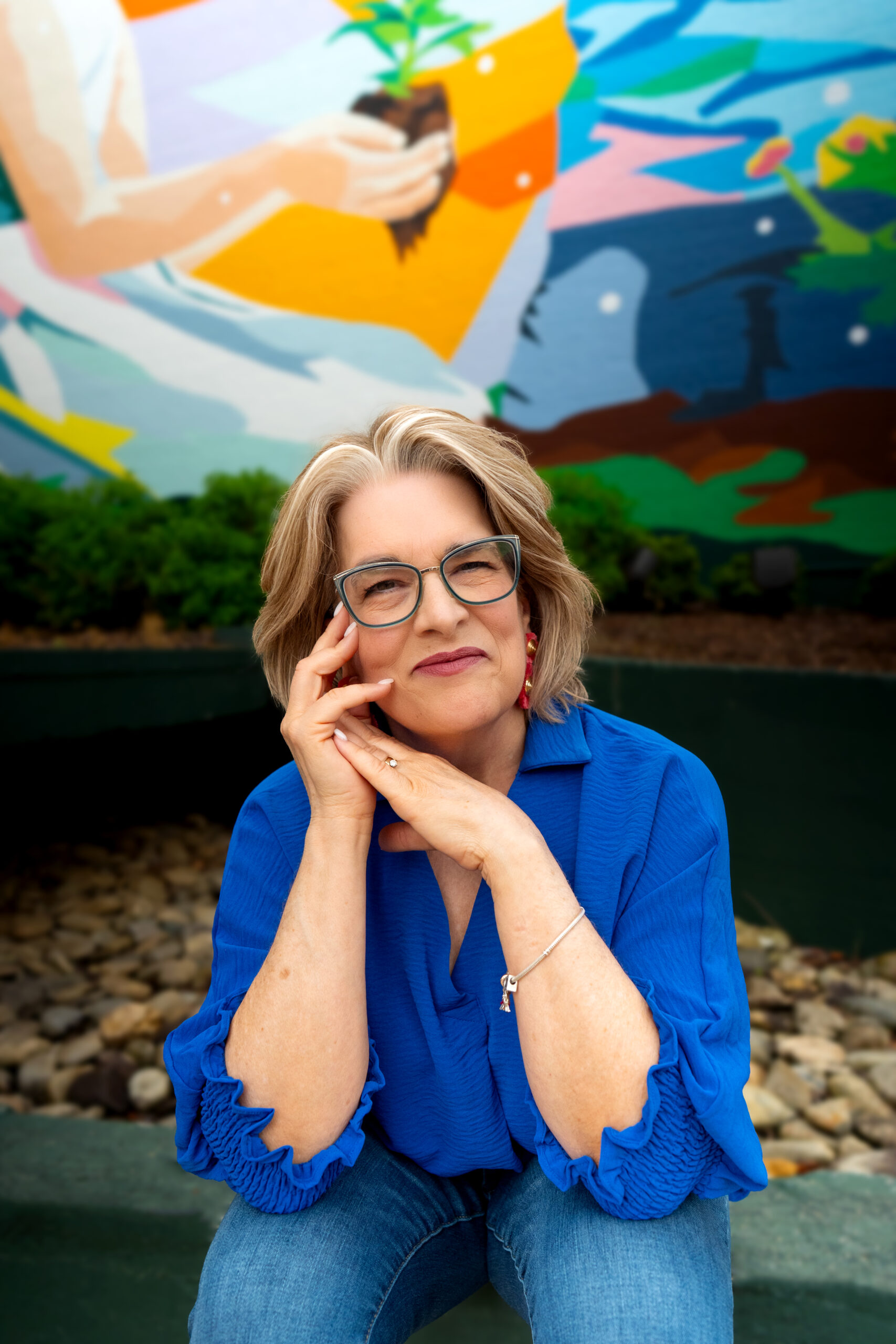
Dianne is an award-winning international speaker and burnout prevention specialist who stood on the brink of burnout herself as a school counselor and administrator, to the point she nearly left the field entirely. We get into the difference between American “hurry culture” and how the rest of the world treats rest (something she noticed firsthand representing the U.S. on a panel with a dozen other countries in India), why “I should be doing more” is the thought that burns high performers out the fastest, and her “power of pause” method for staying present instead of comparing your path to everyone else’s.
We also cover the four biggest energy drains Dianne sees most in her coaching, and why “stop shoulding on yourself” might be the best boundary advice you hear all year.
Watch this episode
In this episode
- Why reclaiming your energy when you’re burned out starts with noticing the sleep that never actually rests you
- The “hurry culture” habit most Americans don’t even realize they have, and what other countries do differently
- Dianne’s “power of pause” method for staying present instead of comparing your path to everyone else’s
- The “30-second reset” she teaches for when things start to spiral
- Why “stop shoulding on yourself” beats chasing the next TEDx talk or book deal
- The biggest energy drains Dianne sees most in high performers, and what to do about them
Timestamps
- (00:01) Welcome and introducing burnout prevention specialist Dianne Andree
- (01:23) How she landed in school counseling, and later, burnout prevention
- (08:39) What burnout actually felt like: sleep that never rests you
- (11:28) Small daily practices that helped her cope: music, journaling, drive-time to decompress
- (13:33) Learning to say no, so you can say yes to what matters
- (14:40) Deciding who is an energy drain and who is an energy filler
- (18:03) America’s “hurry culture,” and what she saw representing the U.S. alongside a dozen other countries
- (21:02) Why human connection, not more doing, is the real fix for burnout
- (22:21) The “30-second reset” and getting grounded before things spiral
- (23:23) The shoebox-of-sand trick from her school counseling days
- (26:46) Comparison, “good enough,” and social media’s highlight reel
- (29:11) Harnessing the “power of pause” to sit in gratitude instead of the path ahead
- (32:30) Where to find Dianne, and her free “simple morning routine”
About Dianne Andree
Dianne Andree is an award-winning international speaker and burnout prevention specialist with more than 25 years of experience in mental health, having stood on the brink of burnout herself. She brings powerful insight, authenticity, and practical strategies that help individuals and organizations reclaim energy, focus, and purpose.
Learn more, including her free “simple morning routine” guide, at dianneandree.com, or connect with her on LinkedIn.
Favorite quotes
“Stop shoulding on yourself. Should, shoulda, coulda, woulda, stop shoulding on yourself.” —Dianne Andree
“There’s a lot of things in our life we can’t control, but I can decide where I put my energy. That is something I have complete control over.” —Dianne Andree
“The windshield is bigger than the rear view mirror for a reason.” —Dianne Andree
Resources mentioned
- DianneAndree.com: Dianne’s site, home to her free “simple morning routine” guide and “30-second reset” videos
- Dianne Andree on LinkedIn
- Emory University’s Compassion Center, referenced by Dianne as the source of her cognitively based compassion training certification
- How to Fill Your Bucket, the “cute little book” Dianne mentions on the “you can’t pour from an empty bucket” idea
Related episodes
- How to Spot Burnout Before It’s Too Late: More on catching the early warning signs Dianne describes before you hit rock bottom.
- Overcoming Burnout, Hustle Culture, and Redefining Success: A companion conversation on why hustle culture burns out high performers, and how to redefine success on your own terms.
- Why Your Midlife ‘Crisis’ Might Actually Be Burnout: Another look at burnout as a full-body wake-up call rather than a personal failing.
Subscribe & connect
If this episode gave you something to sit with, follow Phoenix and Flame so you never miss an episode: all apps in one place, or jump straight to Apple Podcasts, Spotify, Amazon Music, or YouTube. And if it moved you, leave a review; it’s the easiest way to help another listener find the show.
Learn more about Phoenix and Flame, connect with Dana, and listen to more episodes here.
Read the full transcript
[Dana] (00:01)
Welcome friends, whether you’re out on a walk, running errands, or relaxing at home. It’s wonderful to connect with you. Joining us today is Dianne Andree. Dianne is an award-winning international speaker and burnout prevention specialist with over 25 years of experience in mental health, having stood on the brink of burnout herself.
[Dianne] (00:04)
Thank you.
[Dana] (00:31)
She brings powerful insight, authenticity, and practical strategies that help individuals and organizations reclaim energy, focus, and purpose. Dianne, welcome to Phoenix and Flame.
[Dianne] (00:48)
Thank you so much for having me, Dana. I appreciate it.
[Dana] (00:51)
This is fantastic. Now you said your mission is simple: to help people banish burnout and make the most of this one life, starting now. So we have this in common, we’re both in the mental health field and we both have this passion for helping people with burnout. I would really like to know how you got started in mental health, because don’t we all have the story of how we ended up here? That’s really interesting to me. And then, what prompted you to move into the area and interest of helping people with burnout? So it’s kind of a double-layered question there.
[Dianne] (01:23)
We all have stories. Right, so thanks so much for the question. I actually decided to head towards the mental health field in 10th grade. I didn’t really know exactly what it was going to look like, but I had a meeting with my — I call her a guidance counselor. That’s the G word, right, that’s a bad word in my industry now, we are school counselors, but I had a guidance counselor. And I say that because she just sat, literally sat in her office, waited for us to come. I really didn’t know what a counselor was supposed to do in a school. However, I knew that no kid should leave an office with an adult in a school building and feel the way that I felt. So it sort of organically started to happen, that I became a counselor. My goal was to avenge her, and I feel like I’ve done that. In fact, it was funny when she retired, they put the little local newsletter out, my mom sent me the clipping so I could cheer and just throw it out. And then last year I received a lifetime achievement award, I called my mom and said, I think I finally, eventually — because girl, you did that long ago. So that’s how I got into the counseling field. And what a lot of people don’t realize is that school counseling and mental health counseling take all of the same coursework, and then the split comes at DSM versus school. I passed the national exam and all that, but then decided not to pursue private practice, and went into the schools and did my thing, and became an administrator, because I felt like I’ve been a natural leader my whole life, and I felt like I could impact more people and more kids if I went into that role. And then burnout came, because, as you said, I was on the brink of burnout myself, because I went to a phenomenal training program. I know of a lot of really good training programs, but the one thing — and I think you could probably say this from your schooling — they don’t really talk to you about, they tell you take care of yourself, they don’t really tell you what that looks like or how to do it. That was not something I had as part of my daily life. And so when I became a leader,
[Dianne] (04:03)
one of the things I always told the interns coming in was, okay, a couple things you need to know. One, you’re on a year-long interview for a job. And secondly, you have got to learn how to take care of yourself now. You have to learn how to do that and make it part of your daily practice so that you don’t burn out. Self-care is not selfish, right? You have to take care of yourself so that you’re able to show up for other people. I always talk about how you can’t pour from an empty bucket. There’s a cute little book out there, “How to Fill Your Bucket,” but it always sparked to me — as women especially, we’ll do a little manicure, a pedicure, oh great, put a few drops in the bucket, and then we dump it again. So you can end up depleted. I found myself there. As a matter of fact, I almost left the school counseling profession. I would not have avenged my counselor had I done that. And by that time, I’d already put three sexual perpetrators in jail, and that’s probably, of all the awards and accolades, what I’m most proud of. But the reality is that I really was burned out, and I was going to become the statistic, like the first five or six years of education. It was actually in my search to leave the field that I reignited myself. And then after the pandemic, I was seeing so many really good people leaving the field early, or leaving literally the day they hit year 30, they were out, and that used to not be the case. That is really how I got into the burnout prevention specialty. Additionally, the last school system I worked in, I had a really amazing opportunity to partner with Emory University and their compassion center — if you’re not familiar with them, please Google it, they do incredible work, they’re launching an online platform where you can learn cognitively based compassion training. We were also doing social-emotional learning for kids. Working with them, I was able to get some certifications, was able to get a full-expense-paid trip to India to give an update to the Dalai Lama Foundation about the work we were doing, and that was a game changer. While I was there I was like, okay, it’s time, just like when you went into administration to broaden, it’s time for you to broaden again. That’s why now I’m able, luckily, to retire, and I’m a consultant and a keynote speaker.
[Dana] (06:37)
Oh wow. You sound like the exact person I’m trying to reach, the high performer. I’m wondering, you talked about being a leader, and it’s been my experience, because I’m a natural leader as well, and I was wondering what your experience was that — when you have leaders and people that have what I call a light out in the world, people are drawn to them like moth to flame. When you have that light, that passion, that energy, you’re a natural leader, that’s wonderful. But there’s so many people and clients and projects and things that are drawn to you because of that light, that intelligence, that passion, and it sets people up for burnout, because they’re doing what they love and they want to keep doing it, but there’s only 24 hours in the day, there’s only so much energy that we have. I’m wondering if you wouldn’t mind hovering over your experience of when you were out there doing your thing, being that light, being in education, making things happen. What did burnout feel like to you? Because I think we talk about it, but I think some people are listening and thinking I might be burned out, but I’m not sure. And we as women, we’re just used to keep effing going, right, you just keep going. So you don’t even think about, am I burned out? And even if we were, so what, I have to keep going. I think we need to pause and hover over this experience of high performers and burnout, and personally, what was that like for you in that moment?
[Dianne] (08:39)
I appreciate that question, because rarely have I been asked. So here’s the thing about burnout: people need to be aware, because it is different for everybody, but some telltale signs I know is — you sleep, like I literally sometimes felt like I was so drained that I was asleep before I hit the pillow, but I never woke up rested. There were nights I remember saying, like, Dianne, clear head, clear — because I would sort of be asleep, but my brain was just going and moving and doing. There was one point, when I had particularly a lot of projects going on, that I put a notebook next to my bed so I could jot down words to spark my — because otherwise I’d be like, you can’t forget, you’ll deal with it in the morning. But I would wake up and I could not wait to go back to sleep. I remember one time looking at my bed and thinking, oh, I can’t wait to get back to you — that’s not normal, I was in my late 20s, early 30s. What is happening? And I think for me, it was all of a sudden a lack of energy. And because you don’t want to look like you’re not doing the job, you put on the show, which drains you even more. The reality is, at the end of the day, I wasn’t saying no, I wasn’t prioritizing myself, I wasn’t prioritizing my health. At one point I realized it was taking away from my family, because there was so much going on that was drawing my attention. Education, like many other fields, everyone’s like, oh, how nice that you get to work nine to five, you have your summers off — no, none of that. Because for an educator, and in many other fields, everything you hear, you see, you read, you’re like, oh, how can I use that, how can I have that as an example, or oh, I don’t want to use that one as an example, that’s coming up on the news, I got to make sure that if that comes up in conversation I divert it, and bring them back around to things. I realized I was a little too much of the job, and I had kind of lost who I was in the process, and I wasn’t taking care of myself, I wasn’t doing my crafting anymore, I didn’t have the energy or interest in those kinds of things. But the only thing I kept up consistently was music, listening to music, because music is one of the things that’s my go-to. In fact, just getting ready for this, I put on my hype music.
[Dana] (11:24)
I love it, love it!
[Dianne] (11:28)
So I think that was one of the things. And then I learned a practice of writing down some things, so I could literally take it off my mind — writing some things down that, okay, this day is done, but these are things I can look at tomorrow and see where they fit in the priority list. I also made sure that I didn’t work too close to home, because I needed the drive time to decompress.
[Dianne] (11:56)
And what I was finding, when I was really starting to get burned out, it was the sleep, it was the lack of energy, it was the loss of interest in other things, and really not going in with the same verve I wanted to. I had someone to avenge, Dana, right, I had work to do, I had to have that energy I wanted. It was like, how am I going to take care of myself, how am I going to do that? And realizing that part of taking care of myself was learning to say no. I will say that took me a little longer than some of the other things. I put in daily practices of walking and drinking water, because that’s part of the health thing, and we think, oh, it’s just water — no, the body needs water to function. I can go on a whole rabbit hole with that, because when I was preparing to leave education,
[Dianne] (12:54)
I actually went to massage therapy school, and did a lot — everyone’s like, oh, my neck hurts, my shoulder, this is what usually happens. But the reality is, I learned a lot about the importance of water, for your organs to run, your muscles, your tendons, and most importantly your brain, and what happens if you don’t take it in. So I won’t go down that rabbit hole unless you want to, but I wasn’t even drinking water for myself. So it’s like, okay, here are the simple things I can do, I can
[Dianne] (13:23)
drink water, I can make sure I had that drive time to decompress, I could write those lists so I could take it off my mind, and it actually helped me sleep better too.
[Dana] (13:33)
I love that. And I love that you’re talking about learning how to say no, which is hard. Of course, I’m known as the queen of boundaries, I’m passionate about that, I’ve got a story of my own behind it. But I think what some people don’t understand is that when we’re saying no, we’re saying no so that we can say yes to what really matters.
[Dana] (14:02)
We want to say yes to things, but we’re not able to say yes to the things that really matter to us if we’re saying yes to every damn thing.
[Dianne] (14:10)
Well, and you said earlier, there’s seven days a week we all get the same seven days, 24 hours a day, and you have to decide with whom and how you spend your energy. And I think one of the things that came with, and this is part of maturity, right — there’s things people always say, oh, wouldn’t you like to be 20 again? I’m like, only if I could have the knowledge and experience I have now. And of course, when I say high school, there’s not enough money in the world
[Dianne] (14:40)
to send me back there. But the reality is, with some maturity comes a little bit of discernment, and you start to tune into who is an energy drain and who is an energy filler. You get excited to be around them, and not, when you see their number come up you’re like, okay, I can do this — not that you’re going to cut them out, but you can also choose to limit the amount of time
[Dianne] (15:10)
you invest, and how much you talk to them. I think that is what has made such a big difference, deciding with whom and how and where I want to put my energy, so that — I don’t mind giving, but the truth is you’ve got to get, and that’s where the no comes in. If this is not going to fill me, if it’s not going to energize me and make me feel better and be a better person and live a better life, it might not be for me. Lately I have really found myself, not just because it’s the new year, I think because there was a little bit of downtime, but I stopped and said, okay, what are all the things I’m doing, and what do I need to let go? I’ve let go about three or four that weren’t helping me and my business and helping me to help others.
[Dana] (15:40)
I love that reprioritizing and looking at it from a different point of view. And like what we were saying earlier, when we have a lot to give, especially for us in the mental health field, most of the time we’re really good listeners, and that is like gold to people. So we have to be able to put that boundary down, because other people are not going to do that.
[Dana] (16:34)
Making sure that we can keep going. I love the examples you’re giving about prioritizing and giving people limited time, that other people do not get to decide how much of your time they’re going to take, you get to decide how much of your time you’re going to give. It’s amazing how many people are stunned by that, it’s like this epiphany they have — no, your time is yours, not someone else’s to decide.
[Dianne] (16:51)
Exactly. It’s like that meme, the givers have to watch their boundaries because the takers have none. You have to — that’s it, there’s a lot of things in our life we can’t control, but I can decide where I put my energy, that is something I have complete control over.
[Dana] (17:22)
I’m wondering, with the clients you’ve interacted with, and the colleagues and other people you’ve seen, because you’re an international speaker and all these wonderful things, what in your wisdom and maturity have you discovered, what do you think is maybe the top three obstructions people have to
[Dana] (17:51)
being able to keep gas in their tank? What do you see as the top three things that cause people to get burned out the most, that you hear about the most?
[Dianne] (18:03)
Yeah, so having been on these international panels and spoken with these groups — when I was in India, there were, I think, 10 or 12 different countries represented, and none of them had the U.S. hurry culture. None of them had this “I have to, I have to, I should be.” I remember in my first marriage, we had driven up to visit his family, they are the most lovely people, but I slept till, we got in really late, I think I slept till 7:30 or 8. They’re like, well, look who’s sleeping the day away. And that kind of flipped a switch for me, I was like, I must, I need to do more, I’m not using my time well. And I don’t think that’s just that — I think people look at social media and say, oh, look at all they’re doing, I need to be doing that. Our world has gotten faster, and it makes it more challenging to put on the brakes.
[Dianne] (19:16)
And it’s not that you can’t, but we have to choose the brakes. In fact, on my website I give out this thing called a simple morning routine, and it gives the backing behind, don’t get on your phone for 15 to 20 minutes, and the reason is that you literally change your brain’s waves, you flip it, so now you’re in this mode from just waking up. Your brain needs time, we are designed to take a hot minute just to get up and get going. So that’s my simple morning routine, it talks about a few things like that. I think that’s the number one, we are in this horrendous hurry culture. When I was a kid we called it keeping up with the Joneses, and that’s still there, it’s part of the hurry culture, but also this need for stuff, and so, I have to be busier because then I’m working harder. Instead, we have to be more efficient and use our energy well. And if we are taking the time to take care of ourselves and fill ourselves and be around people that energize us, even when we’re in those tough energy places, that task I don’t want to do but I have to do for my job — what I would always do is sandwich those between, I love to do this, I hate to do this, but then I get to do this. You try to do it because you have to get it done, but you have to not get bogged down in just working, working, working to get more stuff that’s just going to collect dust and doesn’t really mean anything. We’re getting away from human connection, and I think that’s another big contributor to burnout, people aren’t taking time to connect
[Dianne] (21:02)
on a real level, on a personal level. My family is fascinated by and somewhat annoyed with this — I’ll go to the checkout line, and I’m sure this happens to you, where all of a sudden I come out and I’m like, oh my gosh, that poor man, his wife is in the hospital and this and that, and they’re like, you were in line for two minutes. I’m like, people just tell me stuff, because we’re the good listener. But it’s that human connection we need, and that goes back to what I said earlier about who are you going to spend your energy with, who are you going to invest your time in, so you can keep your energy levels up. So it’s being selective, not over-committing, not being busy all the time, and making sure you make time for human connection. And I’m going to throw in a fourth one: people need to get outside more. We need to get outside, be in nature, feel the sun,
[Dianne] (21:56)
breathe fresh air. I’m not a tree hugger, but I’m not against it. I just think being out in nature is calming and is literally grounding. And when we take time — that’s part of my morning routine, getting grounded before you start your day. That’s so important. One of the things I train on and speak on is quick little 30-second resets,
[Dianne] (22:21)
how to reset yourself when things start to feel like they’re spiraling. If you’re being attentive, even a little bit, you will know when you’re out of sync, and you can just take 30 seconds and reground yourself.
[Dana] (22:34)
I love this. I’ve read some research on grounding, literal ground — barefoot, flesh onto the soil, the sand, the grass, palms of your hand on trees. The research is quite compelling.
[Dianne] (22:35)
It is. And I grew up near the beach, so the beach is my thing. And when I was a school counselor, an elementary counselor, I loved play therapy, but this was before we had kinetic sand, and I kind of got in trouble with the janitor about the sand all over my carpet. So I did change, I used beans, and then I tried rice, neither of which was quite the same, but hey, you do what you do to make it work. But I took that sand
[Dianne] (23:23)
and put it in a shoe box, and put it under my desk. I remember I had this one parent call, and they were difficult — of course, they weren’t really being difficult, they were trying to advocate for their child, they felt like they were hitting up against the wall, but I was the person between them and the wall, and they were really trying to plow through. So I just popped the lid while I’m talking, slipped my foot out of my shoe, and put it in the sand.
[Dianne] (23:53)
This is why those little Zen gardens get sold, right, just the raking. For some of us, the beach is my heartbeat. So when you said sand, I’m like — because I have gotten to a point that I can actually, in 30 seconds, smell the salt water, hear waves, and feel my feet sinking into the sand, where it’s hot on top and cool underneath.
[Dianne] (24:24)
Yeah, but I can go into it in my mind. It took time, it took practice, that was part of my CBC training, learning to nurture, creating nurturing moments for yourself. Yeah, that’s it.
[Dana] (24:36)
So I want to rewind for a minute and get back to a comment you made about social media and the comparison we’re doing, because I’ve personally experienced something recently, maybe you have as well — when you have high performers, we level up, and when we’re leveling up, lots of times we’re exposing ourselves to groups of people who are doing better than we are, further down the path. And you need to, if you want to get better, get with people who are doing what you eventually want to do, so you can learn from them. But what happens is sometimes the comparison thing with high performers gets to be very difficult and can cause burnout, because it’s like, well, have you written a book, are you a TEDx speaker, have you been on this stage, have you been on that stage, do you know so and so — it just goes on and on. So it’s really knowing how to manage those feelings of wanting to get better, while mitigating and managing that comparison, recognizing we’re all on different journeys. I’m curious about your experience and feedback on that, the leveling up, the comparison, but also recognizing everybody’s on a different phase of their journey, let people be on their own journey. Otherwise you’re always in, oh my gosh, oh my gosh, like you said, the modern-day keeping up with the Joneses, especially if you’re a high performer and you’re leveling up,
[Dana] (26:17)
then it’s like, I’ve got to be a TEDx speaker, I’ve got to be an author, I’ve got to do this and that and the other, and I’m not good enough, I’m not okay. It all boils down to that. There’s a book somebody recommended to me a while back called “How to Be Good Enough.” And I think with high performers, that’s another level, because most of us, our self-esteem, we’ve got that on lock, right, we’re good with that.
[Dana] (26:46)
But the “good enough” can come in in the dark underbelly, when you’re comparing yourself to other people through social media or other groups, thinking, well, I’m not good enough until this, until I accomplish that, until I have that, until, until, until. And then we’re like, excuse the language, just, screw it, right, I’m tired, I’m going to give up. And that’s when burnout
[Dana] (27:10)
threatens to come in. I was just wondering your experience, or people you’ve been around that have gone through something like that.
[Dianne] (27:17)
Well, I think everybody has, whether it’s on social media, in real life, or whatever. What I think makes social media even harder is that so many people, the things they’re posting are full of, well, it’s not real, right, because the reality is you can put anything you want, your family can look
[Dianne] (27:42)
perfect, right. I always think of that line from Steel Magnolias, they look like they’re carved out of cream cheese, just sitting and smiling so perfectly. That’s not real life, nobody looks like that except in the daytime stories, where they’re the only ones dressed to the nines to go to the grocery store. There are plenty of times we look terrible, we feel lousy, we’re all going to have a moment. I think part of it, and part of what I’ve always talked about, even before I came to my don’t-give-a-shit mid-50s, is stop shoulding on yourself. Should, shoulda, coulda, woulda, stop shoulding on yourself. Because, as you said, and I’m glad you said what everybody says, “I’m behind” — that’s how people feel. But the reality is, and then you gave the right framing of,
[Dianne] (28:41)
we’re just where we are, we’re just on a journey. Yes, you need to look at people who are further down that path. But I’ll also say, I know plenty of people further down that path who have no gratitude for where they are and what they have now. And there’s actually a friend of mine who just invited me to a gratitude app, where you create a bubble
[Dianne] (29:11)
with some people, the people that feed your energy, and every day we post and comment and get a little prompt to do it, which is great, because the reality is it could all be gone tomorrow for a million different reasons. So if I keep looking down the path, down the path, down the path, the path is never going to end. If I can sit in now — and that’s what I talk about, my whole talk is around the power of pause, harnessing the power of pause, not just to reset,
[Dianne] (29:41)
but to sit in gratitude, what do I have now. This past year my family has had to navigate some health challenges, kids, adults, everybody, and one of them was getting fussy about it, and I said, hold on, let’s be thankful that we have access to healthcare where we can actually address these things, because that’s not a privilege everybody gets.
[Dianne] (30:12)
It’s about how you frame things, and the mindset, but you’ve got to stay in the now, this is all we got. I always say, you’ve heard it before, the windshield is bigger than the rear view mirror for a reason, because I don’t want to be looking back that much, and I can’t steer forward looking back. I have to be looking out, and I need to have the widest view I can, in order to make the right decisions and choices. So it’s about getting present.
[Dianne] (30:41)
And yes, I believe in having goals, yes there are things you want to do and things I don’t want to do. I’m hit up all the time off of my links, “I loved your post, have you ever thought about writing a book?” Yeah, I’ve thought about it, but I’m not writing the serious book. If I write a book, it’s going to be a fiction book — you have some elements, but it’s going to be fictional. If I ever wrote a serious book, it’s going to be for kids, not adults. There’s plenty of things out there for adults, and they’re not taking advantage of them as it is.
[Dianne] (31:10)
I think you have to decide, this is all I got.
[Dana] (31:17)
So I’m going to make a brief comment about that, and then we’re going to get people geared to where they can reach you, because we’re about out of time. There’s a scripture in the Bible that talks about how life is a vapor, our life is a vapor. And I think about that occasionally, we’ve both reached a stage in life where we get that, it’s like, oh my gosh,
[Dana] (31:46)
it’s just not worth it. It’s just like, okay, how do I want to spend the rest of my vapor? Life does feel like a vapor, it goes so fast. And that does give us some power to decide, okay, I’m not going to get jacked up about this, it’s not worth it, I’m not going to go after this or that, even though so-and-so is doing it, because I don’t give a rat’s ass. It’s just how do you want to spend the rest of
[Dana] (32:12)
your vapor, your time, and just stay in the moment and enjoy that and have that gratitude. For the listeners and viewers tuning in thinking, oh my gosh, I have to find out more about Dianne, where do you want them to go?
[Dianne] (32:30)
So if they want to follow me on socials, that’s my handle on Instagram. On LinkedIn, it’s my full name. My website is dianneandree.com, and it’s in the process of being updated right now, but in the resource section is that free simple morning routine, and it talks about the science behind the things I suggest. I also have videos on there called the 30-second reset.
[Dianne] (33:00)
There are videos I’ve taken, things that have struck me. If anybody would like to drop me a line and say, hey, could you add this, or I have this, I’ll share, or whatever, I’m happy to put it up there too. But it’s just 30 seconds — there was one of the ocean, there’s one in our park where I do my walking, one was just the morning light coming over the meadow, another was the day after rain, the water was rushing a little more, this tiny waterfall. So the thing I would like to say is,
[Dianne] (33:30)
do one nice thing for yourself today. Ask your listeners to do one nice thing for themselves today, even if that’s just stopping, pausing, and having a really good glass of water. Because I could grab my little drink here and go, oh, that’s great, or I can be intentional about what I do — I’m reaching, I’m lifting, ooh, the cup is cool, it’s dripping with a little bit of sweat, how does the straw feel when I put it in my mouth, what does it taste like, can I follow it all the way down. Just create moments for yourself throughout the day, tiny moments, and that’s going to help us all with our wellbeing. Follow me for more tips.
[Dana] (34:13)
That’s fabulous. Also noticing the cheerful red color of your drink, I was noticing that. All right, Dianne, I appreciate you so much. I appreciate your energy and your knowledge and your willingness to come on and spend your time with us on Phoenix and Flame. Thank you so much.
[Dianne] (34:24)
Yeah. Thanks for having me. Have a great week.
[Dana] (34:39)
All right, listeners and viewers, I know you’ve heard multiple things today. I want you to take this podcast episode and copy and paste the link, send it through text, send it in email, put it on your favorite social media sites so we can grow our Phoenix and Flame community and let people know you are not alone. I hope your day is great, I hope the rest of your day is fantastic. I’m Dana, on Phoenix and Flame.
Are your work boundaries supporting you—or quietly draining you?
Take my free Work Boundaries Quiz and find out where you stand.