First aired April 12, 2026
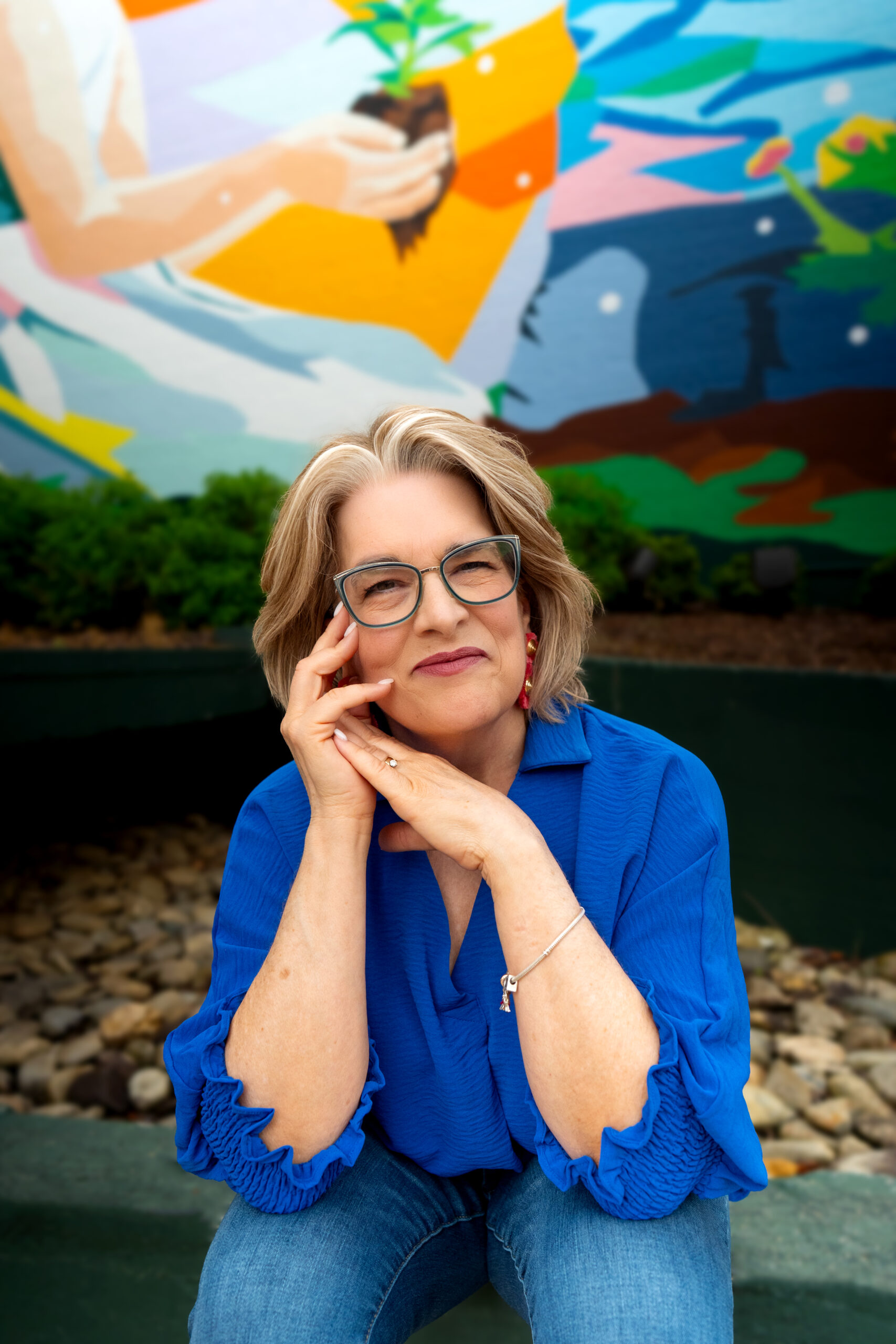
Picture an 18-year-old walking into the office of the disability advisor at a college she’d already decided to skip, after a neuropsych test predicted she probably wouldn’t succeed there, and asking: “What classes can you take with half a brain?” That’s a true story, and it’s how this episode on finding purpose in your biggest struggles gets going. It belongs to my guest Holly Kostrzewski, who sustained a traumatic brain injury at 18 in a car crash and had to relearn to walk, talk, and read from scratch, living back home with her parents until she was 29.
Holly is an international keynote speaker, consultant, and storyteller who has since inspired over a million people across the U.S., Canada, and New Zealand, and her story doesn’t stop at one flame. Fourteen years after her injury, her dad became a paraplegic and she became his caretaker. Then, after 22 years as a public servant, she lost her federal job and had to figure out who she was without the title. Out of all three came her keynote “The Junk Drawer”: the idea that everybody’s got a drawer of stuff they’re too ashamed to show anyone, and the good stuff is hiding right there next to the junk. We get into why shame keeps that drawer shut, my yard boundary metaphor for deciding who’s earned the right to your “tender bits,” and why “at least it’s not cancer” might be the worst thing you can say to someone in pain.
If you’ve ever felt like less of a person because of a job, a diagnosis, or a body that doesn’t work the way it used to, this one’s for you.
Watch this episode
In this episode
- Why finding purpose in your biggest struggles starts with naming the flame that burned you down (Holly’s “three burns” framework)
- The stubborn question that got Holly back into college after a neuropsych test said she probably wouldn’t make it
- Why shame keeps your “junk drawer” shut, and what happens when you finally open it
- Dana’s yard boundary metaphor for deciding who’s earned the right to hear your “tender bits”
- Why “at least” comments shut down grief, and what to do instead
- How to tell if someone is a safe person for your hardest stuff before you hand it to them
Timestamps
- (00:01) Welcome and introducing keynote speaker Holly Kostrzewski
- (01:51) The car crash at 18 and the coup-contrecoup brain injury
- (03:00) Relearning to walk, talk, and read, and failing therapy along the way
- (04:56) “What classes can you take with half a brain?”
- (09:31) Burn number two: her dad’s fall and becoming a paraplegic
- (13:46) Burn number three: losing her federal job after 22 years
- (14:31) Building “The Junk Drawer” keynote
- (20:03) Why we hide our junk drawer: shame and “am I enough”
- (22:07) Dana’s yard boundary metaphor and vetting people for your “tender bits”
- (26:19) The “at least” comments that shut down grief
- (31:14) Where to find Holly, and a plug for Mic Drop Club
About Holly Kostrzewski
Holly Kostrzewski is an international keynote speaker, consultant, and storyteller who has inspired over a million people across the United States, Canada, and New Zealand. A survivor of a traumatic brain injury at 18 and now caretaker to her paraplegic father, she built her signature keynote, “The Junk Drawer,” around the idea that our hidden hard stuff is where real connection (and humor) actually live.
Learn more at hollyspeaks.live, or follow her on Instagram.
Favorite quotes
“What classes can you take with half a brain?” —Holly Kostrzewski
“Shame, I think, is one of the heaviest things to carry.” —Holly Kostrzewski
“You have to just remember you’re more than any job and you’re more than anything that happens to you.” —Holly Kostrzewski
Resources mentioned
- HollySpeaks.live: Holly’s speaking site, home to her “Junk Drawer” keynote
- Holly Kostrzewski on Instagram
- Mic Drop Club, the women’s public speaking group where Holly and Dana are both hosts
- Brené Brown’s “empathy vs. sympathy” video, referenced by Dana
Related episodes
- How to Reclaim Your Power from Shame: More on the shame Holly describes carrying about her brain injury, and how to loosen its grip.
- Victory Over Quadruple Amputation: Interview with Wendy Wallace: Another rising-from-the-ashes story about rebuilding identity after catastrophic physical loss.
- Boundaries – Why Can’t I Set Them?: A deeper dive into the yard metaphor Dana uses here to explain who earns the right to your “tender bits.”
Subscribe & connect
If this episode gave you something to sit with, follow Phoenix and Flame so you never miss an episode: all apps in one place, or jump straight to Apple Podcasts, Spotify, Amazon Music, or YouTube. And if it moved you, leave a review; it’s the easiest way to help another listener find the show.
Learn more about Phoenix and Flame, connect with Dana, and listen to more episodes here.
Read the full transcript
[Dana] (00:01)
Welcome friends, whether you’re out on a walk, running errands, or relaxing at home. It is wonderful to connect with you. Joining us today is Holly, now Kostruski, did I pronounce that?
[Holly] (00:15)
It’s stressful to say, Kostresky.
[Dana] (00:18)
Kostrowski. Because I meant to ask you that beforehand and then I forgot all about it. So now I’m asking you.
[Holly] (00:22)
It’s okay. I forgot to say it too. I usually always say it. Yeah, K as in the word stress and K as in the word Keith.
[Dana] (00:28)
I’m going to write that down right now. So from now on, I’m going to pronounce it the right way. I have a thing about mispronouncing people’s names. I don’t like to do that. So Kostresky, right? Got it. Now, I know Holly from Mic Drop Club. We’ll get into all of that, but Holly is an international keynote speaker and consultant
[Holly] (00:38)
Correct. Yep.
[Dana] (00:55)
and storyteller who has inspired over 1 million people across the United States, Canada, and New Zealand. She is a survivor of a traumatic brain injury at 18 and the daughter of a paraplegic, and brings a rare blend of lived experience, humor, and heart to every stage and conversation. Holly, welcome to Phoenix and Flame.
[Holly] (01:21)
Thanks Dana, I’m so happy to be here.
[Dana] (01:23)
Oh my gosh, there’s so much, you have experienced so much in life and I love the way that you’ve taken your journey and turned it into something that will help other people. You mentioned keynote speaker, traumatic brain injury, and you have your own business. Where would you like to begin? We will just kind of weave back and forth and get your story told.
[Holly] (01:51)
Yeah, I guess I can just start at the beginning. So I sustained a traumatic brain injury at age 18 in a motor vehicle crash. My passenger was not wearing his seatbelt, and so his body flew into me and I sustained a coup-contrecoup brain injury, and my ear imploded, or burst, from the impact of his head hitting my head. And I always like to say that because I’ve also been a public servant and worked in traffic safety for 22 years. And so that’s why it’s important everybody wears a seatbelt in the car, because people can be flying objects. People can hurt other people if they’re not belted in.
[Dana] (02:26)
Wow, the coup-contrecoup. I used to work in neuropsychology on a rehab unit, so I understand the hitting on the first part of the brain and the contrecoup slams on the back part of your skull. So you’re getting hit in the front and the back. I’ve also worked with traumatic brain injured people and understand it impacts them in a myriad of ways. Take us back to when you were 18 years old and now you’re in the hospital after this accident. How did this fairly significant traumatic brain injury impact your day-to-day life?
[Holly] (03:00)
Oh gosh. So I had to live with my parents till I was 29. It wouldn’t have been safe for me to live on my own. I didn’t know that at the beginning, which is probably good, because that would have been even more devastating. But I had to learn to read, write, walk and talk again. And I failed occupational therapy and physical therapy multiple times, and I thought it was my fault. But in retrospect, it wasn’t a good learning environment for a brain injured person to be in, and that’s why I failed occupational and physical therapy so many times. If you put me on a table with four other people also learning the skills they needed to learn, and I was learning a different skill, but with all the noise and the fluorescent lights and all of that, it was too much stimulation for me. And so I really went inward, because I didn’t have a lot of memory. And I moved, because my mom had moved, so I moved with my mom for a change of pace, because my dad was tying up stuff on our farm. I grew up on a potato and grain farm, and we thought it wouldn’t be good for me to stay there with my dad while he tied things up, while all my friends went to college. So I moved to a new adventure with my mom, and my dad came later. But one day I drove to the college that had accepted me, but I had not planned on attending, because my neuropsych test said that she’s very bright, but she probably won’t be successful in college. They were concerned that I would fail out, and then I would never be able to get accepted into a college again. And I was very stubborn, and also bored having been told I can’t work and I can’t go to school. So I drove up to this college and said, what classes can you take with half a brain?
[Dana] (04:55)
Golly.
[Holly] (04:56)
And the person in charge of people with disabilities put me in a 4,000 level logic class and another 4,000 level class. And I said, I don’t think you understand, I am a freshman and unfortunately I have a brain injury, and here’s my neuropsych documentation of what I may be good at. So I dropped out of college before I even started. Then my mom ran into the recruiter that tried to get me to go to that college, and he said, I’ve got one more advisor for her to try. Not the disability advisor, because that’s the one that put me in the 4,000 level classes. But this advisor was the international students advisor, and he was my advisor for the next several years. He helped me get into classes where they had study guides and review tests and teachers were compassionate and helpful. It did take me five years, but I did it. I graduated, and I graduated with honors, all while learning to read, write, walk and talk again.
[Dana] (05:54)
My goodness. So being a psychotherapist and looking at this psychologically, I’m putting myself in your shoes and hovering over that time of your life where your friends are moving on and your life has been sidelined. It’s one thing to sit here and say “yes, I had to learn how to walk and talk,” but let’s just stop there for a moment, because the experience of that is — like we said before, listeners, I explained to Holly before we started recording how I really like to talk about on Phoenix and Flame what was the flame that burnt you to the ground and what did it feel like sitting in that pile of ash, and then what helped you rise as a phoenix. But you can’t rise unless you’ve been burnt and you’re in the pile of ash. It’s a cycle, and hopefully we go through these cycles over and over again. It’s not comfortable, but it’s very transformative. So for you, what was that experience like? How did you keep going, psychologically, emotionally, spiritually, when you couldn’t do the most basic of things, and you were in your twenties, early to mid twenties, trying to do these things and failing out of occupational therapy, physical therapy, multiple times, which must have been — I don’t want to put words in your mouth — what did that feel like? How did you keep going? Why didn’t you just say, screw it, I can’t, I’m just a worthless human being, my life’s over, I’m just going to flop on the couch and eat potato chips and stay here the rest of my life?
[Holly] (07:21)
Devastating. Yeah, I don’t know, but I really admire 18-to-26-year-old Holly. I don’t know how I did it. Probably because the brain injury was kind of helpful, in a way, because I didn’t know what I didn’t know, and I didn’t know I didn’t know it. So it probably was a buffer, in retrospect. And I was just so stubborn and determined that I was going to figure this stuff out, that that’s what I did. I just got up and I did it, and I did it, and I did it. I kind of had blinders on, that my only focus was I was going to get better. I was going to get better. And I was a semi-professional dancer starting at age three until my crash, and that was my goal, I just wanted to dance again. But even getting on a treadmill, the vibration would hurt my brain. I lost the ability to keep beat. I can see dances in my mind to this day, I can choreograph in my mind, but I can’t tell you if it’s on six, four, or eight. I lost that ability. But I am so grateful that I was born to the family I was, because they were my rock, and that’s who helped me. If I wouldn’t have had the parents and the sister that I have, I don’t know. I owe a lot to my family for protecting me and for helping me.
[Dana] (09:31)
Now, if I’m not mistaken, one of your parents is a paraplegic. Is this correct?
[Holly] (09:35)
Yeah, this is. So that’s when you said that you go to the flame and burn down over and over in time. When you asked me that, I’m like, well, I have three burn downs, I can specifically name three. One is the brain injury. Then, 14 years later, my dad fell and became a paraplegic. He requires a lot of assistance and help, and he’s a very private man, so that’s about all I’ll mention about him. But that burned me to the ground. I remember sitting in the spinal cord and brain injury rehab hospital. I had been a motivational speaker speaking about my brain injury, I believe as a way of therapy, to be helpful to others, because I just really didn’t want other people to have to go through what I went through. So I became a motivational brain injury speaker at prevention things for kids or high schools, and at brain injury conferences. And then I kind of stopped for a while, because I wanted to go to graduate school, I wanted to work on my own career, and I was a little bit sick of my story. I just didn’t want to be the “brain injured Holly” anymore. I like to say there’s kind of a decade lost, I kind of lost a decade, so I’m kind of a decade behind everybody else. So when I was in my late 30s, I was really at my early 20s, if that makes sense. So when my dad got hurt when I was 34, I could see it better, sitting in the rehab hospital with him. The hospital he went to had a spinal cord injury floor and a different floor for brain injury, so they weren’t together, but they were still in the same hospital.
[Holly] (11:28)
And I’d been asked so many times about poems I’d written when I was in the acute phase of my brain injury, if rehab hospitals could have my poems, and I’m like, well, I just don’t know what I’m going to want when I’m 40, out in the world. So I always kind of privately kept that stuff. Then I was sitting in that rehab hospital with my dad, and I’m like, this is why the family’s asked for that, because they needed it, they needed those poems. And I felt guilty for not sharing them, because now I was the child of a seriously injured person. I had only ever been the seriously injured one. My mom, my dad, my sister had been the family member of the brain injured, the seriously injured one. But now here I am, seeing what it feels like to be the daughter of a paraplegic. How do you negotiate life when he can’t do anything below the nipples for himself? How do you help your big, strong farmer dad, that was the strongest man you’ve ever seen, now in a chair? I thought, I have to talk about this again, because I have a different viewpoint. Now I’ve been seriously injured, and I live with a serious injury, but now I’m also the caretaker and daughter of somebody that’s seriously injured. And that really burnt me down. I think it was harder for me to experience my dad getting hurt than my own injury, because when you’re watching somebody else, it’s a little bit harder — especially with a brain injury, because you constantly forget, so I couldn’t always see what was wrong with me. Does that make sense?
[Dana] (12:58)
It makes a lot of sense. As I’m listening to you talk, I’m thinking about how we identify ourselves, about your situation and also about your dad, and you describe him as a big strong man, and I know you said he’s a private person and we’re not going to go on and on. I just wanted to point out, for anyone — sometimes we identify in a certain way. Like, for example, I know someone who was a woman who was beautiful, one of those people that you look at twice when you walk down the sidewalk, and then she went through a series of things that caused some facial disfigurement. And I always kind of wondered what that process was like for her, when what we identify with is taken away and we have to switch. For your experience of what you witnessed, your dad or somebody else in your life going through, what are your thoughts on that?
[Holly] (13:46)
Yeah, so this turns quickly and easily into my third burn. I guess I’m just going to tell you my third burn. So I was a federal employee that lost my job this year, and I had been a traffic safety professional for 22 years. When I had to start looking for a job, I thought, what am I? Who am I? Yeah, I’m a keynote speaker, but I don’t just want to be the brain injured speaker anymore. I want to build this.
[Holly] (14:31)
So I built my new keynote when we were in class together. My new keynote is the Junk Drawer. Think about all the stuff that’s in your junk drawer, everybody has one somewhere in their house. But this is like a mental junk drawer. How do you pull those pieces of good out of the junk that you’ve experienced? Because we all have junk in life. It’s not all shiny, it’s not Instagram, it’s not the most beautiful kitchen on Pinterest, but people compare themselves to that. They don’t compare themselves to other people’s junk drawers. And we all have a junk drawer. How do you get to the other side of hard? Because, like you said, I love that you said that over life you’re going to burn multiple times. And when you said that, I thought of my brain injury, my dad becoming a paraplegic, and now this — losing my federal job and my public service after 22 years. In the brain injured world, they talk about you lose the sense of self, or it’s a fractured sense of self, because you’re very different than you were before. I did lose my sense of self when I lost my memory and all of that. But with my dad, and with the job loss, I lost who I am professionally. But then I also know I’m a keynote speaker, so that was good for me, that I had another avenue I’ve been building for over 20 years, because if I didn’t have that, I think I really would have been lost this last six months. I think you have to just remember you’re more than any job and you’re more than anything that happens to you. There’s so many things — people love you that are beyond your health condition, what your face looks like, what your job is. People don’t love you because of that. They love you because you’re funny. They love you because you text back the funniest memes. They love you because you’re thoughtful, or you’re a good listener, or you’ll get to play cards with them, or whatever it is. I think we get so hung up on the outer stuff, like what society labels us as, and then we label ourselves as, versus who we actually are.
[Dana] (16:42)
As you’re talking, I’m thinking about this topic of identity and also how it dovetails with your signature keynote, the Junk Drawer, stop hiding the hard. Because I think that at times when what we have always identified with, or what maybe was easy to identify with, something we always got attention for, something we always got accolades for, something that was naturally very easy for us to do, for whatever reason is stripped away — maybe it was an accident, maybe we lost a job, who knows what — but it was taken away. And then we don’t have anything, it’s like being in a room where all the furniture’s been sucked out, and you’re just standing in this empty room with the junk drawer. Sometimes that’s when we have to go open up that drawer, because at that point, that’s all we have left. When everything else has been taken away, that’s all you’ve got. So you go and you open up that drawer. I’m curious about your thoughts about the correlation between identity and when everything else has been jerked out of the room and all you’ve got is your junk drawer. What are your thoughts on that, and how that plays into your keynote and your passion for it?
[Holly] (17:47)
That’s all I got. Yep. I think that everybody has a junk drawer, and there’s stuff everybody’s hiding, right? I just read something a couple weeks ago that said every person has a secret, a private, and a public self. And that really made me think about my Junk Drawer keynote, because what are people hiding that they don’t want to share with others? And if maybe we felt a little more comfortable sharing our junk moments and what’s in our junk drawer with each other, people might be a lot less anxious, a lot less depressed, and a lot less lonely, because they’d see that they’re not alone. There’s others just like them out there going through really hard stuff right now. It might not be the same, but it’s still hard.
[Dana] (18:36)
That’s fabulous. That’s one of the main reasons why I first started this podcast. Being a psychotherapist, I was hearing multiple stories day after day of people struggling. They’re walking their life journey and they’re having a hard time, and I would sit there with them in that moment and help them process through and develop coping strategies. But they would say, I feel like I’m the only one. They would say, I walk past people in the hallway at work and everyone seems to have it all together. I go to the mall and there are pretty people with big sunglasses on. Only I would know that these pretty people with the big sunglasses on are in my office the next day. But I couldn’t say that, because of confidentiality. So that was one of the reasons why I created the podcast, so that people would know: we all struggle. We all have similar frustrations and overwhelm and aggravations and fears, and you are not alone, we are part of a collective. Here’s my question: you were talking about the things that are in our junk drawer that we want to hide, that we don’t want to share. My question to you is, why do you think we don’t want to share?
[Holly] (20:03)
Embarrassed. Shame. Shame, I think, is one of the heaviest things to carry. There are so many times I’d pretend I wasn’t brain injured, or I wouldn’t check the disabled box. I went to a beautiful college that sits on top of a hill, and I’m in northern Minnesota so it gets snowy and icy, and there weren’t sidewalks. The neurologist said, what else do you need, how else can I help you be successful? And I said, I don’t know what to do about parking, I’m so scared, I have to park at the bottom of the hill, it’s icy, my right leg drags, my right arm cripples, I’m scared I’m going to slide on the ice. She said, well, you could get a handicap pass. And I’m like, oh no, I can’t have a disabled pass, I’m not disabled enough. That’s the other thing — am I enough? So I did get it, and I was shamed at the DMV. They were questioning why, there’s nothing that looks wrong with my face. If I had a penny for every time somebody said, “but you look so normal” — you can’t see my brain, you can’t see anybody’s brain, I don’t know what I’m supposed to look like. It took a long time before I felt really comfortable saying, well, I have a traumatic brain injury, in my professional life, my keynote speaking. If you Google me, it’s everywhere. But if you didn’t know me, I wasn’t necessarily going to say, “I’m Holly and I have a brain injury.” Just like you probably wouldn’t say, “hi, I’m Holly, I have cancer,” or “hi, I’m Holly, I have diabetes,” or “I just got divorced,” whatever it is. I think shame is really a heavy thing that people carry around, and they’re embarrassed, and they don’t think anybody could be having as tough a go as them at the moment.
[Dana] (21:39)
Wow, so much in what you just said, I’m just writing notes over here. Okay, I’m going to toss some things out. My glasses keep falling down. One of them is, when I’m listening to you talk, I’m thinking about how I train people in boundaries, because I use a yard analogy, where I have my yard and there’s a property line, and then my neighbor’s yard is over there. In my yard are my thoughts, feelings and actions, which I have a right to, and it’s my responsibility to honor these and be accountable for these. They are mine. We are responsible for our own yard, for mowing our own yard, it’s our yard. If it gets long, it’s because we’re not mowing it. But on the other side of the property line is my neighbor’s thoughts, feelings and actions, which I did not cause, I cannot control, and I clearly can’t cure. If they have flying monkeys going on over there, those are not my flying monkeys. But the reason I’m bringing this up is I’m thinking about shame, I’m thinking about why we don’t want to share the hard things, why we hide things.
[Dana] (23:06)
I’m wondering how it would change if we tried to know — not wonder, but know — that other people are going to criticize, other people are going to reject, they are going to judge. It’s not if, it’s when. And saying to ourselves, you know what, they’re going to do that, and I’m going to let them. I’m going to be okay if I share this hard thing and somebody thinks something about me because I shared it. Okay, let them. That is a boundary statement, where we allow the other person to have whatever they want to have in their yard, and we come back in our own yard and honor it.
[Holly] (23:50)
Let them, yeah.
[Dana] (24:02)
And sometimes our own yard is the issue, because we are ashamed of ourselves. We’re the ones — the shame is not from the other person’s yard, it’s in our yard. So we have to deal with how we see ourselves as well as how someone else views us. Now, two other things I want to toss out, and then I’ll let you pick whichever one you want to respond to. “Am I enough” — you made the comment about that, and am I enough is huge. And I know we as keynote speakers, going through the Mic Drop Academy and all this kind of stuff, you get thrust into this group of amazing, fabulous, smart women, which is good — this is good — but also what happens is you’re constantly looking at women who are doing things better than you are. So this “am I enough” — sometimes it’s, does this other person think I’m enough? And sometimes it’s, do I think I’m enough? I’m very interested in the origin of that question: do they think I’m enough, does the audience think I’m enough, do I think I’m enough? And your thoughts on that. And then one last thing I’ll toss out: you said people look at your face and say, well, you look just fine, right, but they can’t see your brain. I’ve heard other people make similar comments who have experienced emotional abuse. Sometimes they would say, I would almost rather have visible bruises that I could show to someone and say, look what this person did to me, and they can see it, I can see it. But when we go through emotional abuse, which in my mind is a lot worse, it’s much more insidious and long-standing, we can walk around looking and appearing just fine, but the emotional abuse is not visible. I’ve talked to multiple women, mostly women but sometimes men as well, who have experienced that, and that frustration that they look a certain way and other people have trouble grasping what they’re really experiencing.
[Holly] (26:19)
So the thing that has sat on my heart for a long time — my dad’s been paralyzed for 11 years, and he’s very private. So at first he didn’t want us to tell anybody, not even his siblings. We said, it would be helpful if you’d talk to others, and he said, no, this is my business, I’m private, I don’t want anybody to know. So my mom, my sister and I held that for him until he was ready, because he’s also a vulnerable adult and we’re his caretakers, so we have to respect, but also protect. But when I had him mention it at work to some colleagues, they said, oh, at least it’s not cancer, cancer is bad too. Or, at least he has his arms. Those “at least” comments, and the diminishing of the grief — that’s why people are ashamed to share, and they’re embarrassed, because of the toxic positivity. When I lost my job, I said, I’m going to start punching people’s teeth out if they tell me “chin up” one more time, because this isn’t a chin up situation. Or they’ll say, you’ll land on your feet, or all these comments people take. I really wish people would just sit with whatever somebody’s feeling comfortable enough to share with you, they’re sad, and just be quiet and let them share, and don’t come back with one of these quips, toxic positivity, “land on your feet,” “chin up,” you know, the “at least” comments they did with my dad. That just made me feel more alone, and it shut down the conversation for me. It also made me realize they weren’t a safe person for me at that time. So that’s when I set up my big, strong boundary — steel fences with those particular people, because I’m like, you’re not actually here for me, you’re just nosy, you want the information, and you want to give me some quote off a sign at the Hallmark store.
[Dana] (28:23)
That is absolutely — we have to vet people for safety. I call those our tender bits. We have our tender bits, and people have to earn the right to hear those tender bits. If we don’t vet them, it’s like throwing pearls before swine, they’re just stomping them into the mud, and those are our pearls, those are our tender bits. It’s our responsibility to vet people, and it’s their job to earn the right to hear that. When someone has proven themselves to not be a safe person to share our tender bits with, then we set up that boundary, and we might be cordial to them, but we’re not going to share anything emotional, we’re not going to share anything personal, because they have proven that they are not a safe place to share that.
[Holly] (28:57)
Right. And I think it’s really hard for people when it’s family, when it’s family that’s the unsafe one. I learned a phrase at my old job called psychological safety, and you have to feel psychologically safe around different people. I think that’s the same as your safe-people interview for safe candidates. My husband and I have had this conversation many times about who I feel safe with right now and who I don’t feel safe with right now in our family. Talking about my grief as I transition into a new career, a new phase of life, as I come up from burned ashes, as I’m trying to rise — I’m trying so hard to rise, but my wings are broken right now. That’s why I think it’s been good for my keynote business, because I can work on this presentation being in the heart again, but also really think about who’s safe to me and who I can actually share that I’m sad, I’m really sad, with, and who I can’t share that with. Because I can’t handle one more “chin up” right now. I just can’t. It’s not helpful.
[Dana] (30:14)
Have you ever watched Brené Brown’s video clip about sympathy versus empathy? Oh my gosh, I’m going to send that to you. When you watch it, you are going to chuckle, because you just about had the script right here about the difference between somebody being sympathetic, which is “at least,” versus someone who’s truly empathetic, who will just sit with you in the dark space and go, gosh, that sounds bad, I’m sorry, and just sit there with you. Her video clip is kind of funny, but it’s about — and if you’re listening, look up “Brené Brown sympathy versus empathy video clip” — it’s exactly what Holly just described.
[Dana] (31:14)
Well, Holly, our time is about up here. I know the listeners are going, oh my gosh, Holly’s amazing, I want to know more about her, I possibly want her to come bring her fabulous signature keynote to our group. Where do you want them to go to get more information about you, so they can connect with you and possibly ask you to bring your keynote to serve them?
[Holly] (31:43)
This is so exciting, Dana. This is my first time, because my new website is launched and I haven’t gotten to tell anybody, so your listeners are going to be the first. Yay, woo-hoo! So it’s hollyspeaks.live, my website, www.hollyspeaks.live.
[Holly] (32:01)
And my Instagram is Holly Kostresky.
[Dana] (32:05)
We’ll have all this in the show notes. All right, Holly, this has been amazing. We have known each other because we went through the academy together, Mic Drop Club, a women’s public speaking group started by Jess Ekstrom and Lindsay Bacardo. Holly and I are both hosts, and I’m a host in Johnson City. Are you in Minneapolis, is that where your club is? So whoever’s listening, if you’re in any of those areas, you can either go in-person there, or go to, I think it’s micdropworkshop.com slash club, and you can see all the cities. Once you become a club member you get a monthly course, it’s an hour and they’re so much fun, a class that happens once a month remotely, and then every quarter it’s in-person, where you get to go and connect with other women speakers in a safe place to get better about speaking and feel more comfortable doing that. It’s so exciting.
[Holly] (33:21)
And I love the fact that whatever price you start, if you sign up today, that’s the price you’re locked in for life, they’re not going to raise your fee. I also just took the Mic Drop workforce guide training, so I’m a guide — I have testified in front of legislatures and county boards and city councils. So if you want to help gear up your presentation at work, let’s say you don’t want to be a keynote speaker like we are, but if you want to figure out how to be a better presenter at work, I am one of those workforce guides and happy to come to you and your company.
[Dana] (34:01)
Wonderful, that is awesome. Holly, thank you for blessing us with your time and your energy and your experience and your vision, and just being with us today on Phoenix and Flame.
[Holly] (34:12)
Thanks so much, Dana. I’m so happy to be here. Johnson City, Tennessee.
[Dana] (34:15)
Oh my gosh. Now listeners, I know you have heard multiple things today that you’re thinking, oh my gosh, I have got to tell my best friend, my family member, my coworker, some of these things that Holly said. So take this podcast episode, copy and paste the link in text and email, post it on your favorite social media sites so we can grow our Phoenix and Flame community, and reach out and let people know you are not alone. Thank you for being here, thank you for listening, thank you for participating, thank you for being part of the Phoenix and Flame family. I hope your day has been great, I hope the rest of it is fabulous. I’m Dana, on Phoenix and Flame.
[Holly] (34:50)
Absolutely.
Are your work boundaries supporting you—or quietly draining you?
Take my free Work Boundaries Quiz and find out where you stand.