First aired July 24, 2023
Susan Gold remembers coming home from school one day and seeing her father’s clothing flying out the second-floor window onto the front lawn. She raced to pick up each piece as fast as her mother could throw it down, trying to keep her father in the house, because she didn’t think she’d survive without what she calls his “pseudo protection.” That’s the kind of chaos Susan grew up in as the middle child of five, and it’s exactly the kind of toxic family story I wanted on Phoenix and Flame, because so many of my listeners are living some version of it right now.
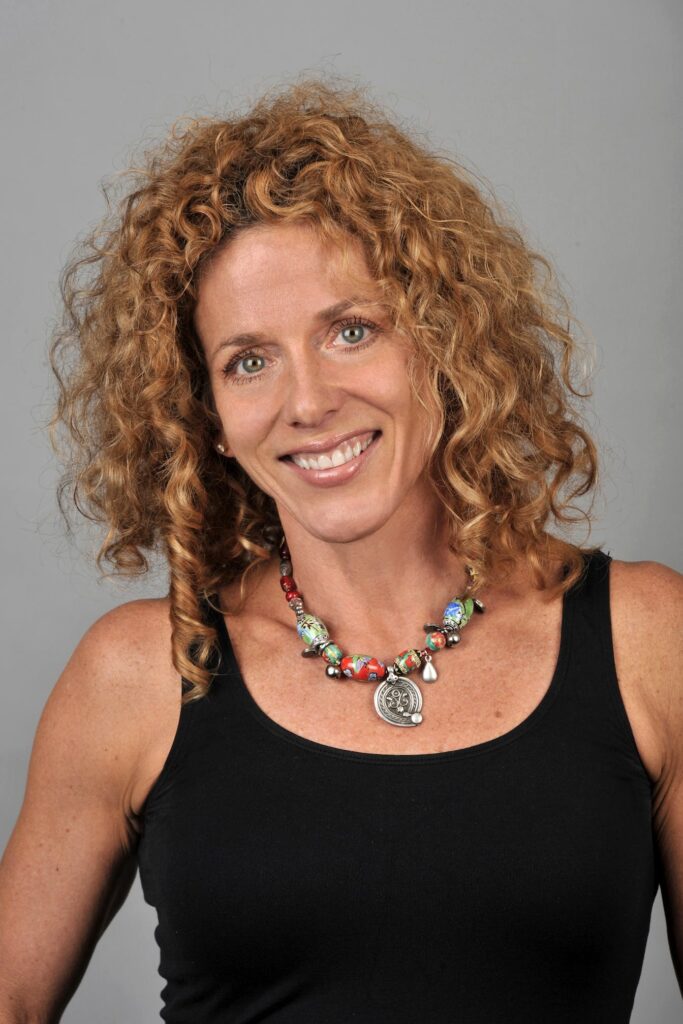
Professionally, Susan Gold is the kind of name-dropper you actually believe: she attached celebrity talent to projects in New York and Los Angeles, talked Andy Warhol into an on-camera Pontiac commercial, helped launch Fox News Channel at Roger Ailes’ request, and got Ben Stiller, Jack Black, Taylor Swift, and David Beckham interviewed by cartoon characters for Disney Channel. But the reason she’s on this show is the book she wrote about what came before all of that, “Toxic Family: Transforming Childhood Trauma into Adult Freedom,” and the years of addiction, clinical depression, and narcissistic relationships that came after it.
We talk about the difference between forgiving your parents for what happened to them and still honoring what happened to you, why the “point one finger, three point back at you” axiom can trap empaths in abusive relationships, and how Susan finally learned to stop carrying weight that was never hers to carry. If you’ve ever felt like you had to be perfect to be safe, this conversation is for you.
Watch this episode
In this episode
- Why understanding where your parents came from doesn’t cancel out your own experience of what they did
- How growing up in chaos and unpredictability teaches you to stay perfect, quiet, and constantly on guard
- Why “point one finger and three come back at you” can quietly trap an empath in a relationship with a narcissist
- The moment Susan’s marriage ended, and the year-long “no eye contact, only in writing” period that followed
- How to stop carrying weight, guilt, and responsibility that was never yours to carry in the first place
- Why it can take a full decade of real work to heal from childhood trauma, and why that’s not a failure
Timestamps
- (00:01) Welcome and guest intro: meet Susan Gold, author of “Toxic Family”
- (04:16) Growing up the middle child of five in a toxic, competitive home
- (09:25) The three-year separation from her mother that started the unpeeling
- (13:03) The polished-cabinet story: trying to earn safety through perfection
- (16:31) Addiction, a decade of clinical depression, and getting real help
- (20:54) The “Saran Wrap” feeling: why authenticity felt too dangerous
- (23:24) Meeting her “Prince Charming,” and the marriage that followed
- (25:23) The moment her ex-husband said, “I’m filing for divorce”
- (31:09) Why “point one finger and three come back at you” is a trap for empaths
- (34:46) Boundaries, the yard metaphor, and owning only what’s actually yours
- (36:51) Where to find Susan and her retreats
About Susan Gold
Susan Gold is an author and talent producer whose career includes attaching celebrity talent to film and television projects in New York and Los Angeles, launching Fox News Channel at the request of Chair Roger Ailes, and securing A-list celebrities for Disney Channel’s “Phineas and Ferb.” She’s also the author of “Toxic Family: Transforming Childhood Trauma into Adult Freedom” and now leads retreats, webinars, workshops, and private sessions helping people drop outdated storylines and live from authentic freedom as adults.
Learn more at SusanGold.us.
Favorite quotes
“There were very few scraps of authentic love doled out. And we fought like dogs to collect them.” —Susan Gold
“I would talk with friends about feeling like I was layered in Saran Wrap and I couldn’t really connect authentically because it felt too dangerous.” —Susan Gold
“This is the universe doing for you what you cannot do for yourself.” —Susan Gold, on the moment her marriage ended
Resources mentioned
- SusanGold.us: Susan’s website, retreats, webinars, workshops, and private sessions
- “Toxic Family: Transforming Childhood Trauma into Adult Freedom” by Susan Gold
Related episodes
- Healing From Narcissistic Abuse: more on recognizing narcissistic dynamics and reclaiming your sense of self after them.
- Finding Yourself: Ascension From Childhood Dysfunction: another honest conversation about rebuilding identity after a chaotic childhood.
Subscribe & connect
If this episode gave you something to sit with, follow Phoenix and Flame so you never miss an episode: all apps in one place, or jump straight to Apple Podcasts, Spotify, Amazon Music, or YouTube. And if it moved you, leave a review; it’s the easiest way to help another listener find the show.
Learn more about Phoenix and Flame, connect with Dana, and listen to more episodes here.
Read the full transcript
[Dana] (00:01)
Welcome to Phoenix in Flame. I’m Dana, and this is my podcast on pushing through and transforming even when you feel like a pile of ash. We have a fantastic guest with us today, and I’m going to start by telling you what she’s done professionally, and then we’re going to get around to what’s even more compelling about her story. So professionally, our guest, Susan Gold, became known for attaching celebrity talent to projects in New York City, which led her to produce for television and film, and then on to Los Angeles. She convinced modern art legend Andy Warhol to do an on-camera commercial for Pontiac, a talent deal American TV personality Donnie Deutsch still claims as one of his best, helped launch Fox News Channel at the request of Chair Roger Ailes, and on behalf of Disney Channel, persuaded A-list celebrities including Ben Stiller, Jack Black, Taylor Swift, and David Beckham to be interviewed by cartoon characters Phineas and Ferb. Who doesn’t love Phineas and Ferb? But let me tell you something, I’m going to just briefly say all that is super duper impressive, all the great names, all that kind of stuff. So clearly Susan has got it going on professionally. But she was also raised in a challenging and chaotic family system. She was the middle child of five. Now, to fully thrive, she bravely chose to meet the demons of her upbringing that were continuing to repeat. And she wrote a book called “Toxic Family, Transforming Childhood Trauma into Adult Freedom.” And that book is about that journey. Susan, welcome to Phoenix in Flame.
[Susan] (01:57)
Dana, I’m delighted to be here, and I love the title. I’m a Scorpio, so I’m so used to diving down and rising up, and I was like, oh yeah, this podcast is for me.
[Dana] (02:10)
Oh my gosh, that’s it. I’ve talked a little bit, not a lot, about my personal experience with some toxic family situations, particularly with my mother. And that’s one of the things I love about Phoenix and Flame, because I want guests to come on who are comfortable being transparent and real about what it’s really like, because my listeners, they’re living it right now. And I know if I was listening, I would know if somebody was, are they telling the real deal, do they know what it’s really like to be in that horrible, manipulative, messed-up situation, or are they just waxing poetic. That’s why I love hearing these stories from people who’ve been there. So tell us more, whether you want to talk about your professional experiences or dive right into what it was like in your family, however you want to begin, because we’re going to have a chance to cover all of it.
[Susan] (03:10)
Well, a lot of people get excited when they hear about my background, and I am very proud of it, but I would like to focus on the toxic family issues, because I feel like this is now my mission, this is my purpose, this is the reason I walked through the fire that I did. And I have incredible courage and incredible strength and power, but I had to learn that I had that. Coming from the home I did, a healthy sense of self-esteem maybe was not my middle name.
[Dana] (03:54)
Got you. Well, if you’re a middle child of five, it’s a struggle from the beginning trying to figure out how do I get noticed, how do I get attention, and then when there’s toxic dynamics going on, it just kind of goes sideways. What was that like for you?
[Susan] (04:16)
There were very few scraps of authentic love doled out, and we fought like dogs to collect them. It was a very competitive environment, I always said we could probably give the Kennedy family a run for their money. And yes, being the middle child was quite difficult, I never felt like I fit into that system, I always wondered why. The abuse started early, and having had the privilege to use tools like therapy and talk, I was able to generate my story, and a lot of those memories of the trauma are somatic, meaning I feel them in my body. My parents absolutely did the best they could, they were from abusive lineages and systems. My mother was horribly abused and then was expected to remain silent about it. And she married one who was a Peter Pan, his father was the child, he didn’t want children, and his mother, my grandmother, was very dutiful: you get married, you have children, this is what you do. So she had my father, and she tried to compensate for her husband’s childishness. And for my father, he could never measure up, so my grandmother compensated for that, and may have planted the seeds of narcissism. So it wasn’t a healthy dynamic to begin with. My father medicated through alcohol, my mother medicated through food, and back then diet pills were prescribed, which is speed. So basically we were raised by an alcoholic, a brilliant one, he’s an astrophysicist, absolutely genius and a lot of fun. And my mother was equally as ingenious, but she was busy raising five children she delivered all before the age of 30, and it was tremendous chaos. And the hard thing, Dana, was my mother could be so loving, so nurturing, and then a minute later her eyes are in slits and she’s beating you and you have no idea why. So the platform was not stable, and it was not a safe environment.
[Dana] (07:17)
You know, I like the way you did the chronology and had an understanding of what your parents came from, that is very important. I tell people we are fallible humans raised by fallible humans who were also raised by fallible humans. On the one hand, because I talk a lot about balance, that information is really, really super important, to have forgiveness, understanding, acceptance of what’s gone on, so we’re not eaten up with rage. What’s equally important, and I’m going to point out here, you talked about, and we’ll talk later about the retreats and private sessions you offer, but the way you described it I thought was really amazing, because you said “to help others drop outdated storylines and programming in exchange for living from the heart and authentic freedom as adults.” And I think in addition to understanding where our parents came from and giving them forgiveness and understanding, we also need to give validity and understanding to what our own experience was like. Both of those things need to be equally present, and I hear you doing that, because I’ve run into some people who have this attitude that, oh well, since my mother or father was abused when they were young, they get a pass, whatever they did to me, bless their heart, they were abused growing up and they couldn’t help it. And on the one hand, yes, they probably did the best they could, and yes, they came from abusive backgrounds, but at the same time, we’re still having our own experience as well. I think those two are equally important and present, and I really liked the way you laid that out.
[Susan] (09:25)
Yeah, that’s been pivotal. It took me about a three-year period of separation from my mother in my early adulthood to really dissect our relationship and what had happened. And I did ultimately the same with my father over many years. That relationship was a little tougher to detonate, because he looked like the hero, he was always coming in and playing and throwing us around, taking us canoeing and mountain hiking and on all these fun trips. But it took a lot of years for me to unpeel the layers and see he was a child in adult clothing, incredibly selfish and self-serving.
[Dana] (10:19)
That’s hard for the mother in that situation, because as a child you look at that father role and think, whoo-hoo, he’s so much fun, we’re going to have fun. And then you have the mother, some listeners out there maybe are the mothers in that scenario, and their children are looking at their dad like, oh, he’s the fun guy, and they don’t like mom because she’s always the one making sure they take their baths and get their homework done, and do everything they’re supposed to be doing, and they don’t like her because she’s not the fun one, but she’s not being supported by her partner because he’s still a child in an adult body. So essentially she has an extra child, her kids and him as well, because of that selfishness. And you talked about the chaos and unpredictability, I wanted to hover over that for a moment, because it’s difficult. If you’re in a situation that’s healthy most of the time, you’re like, okay, I get it, this is how we work, it’s pretty healthy, I can relax, I can feel safe, I can surrender to this situation and not have to be guarding or afraid. If it’s the other extreme, always abusive or unhealthy, then we equally adapt.
[Dana] (11:45)
We’re always on guard, we set up a certain understanding of what’s going on around us, always trying to keep ourselves safe, we have a certain attitude we can adapt and adopt regarding our family situation. It’s not pleasant, but you know what to expect, and you’re also able to detach emotionally, that’s a safety valve. But when it swings back and forth, back and forth, that is the hardest thing, and I hear that a lot from people who have had parents who used substances for different reasons, because it creates such chaos and unpredictability. Not really knowing, and then they have these periods where they feel very loving toward their parent and feel loved and safe, and like you said, in ten minutes their parent’s face looks so different than it did ten minutes ago, and it’s that whole push and shove, push and shove. What do you remember about that, and how do you feel it impacted you then, and how do you feel it impacted you later in life as you were trying to have adult relationships?
[Susan] (13:03)
That dynamic was constant, you described it to a T. And ultimately, and quite early on, I just tried to find safety in staying quiet and being as perfect as I could be. I remember one Sunday afternoon, I polished the kitchen cabinets to try to make my mom happy, I was cleaning up the kitchen and decided to polish the cabinets. I was down in the basement on the bean bag on my belly watching Barbara Walters, because I wanted to be just like her, I wanted to get to New York City as quickly as I could and be like Barbara Walters. All of a sudden I hear this slur of curse words: Suzy, get up here right now, what did you do? And I’m being lambasted because I’ve left polish on the cabinetry. And I really wanted to fix that circumstance with all my heart, for my own well-being and the well-being of my sister and my brothers. But it was impossible, even when you thought you were doing something that would contribute positively, there was some kind of odd punishment. So I just stayed focused on when the day of escape would come, what I would do. And then I stayed out of the house as much as possible, which added to my ability to overachieve, become a workaholic, take exceptional risks, discount self in place of others, the well-being of others, and this caused huge problems. I did leave that home, Dana, the morning after high school graduation, I left at 7:45 a.m. And I did go back, but not frequently, and it was really terrifying. I think a lot of us never are able to leave that home. Physically I left, and it would be many years later until I could leave on different levels, psychological, emotional, because early in my adulthood, when I’d gotten to New York City, I realized, wow, I took a slug from the wine jug to ask for a raise at work. That’s just like Dad opened the dry sink at 7:30 a.m., popping the cork and glug, glug, glug with the whiskey bottle. I think I have something to look at. Gee, I’m lying when it’s just as easy to tell the truth, something’s wrong, my goals are slipping away, my friends are becoming more seedy, fair-weather characters. And so that’s when I got help and realized I had to clean up from addiction, and four and a half years clean, I became suicidally depressed, clinically depressed. I was recreating a role I had played with my parents, I’d often break up their fights and negotiate to bring some kind of civility back into the home, and this was early, pre-teen, I was doing that. And that’s what I was doing at this job, this contract I had, I was brokering between two parties, and it
[Susan] (16:31)
pushed so many buttons, I ended up splitting out of my body. My friends realized it and got me to a treatment center, and that’s where I learned about clinical depression and how to work with it. It was a ten-year period where I was often on medication to help me get to a level playing field where I could actually do the work I needed to do, the self-examination to heal. Another thing I realized, I was in many narcissistic relationships, because that’s what I had cared for, I cleaned up my father’s messes, I was able to pretend it was all okay, I would pull the pieces back. One day I came home from school and saw my father’s clothing flying out the second-floor window onto our front lawn, and I was picking up the clothes as fast as she could throw them down, to keep my father in the house. I didn’t think I would be able to survive without his pseudo protection. So all these things, difficult, yes, and they leave remnants, but I feel if we’re willing to face the truth and the reality of it and examine it with an open heart, ultimately we can be free of those patterns.
[Dana] (17:57)
Thank you for sharing that, gosh, that’s so helpful. So many things are in my mind right now to unpack and hover over. One of the things I wanted to say was, it’s frequently when we have traumas that haven’t been processed and we’re still wounded, then we go out in the world and get triggered and feel it in our bodies. Like you mentioned earlier, you feel things somatically, in your body, your heart’s pounding, there’s a part of the brain that thinks, oh my gosh, it’s getting ready to happen again. That’s something very profound. Now I did want to point out, you said you were ten years being diagnosed as clinically depressed, dealing with that and trying to seek out therapy and dealing with addiction issues, I want to hover over that for a moment and say ten years, okay, because people sometimes have this idea that other people just pop in and out of a therapist’s office, or have this epiphany one day and two weeks later they’re all fine and dandy, skipping down the sidewalk. And by contrast they feel like such a failure because they’re having a hard time and it’s taking them what feels like so much longer to deal with issues. That’s why I wanted to point out, sometimes these journeys take a minute, it takes us a while to do this.
[Dana] (19:51)
I did want to ask you, you talked about a pattern I hear so much in my sessions with patients, the people-pleasing, perfectionistic people-pleasing, feeling like if you don’t please somebody, and this is how it seems to play out in their adult lives, that something really bad is going to happen, because that’s what they learned growing up, that I better be perfect and make sure that person, that key person or persons, are pleased with me and pleased with life in general, or something really bad is going to happen, because that’s what the child part of them learned. When you think about that in your life, do you have other memories of feeling like you had to be perfect and pleasing, and that there was no space, it wasn’t okay to just be human, it wasn’t okay to make a mistake?
[Susan] (20:54)
That’s followed me almost my entire life, I deal with it currently, the decibels turned much lower, it used to be between eight and ten. In college I was a fine arts major, but I didn’t fit in with the women with pink hair and hairy armpits and smelling like garlic, jumping off ladders, it was a modern dance department. So I rushed and became a Pi Phi, what a dichotomy. I was a chameleon, and there was only so much information you’d get out of me, even well into my recovery. I would talk with friends about feeling like I was layered in Saran Wrap and I couldn’t really connect authentically because it felt too dangerous, even though I wanted to, because I was so fearful of the judgment, or not being worthy, or not having value, and that it was all a ruse, and that’s been very costly to my own being, my own ability to live with fullness and freedom here.
[Dana] (22:16)
That is, you’re just hitting so many things, Susan, nail on the head, you just explained something so well. I heard a person recently describe their scenario as, I don’t feel like a real person. And the way you described it, the reason behind that was because it’s too dangerous to take that Saran Wrap off and be authentic and real. They feel like it’s too dangerous because they feel like there’s going to be rejection and abandonment waiting for them. So their choices, apparently, are either stay wrapped in Saran Wrap or be rejected and abandoned, it’s like a double bind, they don’t see a way out. They looked at me and said, I just don’t feel like a real person, I don’t know how to be a real person, I don’t feel like I’m a real person. I was like, that’s what you just described.
[Susan] (23:24)
And for me, it took what I see as a perfect storm. I did move from New York to Los Angeles for what I thought was a great career opportunity, and it was, Dana. But I think ultimately why I moved was to meet one of my greatest gurus of all time, and that was the man who would become my ex-husband. He was almost straight out of the golden age of Hollywood films, and I felt like I had met Prince Charming, this was finally the ideal person, he was so complimentary, he said and did the right things, we were in similar fields and had both grown up in the same state, and there were a lot of circumstances that were really of interest, but ultimately he also had grown up in a very toxic home and had never examined the trauma, so he was still carrying it. And ultimately what I learned was he had created a false persona, I felt like, wow, that’s straight out of a movie, that line, and they started to add up. We were in a long-term marriage and coupleship, and ultimately the mask fell, and I had to face the fact there was an expiration date to the marriage. I tried to make him accountable through mediation, and we came to the last point of contention, and he folded his arms and his eyes went into those cold lizard slits, and he said, I’m hiring an attorney and I’m filing for divorce. And that little intuitive voice, that one we like to push away, said to me very loudly: this is the universe doing for you what you cannot do
[Susan] (25:23)
for yourself. And it was a calendar year of him living in the master bedroom of a home I had purchased and maintained for our family, and me on a mattress on a partial conversion in our garage, keeping no contact, no eye contact, only in writing, and one calendar year to be able to get to the point where I could write this man his six-figure check and he could move on to his next source of supply. And that was the billboard, Dana, it took to fall on my head, to understand my power as a human being, my value, my worth, and to gain an incredible sense of compassion for who I am and all I’ve walked through, as well as compassion for him, his journey, where it took him, and the life he was living. And I think that’s been one of my most profound gifts, walking this earth thus far, and just the unbelievable presence to know I was moving through a gift, and that it would have preciousness and change my life. And it has, because of that experience and the way I chose to work with it, I have freedom in my life.
[Dana] (27:05)
Wow. So what truth do you feel opened up to you in that experience with him?
[Susan] (27:14)
That I was carrying the weight. And that’s what I did as a child, I carried weight that did not belong to me, weight and responsibility, and that’s what I was doing in my relationships, specifically in that one, and it was draining me. Literally, I felt drained the longer I was in that relationship. And believe me, Dana, I wanted to keep that marriage together, I wanted to be the success my parents were not, and I am a fighter. But ultimately I had to surrender, the universe told me, literally: we’re gonna walk you through this, but yeah, time’s up here.
[Dana] (28:08)
My gosh, Susan, what an experience you had, and I want to say for listeners, if there’s anybody out there in a relationship similar to what Susan just described, that individual is never going to take responsibility, that person is never going to own their own stuff, because they still have those wounds and traumas they have not faced. You have to face it, feel it, and then process it, those three things have to happen, and there are people out there walking around who have done none of that. And if they haven’t faced it and felt it and processed it, when things start going sideways, guess who they’re going to blame? They’re not going to look in the mirror and accept responsibility, because they can’t see it, it’s like they’re blind, and so they’re going to blame you. It doesn’t mean you’re responsible, just because someone else blames you for something doesn’t mean it’s your responsibility, it just means they can’t accept it on their own. I did want to point out, you talked about feeling so drained, because I’m known as the queen of boundaries, I have a passion for boundaries, I had to live it, I mentioned briefly my toxic relationship with my own mother, plus I’ve seen my patients go through this so, so much, and I started noticing how boundary dysfunction was at the source of so much dysfunction overall. And so that’s what happens when we’re owning stuff that doesn’t belong to us, we’re carrying around stuff that’s supposed to be in someone else’s yard, and we’re walking around with it. It is draining, and it doesn’t belong to you. And when you can let that go, and wish them well, and it doesn’t mean they’re going to like it, usually they’re not going to like it, but again, back to boundaries and the people-pleasing thing, we have the right to own our own stuff, to say, you know, I made a mistake, I’m a fallible human being, I said this or did this, and I wish I hadn’t, and I’ll try my best not to do it again. We get to own that stuff and accept our own fallibility, and at the same time not own how someone else is going to hear that, how they’re going to respond, we have no control over that. And when we’re trying to control it, it’s like you said, beautifully, so draining, you can’t do it, you can’t keep doing it on and on. Let me ask you this: what is one spiritual truth that you’ve had thrust upon you? That was a question you listed in your PodMatch questions, and that was really interesting to me. What was one spiritual truth you had thrust upon you?
[Susan] (31:09)
So it may turn you on your head when I share this, but you know that spiritual axiom, you point one finger out and three come back at you. Well, that is helpful, but when you’re an empath and you’re engaging with one who may have narcissistic tendencies, that’s a very toxic axiom to work with.
[Susan] (31:53)
And that axiom kept me in an abusive relationship for a very long time. I kept looking back at myself: why am I so stingy, why can’t I just step up, why can’t I be more gracious about taking care of the mortgage yet again, all that stuff. So I had to be very careful in dissecting that axiom as it pertained to my circumstance. I was the first one to run in and say, let me fix it, I’m sorry, let me take care of that, I’m wrong, I shouldn’t have been so cruel. It’s me, me, me, me, me. And that landed me on that mattress on the floor in the garage, in the partial conversion of my home.
[Dana] (32:56)
That is another excellent vantage point you’re pointing out, because that whole thing about when you point at someone, there are three fingers back at you, that’s generally for people who don’t really want to accept responsibility, they’re wanting to blame, well, he will, she will, they will, and they’re not looking at themselves. That would be more something that would be helpful to a narcissist, although it’s not going to do any good, because someone with narcissistic tendencies, they never see that. And I’m telling you, if I hadn’t done this myself, I wouldn’t have believed it, but even if you say it directly to them in very clear and concise terms, and I’m not one who’s known for having issues communicating, when I want to say something I’m pretty clear about it, and I figure out how the person needs to hear it, do I need to scream it, do I need to whisper it, do I need to be logical, do I need to be creative, how do I need to be so the person can hear what I’m saying, I’m very good at that. But with this individual interacting, the narcissism, it’s like you’re talking Russian, they will not hear it, it doesn’t matter what you say or how you say it, they will not accept that responsibility, those three fingers pointing back at them, they don’t ever see those things. And you’ve got an excellent point about people who are empathic and empathetic, their tendency is to blame themselves for things, and kind of circling this back to boundaries, it’s so important that we see what actually belongs to us and what doesn’t. What we think, what we feel, and what we do, yes, that’s in our yard, but what someone else thinks, what someone else feels, and what someone else does is on the other side of the fence.
[Dana] (34:46)
And they can blame us, like you can have a neighbor blaming us because their grass is too high, it’s like, go mow your own damn yard, okay, you know what I’m saying, that’s not my yard to mow, if your grass is too high it’s because you don’t want to get out there and mow your own damn grass, and that’s your responsibility, not mine. And they don’t like to hear that, but I just don’t see how people can live a healthy life and have healthy relationships unless they have healthy boundaries, and that’s why I’m so uber passionate about that in my courses, teaching people about boundaries. And speaking of courses, you have learned so much and come so far, you’ve got the street cred, you know what I’m saying, you’re legit, you’re not somebody who’s just opened a book and is out there saying, oh I know about this and that, when you don’t have personal experience. You have a lot of personal experience, in addition to the research you’ve done, the book you’ve written, you’ve spent time. So Susan, you said you’re now leading retreats, webinars, workshops, and private sessions, and again, I’m going to repeat what I said earlier, to help others, now listen to this listeners, listen, if you’re doing something else, stop, listen, to help others drop outdated storylines and programming in exchange for living from the heart in authentic freedom as adults, because you’re not a kid anymore, you’re an adult now. So if you’re tired of those outdated storylines, this is a place you can go that would help you do something about that. So if I have a listener out there who’s like, oh my gosh, Susan, she is the real deal, I just need to connect with her, she can help me get to this next level, she can help me figure out what’s going on, where do you want them to go?
[Susan] (36:51)
Just go to SusanGold.us, my name first and last, SusanGold.us.
[Dana] (36:59)
Got it, SusanGold.us, and I’m going to put that in the show notes. Susan, thank you so much for your time and your energy and your willingness to meet here with me and my listeners and be so open and authentic about your struggle. Thank you.
[Susan] (37:20)
And thank you, Dana, for the amazing platform and forum you’re producing. I know it takes a lot to produce these episodes, there’s a lot of research, a lot of time, a lot of technology. So we thank you for the amazing content you’re bringing forth.
[Dana] (37:38)
Thank you, thank you so much, it’s from the heart, it’s from the heart, and wanting us to really grow and bond together, that we’re all in this together, we can be honest, there’s a safe space where we can be honest about what’s going on. So guys, I know you have heard something today that is so impactful, and maybe possibly not for you personally, but maybe you’re thinking, I have a friend, a family member, or a coworker going through this exact same thing, I see these exact qualities in that person or in yourself. I’m telling you, take the link, copy and paste it in a text, copy and paste it in an email, put it up on your favorite social media platforms, get the episode out there so we can reach people who are hurting, we can help grow our Phoenix and Flame community. I hope you guys have had a wonderful day, I hope you have a great rest of your day. This is Dana on Phoenix and Flame.
Are your work boundaries supporting you—or quietly draining you?
Take my free Work Boundaries Quiz and find out where you stand.