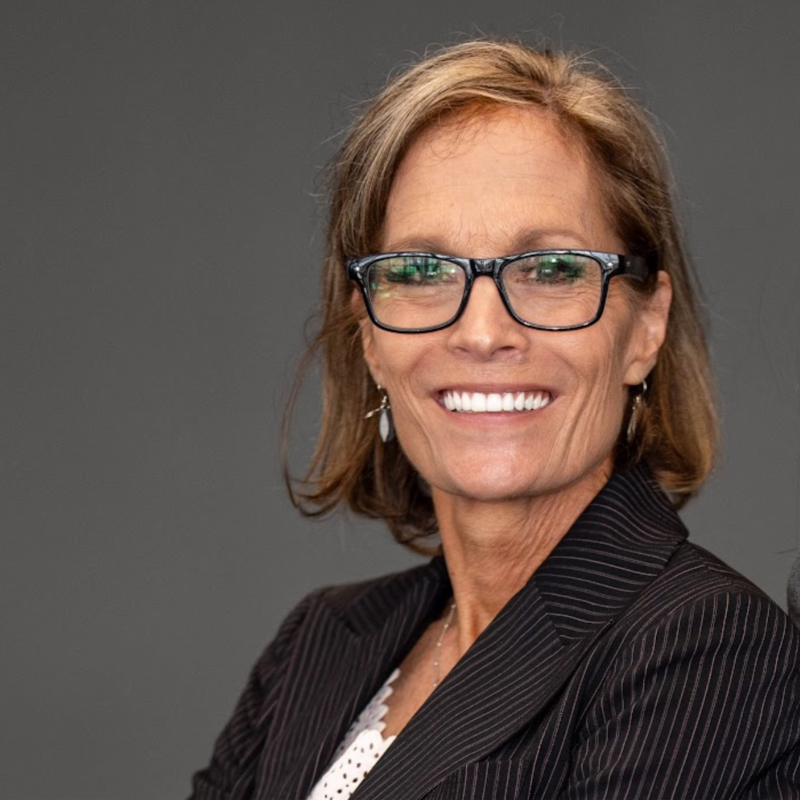
First aired September 20, 2025
A gentle note before you dive in: this conversation touches on sexual assault. It’s okay to pause, skip ahead, or come back to this one another time.
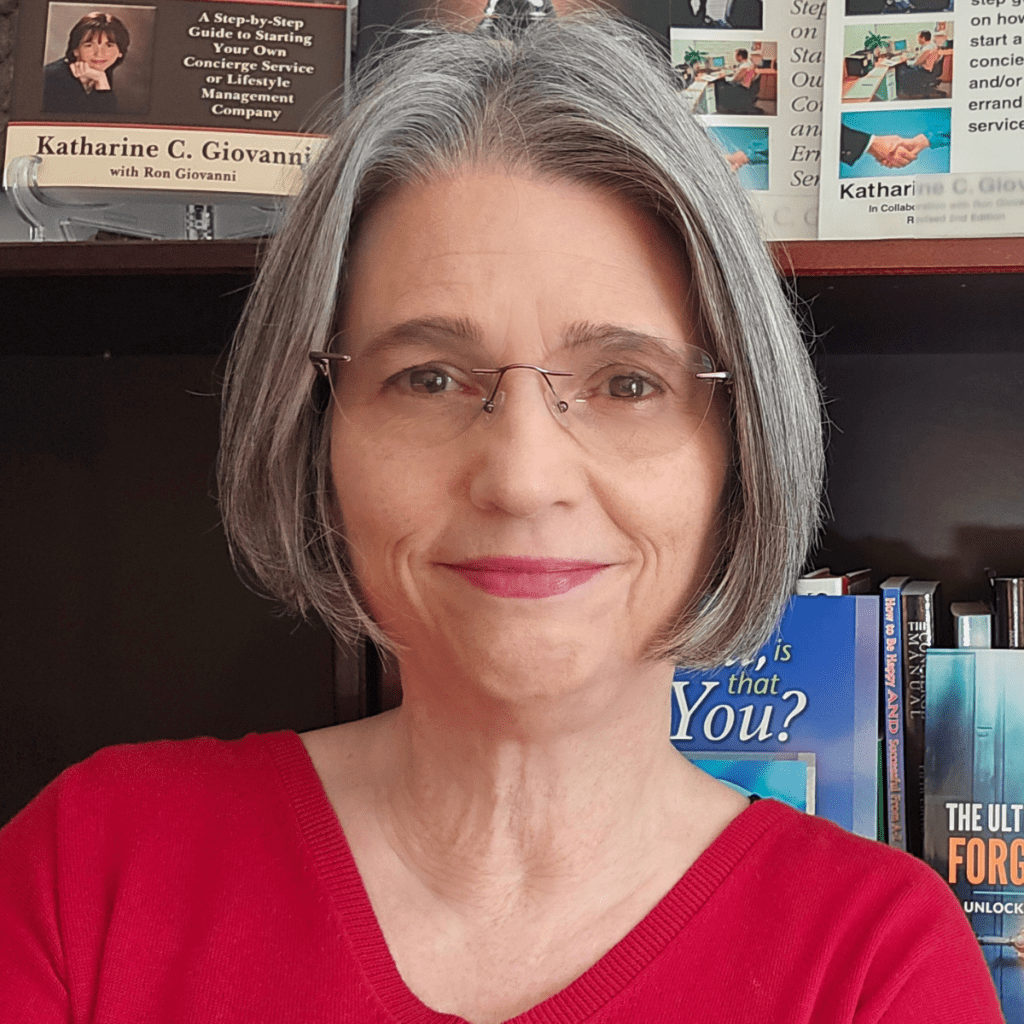
Katharine Giovanni attempted suicide in the eighth grade. She grew up in what she calls a “pickled family” (both parents were alcoholics), got bullied for not fitting into anybody’s box, and spent years wearing her survivor story like an outfit: I lived through this, look at me. Then her mother fell down a flight of stairs, dried out in the hospital, and the two of them spent a few years closer than sisters, before her mother died of breast cancer. That was Katharine’s flashpoint. She got sober (35 years and counting), and eventually built an entire method for how to forgive someone, even the person you’re positive doesn’t deserve it.
I’ve watched enough people get told to “just forgive” and sent off with zero instructions to know how empty that advice is. Katharine is a three-time bestselling author of more than a dozen books, including her latest, The Ultimate Path to Forgiveness: Unlocking Your Power, and she’s the first to say the unforgivable doesn’t have to be forgiven right away, or maybe ever. Her method starts with the easy people and works up to the hard ones, ranking everyone on a scale of one to ten and never skipping straight to your tens.
We get into her exact forgiveness mantra, why forgiveness is 100 percent compatible with never speaking to someone again, and why (yes, you read that right) you can absolutely forgive someone who’s already dead. This is forgiveness with the boundaries left on, and that’s exactly the kind I can get behind.
Watch this episode
In this episode
- Why “just forgive them” advice fails, and the step-by-step method Katharine built instead
- The difference between forgiving someone and reconciling with them (you can do one without ever doing the other)
- Katharine’s forgiveness mantra, and how to use it alone at home in under five minutes
- Why you can forgive someone you’ll never speak to again, including people who have already died
- Why “forgive and forget” is a myth, and what actually changes in your body when you truly let go
- How forgiveness and boundaries work together instead of against each other
Timestamps
- (00:01) Welcome and intro: meet forgiveness coach and author Katharine Giovanni
- (01:33) Why everyone tells you to forgive and nobody teaches you how
- (02:00) Katharine’s “pickled family,” being bullied, and a suicide attempt in eighth grade
- (05:06) Her mother’s fall, rehab, and death from breast cancer: the flashpoint that got her sober
- (06:16) Reconciliation isn’t the goal: “just because I forgive you doesn’t mean I want a relationship with you”
- (09:43) Stop letting them live rent free in your head
- (15:03) The forgiveness mantra, step by step
- (15:30) The rule: start with the easy people, work up to the “tens,” never more than ten at a time
- (20:12) How to forgive the truly unforgivable
- (21:04) Forgiveness, justice, and boundaries: why they’re not the same thing
- (24:03) Forgiving the pieces of a memory: the desk, the playground, even the year itself
- (25:32) What happened in Katharine’s body when she forgave too many people at once
- (33:42) Where to find Katharine and her book
About Katharine Giovanni
Katharine Giovanni is a three-time award-winning bestselling author and speaker who has written more than a dozen books, including her latest, The Ultimate Path to Forgiveness: Unlocking Your Power. A survivor of stage three breast cancer and a turbulent childhood, she spent years teaching people how to run concierge businesses before retiring from that work in 2020 to focus on the forgiveness method she developed in 2021.
Learn more at Katharine’s website, or connect with her on LinkedIn.
Favorite quotes
“Forgiveness is selfish. You do it for you. You don’t do it for them.” —Katharine Giovanni
“Just because I forgive you doesn’t mean I want a relationship with you.” —Katharine Giovanni
“Stop letting them live rent free in your head. You need to forgive them and move on.” —Katharine Giovanni
Resources mentioned
- The Ultimate Path to Forgiveness: Unlocking Your Power by Katharine Giovanni: her latest book, and the source of the step-by-step forgiveness method discussed throughout the episode
- KatharineGiovanni.com: Katharine’s website
- Katharine Giovanni on LinkedIn
Related episodes
- The Jungle of Forgiveness and Boundaries – Can They Co-Exist?: Dana’s own earlier deep dive into the exact question this episode answers.
- Getting Pulled Into the Past: Our Shame Response and the Impact of Unprocessed Trauma: more on why old wounds keep firing until you actually process them, the same territory Katharine’s method covers.
- How to Reclaim Your Power from Shame: a newer conversation on taking your power back from old pain, a natural next listen after this one.
Subscribe & connect
If this episode gave you something to sit with, follow Phoenix and Flame so you never miss an episode: all apps in one place, or jump straight to Apple Podcasts, Spotify, Amazon Music, or YouTube. And if it moved you, leave a review; it’s the easiest way to help another listener find the show.
Learn more about Phoenix and Flame, connect with Dana, and listen to more episodes here.
Read the full transcript
[Dana] (00:01)
Welcome friends, whether you’re out on a walk, running errands, or relaxing at home. It’s wonderful to connect with you. Joining us today is Katherine Giovanni. Now today, we’re talking with Katherine. She is a three-time award-winning bestselling author and speaker who has authored over 12 books, including her latest release, The Ultimate Path to forgiveness, unlocking your power. Catherine, welcome to Phoenix and Flame.
[Katharine] (00:37)
Thank you so much for having me. I appreciate it.
[Dana] (00:40)
This is going to be exciting. I noticed that you also, you mentioned being having quite a bit of resilience because of having survived stage three breast cancer and overcoming hardships, a turbulent childhood. I’ve experienced not the breast cancer, but some childhood issues as well. And we’re going to get real with forgiveness, with boundaries, the interweave between these two areas. So let me just stop talking so much and just kind of let you Fill us in on why forgiveness. There’s a lot of things that we need to learn out there. There’s a lot of wounds that we have. What is it about forgiveness that pulled you in, that made you want to spend so much of your intelligence and your time and your energy to focus on that?
[Katharine] (01:33)
There’s probably two reasons behind it. The first is everybody teaches you, need to forgive everybody. Your minister, your family, your parents, your teachers. Okay. How? Nobody teaches you how. They just kind of throw you to the wolves and say, forgive them. Well, what if I don’t want to? Then what do I do? What if it’s an unforgivable act? Then what do you do?
[Dana] (01:54)
Mm-hmm.
[Katharine] (02:00)
But to really, the reason I started forgiving is because anger was holding me back. And I always knew there was something that I was meant for bigger things, but the anger and the negative self-talk were acting like a shield. Because all I could concentrate on, all I could focus on, all I could talk about was the opposite. I come from a very pickled family. It’s my way of saying they were both pickled alcoholics. I was terribly bullied in school because I was different. I didn’t really fit into anybody’s box. As a result, I tried to commit suicide in the eighth grade and I turned into one of those kids. You know who I’m talking about. Draped in black, although I was raised in New York City, we all wore black. I’m not sure that’s a good indicator or not.
[Dana] (02:29)
you Yes. You
[Katharine] (02:56)
I turned into one of those kids. I was depressed. I had one friend. I talked about, you know, my family. had my story. I’m a survivor of an alcoholic family. Look at me. I survived this. And I lived it and breathe it until my mother fell down a flight of stairs and broke her hip, ended up in the hospital. And even my mother couldn’t get a gin and tonic in the hospital. So she dried out. We sent her to rehab and we spent the next few years closer than sisters. I mean, we were tight. We forgave each other. We did everything together. And then she died of breast cancer. And I knew right then that it was my flashpoint of my entire life. And I knew right then that if I didn’t change, I was going to end up in a grave. So I quit drinking. It was the only New Year’s resolution I actually ever kept. it’s, let’s see, 35 years at last count. And in those rooms, they teach you to
[Dana] (03:50)
Gotcha.
[Katharine] (03:54)
make amends and forgive. Remember, we didn’t even have computers back then and I was very shy. I’m an extroverted introvert now, but I wasn’t then. Taught myself how to do it. And the thought of calling somebody up on the phone who would probably yell at me, no, didn’t want to. So I just paid it lip service. I would just say, I forgive you in my head. There was no energy behind the words at all, but I just kind of, nobody teaches you how to forgive. So I just kind of started throwing the word around. And there was no heart behind it. Sometimes there was heart behind it. And then strangely my life would move forward. And I didn’t put the pieces of the puzzle. It took me years to put those pieces together and realize, hmm, there’s some energy here. And forgiving people in my personal life is directly affecting the bottom line of my company. Cause I’m an entrepreneur and I’ve been teaching people how to be a concierge for years until I retired in 2020. And I thought I’m a college educated girl. There shouldn’t be a correlation between my personal life and my business, but there was. And that’s how it all started. I started to feel better. And then it wasn’t until 2021 where I came up with the actual method and the secret sauce behind the whole thing.
[Dana] (05:06)
I love that whole story and I love the way you’re pointing out that so many people, tell us to forgive, they kind of shame us. Like if we don’t forgive, something’s wrong with us. We’re a bad person if we don’t forgive. But yet no one is standing in the wings with the how-to card. I mean, that is so, so true. It’s like I find myself, and I don’t know how many, whether it’s sermons or whether it’s presentations or whether it’s workshops or whatever,
[Katharine] (05:17)
Right.
[Dana] (05:34)
And I’m listening to them talk and there is that, there’s like this person in the back of my mind that’s going, uh-huh. And how is that supposed to work, right? And so when I walk away, when I walk away from this presentation, when I walk away from this sermon and whatever, and I walk out those doors and go back in my real life, how in the world am I supposed to do what you say? And so I think that’s amazing that the how. is awesome. And another point that I that you brought up that I want you to talk more about is about the difference between forgiveness being about the other person versus being for us. Because I think now you correct me if I’m wrong, but I think we get that confused. We and we are like, no, I’m not gonna you know, so I just spend some time chatting about that because I think that’s probably something we need to hear.
[Katharine] (06:16)
No, that trips everybody. We do. That trips everybody up. So on a 10 scale, with 10 being an unforgivable dumpster fire and one being the easiest person in the world to forgive, 10 out of 10 people, including you, my friend, listening to this broadcast, you’re all thinking of your number 10s. You’re all thinking of your unforgivable person, the person that hurts you the most. Totally fair. Totally fair. But you don’t have to forgive the unforgivable. And I’m the only one that’ll tell you that. And the reason you don’t have to forgive the unforgivable is there’s a lot of people, places and things. And I did say places and things. Don’t cork off. That you can forgive before you even get to that person. You start with the easy ones and you work your way up. And I’ll talk about the method, exact method that I use in a minute. But a few little principles are involved here. First of all, just because I forgive you. Doesn’t mean I want a relationship with you. I probably don’t. Forgiveness does not necessarily mean repair. Forgiveness is selfish. You do it for you. You don’t do it for them. Just because I forgive you doesn’t mean all of a sudden I’m giving in and I’m giving you a pass. And it means now that you’re right. I think that stems from our childhood when we were kids and the teacher would say, now forgive each other and go off and play. I think that’s where it stems from. It’s the only thing that makes sense to me, but it’s wrong.
[Dana] (07:50)
Mm-hmm.
[Katharine] (07:51)
Just because I forgive you, you’re still wrong. You’re still a dumpster fire. You still probably have to make amends. Forgiveness means I want you out of my head. Period. I want to stop thinking about you. I want to stop talking about you. And I want to start paying attention to my life and other things that are around me. Forgiveness, and there’s no such thing as forgive and forget. I just can’t believe. You know, I live in the South now, but I used to live in New York City.
[Katharine] (08:22)
We’re not forgetting anything. I’m from New York and any New Yorker or New Jersey person will tell you, no, there’s no, no, there’s no, we’re not going to forget. However, we, I can promise you when you use my system and it’s a step-by-step system, which, you know, do this, do that. There’s worksheets and stuff in the book, blah, blah.
[Dana] (08:31)
Mm-mm. Ah!
[Katharine] (08:45)
But I can promise you that it will remove the emotional charge attached to the person or the memory. So when you go on Facebook and you see their game or you go to a party and you see that family member, you’re not going to care. Now they’re going to be the same person. They’re going to still be, you know, they’re going to still be, you know, a narcissist. They’re still going to try and push your buttons. They’re still going to try and piss you off. So I have family. I, my family is mostly dead, but my father was like that. He, he, he kind of liked to.
[Katharine] (09:16)
when people were angry at him and he liked that. But what I can promise you is you won’t care. They won’t be able to push your buttons anymore. I can look back, oh, right there, right there. And you don’t have to reach out and talk to these people. You don’t have to. My method is you do it in the privacy of your own home and nobody has to know. That being said, you can forgive dead people.
[Dana] (09:22)
Mm-hmm. Because see, that’s the ultimate power right there.
[Katharine] (09:43)
because where they are or are not doesn’t matter a lick because you’re doing it for yourself. Now us as women, when it’s an ex, we want them to be as miserable as us. Come on now. I mean, we all want them to be rolling in misery and 10 out of 10 times they’re freaking not. They’re moving on with their life. They’re dating again. And we’re sitting and eating a pint of Ben and Jerry’s ice cream and wallowing in it. Yeah. Stop doing that people. Stop letting them live rent free in your head. You need to forgive them and move on.
[Dana] (09:48)
Mm-hmm. Catherine, you bring up so many good points and we’re going to, I’m going to slow this down and go back because as you’re talking, different things are popping into my head. One thing is a quote from Claudia Black. I don’t know if you’re familiar with her. She’s a psychologist and she did a lot. She was actually raised in an alcoholic home, became a psychologist and did work in boundaries and this type of thing. She had a quote about forgiveness that said, forgiving isn’t forgetting, it’s remembering and letting go.
[Katharine] (10:19)
Mm-hmm. Exactly. Buddha has a quote too that says, hatred is, this is my favorite quote, hatred is like drinking poison and hoping the other person dies.
[Dana] (10:42)
And the Yeah. And so what I’m hearing you say is getting it straight because we’re walking, we live in our head. We do not live in a house or an address. We live in our head. And when, like you said, when we let someone else have space in there, someone toxic, rent free, that’s, we’re doing that. You know, if we have, if we have issues, like for example, sometimes I’ll have a patient that will come in and they will have been, let’s just be brutally honest, because that’s what I do on Phoenix and Flame. Let’s say someone was,
[Katharine] (10:57)
We do.
[Dana] (11:20)
raped by a family member years ago and that family member has since passed away like you had mentioned. Are they stuck? No, they’re not stuck with that trauma because that trauma is inside their mind and in their body which they have access to and we have the right and the responsibility to process that so that they can then walk forward. I will say too that when you’re talking about lots of times when we haven’t forgiven somebody
[Katharine] (11:41)
Move on.
[Dana] (11:49)
that they’re living rent free. I can remember, I had an issue with someone in my family, my mother and I haven’t really had a very good relationship. And there were many times before I set some healthier boundaries where literally, and I’m not making this up, when I would get up and I was in the shower in the morning, she would be the first thought in my head. And at night before I would lay down to sleep, she would be the last thought in my head.
[Katharine] (12:16)
left. Yeah.
[Dana] (12:18)
day after day after day, despite all the things that were in my life, despite my job, my husband, my kids, my friends, my activities, all these other things, she was the one that was pushing in and truthfully it felt like I was being eaten from the inside out with acid. That’s what it felt like. So that’s what I’m hearing you talking about is like forgiveness is changing us so that we can let that go.
[Katharine] (12:36)
You were. You were. There was a study done, and I have a lot of science in the book, but there was a study done in Japan. It’s called the Japanese Water Study. You can Google it. It’s right online. This guy named Masumoto, something like that. Anyways, in the interest of time, I’ll say it really fast. He took several containers of water. One container of water, all he did was talk to it. That’s it. He spoke loving, beautiful words at this container of water. The other container of water, hate. Nasty, the worst words he could absolutely come up with. He then froze the water and he put it under a microscope. Pictures are right online. It’s fascinating. The water he spoke love to had these beautiful crystal formations that were gorgeous. The water he spoke hate to had black and brown malformations and it was like it was eating itself up. Your body is 95 % water. So when you have negative self-talk, when you’re living with your bad memories and you’re living with your hatred and the negativity, what do you think you’re doing to the water cells in your body? You’re literally killing yourself from the inside out. So when you are forgiving people, you’re literally changing your body chemistry and you’re changing the energy around your body. Cause Einstein very clearly said, energy is neither created nor destroyed. It just transforms. So when you get mad, you think it leaves your mouth and most people don’t even think about it at all. It leaves your mouth and dissipates into the universe. It does not. It hangs around in your energy field and it hangs around in your body until you clear it. That’s the special sauce. I get so many people coming up to me and saying, I did the work. I have forgiven. Done the work. Yes, they have, but they don’t stay forgiven, do they? You go to a party and you see them and you’re right back in the saddle again, aren’t you? Right? Well, that’s because you didn’t forgive the energy. Everybody has energy around them, including this microphone in front of me, everything. So you forgive the energy around the person. And my little mantra is very simple. I completely forgive Dana. I forgive the energy around Dana. I completely forgive myself. I forgive the energy around myself. I completely forgive the energy around the whole situation.
[Dana] (14:34)
Hehehehehe
[Katharine] (15:03)
That’s like starting with the middle of the process and not the beginning. But that’s the tiny little mantra that I use. And there’s nothing to do. Be alone in a room, turn your technology off. There is an off button people. And if you’re visibly twitching at the idea of turning your phone off, mute it for me. And I don’t even, well, actually I’d like you in, I want it muted and not vibrate. Cause if your phone starts to dance on the desk, yeah, you’re going to look at it.
[Dana] (15:21)
Ha
[Katharine] (15:30)
But part of the system is, you know, I need you to do this alone and I need you to write down a list of all the people that you think you need to forgive. And then I want you to rank them from one to 10. And I don’t care if you have 20 number fours. I don’t care. You could skip a number. I also don’t care. But what I do care about is I want you to start at the, with the ones and work your way up to the tens and don’t do more than 10 at a time.
[Dana] (15:30)
through.
[Katharine] (16:00)
and you don’t have to reach out to these people. Nobody has to know you’re doing it. You do it the privacy of your own home.
[Dana] (16:06)
Okay, all right. I’ve got more questions, Katherine. So I’m going to make a comment and I want to get your feedback on this and then I’m going to ask you a question and I’m going do it together and kind of let you take what however you want to take it, whatever flows for you. So the comment is really noticing how forgiveness has got to occur with boundaries because like you said earlier, these people that were forgiving,
[Katharine] (16:09)
Lay it on me. That’s fine. I love the questions.
[Dana] (16:36)
Right? They more than likely are continuing on doing their dysfunction dance, doing all their dysfunctional stuff that they’ve been doing that caused the issue to begin with. They are not changing. And so, if we don’t set a boundary there, then we are continuing to allow, like you said, that negative energy to come into our lives. So there’s the forgiveness with boundaries. I don’t really see how the two can be separated. They are like married together. The other question that I had was that, because I’m listening to you say this, and I’m imagining what questions my listeners would have as they’re listening to this episode, thinking, okay, well, I can stand by myself in my room and say these things, and what if I say these things, but how does it translate to actual feeling different about the person?
[Katharine] (17:33)
That’s why I have you start with the ones and work your way up to the unforgivables. If you work, if you start with an unforgivable person, I’m going to, we’re going to talk about how exactly how to forgive an unforgivable. Um, and this is the first book of three and the next book is about how to forgive yourself. Hello. But you know, you start with the fur, you start with the easy ones, the kid who stole your, stole your book in grammar school, the kid that, uh, tripped you in the hall. The person who cuts you off on I-95 South. The person who kind of cut off your grocery cart on aisle four of the grocery store. Easy, easy, easy people. People that you could sit down and you could easily forgive. And you don’t even need boundaries because they’re easy. I mean, maybe it was somebody in the news that irritated you and pissed you off. Something like that. The easy people. And as you forgive these easy people, you’re going to start to feel better. You’re going to start to your things are going to smell better. Coffee is going to taste better because you’re starting to lighten up the load inside your mind. You’re starting to, you’re starting to heal. Now, as you get into the higher numbers, now remember you’re not going to get a number 10 person down to a one overnight. Not going to happen. And sometimes, and this happened to a friend of mine, we sat down because I’m a forgiveness coach and she, we went through a level three person. She thought she could easily forgive.
[Katharine] (18:58)
And we did that forgiveness mantra. And all of a sudden, because I want you to check in with your body after you say the mantra, are you still angry or are you finished? Or is your three down to a two? You’re not really ready to forgive them yet. In her case, her three went up to a nine. because the brain is a wonderful, fabulous, marvelous tool and it protects you. And there are some closets in the back of your mind that it is firmly shut to protect you. And as you forgive, that energy is gonna go to your brain and it’s gonna say, wow, okay, Dana’s ready. And it’s gonna open up that back closet and there you go, new memories are gonna come out. This is like an onion. There are many, many layers to the onion.
[Dana] (19:17)
Wry? Yes.
[Katharine] (19:44)
People say, I did what you said and nothing happened. Sure it did. It always works. It’s like the law of gravity. It’s gonna work whether you believe it or not. You can even call the law of gravity the law of holding Dana on the ground. It doesn’t care. It’s still gonna work. Well, I don’t believe in the law of gravity. It doesn’t care. It’s still gonna work. This is the same thing. And as you forgive that first layer, you’re gonna notice more memories are gonna pop up. So how do you forgive the unforgivable?
[Dana] (19:57)
hahahahah
[Katharine] (20:12)
I actually believe there are things in this world that are 100 % unforgivable. There might be some kind of unicorn person on the planet that’s capable of forgiving, but most of us can’t. And we’re certainly not forgetting.
[Dana] (20:24)
Well, let me ask you this, Katherine, real quick, along what you’re just saying right now, because I’m trying to weave it in, because I’m really wanting your thoughts on this, along those lines about something that we feel like is unforgivable, do you feel like, and did you run across it in your research when you’re writing your book, how is our need for justice? You sometimes we feel like, well, I don’t want to forgive them because I don’t feel like…
[Katharine] (20:28)
Mm-hmm.
[Dana] (20:48)
justice, know, they deserve to be punished or they, you know, they want to see justice done. I’ll be able to forgive them when I see that they’ve been, you know, appropriately punished or whatever. But that in this life, sometimes we are fortunate enough to get to see that and sometimes we’re not. We can’t, we can’t hook our forgiveness to that because our forgiveness is in our own body and it impacts us. So what do we do when we’re in that kind of situation where we’re like, I want justice?
[Katharine] (21:04)
That’s right. Let me answer it in two ways. First of all, when you get to the higher numbers, remember what I said is just because I forgive you doesn’t mean I want a relationship with you. That’s the boundary. Forgiveness and boundaries are 100 % combined. And that’s the boundary. I don’t want a relationship with you, but I want you out of my head. That also follows with justice. Just because I forgive you doesn’t mean I’m giving you a pass. You still have to… You, still want justice. I still want you to make amends. I still want you to understand and agree to what you did was absolutely wrong. That’s part of this unforgivable thing. It could be somebody who, who raped you or something like that. It’s very hard to forgive that person. And you have the boundary because you don’t want to be near that person, but in the back of your head, it’s like, well, I kind of want you in jail. I kind of want you in front of a judge. kind of want you to admit what you did. That stays in place. Just because I forgive you doesn’t mean I’m canceling out that thought. It means I’m not angry anymore and I’m pretty zen about it. And I can promise you that the emotional charge will be too neutral. Doesn’t mean I still don’t want you to pay for what you did. It just means I don’t think about you all the time anymore. And the emotional charge that used to send me to the ceiling is not going to apply. Now, if you’ve got an unforgivable person and you can’t forgive them, Just forgive the energy around the person. And I have a very, very close friend who couldn’t even do that. Couldn’t even do that, she was so angry. So here’s what you do. Here comes the people, places and things. Let’s say you’re driving down the road and you go to work every day on this day, but for some reason you took a different route and as a quarter of your eye you notice you just drove by your old high school. You didn’t really pay attention to it. You didn’t even really acknowledge it. But by the time you get to work, you’re really pissed off. You’re angry. You don’t know why. People’s like, what’s wrong? Did you not sleep? No, I got a great night’s sleep. I don’t know why. I’m just in a bad mood. Well, I know why. That movie, The Pais in the Back of Your Head that you don’t even know is there? Well, it started to run and you remembered being bullied. So how do you fix that? Okay, well, maybe you’re not ready to forgive the bully or the energy around the bully. but you can pick out a memory and you could pick apart a memory and forgive other pieces of the memory. Everything has energy around it. So this is one of my own memories. I was bullied as a kid. So I forgave my grammar school and the energy around the building. I forgave the table, the desk, the chair, the playground, the people that were stood around and didn’t help. I even forgave 1974.
[Dana] (24:01)
Hahaha
[Katharine] (24:03)
Why did I forgive 1974? Because that’s the year I tried to commit suicide. And I pulled apart the memories and I forgave the people within the memory, but it was still bugging me. Anything is forgivable. You can forgive the bed. You can forgive your childhood home. You can forgive the Thanksgiving table where the fight happened. I still haven’t forgiven my unforgivable person yet. I’m pulling apart the memory. And now the 10 might be down to a nine because it’s not quite as painful because I’ve gotten rid of some of the junk. some of the memories. And then you just keep going 10 to nine to eight. It’s how I forgave my parents. And it’s a long process. A lot of people call this shadow work because you’re forgiving memories that are in the shadows. You’re forgiving your past. I can look back at my life now, because I’ve done the work. And I can look back and I can see the love that was always there that I didn’t see before. I could see the adults that were in my life desperately trying to help me.
[Katharine] (25:02)
I could probably remember some bad things that happened if you wanted me to. Like giving Scotch to the dog. I didn’t do it. My parents did for a long trip. And in my defense, I’m an animal lover and he lived to a ripe old age of 14. So he was fine. Good old Oliver. But I can remember the love that was there now. I don’t remember a lot of the dysfunction anymore. It’s like it’s gone. The memory went from neutral to I just kind of don’t remember anymore.
[Katharine] (25:32)
I just don’t. So I, for a lot of you who don’t want to go back into those memories, I’m just asking you to go back a few more times. And the reason I only want you to do a few at a time is because this is powerful energy. And I do my own work and I do my own exercises. So I wrote myself a list of all the people that I thought I needed to forgive. And the list was massive because I’m an overachiever. Because of course I am.
[Dana] (25:34)
like that.
[Katharine] (25:57)
And I must’ve had like 40, 50 people and I thought this is going to be great. I’m going to be like a phoenix rising from the ashes. I’m going to wake up tomorrow morning and I’m going to be instantly free of everything. Yeah, it didn’t work out that way. Cause of course it didn’t. Remember those water cells we were talking about before? Yeah. I spent the next, I did forgive many people on the list. I did, but I spent the next three days in what everybody thought was a stomach flu. I spent them in bed. My body, I forgave too many and I forgave too many higher level people. So my body needed to heal itself. And the negative energy that I had spent decades amassing had to go someplace. if this happens to you, it’s not that you made a piece of bad fish. It’s just your body clearing decades of negative energy. Most people get tired.
[Dana] (26:40)
Interesting.
[Katharine] (26:52)
That’s how, that’s why I want you to do it before bed, because your body heals itself when you’re sleeping. And I’ll tell you to do 10 or 12. My friend, Katie will tell you, you can do 10 and 12 low, low numbered people. But if you’re dealing with anybody who’s labeled an eight, nine or 10 only do one at a time.
[Dana] (27:10)
Wow, gosh, again, Catherine, so many thoughts are coming to my head. I mean, wow, so… All right, where do I even begin? So, first of all, I want to say that I totally resonate with what you’re saying because when I do regression therapy with my patients and they go back and they basically get kind of aligned with their younger selves who are holding a lot of the trauma and the pain,
[Katharine] (27:15)
I love your questions, lay them on me, they’re fun. Right.
[Dana] (27:40)
When they’re finished, without fail, I mean, this is unequivocally across the board. They are worn out. The whole regression therapy, they’re very relaxed. That’s the whole point of it. You have to relax your whole body. You relax your mind. You give your mind permission to go back and do the work. And so their body has been literally relaxed and laid out the entire time and yet.
[Katharine] (27:47)
They’re sleeping. Right?
[Dana] (28:03)
when they’re finished. I mean, they will purposefully schedule those appointments later in the day because they say, Dana, I can’t leave here and go do anything. Sometimes I have to sit in your waiting room for a while before I even have enough energy to go get in and drive myself home. I mean, they’re just, the energy is just gone. They’ve expended so much of doing that. I’m also hearing you and I’m connecting and wondering how much do you think that processing and being able to forgive impacts how we get triggered because you know hear people talking about I was triggered I was triggered and you know that’s some kind of pain that’s some kind of wound that hasn’t been healed and then that younger self gets around a situation like oh my gosh it’s getting ready to happen again. I’m wondering what you think and how you feel that those two the synchronicities between being able to be triggered less and forgiveness.
[Katharine] (28:57)
Exactly.
[Dana] (28:59)
You know, how those interweave together.
[Katharine] (29:02)
You’re not going to be triggered as And as you deal with these higher level numbers, you’re going to go out into the world. Cause I said, you’re not going to get an eight, nine or 10 down to a one that’s forgivable right away. You are going to get triggered. You are going to have memories because you’re the bat, the bat closets in and shelves of your mind are going to open up and you’re going to remember things that you had forgotten and you’re going to get triggered. And as you get triggered, write down the memory on your phone. write it on a piece of paper and add that memory to your forgiveness list that you do every night because you are going to, your, memories are going to start popping up. It happened to me when I forgave my father and it took a very long time to get my dad down from a 10 down to something forgivable. And he’s completely forgiven now and he died years ago. But now, you know, as I was going through the process, I’d go into a shop and I would get triggered. I, know, I’d go into a bakery for example, and I’d smell something and be reminded of my mother.
[Katharine] (30:00)
My mother and I, when she died, we were cool. But it’s that kind of thing. You’re gonna smell things. You’re gonna see a color. Maybe it was their favorite color. You’re gonna see somebody was raped on the news and you’re immediately gonna go to that. I was raped too in college. And it took a long time for me to get over that trauma. But after a while, I barely remember it now. And I know that any woman who’s listening to me says, no, I’m never going to forget it. I can come up. I have the memory. It’s still clear as a bell in my head, but it doesn’t trigger me anymore. It’s gone. It’s neutral. I was on Facebook about six months ago and I saw my ex-business partner from years and years ago and I saw her face and I saw her name. Usually it would take me days to get over that. I didn’t care.
[Dana] (30:38)
Hmm doesn’t have that power anymore. Yeah
[Katharine] (30:55)
Now I’m not going to go out and be bestie bestie with her just because I forgive her doesn’t mean I want a relationship with you. It just means that I’m free. I’m the queen of small talk. I’ll talk to you about the weather. There is, mean, I know how to talk to a narcissist. Here you go. Here’s how you talk to a narcissist at 30 seconds or less. Keep the conversation on them. Class over. Everybody dismissed. Yeah, that’s it.
[Dana] (30:55)
Yay! Right. Mm-hmm. and light.
[Katharine] (31:22)
You don’t talk about yourself. Did it used to bother me that, you know, they didn’t want to talk to me about my stuff? Yeah, it used to drive me crazy. You could ask about my kids once in a while, that would be nice. They never did. Drove me nuts. Until I forgave them and now I don’t care. But you are going to get triggered. But the boundaries with those higher level people, that’s what I’m talking about. That’s the, don’t want a relationship with you part. And you have to be… In order to forgive somebody like your parents or your sibling or a very close friend, you have to have those boundaries in place.
[Dana] (31:59)
Yes.
[Katharine] (32:00)
because otherwise you’re still gonna be in the thick of it, won’t you?
[Dana] (32:04)
Yes, you will. Hang on a second. I thought my laptop was plugged in this whole time and it wasn’t. it just gave me a note. I’ll edit all this little part out later, but it just gave me a note, battery running low, I didn’t want it to quit. So Catherine, this is amazing. And I I love everything that you stand for. And there’s so much synchronicity between forgiveness and boundary setting because it’s like we said earlier, because they’re not going to change and…
[Katharine] (32:18)
Oh! There is.
[Dana] (32:42)
Forgiveness is about us. And so we can get rid of that negative energy so we can release them. Like Mel Robbins said, let them, you know, let them be, do whatever. But like when I talk about boundaries, I talk about yards, my yard, your yard, and there’s a fence line in between our yards. And I’m going to let you on your side of your fence have whatever crazy monkeys you’re going to have over there swinging around your trees. Because I know one thing, those monkeys aren’t mine. And so…
[Katharine] (32:42)
No. Exactly. You be, you do you. No, my monkeys fly.
[Dana] (33:13)
So.
[Katharine] (33:13)
know they’re not mine because my monkeys fly, so you keep your monkeys in your yard. Thank you very much.
[Dana] (33:18)
That’s it. So it’s like knowing, and I hear what you’re saying about forgiveness and giving us that power to own our own feelings and not be, not be a, we’re not pulled into a riptide because of someone else’s issues anymore. And so that’s, that gives us a whole lot of power. Now, let me, I know that my listeners are gonna want to be able to access you, your book.
[Katharine] (33:25)
That’s right.
[Dana] (33:42)
You know how what I have here is the website is your name Katherine Giovanni.com. Is this correct?
[Katharine] (33:48)
Yeah, and Catherine is spelled thanks to my mother a little bit differently. Thanks, mom. And it’s K-A-T-H-A-R-I-N-A Giovanni.com.
[Dana] (33:56)
Mm-hmm got that on here and listeners are obviously like always I will put that in the show notes So you’ll have easy access to that Catherine I appreciate you so much giving us your time and your expertise and your energy to come on Phoenix and flame and be with with us to talk about the very very important issue of forgiveness that a lot of us have problems understanding. Thank you for being with us
[Katharine] (34:23)
Thanks so much for having me. I appreciate it.
[Dana] (34:26)
Listeners, oh my goodness, I know you have heard numerous things, Catherine, say today that you’re thinking, I have a friend, I have a relative, I have a co-worker who needs to hear exactly what Catherine is saying, who needs to get her book, who would really benefit from all these lessons, these practical tips on forgiveness. Take this podcast episode. Copy and paste the link, send it in text, send it an email, post it on your favorite social media sites so we can grow our Phoenix and Flame community, reach out and let people know you are not alone. I hope your day has been great. I hope the rest of your day is fantastic. I’m Dana on Phoenix and Flame.
Are your work boundaries supporting you—or quietly draining you?
Take my free Work Boundaries Quiz and find out where you stand.