
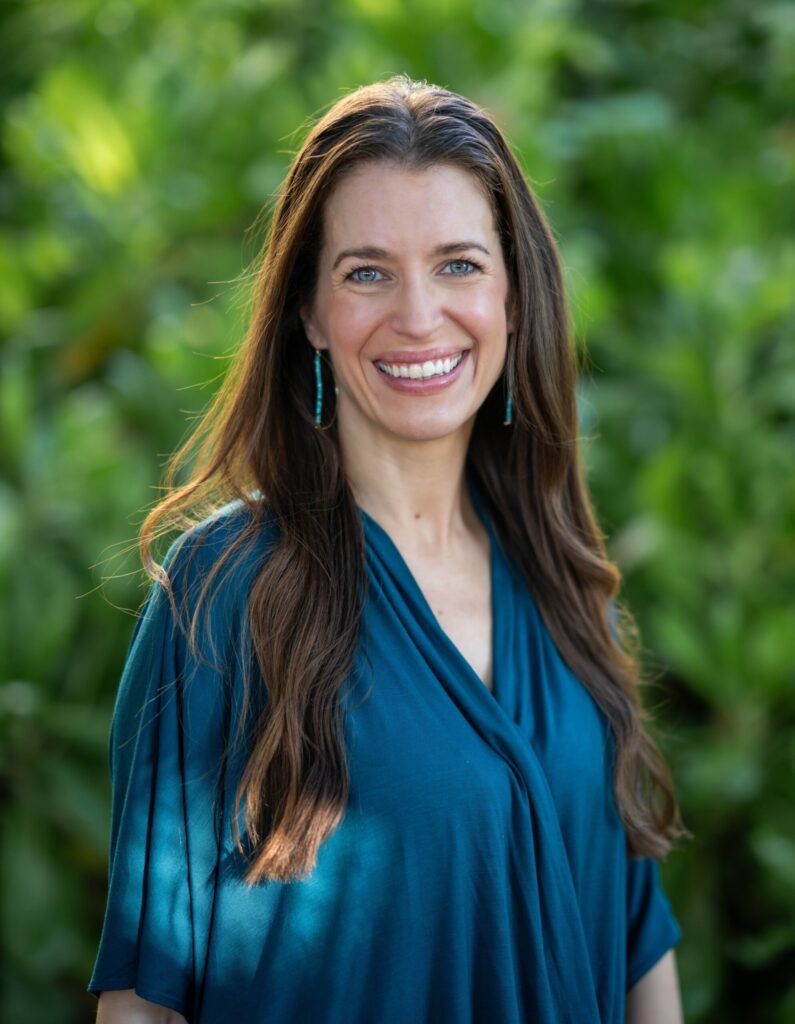
First aired May 5, 2024
Every single one of us has, at some point, had sex or done the dishes while mentally drafting a grocery list. Stay with me, because that image is actually the hook for some genuinely fascinating research my guest shared today: when your mind wanders, you’re less happy, and it doesn’t matter what you’re doing. That’s not correlation, it’s causation, straight out of a study published in the journal Science. My guest, Ann Swanson, has dealt with anxiety so extreme she would pass out, chronic pain since her teen years, and debilitating perfectionism. She says if she can meditate, anyone can meditate, and after years of studying the research, she’s built a whole practice around proving it.
Ann’s first book, Science of Yoga, has sold over half a million copies. Her newest, Meditation for the Real World, was written with Harvard researcher Dr. Sarah Lazar to show that meditation isn’t “woo-woo,” it’s neuroscience: meditators in their fifties can have brain structures that look like non-meditators in their twenties, and the practice touches your cardiovascular health, your cellular function, and your relationships. We get into the myth that’s keeping most people from ever starting (that meditation means stopping your thoughts), the “sigh, see, start”-style cycle your mind actually goes through, and one-minute meditations you can do standing in line, in the car, or mid-panic attack.
We also do a real loving-kindness meditation together, out loud, on the show. If you’ve ever thought meditation requires 20 minutes of sitting perfectly still, this conversation will change your mind.
Watch this episode
In this episode
- Why a wandering mind isn’t meditation failing, it’s the second step in a normal cycle, and noticing it is the whole skill
- The neuroscience behind why meditators in their 50s can have brain structures similar to non-meditators in their 20s
- One-minute meditations you can do standing in line, in your car, or before a stressful moment, no cushion required
- Why present-moment attention, not the activity itself, is what research links to actual happiness
- A simple loving-kindness (metta) practice for perfectionists who find self-compassion the hardest part
- How to use road rage, of all things, as a loving-kindness practice
Timestamps
- (00:58) Welcome and guest intro: meet Ann Swanson, author of Science of Yoga and Meditation for the Real World
- (03:03) Why meditation research matters, and what it shows about the brain
- (08:09) One-minute meditations, and the woman on the book cover meditating in the subway
- (09:15) Anxiety so severe it caused Ann to pass out, and how she started with physical practices first
- (14:40) The biggest misconception about meditation: that your thoughts are supposed to go quiet
- (16:26) The research from the journal Science: mind-wandering and happiness are directly linked
- (19:05) Using your five senses to anchor into the present moment
- (21:41) The 3-2-1 grounding technique (a shorter version of 5-4-3-2-1)
- (24:41) Gratitude, “glimmers,” and the three secrets to happiness
- (27:51) Loving-kindness (metta) meditation, and doing it live on the show
- (32:03) Using loving-kindness meditation for road rage
About Ann Swanson
Ann Swanson is the author of Science of Yoga, which has sold over half a million copies, and Meditation for the Real World, co-written with Harvard researcher Dr. Sarah Lazar. She has dealt with severe anxiety, chronic pain since her teen years, and debilitating perfectionism, and now teaches science-backed meditation practices for busy people with busy minds.
Learn more and get her free meditation challenge at MeditationForTheRealWorld.com, find her book here, or follow her on Instagram at Science.of.Yoga.
Favorite quotes
“When you are present, you are happy. And when you’re not present, you’re not happy. Doesn’t matter what you’re doing.” —Ann Swanson
“If we could sit alone with our thoughts in a quiet room, then there would be world peace.” —Ann Swanson
“Rather than scrolling while we wait, why don’t we meditate while we wait?” —Ann Swanson
Resources mentioned
- MeditationForTheRealWorld.com: Ann’s free meditation challenge, built around music and nature sounds engineered to optimize your brainwaves
- “Meditation for the Real World” by Ann Swanson: her book, co-written with Harvard researcher Dr. Sarah Lazar
- “Science of Yoga” by Ann Swanson, her first book, on the research behind yoga’s physical poses, meditation, and breathing practices
- Greater Good Science Center: the research center Ann cites for its work on gratitude and happiness
Related episodes
For more on quieting an anxious, busy mind, try:
- “Sigh, See, Start”: The ShouldStorm Antidote: Dr. Alison Escalante’s quick-reset method that pairs naturally with Ann’s one-minute meditations.
- Blair Abee: How Meditation Saved His Sanity: another guest’s firsthand account of meditation pulling him back from the edge.
Subscribe & connect
If this episode gave you something to sit with, follow Phoenix and Flame so you never miss an episode: all apps in one place, or jump straight to Apple Podcasts, Spotify, Amazon Music, or YouTube. And if it moved you, leave a review; it’s the easiest way to help another listener find the show.
Learn more about Phoenix and Flame, connect with Dana, and listen to more episodes here.
Read the full transcript
[Dana] (00:01)
Welcome to Phoenix in Flame. I’m Dana and this is my podcast on pushing through and transforming even when you feel like a pile of ash. We have an awesome guest with us today, her name is Ann Swanson. Now, and you’ll, once you hear me describe this, you’ll understand why I was drawn to Ann and why I wanted her on Phoenix in Flame. Ann has dealt with anxiety so extreme that she would pass out. She’s dealt with chronic pain since her teen years, and also with debilitating perfectionism. She says if she can meditate, anyone can meditate. And now she is helping busy people with busy minds meditate using science-backed practices that work. Ann Swanson, welcome to Phoenix in Flame.
[Ann] (00:58)
I’m so glad to be here to share my story.
[Dana] (01:00)
This is exciting, this is exciting. Now, your first book, Science of Yoga, has sold over half a million copies, and your second book was just released. So fill us in, there’s so much to talk about here, just start wherever you’d like, and we’ll just kind of go.
[Ann] (01:15)
Yeah. My first book, Science of Yoga, really dives into the research behind yoga, and it incorporates all aspects of yoga, like the physical poses, meditation, breathing practices. But everybody focuses on the physical, like many people, I came to yoga for the physical too, so I get it. The meditation part seems more elusive, or even for some people more woo-woo, or just not as accessible. So when I wrote my most recent book, Meditation for the Real World, I wanted to incorporate the science to show that it’s not woo-woo, that there’s a massive amount of neuroscience to support it, as well as research in many different areas showing that meditation helps every system of your body, and even on a cellular level. So I teamed with a Harvard researcher, Dr. Sarah Lazar, to write Meditation for the Real World. But it also includes step-by-step practices, so that people, including me, who are intimidated by meditation, can get started.
[Dana] (02:23)
Gosh, why don’t we just start with some of the research behind it, because we’re going to weave around and get your whole story and your background and what motivated you to pursue this and the benefits you receive. But let’s just go ahead and start, because I remember attending some continuing education workshops along the way throughout the years and was just mesmerized by the medical data. And I really want my listeners to understand, because to your point, I think a lot of people who don’t know the background, the medical underpinnings of yoga, they do kind of woo-woo, oh yoga, you’re going to do some yoga, get in a down dog or whatever, but they don’t, there’s so much that it can provide. People just jump in and help educate us.
[Ann] (03:03)
Hehehehe. Well, when we’re speaking of yoga, we have, in addition to all the benefits of meditation, we have the benefits of physical exercise, which we cannot deny, so there’s that physical component to it. But let’s just focus on meditation, and that being present, being mindful, practicing meditation has profound effects first on your brain. That’s one of the most talked-about areas of research because as we age, our brains literally get smaller. Like my 99-year-old grandpa, his brain is smaller now than it was when he was in his 30s. And it gets smaller in critical areas having to do with focus and memory, working memory, planning things, finding words, those things that happen to us as we get older. But the exact areas of the brain that tend to degrade with age, as well as with depression, anxiety, trauma, meditation rebuilds connectivity and literally rebuilds the tissue in those areas, it can be a protective mechanism. So we see that meditators in their 50s have similar brain structures to non-meditators in their 20s, so it can be really beneficial for your brain, which helps with cognition, memory, mental health, which is a huge area of the research, mental health being your resilience, your depression and anxiety lessening, your ability to sleep better. That’s a huge area that meditation helps. And it also helps every system of our body, so we get sick less often, we have better cardiovascular health by far, lower blood pressure, lower cholesterol, through meditation and through yoga, better heart rate variability, all metrics of that, the main metrics we look at for cardiovascular health are improved. And also when we look at a cellular level, the cells improve their function, they act in essence younger, also through these practices. So the exponential growth in research over the last few decades has really shown that meditation helps all aspects of your body and mind, well, I say all aspects, most aspects, all the critical aspects we care about. And it helps with your relationships, your satisfaction, your fulfillment in life.
[Dana] (05:51)
Gosh, I mean, everything you’ve described, my question is why aren’t we all doing this regularly? It just doesn’t make any sense not to. I know just briefly as a psychotherapist, I will have my patients, if they’re, after I’ve taught them deep breathing and that type of thing, and I know we’re not talking about deep breathing by itself, we’re talking more about mindfulness and meditation and we’ll get into all of that, but just the breathing alone,
[Ann] (05:57)
Ha ha. But that’s part of it, yeah.
[Dana] (06:21)
is huge in terms of calming our heart rate down through our respiration. And so, if you’re going someplace and you’re anticipating something icky, something toxic, then before you even get out of your car, just stay in there and do some slow deep breaths before you even open the car door. You mentioned that earlier about how it just helps with that anxiety and the mental health aspect.
[Ann] (06:26)
Yes. Mm. Exactly. And most of the time when people are waiting in line, waiting at the doctor’s office in their car, maybe early to pick up their kids, waiting for their kids, what do you do? You scroll, you click your email, you start answering an email, you get into your text messages, right? On the cover of Meditation for the Real World, there’s a woman in a subway, and she has her feet grounded down, she’s sitting tall, she has headphones on, maybe she’s listening to a guided meditation, maybe she’s listening to a song that’s relaxing. Everyone around her is hunched over their phones, even their computers, they are so distracted. Rather than scrolling while we wait, why don’t we meditate while we wait? Why don’t we do these breathing practices? Why don’t we become a little more present? Check in with your five senses, just for a minute. One minute counts, it makes an immediate effect. So one of my favorite features of the book is the one-minute meditations that are scattered throughout, because those moments like you described, that’s when we need them most, when we can fit them into our day, into those little moments, before something, before you go on stage, before you press accept on a Zoom meeting, before you arrive at a stressful, you know, Costco, to go shopping, whatever it may be.
[Dana] (08:09)
That’s awesome. Now, I know I have some people that are resistant to sitting with their own thoughts and feelings, they just literally stay as kinetic as they can because they’re afraid of their own thoughts and feelings that are going to be sitting there waiting for them, that they don’t want to think and they don’t want to feel. Take us back, if you would, for a moment, because you came from a place of experiencing so much anxiety that you would pass out. And the anxiety also of perfectionism and this type of thing. So you were there, you know what that feels like, and I want my listeners to understand that. That’s one of the reasons why I chose you to be on Phoenix in Flame, because you’ve walked that path, they can listen to you and know
[Ann] (08:43)
Yes.
[Dana] (09:01)
she has been where I am now. There might be some listeners that are just wrapped up, just in a cage of anxiety and don’t know what to do. I want them to know that you’ve been there, you know what it feels like, and what you’re saying is totally doable. So for those people struggling with that, kind of go back to what it was like for you, and how did you get from there to here?
[Ann] (09:15)
Yeah. Yeah, they say that if we could sit alone with our thoughts, in a quiet room, then there would be world peace, that is the secret, because everybody’s evading it. But, you know, like many people, I had to start with the physical. And there are so many different ways to meditate that are physical: being mindful in your movement, exercising or a yoga practice, tai chi, walking meditation, if you’re one of those people that naturally paces, walking meditation might be great for you. I do this daily, when I’m feeling quite anxious. So there’s a place for you to start that is physical, you don’t have to sit still on the floor in perfect silence to meditate. You can be meditating while you’re standing in line, it can be standing, it could be lying down, kind of taking a nap-like meditation, there’s meditations like that too. So just recognize there’s a variety of meditations. Now for me, I dealt with really extreme anxiety and chronic pain, and those were very interrelated, and they’re still lifelong, those things come up for me, but now I have the tools to deal with them and they’re not in the driver’s seat anymore, they’re in the back seat, I’m not letting them take over my life, because I have learned to listen. Like you were saying, we try to ignore and push down, but guess what that pain is, it’s your body telling you something. Even the anxiety, that uneasiness, right, we don’t want to sit alone with our feelings, you said. Feelings are both physically felt as well as emotionally felt. Our anxiety feels like churning in our stomach, it feels like tightness in our chest, it feels like pulling up in our shoulders or jaw. So when we aren’t able to listen to it, it starts to yell at us. And that’s definitely what happened to me with my chronic pain, my body was yelling at me. And it’s a multifaceted approach, anxiety and chronic pain both are, meaning therapy, nutrition, exercise. But meditation has been a really critical part of that, for me, to be able to really listen to my body while it’s whispering rather than yelling, so, okay, I feel a pain flare coming, right, pain and anxiety, they flare. Whether it’s a family event coming up, or toxic people you have to be around that you’re anticipating,
[Dana] (12:00)
Yes. Test.
[Ann] (12:07)
or it’s, you know, your pain could flare because of the weather, or what you ate. So they flare, they come and go. And what happens is what you described, you catastrophize it. And that’s what I did too: “now I’m not going to be able to get all my work done for school, now I have to cancel this, now I have…” And so instead of going there, listen to the body through meditation. It’s ironic, because we don’t want to listen to the body, but when you learn how to do so in a safe way, in a safe place, then it can be really helpful, because you’re going to then, oh, you know what, I need to rest right now, I need to take a bath right now, I need to say no to that event. And part of perfectionism is people-pleasing, I have a really great meditation for people-pleasing, because a lot of times we’re saying yes to too many things. If you want to go through something like that, we could definitely do that.
[Dana] (13:04)
Girl, because you’re talking to the Queen of Boundaries, that’s who you’re talking to. So yeah, I’ve talked to people all the time about, I actually have a course called the Freedom of No Formula, and it’s just because of that, exactly what you’re saying, because we don’t sometimes set those boundaries and we are people-pleasing and that kind of thing, wanting to overextend, and then we start paying the price. So let me ask you this.
[Ann] (13:06)
Ha ha ha. Oh yes.
[Dana] (13:30)
I know I hear from a lot of people, and I’m sure you have as well, that really want to meditate, but they think they’re going to have to sit in the quiet for huge amounts of time, and they can’t imagine doing that because they’re going to get all fidgety, and they just can’t. So for those individuals who might be listening saying, I hear everything you’re saying about meditating and
[Ann] (13:46)
20 minutes, yeah.
[Dana] (13:59)
I’m on board and I like it and I would like to try it, but I live in the real world and I can’t sit down and stare for 20 minutes, who can do that? For the listener who might have that mentality, and I have run into many people who’ve had that mentality, what do you say to them?
[Ann] (14:07)
Yes. Well, first of all, that’s why I wrote Meditation for the Real World. This is not meditation for monks or advanced people, this is for the real world. So go to meditationfortherealworld.com, check out the book, and I have a free meditation challenge for your listeners to help them get started. So what I would like to emphasize to those people, and I was one of you, is that there’s a misconception about what meditation is.
[Dana] (14:18)
Yes.
[Ann] (14:40)
We think meditation is stopping your thoughts, in that perfectly quiet environment, and then your thoughts become quiet. If that’s what you think meditation is, you’re gonna fail. Because guess what, meditation is a cycle. So your teacher will give you a focal point, whatever that may be, your body sensations, your breath, staring at the ocean, whatever the focal point is, repeating a word, you’re given this focal point, and yeah, you want to focus on that and not what you want to eat later. But guess what the second step in this cycle is? Your mind will spontaneously wander. Even the most advanced meditators, that is the second step. So your mind will start to think about what you’re gonna eat later, or what you said three weeks ago to that person and how they’re taking it, whatever it may be. Now, during everyday life, when our mind wanders to something like that, we get into it, we’re like, “I really shouldn’t have said that, maybe I should text them, what should I have said, I should have said this.” We replay it in our head, we don’t even know this, it’s just there. But in meditation, the next step is critical: you notice your mind is wandering, because you’re like, “oh crap, I’m supposed to be focusing on that word they told me to repeat.” So you notice it’s wandering, that’s great, because a specific neural network has picked up. It’s going to determine, is this important or not? So if your mind is wandering to what you said three weeks ago, you know what, that’s not important right this moment, you can deal with that later, you can journal about it, you can respond to them over text, that’s not what you’re doing for this five minutes. If your mind is wandering to the sound of the fire alarm, it’s important, get out of the house. So it’s gonna determine is this actually important or not.
[Dana] (16:21)
Hahaha
[Ann] (16:26)
And then the next part is critical: your brain will redirect back to the focal point if it’s not important. Now that’s a skill you learn, that’s not something that’s just natural, you are rewiring your brain, you’re building neural connectivity and neural network activity specific to that skill. It’s like reading, when we learn to read, we get better at it over time, and it opens up a whole new world of opportunities, and that’s what meditation does. When you become more present, research shows that you’re happier. There’s a huge study published in the prestigious journal Science that determined when people are present versus when their mind is wandering, when they’re doing the dishes and thinking about something else, or when they’re doing the dishes and looking out the window and they’re present listening to a song, just in the moment, they asked them, are you happy or not? And they found that it’s not just correlation, it’s causation. When you are present, you are happy. And when you’re not present, you’re not happy. Doesn’t matter what you’re doing, whether you’re having sex or you’re doing the dishes. When you’re present, you’re happier.
[Dana] (17:36)
I love that, whether you’re having sex or doing the dishes.
[Ann] (17:40)
Exactly, those people, if they were present, they were happy, and if they were not, they tended to be not happy. So building this skill could be one of the most important skills you ever build, but it takes practice, it’s just like reading, it’s a skill you learn. If you are struggling with it, guess what, your mind wanders, that’s normal, this is boot camp for your focus. This is what you do.
[Dana] (18:05)
That’s it, that’s it, that is wonderful. And I love the fact that, let’s just talk about the whole sex thing for a moment, because we go there, this is a very transparent podcast, and let’s just be perfectly honest, there are women who are having sex and they’re thinking about their grocery list. Okay, let’s just be honest, there’s some kind of sexual activity where they’re just like, okay, it’s very routine,
[Ann] (18:12)
Hahaha!
[Dana] (18:33)
and they’re like, okay, well, we’re just going to do this thing now, and while they’re in the middle of it, they’re not present, their mind is already thinking about what they’re going to get when they go to the grocery store. And so bringing it back into really being present, I like what you said earlier about the senses, can you talk a little bit more about how we can use our five senses to anchor ourselves
[Ann] (18:46)
Yeah.
[Dana] (19:01)
into the moment when we don’t really know how to do it cognitively, but we can maybe use our senses. Tell us more about that.
[Ann] (19:05)
Yeah, one really simple meditation you can do as a one-minute meditation, you’re anywhere, anytime, is zone in, check in to your five senses. Wherever you are, whether you’re standing in line, whether you’re sitting formally at your desk and you turn around from your stressful email and look out the window for a minute to decompress, what you’re going to do is notice, and notice as I’m speaking, do you notice everything you see? Just be aware of your surroundings. Notice what you see. Notice what you hear, hearing my voice, but also noises around you, layers of sound even far away. Take a deep breath, notice what you smell. Notice if there’s any tastes present. And then notice what you physically feel. Maybe you’ll even readjust your posture, do a little movement, because your body is constantly speaking to you, it’s telling you how to move or sit to feel better. So you might feel like doing a little stretch. And then you can get back to whatever you were doing with that new sense of presence, you’ll bring that with you, you become more mindful and present in whatever you’re doing.
[Dana] (20:24)
I super, super love that. That’s such a good idea. There’s a coping strategy called 5-4-3-2-1, where you can use five things you can see, four things you can hear, three things you can touch, two things you can smell, one thing you can taste. And actually, someone I know had gone through a really severe trauma, and someone extremely close to her had died,
[Dana] (20:54)
and she was having to go to the funeral and receive friends. And she thought she wasn’t going to be able to do it, she thought she was just going to absolutely break down in the middle of all of that, and it was a very bad experience she had to go through. And she did that 5-4-3-2-1, and it helped, because she was about to lose it, she was about to break out into a panic attack and felt it coming on, and so she said, okay,
[Ann] (20:57)
Mm. Yeah, that’s a really good one.
[Dana] (21:23)
what are five things I can see around me, what are four things I can hear, and so by the time you go through the five, the four, the three, the two, the one, like you said, that one-minute thing, you’ve calmed yourself down enough to where you’ve relaxed, you’ve kind of avoided that anxiety attack.
[Ann] (21:41)
Yeah, yeah, yeah, I love that one. I actually debated putting that one or another one in the book, and I went with 3-2-1 instead because it’s easier to remember. So 3-2-1, being name three things you can see, two things you can hear, and then one, move one body part, that might mean standing up, that might mean doing a little squat, that might mean touching something and feeling it. So it’s the same sort of thing but a shorter version, because as a therapist, I know the 5-4-3-2-1, but I notice people have a hard time remembering it. So 3-2-1 is another way you can do it if you need a quick check-in.
[Dana] (22:15)
Remember, that’s excellent, excellent, because to your point, sometimes we’re in a position where we don’t really know to smell and taste, unless you’re really sucking on a mint or eating a meal or chewing gum, frequently there is no taste, so those two can easily be dropped off. So that’s awesome. And I really liked the way you were talking about the thoughts earlier, from what I heard you say was basically it was sort of a
[Dana] (22:49)
coping strategy for avoiding ruminating, because those ruminating thoughts tend to come in. And I was hearing you say that kind of like letting those go and just kind of focusing on the moment, and differentiating what was important versus what’s not important, and just kind of training ourselves. Is that what I heard you say?
[Ann] (23:05)
Yes. Yes, definitely. But also recognizing that mind-wandering is normal, and even mind-wandering to the negative, like you described, that is normal too, because our brains naturally have a negativity bias to keep us safe. There’s structures in our brain that are constantly scanning the environment for things to keep us safe. So if you were one that tends to worry or ruminate or have these negative thoughts, first, recognizing that’s completely natural and your brain is just trying to keep you safe. But right now, this is the moment for you, whether you’re doing a one-minute meditation or five-minute meditation, to redirect. And each time your mind wanders, it’s an opportunity to redirect back. It’s like when we go to the gym, some days it’s super easy to get those reps in, other days we have to drag ourselves out of bed, we don’t wanna go to the gym and we kind of do it maybe not 100%, maybe we get 50%, but on those days, aren’t you like, wow, I’m so glad I went?
[Dana] (23:53)
That’s it, yes.
[Ann] (24:06)
I did so much better. So when you have those tough days where you have some real sticky thoughts, your thoughts are going on and on, you’re having a hard time, you keep having to redirect every second, guess what, you’re getting a better workout, those neural networks are building stronger, and you’re getting an even better workout those days.
[Dana] (24:25)
I love this, I love this. And I’ve got some questions to ask you, but I can’t help myself, because I’m wondering, as I’m listening to you describe these things, I keep wondering, because I’m imagining people doing this, and I’m imagining gratitude, especially being in the moment and experiencing that mindfulness and experiencing gratitude. Did you do any research, or did that come up at all when you were working with the Harvard professor and such?
[Ann] (24:41)
Hmm. Yes. Yeah, there’s a whole chapter on gratitude when dealing with these life challenges, and giving the secret away, I give the three secrets to happiness in that meditation challenge at meditationfortherealworld.com. And guess what, one of them is gratitude. There’s an abundance of research on gratitude, from the Greater Good Science Center, which is one of the areas that does a lot of research, and they’ve found that gratitude journaling, gratitude meditation, focusing on what you have, seems to be one of the keys to happiness and long life too. So I think that’s a key area, gratitude. When we notice that our thoughts are negative, the negative thoughts can be there too, the frustrations can be there too, but can you also at the same time hold what you’re grateful for, even a little thing, looking for glimmers in your day, right? We’re always focused on our triggers, I feel like the whole society, “what triggers you,” all that, “what’s your pet peeve, what annoys you,” we’re always talking about that and searching for that, because of that negativity bias we have. But what if we do what I talk about in the book, and Deb Dana, a social worker, coined the term “glimmers,” we look throughout the day for things that give us light, things that bring brightness into our life. A picture of your puppy, a rainbow, the warm sunlight on your skin, little things, savor them, really experience them. So it doesn’t mean the negative isn’t there, you’re not pushing that down, that can still be there, the worry can still be there,
[Dana] (26:36)
I love that.
[Ann] (26:44)
but can you bring to the forefront that gratitude and those glimmers and savor them?
[Dana] (26:51)
I love that so much. It reminds me sometimes when I’m taking a shower and I’ve got the suds, the body wash, it’s all sudsy in my hand, and I’ll take a moment and kind of look at how the iridescence in each one of the bubbles looks like a little rainbow in each bubble, and then if you pull it in and you smell it, whatever, I like lavender and strawberry and those types of scents, and just take a moment to smell it and see it, it’s just really
[Ann] (27:04)
So pretty. Yes.
[Dana] (27:20)
creates such a balance, like you said, the negative is going to be there, but sometimes we just need something else to balance that out. Now, and we’re kind of wrapping up in time, but I have a question I wanted to ask you: how have you come to thrive when you deal with your perfectionism? Because I’ve talked to quite a few people who
[Ann] (27:32)
Yeah.
[Dana] (27:45)
described their struggle with perfectionism, and it can be a bear. Given your background and what you’ve gone through with your experience and in your wisdom, what has been your journey? What have you experienced, and how have you come to thrive in that?
[Ann] (27:51)
Mm-hmm. Yeah, I’m giving away all the keys. Second key to happiness is compassion and connection, sense of community. And part of that has to do with your relationship with yourself. So one of the areas of research and meditation that has been really growing recently is compassion-based meditation. There’s one specific Buddhist technique called metta, and it’s called loving-kindness. Basically we send
[Dana] (28:06)
I’m sorry.
[Ann] (28:32)
positive vibes to other people, but you also send it to yourself, and you send it to yourself first. And for people that are perfectionists, that’s the hardest one. Sending to a stranger or somebody else is fine, I can be compassionate and kind and people-pleasing to all of them, but the self is the hardest. So some Buddhist teachers will also put
[Dana] (28:43)
Yes, that’s the problem.
[Ann] (28:57)
yourself at the end after you’ve done the loving-kindness practice to other people, you’ll then send it to yourself again after you’ve had that practice. And it’s amazing what you feel. I can do a 30-second meditation right now where we do it, would you like to?
[Dana] (29:15)
Yes, I would love to.
[Ann] (29:27)
Okay, I’ll do a shortened version of it. So recognize that sending to yourself at first might be a little challenging, but we’re gonna come back to it. So imagine yourself at ease, and repeat these words in your head: “may I be safe, may I be healthy, may I be happy.” Alright, now we’re gonna imagine a loved one, somebody that’s really easy to love, a family member, your puppy, your child, whoever comes to your mind, that’s the perfect person. Imagine them smiling. And as you send these wishes, imagine them glowing and smiling: “may they be safe, may they be healthy, may they be happy.” Now we’ll do a stranger, just anybody, a person who served you coffee, somebody you don’t really know, you saw in the elevator, just think of a random person, your neighbor that you don’t know very well: “may they be safe, may they be healthy, may they be happy.” Let’s go back to ourselves, sending that same level of loving-kindness to yourself. Imagine yourself at ease, smiling, glowing: “may I be safe, may I be healthy, may I be happy.” Just know that you deserve it. And when you are safe, healthy, and happy, you can help others more too. And anytime you notice those negative thoughts, they’re usually even self-critical, when our mind wanders, say whichever feels best for you, even just “may I be safe, may I be healthy,” any good wish you can make up your own, “may I be strong” if you’re going through a difficult time,
[Dana] (31:16)
That is fabulous.
[Ann] (31:37)
and send that good wish to yourself.
[Dana] (31:40)
I love that so much, and just participating in that brief amount of time, I could feel that in my own body and almost got a little bit teary, felt that kind of coming up. But can you imagine how the world would be different if, when we would interact socially, if we’re in a situation where we want to get angry, we want to get annoyed and frustrated, like I’m thinking of myself when I’m on the freeway.
[Ann] (32:03)
Yeah. Oh my gosh, you’ve read my mind. That’s in the book. There’s a whole section on road rage, and we do this exact technique, because that’s what my partner needed. Seriously, this is so good for road rage, because the nicest people, you’re like, “I’m a calm, chill person,” but when you get behind a wheel in that protective barrier, I notice people get really frustrated and your blood pressure goes up. But rather than saying,
[Dana] (32:12)
It’s…
[Ann] (32:36)
bad wishes on them, “oh my God, what a bad driver,” because guess what, they are a bad driver, if they cut you off they’re a horrible driver, like that’s a truth, can you send them, “may they be safe”? Like, of course you want them and everyone around them to be safe. So that’s what me and my partner do, because we have some crazy drivers here. “May they be safe, may they be healthy,” and just whatever
[Dana] (32:40)
Yes.
[Ann] (32:57)
you can say to them, and then he’ll usually add a little jab, “maybe they get to the hospital on time because it looks like somebody’s having a baby in that car,” or something like that, he’ll add a little joke, but then you laugh, and that’s better than your blood pressure rising, because that’s you drinking the poison, your anger, it’s not gonna affect them, you’re drinking the poison, and now that’s gonna affect you and other people around you.
[Dana] (33:05)
I’m out, absolutely. Wow, and I just really, really appreciated everything you have shared today. And it is so, like you said, like you promised, it’s so real life, it’s so practical, it’s research-based, there’s every reason under the sun to adhere to these things, to do them regularly, to do them consistently, responsibly, and we’re going to experience so much from that. And the examples you gave are how we can really do these things in our every busy day, and that’s kind of what your book has been about. So tell my listeners how to get access, if they’re like, oh my gosh, this is amazing, I want to get more access to Ann and her books and what she has to offer, I want more of this, how can I find out more, what do they do, where do they go?
[Ann] (34:07)
Yeah. They go to meditationfortherealworld.com. I have the best challenge there, and not only do you get meditations, but I integrated music and nature sounds that have been engineered to optimize your brainwaves for practice. If you have a hard time focusing, this can help you get into that neural network activity. So definitely go to meditationfortherealworld.com. And if you order the book and want to share, you can tag me on Instagram at science.of.yoga, and I’ll connect with you that way too.
[Dana] (34:43)
Awesome. Well, thank you, thank you so much for the time and the energy that you have given to myself and my listeners today, we so appreciate it.
[Ann] (34:54)
I appreciate being here, thank you!
[Dana] (34:57)
Alright guys, I know you have heard something today, multiple somethings today, that you’re thinking, this is amazing, I have a good friend, I have a coworker, I have a relative that they need to hear this, that’s amazing. We want to grow our Phoenix in Flame community, so copy and paste the link of our podcast, send it through text, send it through email, take it and put it on your favorite social media platforms. Get the word out so more and more people can find out what Ann Swanson is wanting to tell you and teach you, it’s just amazing. The world will be a much better place, I think, if we did these practices on a regular basis. I hope you guys have had a wonderful day, I hope the rest of your day goes fantastically. I’m Dana on Phoenix and Flame.
Are your work boundaries supporting you—or quietly draining you?
Take my free Work Boundaries Quiz and find out where you stand.