
First aired August 10, 2025
One of my guest’s interview subjects took a fully remote marketing job and spent her first weeks scanning her new coworkers’ faces on Zoom, trying to find any signal for what actually mattered at that company. She’d read a coworker’s email and think, that has to be sarcasm. Then she’d get on camera with them and realize, oh my gosh, they were dead serious. That’s what adapting to the modern workplace looks like now: equal parts wave and bewilderment. Craig Mattson, an organizational researcher and communication professor, spent years interviewing rising professionals about exactly this, and the metaphors he landed on (a wave of digital overwhelm, and the life raft you build to survive it) are why we’re talking today.
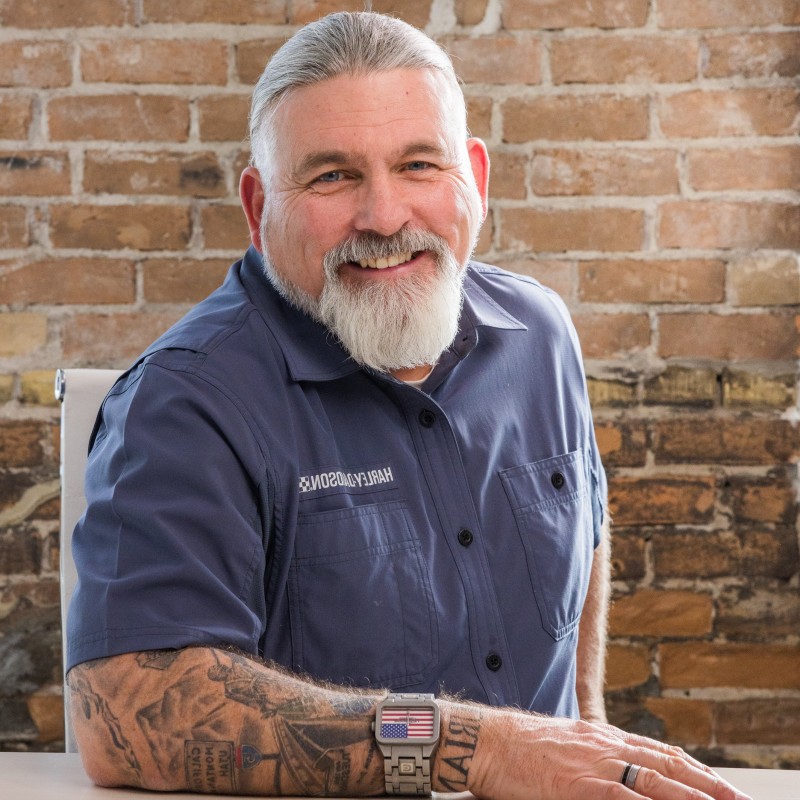
Craig is a professor at Calvin University and the author of “Digital Overwhelm,” built from dozens of conversations with Gen Z and millennial professionals navigating the intensities of the early 2020s workplace. He and I dig into what remote work quietly steals from us (facial cues, tone, trust) and what it sometimes hands back (safety, control, fewer unwanted approaches), plus why personality and home life shape how well any of us cope when the tech breaks down, which it always does.
We also tackle the question I know a lot of you are sitting with right now: if my job doesn’t feel meaningful, should I quit? Craig’s answer isn’t a yes or no. It’s four different postures people take toward meaningless-feeling work, and by the end you’ll know which one you’re in, and what to do about it.
Watch this episode
In this episode
- Why remote work strips away the nonverbal cues that used to tell you what’s actually going on at your job
- The four different ways people find meaning at work, and why “should I quit?” doesn’t have one right answer
- How the digital-era “wave” of overwhelm hit every generation differently, from Gen X to Gen Z
- Why some personalities cope better with tech breakdowns than others, and how to borrow their calm
- What Craig’s interviews revealed about remote work as an unexpected safety net for some women dealing with workplace harassment
- Dana’s “cup of water in an ocean” reframe for anyone who feels like their work doesn’t matter
Timestamps
- (00:01) Welcome and guest intro: meet Craig Mattson, organizational researcher and author of Digital Overwhelm
- (01:30) Why Dana started Phoenix and Flame: the fire, the ashes, and the rebirth
- (02:59) The wave and the life raft: Craig’s metaphors for digital-era work
- (07:10) The Zoom call where every email sounded like sarcasm until she saw their faces
- (14:02) Remote work, harassment, and the surprising safety of controlling your own camera angle
- (18:41) Why personality and temperament shape how well people cope with tech breakdowns
- (20:34) The mom who ran client calls with her kids pulling at her kneecaps
- (29:43) “If my job doesn’t feel meaningful, should I quit?”
- (29:46) The four postures toward work: world-changers, therapists, thespians, and skeptics
- (35:44) Dana’s “cup of water in an ocean” reframe
- (36:39) Where to find Craig and his book, Digital Overwhelm
About Craig Mattson
Craig Mattson is an organizational researcher and professor at Calvin University in the field of communication. His research centers on the vocational experience of rising professionals, particularly Gen Z and millennials, and the intensities and pressures of the American workplace across generations. He is the author of “Digital Overwhelm,” built from interviews with dozens of rising working professionals about coping with digital-era work.
Connect with him on LinkedIn, or read his writing at The Mode Switch.
Favorite quotes
“All our models are wrong and some of them are useful.” —Craig Mattson
“We have to become mindful of how our tools are shaping our work experience, and sometimes distorting our work experience.” —Craig Mattson
“It’s possible that you can find a posture towards your work that’s sustainable, even if your job does feel kind of empty.” —Craig Mattson
Resources mentioned
- “Digital Overwhelm,” Craig’s book, built from interviews with rising professionals about coping with digital-era work pressures
- Craig Mattson on LinkedIn
- The Mode Switch, Craig’s blog
Related episodes
- Signs of a Mismatched Career and How to Make a Change: more on Craig’s exact question, should I quit if my job feels meaningless?
- Why Neurodiversity is Important in the Workplace: another look at what today’s workplace owes every kind of employee.
- How Your Survival Brain is Sabotaging Your Happiness: pairs with Craig’s take on coping with modern-day overwhelm.
Subscribe & connect
If this episode gave you something to sit with, follow Phoenix and Flame so you never miss an episode: all apps in one place, or jump straight to Apple Podcasts, Spotify, Amazon Music, or YouTube. And if it moved you, leave a review; it’s the easiest way to help another listener find the show.
Learn more about Phoenix and Flame, connect with Dana, and listen to more episodes here.
Read the full transcript
[Dana Skaggs] (00:01)
Welcome friends, whether you’re out on a walk, running errands, or relaxing at home, it’s wonderful to connect with you. Joining us today is Craig Mattson. Craig is an organizational researcher and professor at Calvin University in the field of communication. His research over the past few years has centered on the vocational experience of rising professionals, particularly Gen Z and millennials, with an eye to the intensities and pressures of the American workplace for people of every generation. He’s also been a radio guy, a teacher, and a neighbor. Craig and his spouse live in Grand Rapids and have four young adult children. Craig, welcome to Phoenix in Flame.
[Craig Mattson] (00:49)
Thank you. I’m excited to talk with you, especially because I love your metaphors, the phoenix and the flame.
[Dana Skaggs] (00:56)
We will definitely be talking about that.
[Craig Mattson] (00:58)
I’m interested. I’m curious.
[Dana Skaggs] (01:01)
Yes, well, let’s just kind of jump into that quickly, because that’s one of the reasons why I started my podcast. As a psychotherapist, I would see so many people in my office who were experiencing really horrible things, and they would say, Dana, I just feel so alone, I feel like I’m the only one going through this. And I would know that was not the case, because I have the privilege of hearing people’s honesty. I get to hear the behind the curtain story of people’s true life journeys. So I thought, what if I were to start a podcast? And then I had to think about what to name it. Phoenix in Flame basically focuses on three areas. One, what is the fire, what is the flame that you went through that you feel like just burnt you down to ash? We all have those things, and it happens repeatedly, because a phoenix, it’s a cycle. They burn, they’re ash, they’re reborn, and it goes over and over, and that’s what life is like. Number two, I like to know, what was it like for you when you were sitting in this pile of ash, when you felt like you had no hope, you’d been burnt down to nothing? What was that like for you on that leg of your journey? And then also thirdly, what was it like, how did you become reborn as a phoenix, stronger, better, faster, like a six million dollar man from back in the day? So really, when I talk to people, I like to hear those three areas of what they experienced. Now, I’m so interested to talk to you, Craig, on so many levels.
[Craig Mattson] (02:29)
Nice 70s reference there.
[Dana Skaggs] (02:46)
And I’ve got so much to say, but I need to stop talking so much so that you can jump in and tell my listeners more about your experience, who you talk to, why you talk to them, and what you found out.
[Craig Mattson] (02:59)
In talking to dozens of rising working professionals, I would use a different pair of metaphors, but it’ll be fun to talk about the intersection of the figures of the phoenix and the flame, and the metaphor that made the most sense to me in writing my recent book, “Digital Overwhelm.” In that book, the metaphor would instead of a flame be a wave, an ocean wave, an overwhelming wave that washes over you and picks you up and turns you over, and makes you lose your footing. And then the metaphor on the other side of that pairing would be something like a life raft. In writing this book, I was asking rising professionals, how are you coping with all the intensities of early 2020s work and life? We were in COVID-19, we were in racial upheaval, we were in a time of, we still are in a time of, profound political polarization. So what’s your raft? And in the course of hearing their stories, I learned that you can have a raft but not know how to steer it, not know how to navigate with it. And so I tried to sort of build on their stories by talking about craft, like the craft of navigating these boats in the tsunamis of digital technological development today. So I would say that the wave and the raft were my metaphors in thinking about workplace life today.
[Dana Skaggs] (04:44)
I love those so much. I’m a visual person, so I love all kinds of metaphors. When I think about waves, something that comes to my mind is I have this phrase, “you feel like your ass over elbows in a riptide.” That’s sort of what it, as you were saying that, that was coming to my mind, just ass over elbows in a riptide of what all was happening. What has happened with a lot of the remote working especially, and I have a lot of interest in you, Craig, and what you have found out in interviewing all of these wonderful employees, because being the queen of boundaries, that’s my big passion is boundaries. I’ve done a keynote, boundaries in the workplace, yes, no, and everything in between. So there’s a lot of interweaving, and really having a heart for when we’re out in the workplace and we’re trying to navigate that, especially with, like you point out, technology that has been absolutely like a wave that takes over. What are some of the stories that you’ve heard of the Gen Z, the millennials, they’re struggling and they’re also, I think, coming up against people’s assumptions that people make about different generations? Like I’m a Gen Xer, people have assumptions about Gen Xers, and every generation has its pros and cons. So what was your experience with that, and what were some of the stories that you heard of their struggles with, what is their experience like fighting against some of those assumptions that probably are incorrect most of the time?
[Craig Mattson] (06:44)
We’re always doing guesswork, right, Dana? I mean, that’s so much guesswork, and so often we’re wrong. I remember hearing a guy, a friend of mine, say, all our models are wrong and some of them are useful. And I think that’s how I make sense of the data I was receiving from rising professionals. We’re all working with models, most of them are wrong, some of them kind of work sometimes, but I’m glad you brought up remote work. I think that’s sort of the paradigm of digital overwhelm today for people of every generation. And here’s why. Writers and scholars and pundits and journalists have been talking about our distractedness for many years. I remember reading a book that dates back to the early 2000s called “Media Unlimited.” It was about how our digital media are a kind of overwhelming force today. It’s kind of funny to think about what that author was thinking about in the early 2000s in comparison with where we are today. But I raise that point because people have been talking about technological overwhelm for a long time. But most of us haven’t been listening too carefully. Most of us have been just like, yeah, these are tools, we use them, sometimes they get to be a bit much. But when we sank into COVID, and especially people who were just getting hired to jobs, we experienced a level of digital bewilderment and technological confusion. It radically altered our sense of what the workplace is and what work itself is. One story that comes to mind is a woman professional, I think she was right on the cusp between Gen Z and young millennial, and she told me that she had just been hired at a marketing company. She was working entirely remotely, and she spent the Zoom meetings with her new managers scanning faces on the screen, trying to get cues, trying to find some signal that could guide her sense of what mattered, what was prioritized in this company, what their values were, because too few people were managing her, mentoring her, in a way that she needed, and that remote space made it especially confusing and bewildering, and sometimes just exhausting. She said that she felt like she would get an email from a co-worker and think that they were joking, because there was something about the tone that struck her as like, oh, they must be being sarcastic right now. And then she would get on the screen and look at their faces and say, oh my gosh, they were not joking. And then you have this bewilderment of, okay, I’ve got to recalibrate here. I think we’re figuring out remote work. There are studies showing that remote teams are beginning to collaborate even better than in-person teams, which is a huge surprise. Humans are very adaptable, which is remarkable. But nonetheless, the remote aspect of our work today does create a lot of overwhelm, maybe sometimes underwhelm too. People talk about the emptiness they feel when the screen shuts down, and they’re like, okay, here I am in my dining room at my kitchen table trying to get stuff done. So yeah, maybe underwhelm is what we should be talking about in remote meetings.
[Dana Skaggs] (10:41)
As you’re talking, several things are coming to my mind, and I’m just going to toss them out and let you take whichever one you want, and we’ll run in whatever direction we go. First of all, you mentioned that you had four young adult children. I have three, and one of them is in a situation that you’re describing, and I’m watching him, on the one hand enjoying the ease of being at home, because they’re allowed so many minutes to go to the bathroom, so many minutes to eat lunch, it’s kind of, they have to have some kind of a management over that. When he’s at home, that’s much easier versus being on site, when you can’t hardly get up and get all the way to the bathroom and back in time. So he’s enjoying that. But at the same time, there is that isolation. And that leads me to my next comment for you: the facial cues that you’re mentioning, because I remember one time it’s kind of a funny story, being a guest on a podcast, and it was someone who was in a different, a very different time zone, she was in Europe, and it was late in the day for her, and she didn’t want to be on camera. So she just put a picture of herself on the screen. So we did this hour long podcast where I was the guest, and all I could see was a picture of her. I sat here staring at my surroundings in the room that I was in, trying to listen very intently at her voice, because I didn’t have her face, I couldn’t see her face to figure out, like you said, were they sarcastic, were they serious? We read so much, and I actually went to speech and language therapy, they did some research on communication, and they did a pie chart, and the amount of the communication, the cues that we use, the amount that was actually our words was very small. You had all of the other things, like the facial expression, body language, all the signaling. So I’m kind of wondering for you, when you were talking to her, and listening to all these people that you’ve had the privilege of interviewing, how do you see, with the technology, which does provide us with a lot of efficiency and ease, this is true, but it robs us of a lot of things. I’m wondering what you think, not only in the workspace, which is very clear, but also in the personal space, interpersonal, did they talk about at all what it’s like to try to formulate relationships? I know your focus is mainly in the corporate space and work, as is mine tends to be, but also we are one person, as a psychotherapist I know we’re not just a work person, we’re a personal and a work person together. So what are your thoughts on that detachment, and that lack of facial cues, and the things with the digital overwhelm and underwhelm?
[Craig Mattson] (14:02)
It feels like the technological overlay in workplaces today requires a whole new set of manners, but we can’t agree on what the manners are. So we’re constantly irritated by the people around us, because they’re not complying with our particular code of, here’s how you should behave digitally on Slack, or don’t text me, email me, or don’t email me for crying out loud, please DM me, and this is not how to run a meeting, and so forth. There’s all these codes and systems of etiquette that we all disagree on, and there’s something we have to work out together. So I think in my book “Digital Overwhelm” I try to say, I mean often without saying it but just demonstrating it, that we have to slow down, we have to take a look, we have to become mindful of how our tools are shaping our work experience, and sometimes distorting our work experience. I’m thinking about cases of harassment that I encountered as a white, middle-aged, middle-class guy, I had a lot of blind spots, right? In talking with these younger professionals, I was often sort of pulled up by, my gosh, that’s a reality in the workplace for you, maybe it is for me too, and I’ve just not been noticing it. But harassment and unwanted approach was something that people talked about. And sometimes that experience of sexual harassment flipped the script for them, and remote work actually became a safer space. They could control the angles. If you’re a woman sitting at a workstation and your male manager comes up over your shoulder looking at your screen, there’s a kind of proximity that sort of makes sense there, the dude’s just trying to look at your screen, but there’s also sometimes an unwanted closeness there, and the angles you’re trying to sort of guard and manage and negotiate, how much closeness you want. In a remote work situation, that’s a little easier to manage. Your camera allows you to frame what you want to show, and the kind of closeness you want to keep. So everything you said is right, we do lose a lot of cues through remote work. I find you have to put a lot more energy into the cues that you’re providing and that you’re looking for. It’s very possible to manage well in a remote situation, it’s very possible to negotiate collaboration well in a remote work situation, but my gosh, does it take a lot of energy, it takes more energy than you’d think. So I think what you’re saying is right, there is a loss of verbal and nonverbal cues, especially nonverbal cues, but then there are also these possibilities for maybe maintaining a little bit of appropriate distance, and not feeling like you’re constantly having to do this whole person theatrical performance, like sometimes corporate spaces require us to do. So that’s my sort of both-and answer to your question.
[Dana Skaggs] (17:45)
Got it. That makes a lot of sense. Craig, I appreciate your feedback on that. As you’re talking I’ve got more questions, so let me give you two questions and you can answer them however you’d like. One of them is, in your experience from interviewing these individuals, do you feel like certain personalities adjusted better because they roll with technology issues? We were talking, and listeners, you don’t know this, but Craig and I were laughing and chatting before I started to record today, because I was sharing some of the technological issues and struggles that I was having recently. Anybody that does podcasting for any length of time, you’re going to run into it, it’s not an if, it’s a when, you’re going to run into technology problems and trying to get them fixed and trying to get access to that. And I have to be brutally honest and say, I do not have the personality to, I have to calm myself down. I’m more of the entrepreneur visionary, I want to be out there, that’s what I love, I don’t like all of the technology stuff. So I was wondering, Craig, number one, if you ran into people whose personality styles floated better with the technology overwhelm, and some kind of got sucked into the flotsam and jetsam of it all, which I would put myself probably in that category. I have a tech person who I have asked myself, her name is Sadie, and I said, what would Sadie do right now? Because she’s so calm and she doesn’t get upset, she just rolls with the flow. When I’m wanting to scrape my face off with my fingernails, she would just be like, oh la-ti-da. And I’m thinking, okay Dana, calm down, breathe, what would Sadie do right now, and be Sadie right now. So I had to channel my tech person. That’s my question number one, personality style and dealing with digital overwhelm. And number two, do you feel like people, because you referenced the woman who felt like her boss was behind her, and certain people that have gone through different traumas will have a different response to those types of situations. I was also wondering if you ran into people, if you interviewed them, that their home situation, because maybe they live with a lot of people, maybe they live in a very loud space, that they were frustrated trying to create a work environment at home, maybe with a lot of people running around, dogs barking, chaos, and they have much trouble creating a place where they can focus. So those are my two questions: personality style with digital overwhelm, and then the home life.
[Craig Mattson] (20:34)
The home economics, yeah, that’s great. I love it. Oh, Dana. Yeah, personality type definitely played a role. It certainly surfaced, how could it not surface, you’re talking to humans, all these kinds of temperaments and dispositions and personalities. One of the chapters in my book, “Digital Overwhelm,” I was just looking at the table of contents to see if I could figure out which chapter it is, it’s chapter five in this book, it’s called “Fixing Things,” because it’s a whole chapter about technological breakdown and how people respond to that and how they cope with it. Like you, I find that to be one of the most persistently, emotionally troubling aspects of work life today, is just things break down. That’s what tools seem to do. So I asked them, what’s your attitude towards the tool when it does break down? And I’ll never forget one guy said, I get hostile, I get aggressive. He was kind of disappointed in himself, he didn’t like that necessarily about himself, but he’s like, that’s my response. Another person was a bit more like, is it Sadie, your tech person?
[Dana Skaggs] (22:06)
Yes, yes, she’s fantastic.
[Craig Mattson] (22:08)
I think you have to move in a Sadie direction if you’re going to survive technologized workspaces today. This person was like, oh, it’s an opportunity for taking a deep breath, slowing down, kind of re-looking at the workplace, not just looking through it. So I do think disposition, temperament, does definitely shape this. And when our tech breaks down, it teaches us not only about the tech, that’s great, we often learn about things because they break down, but we also learn quite a lot about ourselves and our coworkers, which isn’t always great. We’re like, oh, I seem to have this weakness in my temperament that I wasn’t up, I didn’t want to foreground that. But anyway, your second question was about home life. I remember this woman I interviewed in a podcast studio in downtown Chicago, and she brought her kids with her, that was a first for me, I’d never had kids in a studio. They were young kids, so it was a hopping interview, it was pretty dramatic in some ways, because there were all these interruptions we had to edit out later. But I noticed that she was somehow able to be quite vibrant and energetic and focused, but she was also very loose, she sat loose to the conversation, she had to distribute her attention to her kids now and then. She told me that at home, when she’s working with clients, she sets up this kind of staging area, and it’s sometimes hilarious the ways that just outside that staging area, she has this background and this standing desk or whatever, and the laptop, and all the paraphernalia we all use. But she described her kids might be pulling at her kneecaps while she’s trying to talk to this client in Indonesia who has no concept of what her home life is like. So your question is astute, our environments really do profoundly shape our capacities for digital communication.
[Dana Skaggs] (24:18)
Oh my goodness, that is the truth, truth, truth. As you’re talking, I’m thinking of a quote that I ran across years and years ago from Charles Darwin. I’ll see if I can get this right. It says, it is not the strongest that will survive, nor the most intelligent, it will be those most responsive to change.
[Craig Mattson] (24:29)
All right.
[Dana Skaggs] (24:52)
And that’s what I hear you talking about, because the digital era, and COVID, it just made it even more pronounced. Now you have these generations, you have Gen X that we remember before internet, which you might as well say you lived in a cave, right? I would say I’m embarrassed, but I don’t really get embarrassed by much. I remember the phone on the wall that had the cord, the curly cord and everything. So you have us who are dealing with technology, then you have the millennials and the Gen Z, they were born into it, they’ve never known anything else. So you have all these different types of generations coming into, and I imagine perceiving and responding to technology in a very different way. What did you glean, what insights did you glean from all those wonderful interviews that you were able to do on that level?
[Craig Mattson] (25:52)
Oh man, yeah, I know you and I have a sort of, there was a Denzel Washington movie years ago, a sci-fi thing, where he could wear this headset that would allow him to be looking with his natural eye at the world around him, and then also looking through a lens at the past, so he’s seeing the same situation in the present and in the past, and that’s how we feel in the workplace. We have lived in workplaces where the digital did not saturate us quite so much as it does today, not nearly. So we have this weird sort of, sometimes literally, bifocal experience.
[Dana Skaggs] (27:01)
Progressive lenses, Craig.
[Craig Mattson] (27:11)
Yeah, I think the thing that struck me about especially the younger workers is that sense of, this is just what we’re given, this is just what we have. As I continue to pay attention to Gen Z and millennial experience of workplaces, I think there’s a little less alarm among them about artificial intelligence, large language networks, the sort of pervasive technologizing of the workplace. They’re just not really afraid about that in ways that I sometimes freak out, like, oh my gosh, this is too much change too fast. They’re not really there. But on the other hand, our sort of split screen reality, like a gift you bring to the world, Dana, is that you did live before it was like it is today, and you have some values and some commitments that are shaped by that pre-smartphone life that you led. I sometimes think about my work in the 90s and wonder, what did I do on lunch break? I just ate my sandwich and stared at the wall.
[Dana Skaggs] (28:27)
There was no scrolling through the phone, you know?
[Craig Mattson] (28:33)
I think I actually read books during my lunch break. That’s really weird. So I packed a sandwich and a book. What else can you do?
[Dana Skaggs] (28:40)
You’re so funny, Craig. So let me ask you this, in the question that I want to, I’m kind of interested in your answer because I run into this with people particularly, and I respect it, I see both sides. Part of my personality and part of what I do for a living is I’m able to see many different facets, many different aspects, many different points of view. So it’s very hard for me to land hard on a point of view, because I can see so many different angles. The question is, if my job doesn’t feel meaningful, should I quit? And I can see several different angles from that, several different points of view, and some of those are generational, some of them are personality. What are your thoughts on that? Because I know I have some listeners right now that are struggling with that. They may be at a job that they feel like, is this it, is this it, it doesn’t feel like I’m contributing to life, don’t, should I just keep going because I have bills to pay, or do I need to step back and rethink things? What are your thoughts, and what did you run into when you interviewed these individuals, and what insights did you glean on that question: if my job doesn’t feel meaningful, should I quit?
[Craig Mattson] (29:46)
Yes, I did run into several postures towards work in our early 2020s and all the intensities and pressures of that time, many of them digitally mediated pressures, whether social media or just the tools that we’re using. It’s an intense time. So if your job feels meaningless, or it just feels kind of empty, that’s a weird experience, right, you have this kind of intense experience of our historical moment, and then you get to work and it’s like, what’s happening? Yeah, I ran into that, Dana, definitely, four postures. I kind of culled from their stories. There were people who dealt with that sense of, does my job mean anything, by trying to use their work to make the world better. It sounds a little naive, but I didn’t think that they were naive, when I talked to them they seemed like very practical and strategic minded people. One was like a deputy campaign manager for a Chicago, Illinois politician. Someone else worked for a metropolitan water district. So these are people who have to be really practical, but they saw their jobs in terms of the why of their work, and they might have to come up with that why on their own, but they infuse their work with a sense of, I’m making the world better, so even on days when it feels pointless, that’s what I’m about. Another posture towards work that I encountered was therapeutic, sort of like your line of work, Dana. So these people saw their work, maybe it’s kind of pointless, maybe it’s not going to make history, but I’m here to try to help shape the lives of my team members, I want to pastor them or mentor them or help cultivate their professional ethos. And then I also ran into people I called the thespians, and these were people who saw their work in basically performative terms, they saw work as a theatrical space.
[Craig Mattson] (32:25)
They might be masking, because of their orientation, or because they just really don’t care about their work but they need to pretend like they do. They might also be like improv artists, so they just saw their work as, this is finally about trying to coordinate with other people, like you do when you’re doing an improv show, you just adapt and adjust and flex and dance with the people around you, and that’s the point, that’s what we’re trying to do, we’re just trying to pay our mortgage together.
[Craig Mattson] (32:55)
And then the last group was the deconverts, the skeptics, the people who said, yeah, my job’s pointless, it doesn’t mean anything, and I don’t really care about that because I get my meaning elsewhere, I find my work after hours. Those postures, as I coded the stories and the data that I heard through all these interviews, they were roughly equal, there were roughly equal parts of each of those.
[Craig Mattson] (33:25)
I would have thought there would be more skeptics than, you know, inspirational world betterment people, but it wasn’t the case, there seemed to be equal parts of each of those. So your question was a kind of binary question, which wasn’t kind of you, Dana, to give me a binary, a yes or no, should you quit your job? I’m like you, I have to say, well, it’s possible that you can find a posture towards your work that’s sustainable, even if your job does feel kind of empty. And I think it’s hard to be a human and not have your job feel empty at many points. It’s not quite every other day, but it’s pretty common for me to have that experience of, oh my gosh, I am a pretty small factor in the universe, my job is just not that important.
[Craig Mattson] (34:21)
I think there could be some freedom and humor in that. I’m glad you’re laughing, because I think that’s a right response to it. There are some jobs where the meaninglessness comes from people mistreating you and abusing or harassing you, and in those situations, of course, the pointlessness of the work is coming from people’s cruelty, and you should just get out, you should just leave. Sometimes your sense of the meaninglessness of work is a prompt to reflection, and you’re like, yeah, maybe the reality is talking to me right now and I should move on. So I don’t have a binary answer to your question, but I do think it’s possible that you can develop a posture, and it’s possible that you need to take this prompt from the universe and say, what should I be doing right now? Maybe not this job.
[Dana Skaggs] (35:16)
I like it, I like it, Craig. I purposefully ask questions like that, because life is complicated, life can be multiple shades of gray, life is frequently complicated, and for someone to act like it’s not, they’re either delusional, stupid, or I don’t know what, because life is complicated. So I want to leave you with this. Unfortunately, our time is up for today. I feel like we could probably talk a lot more, but I remember telling somebody one time that I felt like a cup of water in an ocean. And I got to thinking about that sensation for me, and what I came to, the conclusion I came to, is this: I may be a cup of water in an ocean, but to someone who is dying of thirst, a cup of water is pretty darn meaningful. A cup of water could be the difference between life or death. So even though you might feel like a cup of water in an ocean, your cup matters.
[Craig Mattson] (36:16)
Thank you. That’s good. That’s really good. I hear you.
[Dana Skaggs] (36:27)
You know what I’m saying? Craig, I thank you so much. Gosh, any last words of wisdom, anything you want to share before we wrap up today for my listeners?
[Craig Mattson] (36:39)
Yeah, I really want to invite people to take a look at my book, “Digital Overwhelm.” My reason for doing so is self-interested, I’d love to sell some books, that’s a joy for an author. But I think it’s also the case that I like to learn from people. I think of myself as a sort of public learner. So as you take a look at the book, reach back out to me, connect with me, let me know your experience. I’ve learned from you, Dana, today, the cup of water metaphor is so good, and your emphasis on sometimes you’re sitting in ashes and it looks like that’s where you’re going to be forever, the possibilities of the Phoenix life is just a wonderful figure. So yeah, I think that’s my posture, as I love to learn from people, that’s why I interviewed all these rising professionals, and I would love to learn from your listeners too.
[Dana Skaggs] (37:38)
Fabulous. Craig, thank you so much for spending your valuable time and your wisdom and your insights with me and with my listeners. Thank you very much. Now guys, I know that you have heard multiple things today from Craig that you’re thinking, I have a best friend, I have a coworker, I have a relative that needs to hear what Craig Mattson has to say, needs to read his book. Oh my goodness. So take this podcast episode, copy and paste the link, send it a text, send it an email, put it on your favorite social media sites so we can grow our Phoenix in Flame community to reach out and let people know you are not alone. I hope your day has been fantastic. I hope the rest of your day goes great. I’m Dana on Phoenix in Flame.
Are your work boundaries supporting you—or quietly draining you?
Take my free Work Boundaries Quiz and find out where you stand.