First aired March 8, 2026
A gentle note before you dive in: this conversation touches on suicide loss. It’s okay to pause, skip ahead, or come back to this one another time.
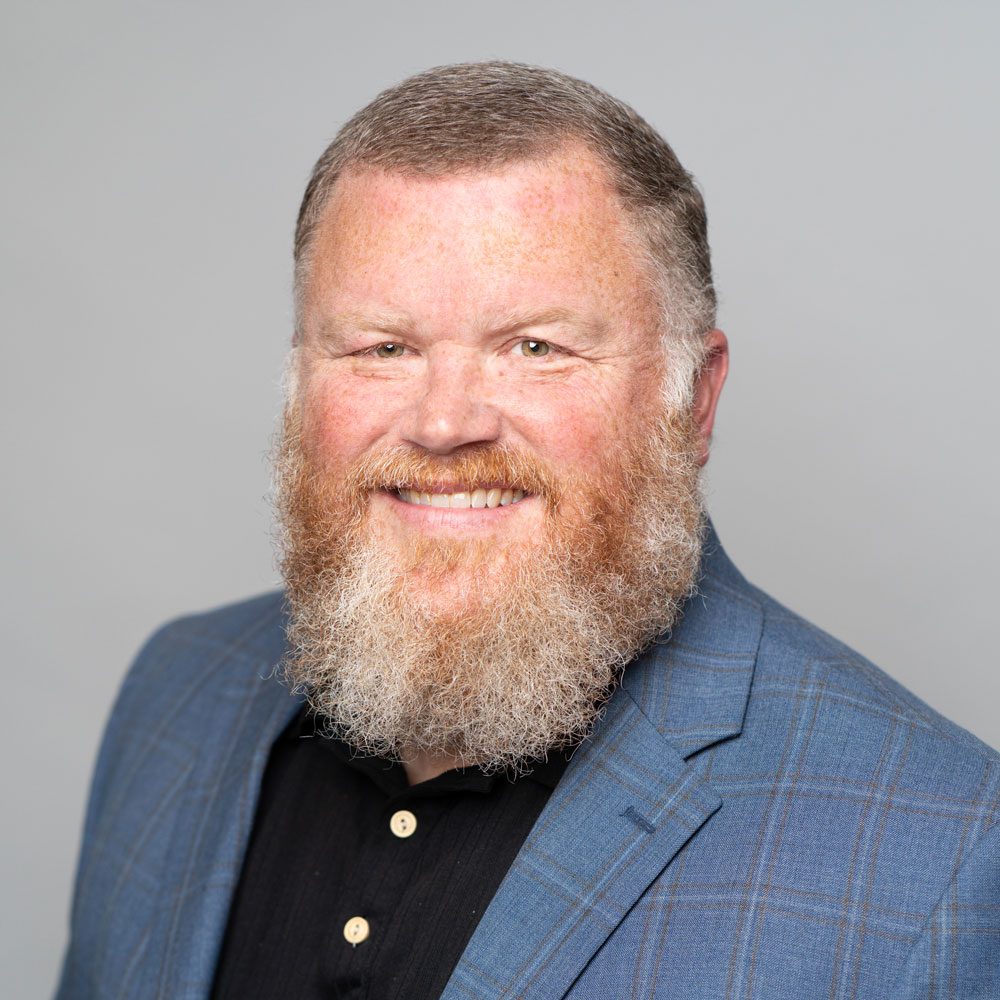
Chris Gillen was born into what he calls “a family of professional victims.” His dad could never own a decision: everything was somebody else’s fault. That same pattern passed down to Chris’s younger brother, who died by suicide at 34 after reaching a point where, in Chris’s words, “the world was a villain” and there was no way out. That’s the origin story behind what Chris now calls the Villain Trap: the ego in leadership that quietly sabotages companies, careers, and homes long before anyone notices it’s happening.
Chris is a leadership advisor and former executive with over 30 years of experience helping companies navigate rapid growth, change, and internal conflict. In our conversation he breaks down why the Villain Trap isn’t the leader who’s yelling and throwing things, it’s quiet: a leader gets feedback they don’t like, and instead of sitting with it, they start building a case in their head for why the person giving it is “out to get them.” We get into why ego makes that so hard to catch in yourself, and why he thinks humility has become a “dead skill set.”
We also cover the generational collision happening in corporate America right now (Gen X holds 70 percent of global leadership roles, and younger workers are pushing back on the “butt in the seat, 6 a.m. to 6 p.m.” model Gen X leaders are now enforcing), and why chasing KPIs over people quietly burns a culture down.
Watch this episode
In this episode
- Why ego, not incompetence, is usually what stops leaders from accepting accountability
- The “blame bubble”: how a quiet leadership pattern turns a colleague into a villain in your head, without anyone ever raising their voice
- Why Chris says humility is a “dead skill set,” and how chasing a polished image on social media works against real connection
- How ego in leadership shows up differently across generations, with Gen X now holding 70% of global leadership roles
- Why KPI-obsessed leadership burns people out, and what “coach, guide, develop, nurture” looks like instead
- The one accountability question Chris says has to come before any other: “what could I have done differently?”
Timestamps
- (00:01) Welcome and meet leadership advisor Chris Gillen
- (01:24) Growing up in “a family of professional victims”
- (03:15) His brother’s death at 34, and the moment the Villain Trap idea was born
- (06:42) Why ego stops us from accepting responsibility
- (09:42) The “blame bubble”: how a leader quietly turns a colleague into the villain
- (14:25) Vulnerability, authenticity, and why “look at me” leadership backfires
- (20:45) Gen X holds 70% of global leadership: what that means for the generational shift underway
- (25:31) What happens when companies chase KPIs over people
- (29:44) Why Chris wrote The Villain Trap, and who needs to read it
- (34:21) The accountability question that has to come first
About Chris Gillen
Chris Gillen is a sought-after leadership advisor and former executive with over 30 years of experience helping companies navigate rapid growth, change, and internal conflict. He’s worked with organizations ranging from lean startups to Fortune 100s, and is the author of The Villain Trap.
Learn more at TheVillainTrap.com, or connect with him on LinkedIn.
Favorite quotes
“Accountability begins with, in any situation: what could I have done differently, before you can say what could you have done differently.” —Chris Gillen
“Vulnerability isn’t weakness, it’s strength. It’s real strength.” —Chris Gillen
“The bigger the ego, the less humility that a person can have.” —Chris Gillen
Resources mentioned
- The Villain Trap, Chris’s book, available in hardcover, Kindle, and Audible: TheVillainTrap.com
- Chris Gillen on LinkedIn
Related episodes
- How to Build a Workplace Culture That Lasts: another leadership conversation about what actually changes a company’s culture from the inside.
- Stop Winging It: A Leader’s Guide to Resilience: more on what it takes to lead well under pressure.
- The Path to Trauma-Informed Leadership: pairs naturally with Chris’s take on leading with humility and self-awareness.
Subscribe & connect
If this episode gave you something to sit with, follow Phoenix and Flame so you never miss an episode: all apps in one place, or jump straight to Apple Podcasts, Spotify, Amazon Music, or YouTube. And if it moved you, leave a review; it’s the easiest way to help another listener find the show.
Learn more about Phoenix and Flame, connect with Dana, and listen to more episodes here.
Read the full transcript
[Dana] (00:01)
Welcome friends, whether you’re out on a walk, running errands, or relaxing at home, it’s wonderful to connect with you. Joining us today is Chris Gillen. Chris is a sought after leadership advisor and former executive with over 30 years of experience helping companies navigate rapid growth, change, and internal conflict. Known for his ability to cut through ego-driven leadership patterns with clarity and compassion, he has worked with organizations ranging from lean startups to Fortune 100s. Chris, welcome to Phoenix in Flame.
[Chris] (00:42)
Hi, Dana. Thank you so much. I’m so excited to be on the podcast. I’ve listened to your show and it’s just an honor to be here and to be speaking with you today. So thank you.
[Dana] (00:52)
This is going to be fun. There’s so much to talk about. In your bio, it talks about how you blend narrative psychology, emotional intelligence, and strategic development to help leaders rewrite the stories that shape their culture for good. There is so much right there that I could go in so many different directions, but I’m just going to take my cue from you. How did you end up here? Tell us a little bit about your journey.
[Chris] (01:24)
Yeah, thank you, I’d love to. I tell people when I talk about the book that this was a book that’s been almost 55 years in the making. I got a calling, I guess you could say, four years ago to really write it. I tell people my journey is interesting because I was actually born into a family of professional victims. And I say that and people are like, what does he mean by that? Well, listen, I love my family, I love my parents. But I had a dad who just would never, could never accept responsibility for his decisions and his actions. Everything was somebody else’s fault. And that’s how he lived his life. There was never anything that he would take responsibility or accountability for. And I watched how that affected our family. I was fortunate as the oldest child to have a deep relationship with my grandfather, who was the exact opposite. This was a man that was born in the Depression, took full accountability, responsibility for everything, and it instilled that mantra in me that when you make a decision, you own it, good or bad, you don’t blame anybody else for it. But in my family, I watched this whole concept of blame erode the quality of life my dad had. He ultimately died at 54. And I’d say he died a victim. He never got to know his full story, because he wouldn’t allow himself to take responsibility, to look internally and say, okay, what’s my role in this, what can I do differently? And unfortunately that was passed on to my younger brother, who was eight years younger than myself. And he fell into the same mentality of never being able to fully accept responsibility for his actions and decisions.
[Chris] (03:15)
Tragically, he committed suicide when he was 34. And I tell people that’s a terrible thing, but I tell people that he had reached a point in his life where the world was a villain. There was no way around it. There was nothing that he could do, nothing he could say that was ever going to change his circumstances. And he believed people owed him something, and he didn’t see a way out of that. And as a result of that, he took his own life. I think that’s the crescendo of what happens when you allow yourself to fall into blame. Somebody asked me, what is the Villain Trap? And I said, it’s born out of elements of psychology and emotional intelligence, but you know what it is: it’s a cycle that we fall into when we blame others to avoid facing our own accountability. It’s a choice. So sometimes people ask me, what’s the difference between being a real victim of something and being a pseudo-victim? I say, you’re choosing to do this. It’s much different than if I just go to the ATM and somebody hits me in the back of the head and I’m a victim of a crime. In this case, what we’re talking about are the conscious decisions that people make where they allow themselves to pass off blame and to not accept accountability, and they place that on other people because it feels better when they do that. So that’s really how I got into this with my family. And then I started to see the same things when I was in my corporate career for 30 or 35 years, where leaders and employees of companies point fingers, and I really started to see how that impacts the organization culturally.
[Dana] (04:56)
Wow, okay, so many places to go. So let’s rewind, and I’m going to hover over a little bit about your experience with your dad, because when people are at work, those are people, they’re at work, but they’re still the same person. They’re going to enact the same habits and patterns, they don’t just magically transform into someone else when they walk through the threshold of the employment place of business. Understanding the whole picture is so fascinating. My mother was similar, describe your dad, and I can remember making a comment one time to a medical resource agency that I was talking with regarding her, and I said, the thing is she can do these things, she just won’t. And so, because you were talking about the difference between someone asking you, what’s the difference between someone who’s a legitimate victim versus a pseudo-victim, it’s that choice, and it’s that cascade of things that happens after that. So I’m interested in your conclusion, from your experience personally and professionally, what do you feel like prevents people from accepting responsibility? Because I know we have listeners right now who know people like that, or maybe they’re thinking, gosh, is that me, could that be me, or they know someone exactly like what we’re talking about. So I’m wondering from your experience, what conclusions have you come to about what prevents people from accepting responsibility?
[Chris] (06:42)
Yeah, that’s a great question. And I think there’s really one prominent thing, which is our ego. The way that I like to break it down for people in non-clinical terms is your ego is that little voice who creates a story about you and how you see yourself. And so we all walk around and we all like to believe that we see ourselves as these infallible, perfect, look-at-me, look-at-what-I’m-doing, look-at-all-this-stuff-that-I-have people. And we know that’s not the real story, that’s just the story that our ego is telling us,
[Chris] (07:20)
and the image that we portray out to other people. So one, I think oftentimes what holds us back from accepting accountability and responsibility is our ego won’t let us, because it’s counterintuitive to what we believe about ourselves. I use the example sometimes that if you’re a leader of an organization and people like you and they’re giving you praise, “I love working for Dana,” which is all good stuff, but what happens is that story begins to manifest itself in you as a leader, and the ego is saying, yeah, you know what, I am really, really good at what I do, I’m a great leader in what I do. When somebody then comes along and gives us feedback that’s counter to what we believe, our inclination is to reject it, our inclination is to say, that’s not me, I don’t do that, because ego has painted this story about us that we begin to believe is true. So I think that’s one big element: when we start talking about accepting accountability for our choices and our decisions, and we feel that they’re right when we’re told differently, there’s this cognitive dissonance: I hear it and I go, oh, that’s not me, that doesn’t sound like me. I think that’s one. Two is, along the same vein, my dad could absolutely do everything that he said he wanted to do. There was nothing stopping him from doing it except himself. And I think part of that was just the fear of being able to put yourself out there, the fear of learning, because again, the ego likes to tell us that we have all the answers, that we know everything. To really grow and develop, you’ve got to reach a point where you say, I don’t know, I want to learn, I want to ask you, I’m not good at this, what else could I be doing? And I think those two things
[Chris] (09:13)
really keep people in this box, or in the trap, as I like to say, where they’ve just reached a point where they’re saying, I believe who I am and this is how I am, even when the world sees us differently, and we fail to take a step back, humble ourselves, and have humility to say, you know what, maybe I’m not as good as I think I am, or maybe I don’t know as much as I think I do, and put ourselves out there to learn it. I think those are the two biggest things that stop us.
[Dana] (09:42)
And I can see that so much in a personal life and also professionally, how that would impact people. So given what you’re saying, what have you experienced and run across that helps people to accept information about themselves that is counter to their story? Especially, they need to grow, but they’ve decided, okay, this is what I believe about myself.
[Chris] (10:02)
Yeah.
[Dana] (10:09)
So what components, what factors have you run across that actually help people to accept this information that may be absolutely true, or at the very least it’s legitimately someone else’s opinion? What helps them to receive that, versus saying, you’re wrong, this is who I am, this is what I do, you need to go away and shut up because I’m not going to listen to anything you have to say? What helps them not do that?
[Chris] (10:36)
Well, I don’t know how much experience you’ve ever had in your life with dealing with anybody who has an addiction, a true addiction. And the first thing that you learn, because I came from a family of addicts, is you can’t help anybody unless they’re willing to help themselves. There’s nothing you can say, nothing you can do that’s going to change what they’re doing or what they think. So the first thing I tell people is, don’t be preachy, don’t run around and tell people what they need to do: “Dana, I think you need to do this,” because that creates that cognitive dissonance right out of the gate. You’re never going to get anywhere. I think what really helps people
[Chris] (11:20)
come to grips with how to change is, like my book, reading a book that allows you to open yourself up to say, is this me, do I do these things, objectively? If you do that, and if you say, yeah, you know what, I do do that, then it becomes easier to help somebody through the cycle of what the Villain Trap is all about. Because remember, the Villain Trap is not that leader who’s throwing things and yelling and screaming, like what you would probably see when we talk about a bad leader. What this is is quiet. This is the “put baby in a corner” moment, where you say something to me that I don’t like as your leader, and then I go through a process, which is really what we refer to as the blame bubble, where I’m then saying, “Dana’s telling me these things because she’s always been after my job, and you know what, I don’t want to include Dana in all of these meetings anymore because I think she’s out to get me.” That’s that silent creation of the villain in your narrative that allows you to accept “it’s not me, it’s Dana,” and quietly push Dana out. And so sharing examples with leaders in particular, I haven’t met a leader yet that has read the book and said, gosh, I do this. They all come back and say, oh, that’s not me, I don’t do that. And the reality of it is, they do. And we help them through some workshops and try to get some feedback from people, because they don’t think they’re doing it. So it’s a challenge, because you have to accept that you need to change, what you’re doing and how you’re leading. A lot of people that have read the book have said the same thing: where was this 30 years ago, I wish I would have read it as a new leader. And I think it’s perfect for anybody entering the workforce as a new leader, to really read it and understand it before you get ingrained in your leadership style and your certain way of doing things. But like anything, it’s a process, people have to legitimately assess themselves and say, what can I do differently, and then apply some of the principles in the book to help you do that. The last thing I’ll say, Dana, and I think this is big, is if I were to tell anybody, get off social media. I think social media is one of the worst things you can do from a humility perspective, because social media for most people is used to be “look at me, look at what I have, look at what I’m doing, look how good I am.” And all that does is fuel that ego. And the bigger the ego, the less humility that a person can have. So I always tell people, put it in check, you’re not as good as you think you are, you’re not as great as you think you are, we all have the same flaws and issues and problems, embrace those.
[Dana] (14:25)
I love this. I have all kinds of questions, so it’s a good thing I’m writing these down, Chris. One comment I want to make, and it’s kind of pinging off what you just said, is I just got finished going through a Mic Drop Academy with Jess Ekstrom, so much fun, but it’s learning more about keynote speaking, and I think Brene Brown and people like this, you want the connection, it’s not about getting on stage and performing, it’s about connecting with people. And we do this lots of times through vulnerability. As a leader, I think leaders are given this idea that we have to put ourselves out there on social media as this “look at all this wonderful stuff I can do, don’t you want me to come do it for you.” And so as a leader, you’re afraid to expose any weakness. But I think what Jess Ekstrom was talking about is, if you’re going out and you want to speak to corporations and connect with the people there, it’s about the vulnerability. And as a leader,
[Dana] (15:49)
whether you’re a manager, whether you’re a keynote speaker, whether you’re a director, wherever your space is, whether you’re in your pod of people, just a leader as a human being, a leader in your family, a leader with your friends, being willing to be vulnerable, being willing to share those things that you don’t do well, that you made a mistake, and then when you do that, I think other people let their guard down and go, man, me too.
[Chris] (16:18)
Yeah.
[Dana] (16:18)
You have that “me too,” and that creates connection. Do you run into that too?
[Chris] (16:25)
I like to use the word authenticity, I think that’s…
[Dana] (16:28)
Yes.
[Chris] (16:29)
what people are really looking for these days, because everything seems so plastic, fake. I’m on LinkedIn a lot, and I’ve never seen anybody post on LinkedIn, “man, I really messed up something today, let me show you some pictures of what I screwed up.” You never see that. What you see is “look how wonderful this is, look at me, look at all the wonderful things I’m doing.” And I’m not saying that’s wrong, if you’re proud, shout it out, but put it in perspective and know that the image you’re portraying to other people is not the real story, that’s not your real story. If you want to make a connection with people, then be authentic, tell people you’re human, you’re fallible. These are the things I do, have humility. I just wrote an article about how humility is a dead skill set. You very rarely run into, especially senior leaders, who are humble and down to earth, not arrogant, don’t have egos. I went to a conference once, Dana, I’m not going to say the name of the company, but let me just say, this company’s whole mantra is helping people, that’s what they do, they’re an organization known for helping the less fortunate, and it was a CEO conference, so all their CEOs were there. And I’m thinking, wow, this is an organization that’s dedicated to literally helping the disadvantaged. And they were the most arrogant people I think I have ever met in my life. So I asked myself, why are you working for an organization whose whole mantra is to help, yet you’re portraying yourself as somebody who doesn’t help, that you’re better than everybody else, better than the people that you’re helping. When I look at that I say, where is the humility? It doesn’t matter if you’re making 20 million dollars a year or 20 thousand dollars a year, we should all be supportive of each other, regardless of what we have and who we are.
[Chris] (18:38)
And I think that’s a really important thing for people to take away: vulnerability isn’t weakness, it’s strength. It’s real strength. It’s scary to do it, because it’s counterintuitive to what our ego is telling us to do.
[Dana] (18:46)
Yes. That’s fabulous, because it reminds me of a comment that I hear, fortunately not as much as I used to in my psychotherapy practice, that someone will come in and say, “I feel like weak people have to come to therapy.” I’m like, but that’s the strongest thing, because you’re willing to come here and be authentic, to be real, to be honest about what’s, I mean, it’s going around in your head anyway, so you might as well come in here and cough it up so we can do something with it. The people that are weaker, at that moment on their journey of life, they’re not ready to face those things. So I want you to view your time here with me in my office as a position of strength. Being willing to be vulnerable is a position of strength. Now let me ask you,
[Chris] (19:38)
Yeah.
[Dana] (19:45)
do you feel like everything that you’re talking about, because we were chatting earlier, listeners, before I hit record, but I hit record as soon as I could, we were talking about the generational differences. It seems like the younger generations, the Gen Z, the Gen Alpha coming along, they seem to value authenticity more. We’re both Gen Xers, and we were talking about how when we were raised, people didn’t want to know, you didn’t share stuff, you just basically got shit done, you just shut up and got shit done, and you didn’t talk about your feelings, you just kept at it, you didn’t challenge anything, you didn’t ask any questions. And it caused a lot of problems because of that. So the younger generations are looking at things from a very different standpoint. So share with us your wisdom and your experience about that.
[Chris] (20:45)
I love it, because I often talk about how there are multiple factors, not just artificial intelligence, which everybody will have you believe, that are reshaping the way we think about living and working. One of them is this massive generational change that’s happening. If you think about this: boomers and Gen X have been in control of corporate culture and structure and work ethic for the last 50 years. And here’s an interesting statistic, as I was researching for a paper,
[Chris] (21:20)
Gen Xers, which is, we’re often called the forgotten generation because we’re sandwiched between boomers and millennials, we’re small comparatively. Gen X holds 70% of all leadership positions globally today. So think about this for a minute, and I’m going somewhere with this. 70% of leaders are Gen Xers globally for corporations. As you mentioned, we’re the boundary-less generation, because we grew up as latchkey kids, we were independent, we never got to be children, we went right in because both parents worked and had all these things going on, and we were raised to work. That’s what we did. When I was growing up, you went to school, you go to college, you go get a job, and you do whatever it takes to get promoted and advance. We would move anywhere, we would do anything for no money. Somebody would come to you and say, “Dana, can you just pick up this department for us, it’s going to be a learning thing, it’s going to be a great growth and development opportunity,” and you would say, you never thought to ask for more money, you just said, yeah, I’m in. And you were there 6 a.m. to 9 p.m., and that was your life, your life was all about work. Again, I’m not suggesting that’s good or bad, it’s just what it is. You have this generation, I think it started with the millennials, kind of questioning the whole work ethic and what I get out of it. And now you have Gen Z, Gen Alpha coming up that have boundaries. They’re now saying, “I’m not going to go anywhere and do anything for no more money, I’m not going to give you my services for nothing, you’ve got to come to me.” And now it’s kind of got to be a tit-for-tat relationship, I’m giving you something, you’re giving me something, that’s so drastically different than what corporations have done for the last 35 years. What you’re seeing now is companies trying to fight back against this by saying, “you’re coming into the office five days a week, I don’t care if you want flexible working relationships, this is what you are going to do, because that’s what we did, that’s what Gen X did.” And where do you think those decisions are coming from? They’re coming from our generation, who’s saying, “wait a minute, you can’t work from home, I never worked from home, you’ve got to be in the office, you’ve got to have a butt in the seat, you’ve got to be here from 6 a.m. to 6 p.m.” And so companies are pushing back against this, the employees, the workers are saying, no, that’s not the way it’s going to be anymore. And what you have is just this impending change that will take place over the next two or three years, to see what the future of work looks like.
[Dana] (24:11)
Gosh, it’s going to be interesting. It’s going to be very interesting. Because I’m thinking earlier about what you said about rewriting the stories, because that’s going to happen, because time is going to keep passing and the stories are going to be rewritten. So I think it’s amazing for people like you, Chris, and myself to have these conversations, to talk about how can we reach out and help in this process so that it gets rewritten in a very positive, productive, wonderful way that’s good for the company, for the bottom line, and also good for the employees. In my mind, it’s the same thing, my keynote is becoming the CEO of your mental boardroom, banishing burnout with boundaries, to prevent that overwhelm and quitting, which is in turn costing the companies a lot of money.
[Dana] (25:10)
So again, I have so many more questions and I’m looking at the time.
[Chris] (25:16)
Yeah.
[Dana] (25:21)
Let’s talk about KPIs for a moment and explain that to my listeners, and what happens when companies become too focused on the KPIs.
[Chris] (25:31)
Key performance indicators, obviously every corporation has them, they have those identifiable metrics that determine success or failure in an organization, and in most organizations, and I know in every organization I’ve ever worked in, they’re the end-all be-all. That is how you are measured, you look at the KPIs. The problem with the KPI is, all too often, people don’t care how you get there, they don’t care how I got the result, they just want the result. And when you operate a business like that, you’re making decisions purely off a number, or purely off a set of goals that you want to hit, and you’re willing to do whatever to be able to go hit those goals. The problem with that is that all too often, the human element of the employee falls out of the equation, because now I’m just thinking, “Dana, you’ve got to come into my office, I need you here for 12 hours, you got to hit this number,” and we stop thinking about the human element of the business.
[Chris] (26:24)
And so now it’s just performance over people, it’s profit over people. And that’s typically what happens in all of these organizations, where they just stop thinking about the good of the worker. What can I do to make you better, Dana, how can I get more performance out of you by nurturing you and developing you,
[Chris] (26:55)
by creating a safe space for you to work. Now it just becomes, well, Dana, if you can’t do it, somebody else will do it, so get out. And you’re never going to create a truly employee-centric organization when your sole motivation is KPI. And it’s counterproductive to everything we have ever been taught to think about from a business perspective. Can you effectively run a consciously capitalized business if you’re never thinking about your employees, if you’re only thinking about the end goal and the profit? So what I tell people is, yes, goals are important, we all have to hit those, but focus more on how you hit the goal, not just hitting the goal, because when you do that, suddenly the people become in play, and now I need to get more performance out of Dana, and more performance out of Tom, what do I need to do, I need to nurture, I need to develop, I need to give you the tools and resources to do that. And that’s the essence of the future leader. The future leader should be that person that is there 100% of the time to make their team better, that’s what their role is, that’s what they do. They’re not the doer, they’re not the driver, they’re there to coach, guide, develop, and nurture the team. When you do that, not only will you hit KPIs, but suddenly the employee culture changes in your organization, because people feel heard and they feel valued and they feel part of something, versus “go hit this number, well how do I do that, I don’t care, just go hit it.”
[Dana] (28:30)
You know, Chris, what’s interesting though, as I’ve heard from discussions with corporate leaders, is that yes, on the one hand, they’re talking about the KPIs, but out of the other side of their mouth, it’s about “we want engagement,” that’s the big buzzword, we want engagement. And so the engagement is more about what you’re talking about, because the bottom line is happening from the people, and if they don’t feel like they can continue, if they don’t feel heard and nurtured and supported, then they’re going to leave. And then where’s your KPI then? So one last thing, I want you to think about the Villain Trap, and how do you feel like, what would you want to leave my listeners with, if they haven’t read your book, they’re going to now because they’re hearing about it, they’re like, oh my gosh, this is going to sound so interesting, I’ve got to read this Villain Trap. What is a hook that you want to put out for them? How does it influence, if you were to read the book, if someone’s thinking, well, I’m awfully busy, Chris,
[Chris] (29:44)
Yeah, which everybody says.
[Dana] (29:46)
I’m awfully busy, do I have, what’s in the Villain Trap, why do I want to read that book, why do I want to make time, what kind of difference is it going to make in my life to go get that book and read it?
[Chris] (29:58)
I would say a couple of things about it. One, I would say the world is changing, and everybody kind of goes to AI, and it is, AI is going to be a massive disruptor, it’s already become a disruptor. But there are so many other forces at work right now: declining birth rate, massively aging population, it’s going to be the largest group of people that have ever retired in the United States over the next 10 years, you’ve got birth rates at historical lows, you’ve got Gen Z and Gen Alpha who are rewriting the script on everything. They’re not drinking, Gen X was the drinking generation, this generation isn’t drinking, that’s a ripple effect across so many different industries. They’re not consuming like we consume, the material aspect of things gives way to more experiential things. Society as a whole, whether you want to believe this or not, is undergoing significant change. That means you as a leader, and you mentioned this before, Dana, not just at work, but a leader in your home, a leader in your community, a leader in your church, you’re going to have to change to adapt, or you won’t be part of the new civilization going forward, because you won’t recognize it. And to do that, you’ve got to recognize, especially as leaders, when you think about leading this generation, you’ve got to recognize your own shortcomings and what you do. And that’s what this book does. This book takes what I believe is an epidemic of blame, because you can see it, watch the news, watch social media, nobody’s accountable for anything, “it’s not my fault, oh, I robbed your house, well, that’s not me, that’s somebody else.” So this is what the book does. I think the book, if you allow it, and if you open yourself up to say, I’m just going to read it and not have any preconceived notions, it will help you understand how you can get rid of blame, how you can accept accountability and responsibility for your actions and your decisions, and embrace those holistically to get to a real story and not be afraid of it. If you’re going to post a success story on social media, that’s great, but the next day post something that isn’t great, I guarantee you, you’ll get more connection with people when you do that, versus the “look at me and look at what I have” kind of thing. That’s where we’re headed. I just don’t think a lot of people really understand all of these macro forces that are all competing at the same time right now, which is why people feel
[Chris] (32:38)
weird, I think that’s a word most of us talk about, it’s a weird time, with everything going on, I think this offers some level of grounding. The last chapter in the book is dedicated to the Villain Trap at home, because there’s nobody we villainize more than our family and our loved ones, and you do it a thousand times a day and you don’t even know it. So this is going to help you not only in your work relationships, but I believe it’s going to help you in your personal relationships as well.
[Dana] (32:42)
Yeah, that’s fabulous because they overflow. I’ve had conversations about burnout, and because of what I do for a living, I know that how someone functions at home bleeds into who they are when they walk through the doorway at work, and what happens to them at work is on their shoulders as they walk through the doorway at home. It weaves back and forth, we are a whole person, and so it’s definitely within our best interest to focus on both of those landscapes.
[Chris] (33:36)
That’s exactly right. And I really feel like we’ve reached a point in society where it’s just natural for us to say, no, it’s not my fault, no, I didn’t do it, it’s somebody else’s, and blame. I always say in the book, it makes your ego feel better, makes you feel better, because you don’t have to take the responsibility. But quietly, it’s eroding how you think and how you feel and how you look at the world, versus taking accountability and ownership. And think about it, if everybody in the world thought before they made their decision or took their action, how is this going to impact me and others, and then made the determination whether they would or would not do that, we would be living in a completely different world than we are today.
[Dana] (34:21)
No, 100%. I’m thinking as you’re talking, one of the slides in my keynote is you have to own it to change it, because you can’t change something that doesn’t belong to you. Initially, it feels kind of good blaming everybody else, but if it’s someone else’s fault, you don’t have the ability, you have no agency to change that.
[Chris] (34:29)
Yeah, you give away your power. Every time you blame somebody and you point the finger and say, it’s you, not me, you’re giving away power. You’re giving away the power to actually look in the mirror and say, what changes do I need to make, what can I do differently? That’s where it really begins. Accountability begins with, in any situation, what could I have done differently, before you can say what could you have done differently.
[Dana] (34:44)
Yes, absolutely. Man, Chris, before I let you go, I need to find out, the link I had from PodMatch looks like it goes to Amazon to get your book, is there a website that you want my listeners to go, because I know they’re going to want to go someplace to find out more about you. Where do you want them to go?
[Chris] (35:30)
Sure, www.thevillaintrap.com. If you go to the website, you can learn more about me, you can learn more about the book, and you can learn more about keynote speeches and workshops that I perform for companies. The book is available on Amazon, it’s called The Villain Trap, and it’s available in hardcover. It’s also available in digital on Kindle and on Audible as an audiobook, if you want to go check it out. So multiple ways for you to go check it out.
[Dana] (35:58)
That’s wonderful. And I want to thank you for spending your time and your energy to create that book, because that’s like an effort of love, it’s a lot, and you have to sacrifice your time and other things that you would rather be doing to really put that together and make it sound exactly the way you want, and then go through all the publishing stuff and all the things. Thank you for doing that, so people can read it and benefit from that. Thank you, Chris.
[Chris] (36:27)
Yeah, thank you. I hope so. It was a real labor of love for me. If you’ve ever written a book, you don’t write a book and become a millionaire, you write a book because you want to get the message out. And that’s really what I want, if I can help one leader, if I can help one organization cut through blame and create a better culture internally for them, or help a leader feel more grounded and more realistic about what they’re doing, that’s the essence of the book. And I love talking about it, and so it’s fun for me to get out and have these conversations.
[Dana] (37:01)
Yeah, fabulous. Chris, thank you for spending your time today to come on my podcast and to share your wisdom and your experience and your journey with myself and my listeners. Thank you.
[Chris] (37:13)
Thank you, Dana. I was happy to do it.
[Dana] (37:15)
All right, listeners, I know that you’ve heard multiple things today that you’re thinking, oh my gosh, I have a friend, I have a coworker, I have a family member that absolutely needs to hear what Chris Gillen has to say. Take this episode, copy and paste it, send it in text, send it in email, put it on your favorite social media platform so that we can spread the word, we can grow our Phoenix and Flame community to let people know you are not alone. I hope your day is great. I hope the rest of it goes fantastic. I’m Dana on Phoenix and Flame.
Are your work boundaries supporting you—or quietly draining you?
Take my free Work Boundaries Quiz and find out where you stand.