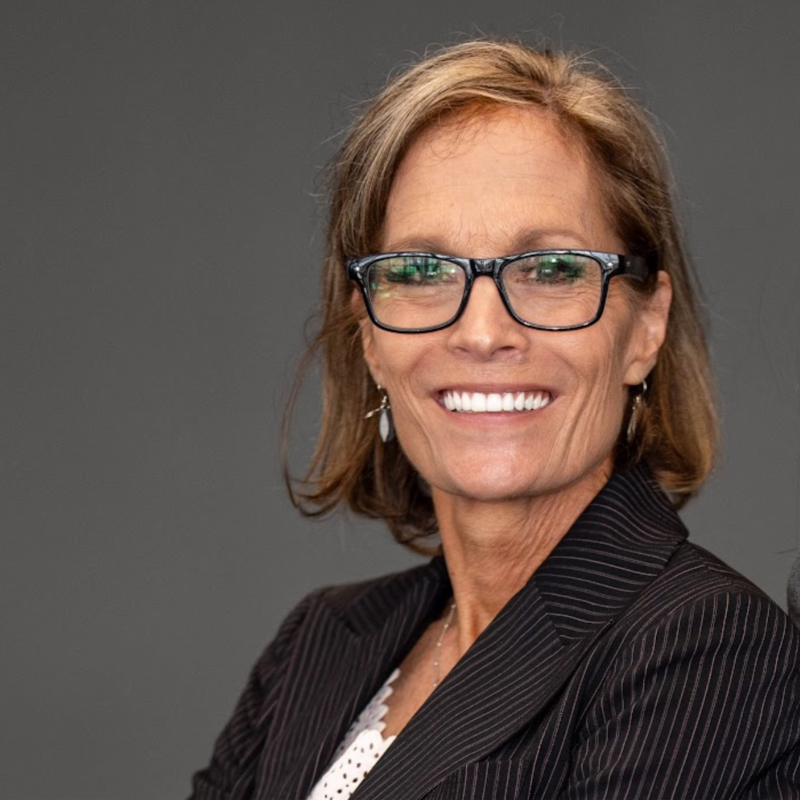

First aired June 19, 2023
Some people quit a job. Danielle Sunberg quit big law in one sentence she didn’t even plan to say. She’d just helped her team win a trial against a $6 billion judgment, and the partner on the phone told her he’d see her back in the office in two weeks. She thought about her actual office, that glass fishbowl in Washington, D.C., her stomach tightened, and “I quit” flew out of her mouth before she’d decided to say it. If you’ve ever felt that same tightening walking toward a job that looks perfect on paper, this conversation is for you.
Danielle is a wellness entrepreneur, transformational coach, and keynote speaker, and a former corporate litigator who spent years doing everything she’d been taught would guarantee lifelong happiness: work hard, get the prestigious job, win the case. She had all of it and still felt misaligned, so she went looking for why, and turned that search into her book “Atlas of Being.” We talk about the persona she’d built as a “big law DC attorney,” why the risk of staying eventually outweighed the risk of leaving, and what she learned traveling to Thailand and Greece with no one around who knew her as anything but herself.
We also get into her idea of “empty words,” the agreements we sign onto without meaning to, and how learning to hear your own inner voice, what she calls the space underneath your thoughts, is the real first step toward realignment. If you’ve been quietly building a life that looks right from the outside but feels wrong from the inside, Danielle’s story is a good place to start questioning it.
Watch this episode
In this episode
- Why “I quit” can fly out of your mouth before you’ve consciously decided to say it, and what that tells you
- How to tell when the risk of staying in a job has finally outweighed the risk of leaving it
- Why traveling somewhere no one knows your resume can help you peel away a persona you’ve outgrown
- The difference between having a thought and believing a thought, and why that distinction changes everything
- What “empty words” are (the agreements you never actually signed) and how to stop co-signing other people’s expectations
- How to hear your own inner voice, or as Danielle calls it, “the space underneath our thoughts”
Timestamps
- (00:01) Welcome and guest intro: meet former Big Law attorney Danielle Sunberg
- (04:19) The trial, the $6 billion judgment, and the “I quit” that flew out before she planned it
- (08:20) The big-law-DC-attorney persona, and what it costs to keep it propped up
- (10:32) What opened up traveling to Thailand and Greece, where no one knew her old story
- (12:11) Why the risk of staying finally outweighed the risk of leaving
- (16:47) The frog-in-the-pot problem: how we stay in situations that keep getting a little hotter
- (19:09) The “space underneath our thoughts”: learning to hear your own inner voice
- (25:29) The chicken-restaurant story in Thailand and the lesson in not projecting your framework onto others
- (30:36) The storm on the boat in Greece: two people, one experience, two totally different realities
- (34:27) “Empty words”: the agreements we never actually signed
- (41:44) Where to find Danielle and her book, “Atlas of Being”
About Danielle Sunberg
Danielle Sunberg is a wellness entrepreneur, transformational coach, and keynote speaker. A former corporate litigator at an award-winning Washington, D.C. law firm, she left the profession after successfully defending a client at trial against a $6 billion judgment, and documented her journey of self-discovery in her book “Atlas of Being.”
Learn more at DanielleSunberg.com.
Favorite quotes
“Who we are in this moment does not need to be who we remain. Something strange happens in adulthood where we believe we are done becoming ourselves.” —Danielle Sunberg, from “Atlas of Being”
“The risk of staying at the law firm was higher for me than the risk of leaving, because I had reached my threshold of what I was willing to tolerate as far as suffering.” —Danielle Sunberg
“Empty words are things we say that we don’t believe. They are the agreements that we don’t sign, and they have no power.” —Danielle Sunberg, from “Atlas of Being”
Resources mentioned
- DanielleSunberg.com: Danielle’s website
- “Atlas of Being” by Danielle Sunberg
- “The Power of Now” by Eckhart Tolle
- “The Four Agreements” by Don Miguel Ruiz
Related episodes
- Why Your Midlife ‘Crisis’ Might Actually Be Burnout: another conversation about the body finally forcing a reckoning with a career that no longer fits, and what to do the moment you notice it.
- Overcoming Burnout, Hustle Culture, and Redefining Success: more on walking away from the version of success you were told to want.
Subscribe & connect
If this episode gave you something to sit with, follow Phoenix and Flame so you never miss an episode: all apps in one place, or jump straight to Apple Podcasts, Spotify, Amazon Music, or YouTube. And if it moved you, leave a review; it’s the easiest way to help another listener find the show.
Learn more about Phoenix and Flame, connect with Dana, and listen to more episodes here.
Read the full transcript
[Dana] (00:01)
Welcome to Phoenix and Flame. I’m Dana and this is my podcast on pushing through and transforming even when you feel like a pile of ash. I have to say that I just absolutely love doing podcasting because I get to talk to some of the most amazing, wonderful people who have done just amazing things. And today is no exception. Today we get to talk with Danielle Sunberg.
[Dana] (00:32)
Now, Danielle is a wellness entrepreneur, transformational coach, and keynote speaker. A former big law attorney, Danielle worked as a corporate litigator at an award-winning law firm in Washington, D.C. After successfully defending her client at trial against a $6 billion judgment, Danielle left the firm to discover what truly inspired her. For years she lived her life according to the values she had been taught: that in order to have lifelong happiness she needed to work hard, get a prestigious job, and achieve success. As an attorney she had accomplished all of that, but something was missing. She was not happy and felt like her life was somehow
[Dana] (01:32)
misaligned. She had no idea why or what to do about it. Her literal and figurative journey of discovery is documented in her book “Atlas of Being.” Danielle, welcome to Phoenix and Flame.
[Danielle] (01:51)
Thank you, Dana. It’s so fun to hear you read my little bio. I’m like, who is that? She sounds great.
[Dana] (01:58)
(laughing) This was, well, I’m telling you, I read a lot and I hate to say this, but I’m just, you know, on Phoenix and Flame, we’re just honest. I’m kind of a reading snob, I have to say that, because my IQ is a little higher than average and I just pour through books. I’m a reader by nature. So I get bored with books and I’ll put them down, I’m like, ain’t no way I’ve got time for that, I got too much to do, I’m not going to waste my time reading a book that
[Danielle] (02:30)
(laughs)
[Dana] (02:31)
just tells me something I already know, or that, to be honest, sounds stupid. Well, your book is none of that. Your book captured my attention. I was able to latch onto things you were saying. And I’m also very much a practical realist. I’ve been around this world long enough to know what really matters, what does not, and what’s going to stick with people. I’m kind of an application person: how something’s going to apply to real life, and if I don’t see how it applies, then I just don’t have much use for it. I’m flushing it in my mental toilet, I don’t even care, don’t have the mental bandwidth for things I don’t see mattering. Your book has all kinds of stuff. I’m about halfway through, I haven’t even gotten to the last half yet, but already I’ve got things underlined, notes in the margins, all kinds of stuff, because it was
[Danielle] (03:27)
(laughs)
[Dana] (03:31)
real, and I like the way you shared your journey in the book. So I’m going to stop talking so much and just let you share with us a little bit about you and what that was like. Let me start with the question right off the bat: you were in big law, which means big money, and you had just defended
[Dana] (04:02)
against a $6 billion judgment. And then I’m imagining what this must have been like when you just said, okay, I’m going to exit stage left now. Let’s start there. What, oh my gosh, what was that like?
[Danielle] (04:19)
First I have to say I appreciate your feedback about the book, and that’s in large part a big driver of why I wrote it, because I’ve read a ton of self-development and spiritual type books, and they can be really intriguing and offer really interesting concepts, and I can go, ooh, I really like that. And then it leaves you there. It’s like, well, what happens next? How do I integrate this into my life
[Danielle] (04:49)
and use it to actually up-level the way that I am in the world? So I really appreciate what you said. To answer your question: I flew home from that trial totally exhausted, burnt out, stressed out. It was the kind of trial where we were all living out of a hotel room and using the ballroom, reserved for the entire span of the trial, this huge hotel ballroom for our seven-, eight-attorney team, paralegals, legal assistants, mountains of paperwork, printers, all the time, and copiers, and food carts coming in. We’d have to wake up, we being the associates, before the partners, so like four or five in the morning, to get to the ballroom and start working and prepping for court that day before the partners came, because God forbid they come in the room and the associates aren’t already there, right? And then at the end of the day, same thing: no way we could go to bed before a partner goes to bed.
[Dana] (05:55)
Hmm?
[Danielle] (06:02)
So this went on for a month, no time to exercise or go to the supermarket and grab a carrot to eat, it’s just delivery food. So I go home and I’m just unwell from tip to tail, every direction, unwell. And the partner calls me to let me know that the jury came back with their verdict and we won. And he said, I’ll see you back in the office in two weeks, I’m going to go take a vacation. And that’s the first time I thought about my actual office, in my office building in Washington, D.C., that little glass fishbowl I was going to have to go back to on Monday. And my stomach just tightened. And before I knew it, I said, “I quit.” And it flew out of my mouth, and both the partner and I were like,
[Dana] (07:01)
Oh
[Danielle] (07:02)
that really just happened. And yeah, so I gave my two weeks’ notice, and that was sort of the end of that career. So fast, so sharp, so fast.
[Dana] (07:15)
Oh my goodness. I’m thinking that I have listeners out there who are in somewhat similar circumstances, where the thought of going to work the next day causes that same tightening in their stomach. And you had a quote in your book that I want to bring up now, because I think it really weaves in with what you just shared, and I wanted to get your thoughts on it. I think it was quite profound. For those of you following along at home,
[Dana] (07:45)
it’s on page three. It says: “Who we are in this moment does not need to be who we remain. Something strange happens in adulthood where we believe we are done becoming ourselves.” I thought that was really interesting, and it happens a lot. So what are your thoughts on that? I want to hear about the trip and everything too, but what comes to mind?
[Danielle] (08:20)
That sentence is really potent for me too, still, just listening to you say it, because what I found is that we spend so much of our energy and time pouring into strengthening this persona that we walk around the world with. Mine happened to be this big-law D.C.-attorney persona: I would look in people’s eyes and see how they thought of me, knowing that was my persona, when they’d meet me and the first question in D.C. is always
[Danielle] (08:51)
“what do you do,” right? So immediately they’d know this is who I am. And I would see in their eyes, okay, instant respect. They think of me as competent, intelligent, prestigious, successful, worthy of time. All of these things that I needed to validate this persona I had been spending so much time working on. And what happens is it can almost calcify around us. As we grow past those personas, we sometimes don’t let ourselves take that shell off and go get a new one.
[Dana] (09:32)
I feel, as I’m listening to you describe that, a fear that people would have. I’ve not only walked with a lot of my patients through this, I’ve experienced some of it myself through this rebranding thing I’m still in the process of doing. Side note: I’ve got a meeting with my consultant later today that’s supposed to be, as she’s called it, a huge meeting, and I’m like, oh God, do I need some wine? Is there some wine? Because of the fear, you know, you feel like you need to grow, but there’s the fear too. And I’m really interested, as much as you want to share, in the mental space that opened up for you when you went to Thailand and then Greece,
[Danielle] (10:07)
(laughs)
[Dana] (10:32)
and the things you allowed yourself to learn, opening your mind, creating space for that. But that required you to face the fear of, I’m imagining people listening going, okay, now let me get this straight: Danielle was a big-law attorney, saying “I’m a lawyer, I work for this firm, I’m doing well,” whatever,
[Dana] (11:02)
and then you were able somehow to just turn your back on that. And you went to places, and by the way I’m reading the book, that you had never been before, facing a lot of unknowns. That’s a theme that runs through it, the unknown, what you feel in the unknown. I want to hear you talk about that. What was that like for you, and what did you learn?
[Danielle] (11:31)
Hmm, that’s such a great question, there’s so many ways to go with it. So the fear is partially, a lot of the persona I had developed had gotten me really far in life. So to give it up is like, okay, am I letting go of the safety, the stability, the security of who I am in this world? And I don’t know what else is out there for me, I don’t know who I am without those things. It’s a huge identity crisis. But what happened was
[Dana] (12:07)
Yes.
[Danielle] (12:11)
the risk of staying at the law firm was higher for me than the risk of leaving, because I had reached my threshold of what I was willing to tolerate as far as suffering, as far as going into the office every day feeling empty and numb, being diagnosed with depression, feeling like, okay, I can see what happens from here
[Danielle] (12:42)
down the road: I get promoted to partner, and that’s how things go. And even though that’s years down the road, it was just a few feet down the hall. I could see the partners in that life waiting for me so clearly. My stomach would just twist. I’d think, I can’t keep going in this direction because more suffering is waiting for me. And it would manifest beyond mental, into more physical symptoms of unwellness. So I personally hit my threshold for suffering, which totally rebalanced the scales of risk. Whatever fear was there, it’s not like it went away, but there was actually more fear if I stayed. So what opened up to me as I traveled was peeling away all of that acculturation, all of those values and beliefs and shoulds, “this is who I need to be in the world, this is what’s expected of me,” and that’s so much easier to do in a vacuum, removed. In Thailand, where no one knew me, I didn’t have to be a certain way, say I was an attorney, the chicken vendor on the street corner isn’t going to care.
[Dana] (14:01)
(laughs)
[Danielle] (14:05)
It gave me more space to let go, personally, of who I was, which I wasn’t going to find maintaining my current life, because I just needed to really break away. You don’t have to break away from your entire life to do this, and I hope in reading the book you learn the tool so you don’t have to burn your career to the ground to do it. That’s what it took for me, but I’m also a pretty extreme person,
[Dana] (14:23)
(laughs)
[Danielle] (14:35)
I quit an entire career I’d invested a quarter of a million dollars in and decided to travel six continents and do this stuff. So that’s who I am.
[Dana] (14:49)
I really like the way you’re terming it, though, talking about the pain threshold, the suffering threshold. I think there are so many people who are hovering just because of the fear. The fear keeps them from really, they’re like, well, I’m looking at my job right now, I’m on antidepressants, I’m on Xanax, I’m leading a miserable life, I really hate my life if I’m being honest. And I don’t like it, but I’ve got all these people depending on me, we’ve got the big-girl and big-boy pants on, you know, car payments, car insurance, mortgage, expenses for the kids, all of that. So they’re thinking, what to do, how, how, how to move forward. I’m wondering what your thoughts are for those listening right now who are kind of in the position you were in, and they can’t quite, they’re right under the threshold and they’re afraid. They’re afraid to push beyond it. It’s like being a frog in a pot, have you heard the frog in the pot thing? For those of you out there who possibly haven’t heard about the frog in the pot: if you put a frog in a pot of lukewarm water and turn up the flame all of a sudden, the frog’s going to jump out because it’s like, oh my gosh, this is very hot.
[Dana] (16:17)
But if you increase the flame just a little bit at a time, incrementally, the frog won’t jump, and it’ll stay in the water until it’s cooked. And I feel like there are so many people out there, unfortunately more common than uncommon, who feel like they’re a frog in that pot, and they just keep getting a little bit hotter and a little bit hotter, but they’re like, well, maybe I can handle it, maybe I can do it, maybe I don’t need to jump out of this pot.
[Dana] (16:47)
What are your thoughts, given your situation and your experience, for listeners who might be wondering, gosh, that sounds like me, but I don’t know what to do?
[Danielle] (17:00)
That’s the billion-dollar question, isn’t it? I would just say, yes, you can handle it. We can handle anything that comes our way in life, that’s what we’re built for. As humans, we have incredible innate tool sets of resourcefulness, creativity, perseverance, and desire to grow, among others. And we can use those to maintain a life we don’t like,
[Danielle] (17:30)
to push through, or we can use them to move in a direction we enjoy. And the only difference is using that emotional information: “oh, I hate my life,” and how that feels, tight, restrictive, sad, frustrated, angry, all of those feelings. We can pathologize them and end up with a stack of medications, and I’m not saying not to use them,
[Danielle] (18:00)
but that’s just one way of doing it, and they’re not mutually exclusive. But another way is to just look at it as information: this is information about my life, this is the feelings that are the result of the life I lead. And just shifting the perspective that we understand our emotions can open up even just a little bit of space to say, okay, I can take a breath, I can have a little space here.
[Danielle] (18:31)
They’re just feelings, and now what. Slowing down and becoming more aware of the way we feel, what we think, what’s going on moment to moment, is a simple, really, really simple, but lost art form that we don’t practice in hustle culture. But when we do practice it, it can lead to incredible insight about ways to create a life we like that aren’t total 180s.
[Dana] (19:09)
As I’m listening to you say that, I’m thinking about what you put in your book about the voice, our inner voice, people call it different things. And this is on page 54 for the listeners who are going to get the book and want to know exactly where I’m pulling this from: you call it “the space underneath our thoughts.” It reminded me a lot of Eckhart Tolle’s book “The Power of Now.” I’m not sure if you’ve read that or not, but actually a lawyer was the one who told me about it, he was a patient of mine. That’s a dense book, you have to really read one page three times, but in it he talks about the witness, the witness we have inside, being pulled into that center of it. And that really, in my mind, aligned with how you were describing the voice. So talk about your meaning of, and making space for, learning your voice.
[Danielle] (20:28)
So the voice for me is what I call our intuition. Maybe you can call it your own personal channeling with God, or the universe, or spiritual connection, gut, loving awareness. There are a lot of ways to talk about what I mean by my voice.
[Danielle] (20:58)
For someone who grew up hyper-rational, type A, linear, go be a lawyer, which is where a lot of us grow up, we’re not taught how to use our voice. We’re not taught that it exists. We’re not taught that it offers us any wisdom or that it’s useful. And when we don’t get a framework or language for something, we don’t recognize that it’s there. So this whole book is also a process of creating space for the voice to be heard, and what to do about it when you hear it. For everyone that’s different: for some people, intuition is like ideas that pop in, when you’re in the shower and you have a chance to slow down and break away from regular life and put down your coffee
[Danielle] (21:58)
and move into that other space, insights might drop in, aha moments, creative ideas for the thing you were thinking about that you just couldn’t find, that might be your voice. For some people it could just be a feeling of openness or constriction around “should I do this or that,” you get a feeling in your body, it’s more of a somatic experience.
[Danielle] (22:29)
So when I say voice, it’s the opposite of literal. And for me, I do experience it in multiple sensory modalities, so a lot of the work for me too is tuning into a lot of things at once.
[Dana] (22:50)
I catch ya, that’s wonderful. And looking at it psychologically, it’s really creating space. And instead of jumping in, and I’ve got some other quotes here I’m going to get to in just a minute, it’s being willing to think your thoughts and feel your feelings, but almost like you’re stepped to the side, and you’re aware of them, and you’re experiencing them, whether in your body, or
[Danielle] (23:17)
Yeah.
[Dana] (23:23)
wherever, but you’re experiencing it, and you don’t necessarily need to do anything about it, but you can be aware of it. And that creating space for that awareness is kind of a big deal, because people spend so much time in avoidance, and I see so many patients going mop to with their hair on fire, avoiding things. And it’s just like, stop. But they’re like, no, no, no, I can’t stop,
[Danielle] (23:39)
Oh yeah, yeah.
[Dana] (23:53)
because if I stop, then my feelings are waiting for me, my thoughts are waiting for me, and I don’t want to think those things, I don’t want to feel those things. So I have to keep going, either from this frenetic workaholic place or through alcohol, pills, spending, sex, shopping, all kinds of things people do to not sit. But if we can sit almost to the side of our thoughts and feelings,
[Dana] (24:23)
and not have to feel like we’re being sucked under, that’s a different story. And that’s kind of what I heard you saying. I’m going to use that, because there’s another quote here I thought was fantastic. This one’s on page 27, where you said: “I changed. I cared less to convince Ted or anyone else. No one needed to co-sign my perspective and I didn’t need to co-sign on theirs.” And I thought once people could understand that, it changes things. That’s a boundary issue right there, that’s you setting a boundary. So talk about that headspace, that understanding, that insight, that nobody needed to co-sign your perspective and you didn’t need to co-sign on theirs. What was that like?
[Danielle] (25:29)
So I think that comes from the chapter where I’m in Thailand, sitting at the chicken restaurant. That’s such a great story, because what happened was we’re sitting and eating dinner at this fun little casual chicken restaurant in Chiang Mai, Thailand, these little wooden picnic tables and all these families next to us. And when we’re done, Ted is my husband, when we’re done,
[Danielle] (25:59)
we’re trying to get the waiter’s attention for the check, just raising our hands with two little fingers in the air, going, check please, check please. And I see the waiter look at us and just keep going about their business. So we do it again, waiting, trying to be patient, 10, 15 minutes go by, and I’m like, what’s going on? I feel myself getting frustrated, tense, confused. So I go up to
[Danielle] (26:29)
the hostess counter, signing and trying to point, “I would like the check please,” to communicate it, and she understood completely what I wanted and handed me a little card. I was like, oh, okay, there’s a totally different way of getting your check at this restaurant, and I had completely projected my past experience and expectations of what it needed to look like to get a check onto this new experience in Thailand.
[Danielle] (27:00)
And that tiny little moment really sat with me. I realized how much I had been living in reactive thoughts that weren’t conscious, in the sense that I was trapped in my expectations and beliefs about what things needed to look like. I was upset, tense, and frustrated, but the waiter wasn’t. The other families were having their own experience of that chicken, and probably looking at me like, what is that weird sign that American girl is making?
[Dana] (27:45)
What is she doing?
[Danielle] (27:59)
So I realized how subjective our experience of life is, based on whatever framework of thought we’re using. And then it’s like, okay, so I really can’t project my framework onto anybody else, I just can’t. But equally, they can’t project theirs onto mine. I have the power to say, no, this is what I believe, this is what I stand for, this is my truth, this is my feelings, and own them. And as someone who grew up as a people pleaser, and also I think just partially as women, that was a really big lesson, a really important lesson that I’m still learning.
[Dana] (28:35)
That’s amazing. I really like the way you couch it in feeling trapped in expectations. Listeners, I want you to think about being trapped not only in our own expectations, what we expect from ourselves, what we expect from other people, but also being trapped in other people’s expectations
[Dana] (29:05)
of us, and feeling like, like you said, we don’t have to co-sign on that. We can’t stop what someone else is going to expect of us, but that doesn’t mean we have to get trapped in their expectation of us, and we don’t have to get trapped in our own expectations. We can question it. We can say, okay, this is interesting. Again, back to the voice, kind of step to the side and go, huh, this is curious. I’m expecting myself to
[Dana] (29:35)
stay in a big law firm, well, hmm, is that what I want to do? Just kind of stepping to the side and hearing and feeling that voice and walking out of that cage of expectation. And again, nobody’s saying this stuff is easy to do, or that you can really do this stuff without fear. Fear is part of life. You just feel it, and again, you step to the side and go, well, there’s fear, huh, that’s interesting. And that gives you space to be able to process that stuff. Now let me bring up a couple of other things. You talked about being on a boat trip, I think this was in Greece, and Amelie, is that how you pronounce her name, Amelie, she was on the boat with you and you all went into a storm, and you were noticing the difference in how she was responding
[Danielle] (30:25)
Yep.
[Dana] (30:36)
and I’m going to let you explain what happened to the listeners, but I wanted to point out that your thoughts about that situation reminded me of a quote from Epictetus: “People are not disturbed by things, but by the view they take of them.” I thought that was pretty, that your experience and insight with that was profound. So help explain and describe to the listeners what happened on that boat, and the difference between Amelie’s response to this storm versus yours.
[Danielle] (31:14)
Right, yeah, that was a really powerful moment too, because it showed me the power of perspective and how we create our reality through it. The analogy I think is pretty ubiquitous at this point is wearing a pair of sunglasses with a different color lens, and the color is basically the perspective you’re wearing in the moment. So you could be seeing life through rose-tinted glasses, and then the next minute someone yells at you from across the room and calls you a nasty name, and those rose-tinted glasses turn into, you know, anger red or something. That’s the view we see the world from. And the way that played out on the boat was: my girlfriend Amelie, who suffers immensely from seasickness, had been on this little catamaran with us for almost a week, and had run out of her seasickness patches
[Danielle] (32:14)
while the captain of the boat is saying a storm is coming through. And we didn’t have any cove to protect ourselves from the storm, so we basically sailed through open water in it. It was a really big storm, couldn’t see the difference between the sky and the waves, the boat was rocking, rain was pelting. And I happened to experience it as an adventure, I was just sort of dancing on the side of the boat,
[Danielle] (32:44)
holding on tightly and doing what I thought was safe, but kind of beating my chest and howling into the wind, while she was sitting tucked under her boyfriend’s lap hiding and writing notes of love and farewell to her friends and family. So she was experiencing mortal danger while I was experiencing kind of a pirate adventure. And who was right? Neither of us are, quote unquote, right. There is no objective way this particular situation needs to be understood, it’s simply the way we saw it through the color lens we were wearing.
[Dana] (33:28)
I just think that’s a wonderful example, because from a third-party, objective perspective, you were both experiencing the exact same thing, but from an internal, psychological perspective, clearly based on the evidence of your behavior, you were processing it so differently. I think that’s such a good insight. As we go through life, it’s like, okay, well, this is happening, but what conclusion do I draw about that, how do I want to choose to view it. And that in turn is going to have a huge impact on how you behave. Which brings me to my last comment about the book, on page 37. You said: “Empty words are things we say that we don’t believe. They are the agreements that we don’t sign and they have no power.” Now I wanted to
[Danielle] (34:05)
Yeah.
[Dana] (34:27)
say that, and we’re going to talk about it for just a second, and also point out the book “The Four Agreements” by Don Miguel Ruiz, which kind of aligns with it, and I remember talking to my patients about that. It’s like, it’s not the words, it’s not the experiences, it’s what you agree to. I really like the way you termed it in terms of a legal agreement, that you would sign or not sign,
[Dana] (34:57)
whether it’s our own thoughts or somebody else’s, if we don’t sign, if we don’t become a co-signer on that, then it’s meaningless to us. Like a contract someone puts on the table: well, that’s interesting, but I’m not signing that, I don’t agree to that, I don’t agree to those terms, I’m not signing that. And when we say we’re not signing it, we’re making a declaration, a statement that, nope, I do not support that, I do not agree with that, and I’m not attaching myself to this agreement. But if we think about that psychologically, and how many times in our life, whether it’s our own thoughts coming along or someone else’s that they’re projecting onto us, we have the power to decide, to view it as an interesting contract: do we want to sign onto this and say, I agree to these terms and I’m going to participate, or not? So when you were going through that, what were your thoughts, feelings, and insights?
[Danielle] (35:58)
Yeah, that is so tremendous a concept to not just understand but embody. And I still go through it all the time. I’ll give you an example: it’s the difference between having a thought and then believing the thought. Once we decide we believe the thought, that’s us signing the agreement and saying, okay, yeah, I’m going to internalize this and make it true. And then it becomes part of our perspective framework, through which we create reality.
[Danielle] (36:30)
So I had a thought, oh, maybe I might fall off and die. It’s not that I didn’t think it, but it came and went without getting caught in my personal belief trap of, is this true for me, is this a thought I believe? And it wasn’t, so it just went on through. The example I was thinking of, where I’m still personally moving through it: postpartum, I have two young kids, a three-year-old and a one-year-old, and I’ve been adjusting to my new body for over a year now, looking in the mirror and having a whole spectrum of thoughts about this body. Sometimes it’s, oh my gosh, this body created a miracle, look at what amazing things it can do, I’m so proud of it. And then sometimes I’ll look at my body and go, look, what a gross meat sack, this doesn’t look like me, this isn’t me, I don’t like this body. And I will hold both of them as true in the moment I’m looking in the mirror. So it’s up to me to decide, well, which one do I want to sign? If I’m going to pick a story about my body, which one is the one I want?
[Dana] (37:58)
I like that, because aren’t we all in a story, but I think sometimes we feel like someone else was writing it, and we don’t realize we’re the ones writing our own story. What I’m hearing you say, and what I’ve seen other people struggle with doing, is: this is our life, this is our story, step into authorship, like you literally did. Sometimes we need to figuratively step into the authorship, stop letting other people write
[Dana] (38:28)
your story. You write it, you decide. Like you said, standing in front of that mirror, how many of us haven’t done that, looking and thinking, oh my gosh, yes, there are things there we might not like that we see. But then again, you kind of have to question where that perception came from, that whole stepping to the side and going, well, that’s curious.
[Danielle] (38:53)
Right, to bring the witness into that, of course. Then I’ll have a moment where I’m looking in the mirror saying, oh, this body is a miracle. And then my witness that I’ve cultivated shows up, and it’s like, okay, there’s Danielle having an experience in which she’s appreciating her body. And then sometimes there’s a witness to that witness, and I go, ooh, good for me moment, that I have a witness there who saw the space of what Danielle the human
[Dana] (39:11)
Mm-hmm.
[Danielle] (39:23)
was experiencing. There’s like a little celebration, celebration. And then there’s me looking in the mirror saying, oh, I really don’t like my body right now, and the witness comes in and goes, oh, there’s a woman judging herself. And similarly, then I still get to have a celebration, because I’m like, oh, there’s a witness showing up again.
[Dana] (39:41)
I love that. That gives us space to accommodate our thoughts and feelings, and we don’t have to be sucked under the bus by them. We can observe them and think, well, isn’t that curious, isn’t that interesting, and just decide what we want to think about that, and whether we want to sign onto this particular set of thoughts, decide we’re going to believe them or not. And if we do say, well, my body doesn’t look great, but then according to what? That’s where the expectations come into play, according to the magazines we see, the models walking the catwalk. I’ve seen people in my office who, if you saw them walking up and down the sidewalk, would look amazing,
[Dana] (40:44)
but we don’t, and that’s one of the reasons I wanted to do Phoenix and Flame, because I was hearing people in my office say “I feel so alone in this,” but I would know they were not, and we’re looking at other people who seemingly have it all together. We’re all struggling, we all have different things we’re struggling with, and that’s why I say “we,” because it’s a collective, we are a group of people. And when we understand that we are struggling with things, yes we are, and so is everybody else that you see, then we’re like, okay, it’s part of the process, and we create that space. Danielle, I thank you so much for your willingness to spend the time and effort it took to create “Atlas of Being,” the book you wrote. I’m going to continue reading it to see what else is in there, it’s just amazing.
[Dana] (41:44)
Let’s make sure everybody knows where to go to get Danielle’s book now. Do you want them to go to DanielleSunberg.com?
[Danielle] (41:54)
Perfect. Sure.
[Dana] (41:55)
Okay, I’m going to spell this. We all know how to spell Danielle, but Sunberg is S-U-N-B-E-R-G. Love that. All right, Danielle, thank you again for spending your time today, out of your, because you’re a busy mom of two small children, you’ve got a lot going on, thank you for joining us on Phoenix and Flame.
[Danielle] (42:03)
Right, like an iceberg, but a sun. Thank you, Dana. I really enjoy, these conversations are just so fun and fulfilling, and I walk away a different person too, even though it’s my words and my work, having those conversations with people about it opens up new ways to think about it and new things to explore. So I really appreciate it.
[Dana] (42:41)
This is awesome, I just so enjoyed being able to talk with you and read your book, that’s fantastic. Listeners, I know that you’ve heard things today that you’re thinking, oh my gosh, this is life-changing, this is something I really need to think about. You probably even have friends or family or coworkers you’re thinking, oh, I know the person who really, really needs to hear this. Share the podcast, copy and paste it into a text, into an email, share it on your favorite social media platforms,
[Dana] (43:12)
do whatever you need to do to share it and get the message out there, so we can grow our Phoenix and Flame community, and know that we are all transforming, we all have sat in the ashes at times, and we’re all pushing through to transform into the Phoenix that we can be. Thank you all for listening, I hope you have a wonderful rest of your day. This is Dana on Phoenix and Flame.
Are your work boundaries supporting you—or quietly draining you?
Take my free Work Boundaries Quiz and find out where you stand.