First aired January 18, 2026
A gentle note before you dive in: this conversation touches on severe bullying and self-harm. It’s okay to pause, skip ahead, or come back to this one another time.
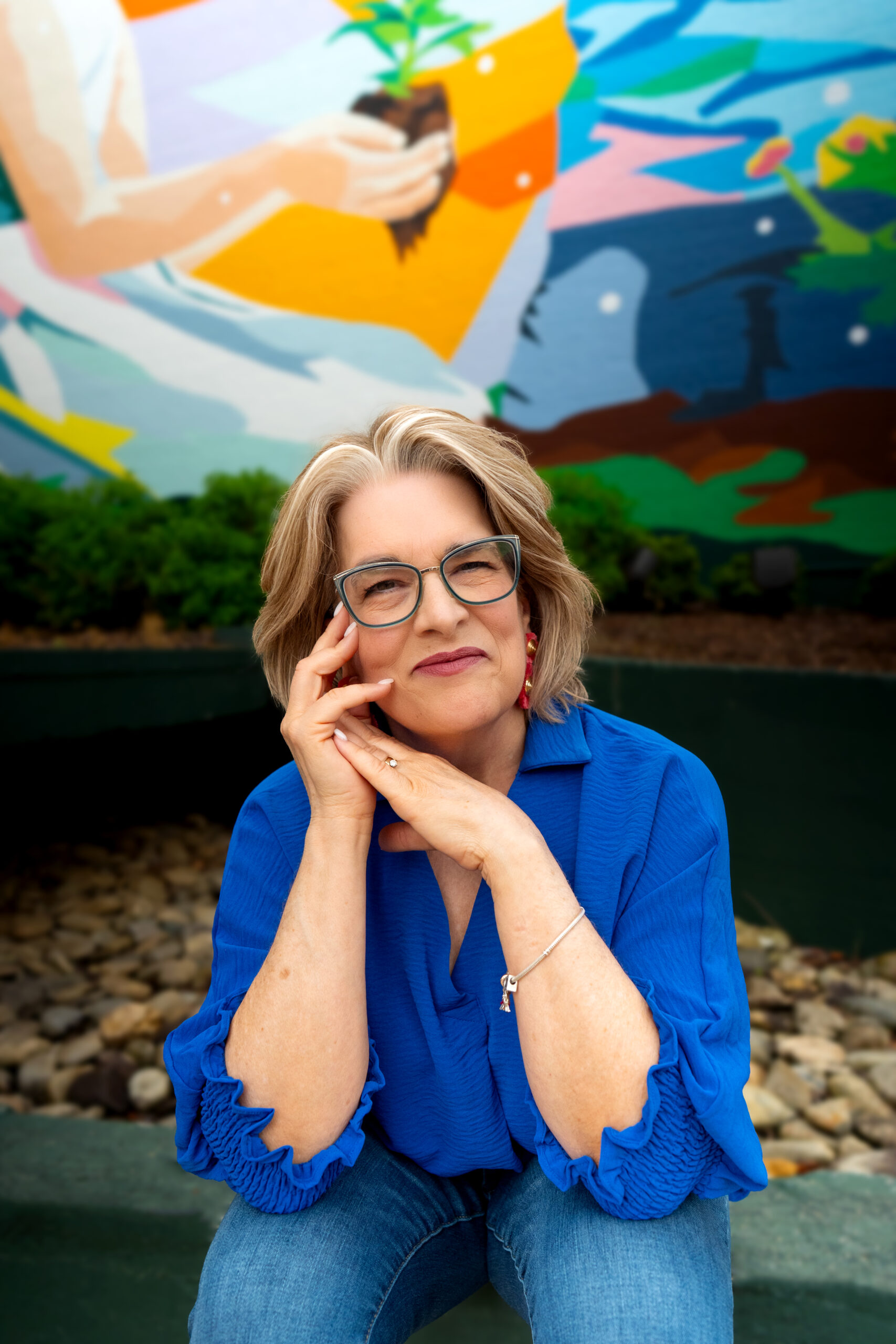
My guest Brianna Brown Keen was 14 when bullying so severe it landed her in the hospital, bullying so bad that her best friend’s own father, a judge, told his daughter to stop being friends with her so she wouldn’t get bullied too. In that hospital room, something shifted: a calm white light, she calls it, moving through her. She didn’t know what her purpose was yet. She just knew, suddenly, that she had one.
Brianna is an award-winning actress with more than two decades in Hollywood, known for roles on Dynasty, Devious Maids, General Hospital, and Homeland, and she just finished shooting season four of Netflix’s Outer Banks. She’s also the founder and CEO of The New Hollywood, a nonprofit she’s run for nearly 20 years supporting socially conscious storytellers through grants and mentorship. But we spend most of this conversation on the parts that came before any of that: a career-threatening back injury doctors doubted was real, a mother who modeled victimhood at every turn, and Brianna’s hard-won belief that if something in your life isn’t working, it simply means there’s something you don’t know yet.
You’ll walk away with her theory of “start stopping” limiting beliefs before you can build anything new, why healthy boundaries equal self-love, and why getting comfortable with being uncomfortable is the actual key to living your purpose, not a slogan on a mug.
Watch this episode
In this episode
- How severe bullying that led to hospitalization as a teen became the turning point that gave Brianna a sense of purpose
- Why a career-threatening back injury, and a lawsuit that doubted her pain was real, taught her that despair is allowed in the journey
- The reframe Brianna uses on every setback: “there’s something I don’t know yet”
- How a lonely first year in Hollywood turned into The New Hollywood, the nonprofit she’s run for nearly 20 years
- Why healthy boundaries equal self-love, and what she’s seen happen to women who never learned to set them
- Why getting comfortable with being uncomfortable is the real key to achieving your purpose
Timestamps
- (00:01) Welcome and guest intro: meet award-winning actress Brianna Brown Keen
- (03:53) From the Minnesota suburbs to Hollywood: no money, no connections, cold calls from the yellow pages
- (04:24) Severe bullying, hospitalization, and the moment that changed everything
- (09:42) The “calm white light” moment in the psych ward that gave her a sense of purpose
- (13:23) Limiting beliefs inherited from her mother’s “doctorate in victimhood”
- (16:20) The C-team-to-varsity story: how being believed in changes what you’re capable of
- (18:58) Moving to LA at 19, her grandmother’s guilt campaign, and early breaks like “Freaks and Geeks”
- (20:05) The career-threatening back injury and the lawsuit that doubted her pain
- (25:01) “There’s something I don’t know yet”: the reframe behind Manifesting Your Mission
- (27:08) Boundaries as self-love, and what she sees in the women her nonprofit serves
- (37:34) Where to find Brianna, The New Hollywood, and Manifesting Your Mission
About Brianna Brown Keen
Brianna Brown Keen is a Minnesota native and an award-winning actress who has worked for over two decades in Hollywood, in projects ranging from top-grossing feature films to Emmy-winning television shows to indie projects she has produced herself. She’s often recognized for her roles on Dynasty, Devious Maids, General Hospital, and Homeland, and recently finished shooting season four of Netflix’s Outer Banks. She’s also the founder and CEO of The New Hollywood, a nonprofit established in 2006 dedicated to supporting socially conscious storytellers and change-makers through grants, goals, and mentorship.
Learn more about her coaching and guidebook at Brianna’s website, Manifesting Your Mission, or connect with her on LinkedIn.
Favorite quotes
“I have a theory that if something isn’t working in my life, it simply means that there’s something I don’t know yet.” —Brianna Brown Keen
“Really healthy boundaries equals self-love. If you love yourself, you’re going to set up boundaries.” —Brianna Brown Keen
“It’s okay in the journey to have despair… we have to feel all the feelings to get through it.” —Brianna Brown Keen
Resources mentioned
- Manifesting Your Mission: Brianna’s guidebook, coaching program, and podcast of the same name
- The New Hollywood: Brianna’s 501(c)3 nonprofit, established in 2006, supporting socially conscious storytellers and change-makers through grants, goals, and mentorship
- Brianna Brown Keen on LinkedIn
Related episodes
- How to Find Purpose in Your Biggest Struggles: pairs directly with Brianna’s reframe of her bullying and injury as the source of her life’s work
- Finding Purpose After Relational Trauma: another guest’s journey from a painful family dynamic to a clear sense of mission
- How You Can Find Hope After Hitting Rock Bottom: echoes Brianna’s psych-ward turning point and the hope that followed it
Subscribe & connect
If this episode gave you something to sit with, follow Phoenix and Flame so you never miss an episode: all apps in one place, or jump straight to Apple Podcasts, Spotify, Amazon Music, or YouTube. And if it moved you, leave a review; it’s the easiest way to help another listener find the show.
Learn more about Phoenix and Flame, connect with Dana, and listen to more episodes here.
Read the full transcript
[Dana] (00:01)
Welcome friends, whether you’re out on a walk, running errands, or relaxing at home, it’s wonderful to connect with you. Joining us today is Brianna Brown Keen. I will tell you, Brianna is a Minnesota native, an award-winning actress who has worked for over two decades in Hollywood, with projects ranging from top-grossing feature films to Emmy-winning television shows, to indie projects that she produced. She’s often recognized for her roles on Dynasty, Devious Maids, General Hospital, and Homeland, and recently finished shooting season four of Netflix’s hit series, Outer Banks. Brianna, welcome to Phoenix and Flame.
[Brianna] (00:50)
Thank you so much, thank you for having me.
[Dana] (00:53)
This is fabulous. Now listeners also have to know that Brianna and I know one another through Mic Drop Academy, it was a wonderful time to get to know her and other wonderful speaker sisters, and we were put through it, let me tell you. It was wonderful and hard for 10 weeks. It’s sort of like when you go to camp with someone and you start out at camp and nobody knows anybody, and then after you’ve been through all the mud piles and the sweating and the running around and the thorns and the cuts and the bruises, by the end of the week you feel like you’re BFFs, because you’ve been through all this together. That’s sort of how us speaker sisters feel once we’ve graduated from the academy: we’re connected in a way that’s never going to go away. So Brianna, thank you for coming on Phoenix and Flame and spending your time with us.
[Brianna] (01:49)
Thank you so much, yes, I couldn’t agree more, it was so fun. It’s so odd how you can connect to someone virtually and yet feel that, obviously this podcast shows that that totally happens and is easy to access. I can’t talk today.
[Dana] (02:06)
No worries, girl, I’m going to be doing the same thing before the end of this podcast. That’s the beautiful thing I love about at least my podcast, is that we are just totally real, we are transparent, we make mistakes, we laugh, we move along, because we’re all doing the exact same thing.
[Brianna] (02:22)
I’m normally so eloquent, and I’m like, oh, speaker sister can’t talk.
[Dana] (02:27)
Oh, the irony.
[Brianna] (02:29)
But yeah, I couldn’t agree more.
[Dana] (02:32)
Got you. There’s so much, really, I don’t even know hardly where to start, because you have so much. I’m going to bring a few things in here just to bring up topics, but then I want you to start wherever is comfortable for you and just tell your story and weave around, because you’re also founder and CEO of a nonprofit organization, The New Hollywood, which, just that title is intriguing to me, I think that’s definitely worth the discussion. You established that in 2006, dedicated to supporting socially conscious storytellers and change-makers through grants, goals, and mentorship. I could go on, but I’m going to stop talking so much, because I really want to hear from you. So, The New Hollywood, socially conscious storytelling, you can start there if you want, or you can weave around to that, but I’d like to start back in the day. We need to get to know you: how did you get to be where you are right now, doing all the wonderful things you’re doing?
[Brianna] (03:53)
Yeah, it’s so bizarre looking back, because I never would have thought any of it. If we go way, way back, you need to understand I didn’t come from money, I didn’t come from connections, I was from the suburbs of Minnesota. This was before the internet, I was looking for reps in the yellow pages, cold calling. And by the way, I never made a single middle school play, because I was so stage fright, so it’s not like, oh, I was the lead in everything, that wasn’t…
[Brianna] (04:24)
Through my journey, I learned so many things about perseverance, and specifically about picking yourself up by your bootstraps and using obstacles as opportunities. I can go into whether it was being severely bullied when I was 14 to the point of nearly killing myself, to rising from the ashes from that, to moving out to Hollywood at 19, being told to sink or swim by my parents, to getting a back injury where I was told I would never run again, and that was literally my only tool for dealing with stress, and then how did I heal that. I learned that if I just kept trying to figure things out, things would manifest that I wanted. Hence Manifesting Your Mission, which is actually a book, a guidebook, that I wrote. And to kind of answer your question about the name The New Hollywood: it is so bold, and it was only because…
[Brianna] (05:20)
I had a group of women that I curated for goal-setting, back when I was in my 20s. I thought, I know I’m better at leading a group, I know I’m good at facilitating groups, I’m good with people and that helps me move forward. I played soccer when I was younger, team, go team, right, that would help push me, and community. Since I didn’t have any community, I had to figure it out all on my own. Through that, what formed is just a goal group. I then wanted to have a philanthropic aspect, I wanted it to be less about just us being our bold selves, and also a give-back element, which then became the title, which was said in a meeting where someone said, “We’re like the new Hollywood,” and it struck me, and I thought, that’s it, that’s the name. It’s so bold. We started doing different philanthropic events to help, whether it was human trafficking victims, the homeless, the environment, we kind of went all over the place and did all sorts of different events over the years. Later I ended up dividing what became my coaching business, Manifesting Your Mission, from The New Hollywood. The New Hollywood is solely the 501(c)(3) nonprofit that’s been established since 2006, which is almost 20 years.
[Dana] (06:38)
Are you just shaking your head like, has it really been 20 years, how did that even happen?
[Brianna] (06:43)
Yes, because coming this January it’s 20 years. Through doing that I created a guidebook, I created a coaching program, and it was slowly, slowly, it’s not like I did it all within two years. I was asked to speak at things, and it wasn’t like it happened immediately, it’s just over time I was asked to speak at an event and the woman gave me the topic, she said, “I’d like you to speak on Manifesting Your Mission,” and I thought, that’s a bold title, and then I thought, that’s my title. So I ran with that, because Manifesting Your Mission is consciously creating your life, right, how do you do that: goal setting, manifestation through visualization, working through your trauma, working through your limiting beliefs, and then constantly pushing yourself forward even when it’s uncomfortable, especially when it’s uncomfortable. So there’s a lot more to fill in with my journey, but broad strokes, I look back and I’m like, I can’t believe that this little girl who had cystic acne, who got made fun of for wearing bad clothes, who was so shy, had zero self-confidence, who lost all of her friends from being bullied when I was 14. My best friend, her father was a judge, and I only mention this because I feel like if you’re a judge you should have good judgment, right?
[Dana] (08:15)
Well, hence the name, yes.
[Brianna] (08:17)
Yes, right. But her father, who was a judge, told her, when we went into freshman year, because I was still being so severely bullied from eighth grade into ninth grade, when middle school went into high school, he told her to stop being friends with me, because he didn’t want her to get bullied too. That just goes to show how severe it was, it wasn’t like I got made fun of for my clothes, I mean that sucks too, but it was severe. My parents wanted me to move, I was dead set on staying there, but through this really difficult time, a pinnacle of “I don’t want to do this anymore,” meaning life. I think it was complicated because, hormonally at that age, I was put on Paxil, which they later found created suicidal tendencies for adolescents, which they didn’t know at that time. On top of that, I didn’t have great life skills to cope with all of the seemingly insurmountable amount of bullying, or the vandalism done to my house, or all the things that happened within a short period of time that just amounted to “I can’t do this anymore.” I was hospitalized, put in the children’s hospital psych ward, and I wanted to be done. I remember distinctly being in my room, because they take away your shoelaces, they take away anything you could use to hurt yourself.
[Brianna] (09:42)
And I remember being in there, it was nighttime, and I remember banging my head on the ground, because I didn’t have anything, banging my head on the side of the bed or whatever was going on. And I remember, I suddenly felt this calm white light, or I don’t know, I just see it as, it was like something went through me, and I felt calm. In that moment my life changed, and I knew that I had a purpose. I didn’t know what that purpose was, but I knew…
[Brianna] (10:13)
…I was going to be okay. From that moment forward I became an overachiever. From that moment forward I realized that path was done. Now, that didn’t mean everything was magical and healed and perfect, but I was no longer suicidal and I no longer wanted to kill myself.
[Dana] (10:33)
So, because several things you’ve said so far have spurred some comments and questions in me, and I really do so appreciate your being willing to be transparent and share your true story, because I know I’ve been bullied before, it’s a terrible experience, and I know there are other people out there going through harsh times, might be feeling suicidal right now, might know someone they love who is struggling with thoughts of not wanting to be on this earth anymore, they’re tired, tired of dealing with it. What I’m kind of wondering, because I’m listening to you say this, and I’ve seen your speaker reel, and we’re going to give your CTAs at the end, but guys, when you see it, it’s freaking amazing, and somebody’s going to watch that and go… Because I could see how someone would watch that, because this is what happens to us sometimes when we’re comparing, and we look at other women, especially women looking at other women who at that snapshot of their life are doing really, really well, and think, “Gosh, I could never do that, that’s another category for me, I could never get to where she is.” That’s why I really love, on Phoenix and Flame, to hear the whole story…
[Dana] (11:57)
…and how someone started, and the flame that burned them down, and what it felt like to be in the pile of ashes, and how they pulled out of that, so we can all connect together and know that no matter what screenshots you see from a woman, wherever chapter she is in her life, we are all together, we are all connected, we are all going through very similar things, not exactly the same, but similar, so we should support each other and encourage one another and think, you know what, we can help each other, and if we’ve made it through to a point, reach back with a hand and say, let me help you pull you along, which I feel like that’s what you’re doing. So one of the questions, actually two questions: one is, what helped you keep going when…
[Dana] (12:XX)
…I heard you say multiple times, you had multiple reasons to just say, I’m tired, I’m not doing this anymore, I don’t want to try anymore, this is too heavy, it’s too hard, it’s gone on too long, I don’t have any community, I feel alone. So I’m curious what helped you keep going in those spots. And I’d also like to hear you talk a little later about the limiting beliefs that we end up having that keep us down, when those beliefs are inside of us, not necessarily someone else keeping us down, it’s us keeping ourselves down. So you can answer however you want.
[Brianna] (13:23)
Yeah, I’m actually going to start with the limiting beliefs, because I think that’s actually part of the root of why I do a lot of what I do, and I think it stems from my mom. I love my mom, my mom, she’s in a home right now in memory care, so she wouldn’t be able to listen to this anyway. If there was a way for her to have gotten her doctorate in victimhood, she got several. She really went for it, and it was so frustrating for me as a kid, because whenever she’d have a problem, it was, “Oh, poor me.” Even as a kid I would say, “Well mom, maybe you could try this, or maybe try this, what about this?” And she was, because she’s very smart, she would negate each one: “Here’s why this won’t work, here’s why this won’t work,” like anytime she loved a product, of course it would suddenly be unavailable. I was like, wow, you really are attracted to that, when I later understood more about it. But that was just her way of staying small and staying safe, and I understand the root of it, and the root of it has to do with her being an army brat, having to move around and make new friends, and also transgenerational trauma from my grandmother that was never dealt with, who was abandoned and orphaned as a kid, and told if someone doesn’t adopt her, they were going to give her to an orphanage, this happened at a church. So when you look at the generational stuff, you say, okay, this person has abandonment issues, this person has huge fears, and I had that myself, and I could see that some of it didn’t belong to me. Truthfully, I don’t think a lot of it belonged to me, because my mother and I were like oil and water, we were so different, I was more like my dad and my brother was more like my mom. So seeing her not ask for the raise, hating on herself, I just was like, I don’t want to be that, even though I’m kind of wired to be that way. So I had to work really hard to undo that way of being, and I think it was mainly to rebel, like, I’m not going to be like her, even though…
[Brianna] (15:44)
…there’s lovely things about her, clearly, I wouldn’t be who I am if it wasn’t for her, but that I really disliked, and I disliked that in myself, and I really hated victimhood. I was someone who didn’t make the A-team in soccer, I was on the C-team, I was bullied on the C-team, and then I worked my way up, and I worked my way up, and then suddenly a coach was asking me to play above my age level, and those people treated me like I was of that level and deserved to be, and I was able to play at that level because they believed in me. And I got, they expected it, they’re like, “Oh well, she’s being brought up, she’s going to be amazing,” and then I would be, because I believed in it. And I saw the same with acting and stage fright, I had so much stage fright, and again it didn’t just magically go away, I had to keep doing it over and over again, despite being uncomfortable. And I really do think that…
[Brianna] (16:42)
…it’s about getting comfortable consistently being uncomfortable.
[Dana] (16:49)
I love that, I love that, so true.
[Brianna] (16:50)
Right, you just have to do it over and over and over again, and when it doesn’t work out, you figure out another way. I think honestly, the blessing of not having a formal education beyond a little bit of college is it taught me that there’s always a way, and it may not look the same as in that box. I have a lot of clients who are Ivy League, someone in India who owns a college, and I’m helping them think outside the box to get from point A to point Z or wherever they wanted to get, because sometimes we have a limited idea that there’s only one way. I’m not saying formal education isn’t super important, because I’m constantly learning and educating myself, but I think being willing to look at things from different angles and say, “Oh, I failed, okay, get up, what did I learn, how do I pivot and polish, now I’ll try it this way.” I think, to answer your second question: tenacity, grit, and being really stubborn.
[Brianna] (17:57)
I think one of the best things my grandmother ever did was try to guilt me into coming home, because early on, after I moved out to Los Angeles at 19, she was suddenly, she had kept all of her children within a very short radius, I was the first one to go, and it was phone calls, it was cards, it was just total manipulation, and I was like, uh-uh, you cannot…
[Dana] (18:24)
You’re like hell to the no, I’m not gonna…
[Brianna] (18:28)
Well, to the point where I had to call my dad and say, “If she keeps doing this, I will never speak to her again.” He knew I was like him, and he called my grandfather, my grandfather had to have a talk with her, because it made no sense, I was like, “Come on, I didn’t even see you that much when I was in Minnesota.” It was a control issue for her. So I was kind of dead set, like, I have to do this, I have to figure it out. I also think…
[Brianna] (18:58)
…the blessing was, when I first was brought out to Los Angeles, I had success, so when I first came out I was kind of coddled, they brought me to auditions and things like that, and I’d already screen-tested for a big movie opposite Chevy Chase, I didn’t get it, but it gave me a lot of confidence. And suddenly I booked a family film in Romania, it’s not a family film worth watching, it’s kind of terrible, but I did it. I was the first line in “Freaks and Geeks,” if you saw that cult classic TV show, they tested me for other parts in it, but I was clearly not established enough, I was too green. So when I actually moved out and had to do it all on my own, when it was the sink-or-swim time, I knew I was capable, but I then had to work through so many things. “Adulting” wasn’t a term then, you just had to be an adult.
[Brianna] (20:03)
You just had to be an adult, but having to figure out finances, how to figure out all of these things. And then suddenly, because of stress and not knowing how to handle certain things, I injured my back, I bulged three discs in my back, I was told I would never run again. I had to figure out how to navigate the disability, I was on disability where you make no money, trying to figure out how do I do this. And I wasn’t trying to leech off the system, I just wanted my back to be better. So I’m suddenly in this demographic of sitting in a doctor’s office for seven hours trying to have a doctor look at me, to basically say, “Yeah, you still have a bad back.” And I’m like, but I’m…
[Dana] (20:50)
See, but I want to point out here, Brianna, that you have been manifesting your mission virtually your whole life, and you seem to be very solution-focused, probably because of your mother’s victim status, and I’ve shared before on my podcast, guys, I mean, we’re like the same, and we know this because we had that coffee chat together earlier, a few months ago. I’m sitting here watching you talk, and I feel like this is, all my words are just coming right out of your mouth, it could have been the exact, I mean 80 to 90% of what you said fits exactly my walk. So hearing you talk, it’s like you decided you are going to be solution-focused, not problem-focused, you were not going to be the victim. Because I’m hearing you describe what it was like to have your injured back, be on disability, and spend hours and hours in the doctor’s office, there’s a lot of people who would reach that point and just stop, that’s what the rest of their life would be. I’m not judging that, I’m simply observing that people walk different paths of life. But on this podcast we try to reach out and connect and encourage one another. So I’m hearing you say you were in that spot, but you were focused on how can I find a solution, how can I keep moving, like you said earlier, resilience and grit and trying to find a different way. If door number one doesn’t work, what’s door number two, is there a door number three, and keep trying to open different doors until you find one, because you were focused on: I’m going to find a solution, I’m not going to be a victim.
[Brianna] (22:38)
Yes, but I also want to say it’s okay in the journey to have despair. I had despair going through disability, spending hours trying to go through a lawsuit to try to get the money to heal my back, because it was a work injury, and dealing with people who were basically saying I was lying. I’m not lying. There was a doctor, because the whole system’s so messed up, I went to their doctors, and they kept just basically…
[Brianna] (23:06)
…running me around, not helping me at all, just hoping I would give up and quit the job and move on. I remember this one doctor said, “Well, you have this mobility and you have this, it seems like you’re fine,” and I said, “I can’t do this without massive pain, this is not what you’re saying,” and she kind of insinuated I was lying. I remember I burst into tears and said, “I went to a private liberal arts college, I could be anything I want.
[Brianna] (23:34)
I’m not trying to use this to get money, I’m not.” And I’m crying, and I say, “I could do this, I’m not.” Then she said, “All right, I’m going to get you an MRI.” And finally I got an MRI, and yeah, she has three bulged discs, this is a legitimate injury, I wasn’t just, “I don’t want to work, I want money.” So that then became, once I knew that, I had to continue going through the lawsuit, but then the lawsuit kind of puts you in a mentality of, “Don’t get better, if you get better, you don’t get…
[Dana] (24:00)
Yeah, you won’t get your money.
[Brianna] (24:03)
You don’t get your money. So that was a really strange place to be in. I remember talking about it a lot, starting to really identify with the injury, and it got called out to me, my manager said, “You talk about it a lot,” and I thought, “Huh, interesting.” And anyway, of course I did, this is what I was raised to do, right, you have a problem and you identify that your problem is just what it is. Like my mother, when she got diagnosed with a disease, she said, “Well, this is what I have,” and I said, “Well, there are things you can do,” and she said, “No, this is just what I have.” Anyway, so I realized, once the lawsuit was finished and I had the money, which wasn’t a lot of money, and in retrospect I don’t know if it was worth it, but I didn’t have any support from my family to go to alternative therapies to help my back, and I didn’t even know where to start, because again I was 19.
[Brianna] (25:01)
So I then went to acupuncture, I went to these different things, and it was actually acupuncture and Qigong, this guy from Japan who had helped my cousin, he literally helped heal my back. Since then I’ve run half marathons, I played on a soccer league for a minute, I ran a marathon. So that made me realize, if any ailment comes up, I can try and find something. Is it going to be easy? No. Is it going to be cheap? Probably not, I had to spend thousands of dollars going to this man to heal my back, but I did. So to go to your point, it’s okay to have despair in the journey and feel like I can’t do it anymore, I think that’s normal, we have to feel all the feelings to get through it. But then at a certain point, say, “But what if there’s something I don’t know?” I have a theory that if something isn’t working in my life, it simply means that there’s something I don’t know yet. I’m not yet…
[Dana] (26:06)
Oh my gosh, I feel like we have part of the same brain. With my patients I say this, I’m like, if you’re confused about something, it’s just because there’s a piece you’re not aware of, because once we have all the pieces, everything makes sense. If we don’t understand something, it’s simply because there’s a piece we don’t have yet.
[Brianna] (26:11)
Yeah, but then also, to kind of go to your boundaries that you were talking about, because I think that’s so important, so much of our energy gets siphoned off if we don’t have boundaries. I remember trying to rescue some of my friends, so many of my friends, especially when I first came out to Los Angeles, because I was wanting community, I wanted to have friendships, wanted to feel loved and in a relationship, and I would over-give, or I would give to my detriment. That was really what it was, giving to my detriment, and not knowing how to have healthy boundaries. Really healthy boundaries equals self-love, right, if you love yourself, you’re going to set up boundaries, if you don’t love yourself, you’re not going to be surprised when someone’s abusing you, because you’re like, “Well, I guess I deserve it,” or you’re not going to be strong enough to leave. I see that with some of the women in one of the programs under my nonprofit, which supports formerly homeless single moms.
[Dana] (27:08)
Yes.
[Brianna] (27:28)
And sitting there dealing with so much of it, I’m like, “Well, yeah, you’ve been in an abusive, violently abusive relationship because you don’t love yourself,” but yeah, you grew up in an orphanage, your version of love is different, there’s different versions of what normalcy is. So I can see it so boldly with that community, and it’s a little more discreet when you go…
[Dana] (27:53)
Yeah.
[Brianna] (27:56)
…through the ranks of different people’s experience. But at the end of the day, I don’t think, and you’re obviously the expert, the Queen of Boundaries, but I think it’s a constant refinement.
[Dana] (28:12)
Yes, and there are a lot of myths about boundaries. To your point about the communities, I teach the boundaries component of a project here in town, a group of women in a class, a course they go through, 13 weeks, and they have different classes: learning how to have community resources, learning how to do a budget, all these things. The woman who set that up recruited me to do the boundaries piece, because like you were saying, many times they are in relationships with people, frequently men but not always, who are treating them badly, abusing them, and they don’t know how to say no, don’t feel like they’re worth anything. It was an honor to be able to present that to them and see them apply it, they come up to me after graduation and say, “Everything is different now, I never thought my life could be this way, and now I know I can say no, can set my boundaries, can fill myself up, and it’s just wonderful.” So in our last minute or so, because gosh, there’s so much, do you want to focus on Manifesting Your Mission, or is there something else you’d rather focus on?
[Dana] (29:34)
There’s just, I feel like I’m standing at a buffet, there’s so much to talk about. Well, okay, let’s end up with Manifesting Your Mission, tell us a little more about that, and I think you have a podcast called Manifesting Your Mission, and I think I’m supposed to be a guest on there next week. So what do you want to leave my listeners with?
[Dana] (30:04)
Why are you willing, because clearly you’re busy and you’ve got a lot of energy, a lot going on, you built your life into this wonderful thing, why are you willing to spend your precious time and energy to focus on Manifesting Your Mission?
[Brianna] (30:20)
Yeah, that’s a great question. I think, to kind of go back to when I was so lonely and needed community, and then curated a community of other amazing women, at one point I had men in there too, I still have men in my community, just not in that specific mastermind goal group. But I realize we rise together, I want, like a team, to be around other people who are not just selfishly about themselves, I see plenty of that in Hollywood, narcissism is applauded. But the essence of all I’ve done, whether it’s The New Hollywood or Manifesting Your Mission, really goes down to, and for those on YouTube, if you can see it, it says, “Rise higher, shine brighter, give.” I really believe if we’re all living our purpose, whatever that purpose is, and by the way, purpose doesn’t mean go be an astronaut, it can be being a conscious, loving mother, or working within your craft or career, if we’re all living our purpose, we will have a healthier, kinder, more peaceful planet. The more I help others, within my boundaries, within my boundaries, the more I do that, the more I’m uplifted, and it keeps me in that state of love and creativity. Marie Forleo talks about being a multi-passionate person, and I feel that way too, I’m very creative, I like to create with people who…
[Brianna] (32:09)
…have high energy, high vibration, who have a purpose, who want to give back, but also want to push themselves. Just like that soccer team I got to go up a grade level and start, and be like, I want to play up a level, and they believe in me, and then I believe in them. When I started my podcast I was like, oh my God, I don’t love technology, all of these things, I have all this resistance, but instead of learning the technical stuff I’m like, I’m going to make sure my backdrop, the color, my color palette, I mean, is it the most important? No, but I then did it, I’m like, okay great, now I’m going to do it. Similarly, I’ve done some keynote speaking, I want to do that more, I’m going to push myself to go do it more. And then within…
[Brianna] (33:05)
…an amount of time it’ll be completely second nature. So I think if we all put ourselves into community that helps us rise to what we think we have potential for, and just be like, what’s the worst thing that happens, we fail, okay, then we get up and we learn again, and we keep trying, you don’t learn anything if you don’t push yourself. I don’t know what it’s going to look like in 20 years from now, but I never thought…
[Brianna] (33:34)
…I mean, I never thought I’d write a guidebook that’s 350 pages, I never thought I’d do any of these things, but then I felt drawn to it, like, now I need to do it, I’m like, okay, I’m going to do this, and I’m going to figure it out.
[Dana] (33:47)
That is amazing. Now I want to make one last comment before I wrap this up, because you mentioned earlier that people are at different levels in terms of our journeys, we’re at different chapters, different legs of our journeys, is what I like to call it, we’re all just walking journeys and we’re just at different legs. I did want to point out that when women, and let’s just be honest, we were around a lot of women in Mic Drop Academy who were amazingly talented, with multiple gifts and powerful, if people like that, like us, don’t set boundaries, then we get kind of sucked down the drain, because like you said earlier about high frequency, people who function on a high frequency, which I believe we do, it’s like people get drawn to us like moths to a flame. I’ve noticed this, I’ve been trying to reach out and connect with people, and you have to be able to have a stop, where you have to nourish yourself so you can keep going with all your wonderful talents and skills. Has that been your experience?
[Brianna] (35:37)
Yeah, and I think, I don’t know if you know Alison Armstrong and her gender dynamic materials, but she talks about that, just biologically, women tend to over-give because of the caretaking role and being multitaskers, whereas men are much more aware of how much energy they have and how much they’ll preserve, which is why it’s easier for them to set a boundary or to be more focused, because they’re more single-focused. It goes down to…
[Brianna] (36:04)
…hunting, or just, if it goes down to thinking of yourself back in more tribal days. One of the things she talks about, which I thought was really interesting, is that as women we have to actually kind of cut ourselves off from how much we give, instead of giving 110%, sometimes I think there’s a need for that, if you’re in crisis or something, but if that’s your go-to, you’re going to be burned out, you’re going to have health issues. I had health issues because of burning the candle at both ends, so I’m more hyper-aware of it now, you can’t just, I’m not a Duracell battery that doesn’t need to be recharged, I’ve got to recharge. I think it’s interesting to be like, all right, I will give 75%, or even in the time management I do within my guidebook, or when I’m coaching with people, I’m like, okay, if you’re a parent, you’ve got a whole other level of tasks you have to do when school’s out, and you want to be present for that and not be depleted when they’re suddenly going to ask that big question, and you need to be present for it, not irritated and exhausted from pickup and making dinner. How much energy are we giving to all the things, how much can we realistically do within a period of time, and I think for women we’ve kind of…
[Brianna] (37:28)
…set ourselves up for failure in that we’re supposed to do all the things effortlessly all the time. I think if you can do slow growth for some of the bigger things, then you won’t be as exhausted, but that’s a craft in and of itself. When it comes with other women in high vibration, I’m really big into energy work, I’m actually a Reiki II practitioner, I’m going to be working on being a Reiki master next year.
[Brianna] (37:58)
It’s on my goals, and doing long-distance Reiki starting in the fall, I haven’t even planned it out, my husband’s like, “What are you…
[Brianna] (38:13)
…need things that ground me and keep me grounded, and also so I’m not absorbing, because I am really empathic, I am really intuitive, and I am sensitive, and we need those tools in our toolbox that we go to religiously to get ourselves to a good starting place, whether that’s your faith, whether that’s inspirational books, whether that’s being out in nature, truthfully it should be all that and more.
[Brianna] (38:42)
But what are those things that help us? To kind of go to what you’re saying, I think it’s, if we can be honest with each other, especially as women, that it’s not effortless. Yeah, I do a lot of things and I delegate out a lot, I don’t personally do all the things, I manage a lot, and that’s how I can do a lot. I think that’s the thing a lot of women think, that I need to do all the things all at once, and it’s just not possible.
[Dana] (39:05)
Yeah, no. Well, you know what, I know my listeners are thinking, geez, Brianna’s amazing, and I need to get more of her, I want to find out more about her. Guys, you absolutely need to go to her website and see the speaker reel, it’s amazing. So where do you want them to go? Because you’ve listed several websites, and I’ll put them all on the show notes, but which one, where do you want them to go mainly?
[Brianna] (39:34)
Okay, I’ll tell you: for Manifesting Your Mission, that has all the stuff I’m talking about with the guidebook and coaching. If you sign up for my newsletter, you’ll know when I start doing my Reiki 2, Reiki Long-Distance Healing, in the fall. On top of that I have my Brianna Brown Keen website, which is my acting…
[Brianna] (40:05)
…website, and then my New Hollywood website. It’s really fun, we do fun events to fundraise, we’re going to be doing a silent disco to raise money for the nonprofit. We try to build community to create community, bringing good people together. Any of those places, join the newsletters, stay in touch, I’m mainly on Instagram, I’m also on TikTok and LinkedIn and X, it’s at Brianna Brown Keen.
[Dana] (40:21)
I love it.
[Brianna] (40:35)
And yeah, keep in touch, reach out to me, send me a message, and I would love to hear how all of you go from ash, rise from the ashes, from writing critics.
[Dana] (40:40)
Gotchu, this is fabulous. Brianna, I really do appreciate you taking some of your precious time and energy and bringing it here with me and my listeners, sharing your story, your transparency, your vulnerabilities, and all the wisdom you’ve gleaned with us. Thank you very, very much.
[Brianna] (41:06)
Oh, you’re so welcome, thank you so much for having me, and I’m excited to interview you and get all the juice on your story.
[Dana] (41:14)
I know I have a coworker, I have a family member that absolutely needs to hear what Brianna has to say. So take this episode, copy and paste the link, send it in text, send it in email, put it on your favorite social media platforms, we need to spread the word, grow our Phoenix and Flame community, so we can let people know: you are not alone.
Are your work boundaries supporting you—or quietly draining you?
Take my free Work Boundaries Quiz and find out where you stand.