
First aired May 30, 2023
How does a fourteen-year-old get sent to detention and come out the other side an international yoga teacher? Simple: a teacher hands him a book on yoga as a joke (punishment, supposedly) and the kid keeps sneaking back to detention every lunchtime to read more. (For the record, I logged some detention hours myself. We’re just being honest around here.)
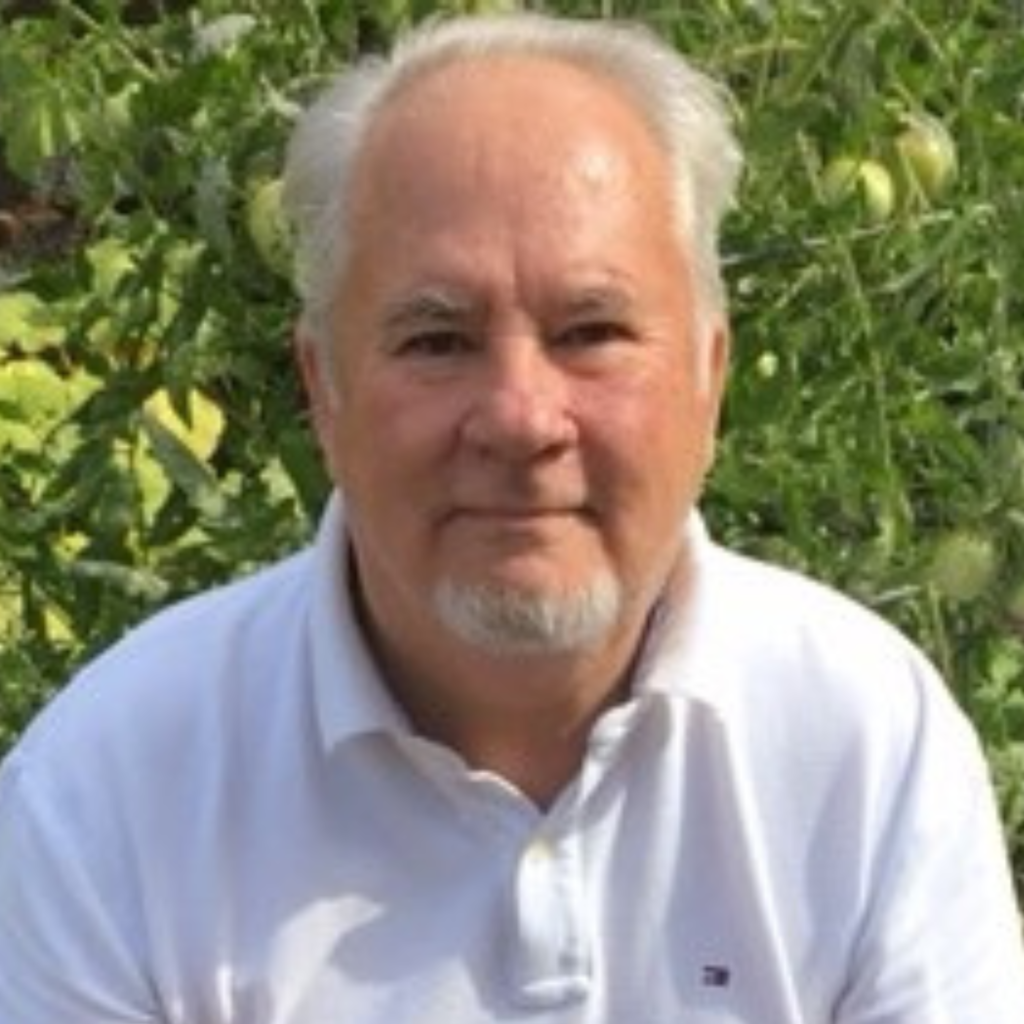
Fast forward: Troy Hadeed, raised Catholic in Trinidad and a former hemp-store owner (“not a head shop,” he’d like you to know), now teaches yoga around the world and holds a view of Christ that may stretch you, comfort you, or both. If you’re carrying church hurt, wrestling with forgiveness, or quietly wondering why the Jesus you met in scripture doesn’t always resemble the one at the pulpit, this conversation was recorded for you.
We dig into the difference between “I am God” and “God within me,” why “born a sinner” can quietly become a hiding place from responsibility, and Troy’s question that will reframe every relationship you have, including the hard ones. Don’t ask if it’s love. Ask what is being loved.
Watch this episode
In this episode
- How a “punishment” in detention accidentally set a fourteen-year-old on the path to becoming a yoga teacher
- Why Troy sees Jesus as one of the greatest practitioners who ever lived, and what that has to do with the word “namaste”
- The real difference between saying “I am God” and “God is within me”
- Why the idea that we’re “born sinners” can quietly become an excuse to avoid taking responsibility
- How to spot when organized religion drifts from Christ’s own teaching of unconditional, inclusive love
- Troy’s reframe for every relationship in your life: instead of asking “is this love,” ask “what is being loved?”
Timestamps
- (00:01) Welcome to Phoenix and Flame, and Troy’s background growing up in Trinidad
- (01:33) The detention story: how a “punishment” led a fourteen-year-old to yoga
- (06:38) Why Troy calls Jesus one of the greatest practitioners to ever walk the planet
- (07:54) “I am God” vs. “God within me”: is there a difference?
- (14:57) Rethinking original sin, responsibility, and the real message behind Christ’s teachings
- (21:39) The Christ you don’t always see represented in church
- (24:05) Troy calls out the exclusivity taught by a lot of organized religion
- (29:22) Building your own unique relationship with God
- (31:17) Why conditioning, not divinity, explains our differences
- (37:21) The question that changes everything: what is being loved?
- (39:52) Applying “what is being loved” to abuse and codependency
- (42:19) Troy’s book, Popcorn in My Pocket
- (45:01) Where to find Troy online
About Troy Hadeed
Troy Hadeed is an international yoga teacher, public speaker, and author based in Trinidad. He discovered yoga at fourteen after a teacher handed him a book on yoga as a joke during detention; Troy kept coming back on his own to read more. He went on to run a hemp store and a waste-cooking-oil recycling business for years before selling them to dedicate his life to studying and teaching yoga full-time. He’s the author of the book Popcorn in My Pocket and also works one-on-one with students on their own journeys. Learn more and sign up for his newsletter at troyhadeed.com, or find him on Instagram.
Quotes worth sitting with
“I am putting up with that—that is not loving them. That is me loving what they provide me.” —Troy Hadeed
“I have this beautiful tattoo that says ‘ignore the story, see the soul.'” —Troy Hadeed
Resources mentioned
- Troy Hadeed’s website and newsletter: troyhadeed.com
- Troy’s book, Popcorn in My Pocket
- Troy on Instagram
Enjoyed this episode?
If this conversation moved you, follow Phoenix and Flame so you never miss an episode: all apps in one place, or jump straight to Apple Podcasts, Spotify, Amazon Music, or YouTube, and leave a review; it helps other listeners find these conversations. Know someone wrestling with church hurt or forgiveness who needs to hear this one? Copy the link and text it, email it, or share it on social media, and help us grow the Phoenix and Flame community.
Read the full transcript
Dana (00:01): Welcome to Phoenix and Flame. I’m Dana, and this is my podcast on pushing through and transforming, even when you feel like a pile of ash. Today we have an amazing guest with us. Our guest’s name is Troy Hadeed. Now, Troy was born in Trinidad. His father was of Middle Eastern descent and his mother was of Irish ancestry. He was the youngest of three brothers, and they were brought up in a Catholic home.
Dana (00:32): Now, when Troy was about fourteen, he was sent to detention, where his teacher gave him a text on yoga to read. He then found himself going back to detention every lunchtime of his own free will to read more and more about yoga. Now, fast forward to the current time — Troy has run a hemp store (not a head shop, a hemp store) for seven years, and also a waste-cooking-oil recycling business, and sold it some years later because he wanted to dedicate his life to studying and teaching yoga. Now he’s an international yoga teacher, a public speaker, and an author. Troy, welcome to Phoenix and Flame.
Troy Hadeed (01:17): Thanks for having me, Dana. It is a pleasure to be here.
Dana (01:22): This is wonderful. You know, I was reading the information that you had shared on your bio, and — I mean, I spent some time in detention myself, you just got to be honest about that — so the idea that a teacher is going to bring you… I mean, did the teacher think that was going to be punishment, to have to read a book on yoga? I mean, this is interesting.
Troy Hadeed (01:33): Well, you know, for many years — for about twenty years since I’ve been teaching — I always said that I wished one day I could talk to him, to tell him how I may have influenced my life. And I got this message in my email inbox a few years back, and it was from him. And I said, I think I gave you the practice, the Brahmacharya, to read in 1994… and it came from a comment on my website, which usually goes to junk because it’s usually all spam, but this one came through. So I replied to him, and I got his phone number, and I called him, and so we stay in touch every now and again. But he’s the one that said to me — he said, “Troy, let me get your story straight,” he’s like, “you were sent to detention, that’s how you came into my room,” and he further said — he said that he gave me that book as a joke, he’s—
Troy Hadeed (02:44): “I don’t even know you, I’m not even Hindu,” he’s like, “I know nothing about you, but this was a text about Brahmacharya, which is sexual conduct, or sexual misconduct, or how to conduct yourself with your sexual energy.” He said, “I gave it to a fourteen-year-old boy in his adolescence as a joke.” He said, “I never expected you to actually read it.” He said, “You read the entire thing, and then you came to detention every lunchtime after that, of your own free will, to read more and read more and read more.” And what’s beautiful about that story, as he said to me — he says, “It’s funny that you’ve been talking about me for the last twenty years,” he said, “because I’ve been talking about you for the last twenty-five.” He said, “I’ve been talking about you as a fourteen-year-old boy who impressed me with his commitment.”
Dana (03:37): I don’t want—
Troy Hadeed (03:44): …study and read these texts that most adults couldn’t even read. And he said, “how I found you is” — he’s now teaching in Toronto, Canada, and he said he was telling his class about the fourteen-year-old kid, and they Googled my name, and they said, “do you know he’s an international yoga teacher?” And he was like, “what?” So that’s how he found my website.
Troy Hadeed (04:14): He says, “look at this synchronicity we’ve had, speaking about one another and the impact we’ve had on each other’s lives without a word.” He had no idea what had become of my life; I had no idea what had come of it.
Dana (04:30): So let me ask you something. I know that many times people will use practices like yoga to really help them through harder times in their life — you know, something that they’re having a difficult time dealing with. So I’m kind of wondering, for you, your experience at fourteen years old — if there was anything going on with you at that time, or later, that you felt like yoga was really something to hold on to and practice.
Troy Hadeed (04:42): Yeah.
Dana (05:00): …give you some mindfulness, some peace, to deal with the crises or issues that you might have been facing.
Troy Hadeed (05:03): Yeah, at that age, no, I don’t think I realized it. All I knew was what I would read made sense to me, and I was into it, and I was called to read more and read more and read more. And it wasn’t just yoga texts — I think he gave me a series of different texts I would go and read. Now, I didn’t then practice yoga as we know it — you know, when we think of yoga, we think of yoga postures, what we call…
Troy Hadeed (05:39): …but yoga is so much more than these postures. These postures are just a very small part of what yoga is. But when I graduated university at twenty-one, I came back home, and people would ask, “so what are you going to do?” And I’d say, “well, I’m going to teach yoga,” and they’d be like, “do you…? Like, now?” But I knew I was going to be a yoga teacher. And I didn’t actually consistently start practicing postures until I was about twenty-four. But now that I have knowledge about what yoga actually is, I understand that I was actually deep into the real practice and teachings of yoga long before I even knew what yoga was. And that’s because, for me, I think — one of the greatest…
Troy Hadeed (06:38): …one of the greatest practitioners to have ever walked the planet was a man called Jesus. And I know a lot of people, who are into organized religion or faith, might say, “how can you say that? That’s blasphemy.” Well, not really — not if you really understand what yoga is, and not if you really understand the teachings of Christ. The very foundation of the teachings of yoga, Dana, is realization with God. It’s the acknowledgment…
Troy Hadeed (07:09): …of our interconnectedness. It’s the realization that we are not actually separate individuals, that we are part of this one whole collective consciousness that is also God. And you know, we have that beautiful word “namaste” that we love to throw around in the yoga world — well, namaste means “the God within me acknowledges the God within you.” So to actually acknowledge divinity in everyone and everything around us — that is the fundamental essence of yoga, and that is the fundamental teaching of a man called Jesus, you know.
Dana (07:54): Yeah, that’s really interesting, and I want to point out — and hear your thoughts on — the difference between when someone says “I am God” versus “God within me,” because I know there are some individuals out there — and I’m one of these people — that I’m like, everybody is on their own path, okay? I’m not a fan of judging and carrying on, I just want everyone to have a platform to speak their thoughts and feel heard, that kind of thing. And so I’ve interacted with…
Troy Hadeed (08:04): Yeah, yeah.
Dana (08:24): …people along the way. And also, I can remember seeing something — because my degree is in clinical psychology, and a lot of people, not everyone by any means, but a lot in that field, can tend to view religion as a crutch. They tend to want to focus more on the human being, and saying, you know, “I am God.” And I remember being in an elevator one time in grad school…
Troy Hadeed (08:33): Yeah, yeah.
Dana (08:54): …and looking up on the wall — the metal wall — someone had taken a Sharpie marker and written “man is God” on the wall. And of course, like I said before, each to his own, all right? But I think that’s curious, and I’d like to hear your thoughts on the difference between someone saying “God within me,” you know, the collective, versus “I am God,” “man is God.” So do…
Troy Hadeed (09:02): Yeah, yeah, yeah.
Dana (09:24): …you see a difference, or not?
Troy Hadeed (09:27): I don’t know if I’ll explain how I view it, but I will say this: I personally don’t connect to a dualistic reality. And what I mean by that — because I don’t like to talk in esoteric mumbo jumbo — what I mean is, the only way to discover who I am is for me to dissolve the word “I.” Because the second I use “I” — “I am this, I am that” — that implies that I am separate from everything else, you know? And this identity is ingrained in us, our individual identity is ingrained in us from the day we are born. We’re told a narrative: “I am Troy, this is my body,” and everything — as we grow up into adulthood, our personality revolves around that individual identity and strengthens it, so much so that we say things like, “I am Catholic” — well, does that mean if I change my religion, I no longer exist? We say things like “I am fat” — does that mean if I lose weight, I no longer exist? Or we say “I am Republican,” or “I am a podcast guest,” or “podcast host.” We define ourselves by these labels, but these are not who we are. If these were things that we are, then we could never be something else. And for me — I know I’m going to answer your question shortly — for me, I know somebody will have an extremely hard time convincing me that I am anything associated with my body.
Troy Hadeed (11:32): Because I know — not just believe, but know — the resonance and vibration of my actions, my words, and my thoughts, as I live through this human experience, will never die. So I know I will never die, I cannot die. Energy is neither created nor destroyed, it merely changes state, right? It carries on forever. And you know, I believe that one of the greatest teachings of Christ that people aren’t putting their finger on — he rose again from the dead to prove to us that we are not our bodies. And he said, “you will do far greater things than I have ever done.”
Troy Hadeed (12:19): I don’t want to go back to that, but I want to answer your question. So, I am okay with somebody saying “I am God,” as long as they understand that means everyone else is God as well, as long as they understand that everything and everyone around them is also God. You must hold that entire perspective — you can’t say “I am God,” but these things ain’t God, it doesn’t work like that. If you’re going to understand our divine nature, then you have to embrace all of it, you can’t be selective. You know, for so many generations, God has been portrayed as exclusive, and God is not exclusive — religion did that, but God came before religion, religion didn’t create God. And it’s important for us to recognize that God is inclusive, that means there are no exceptions to who or what God touches.
Troy Hadeed (13:46): Does that kind of answer your question?
Dana (13:49): It does. You know, I think sometimes I’ve been in conversations where — and also, with my background in psychology, you know, I’m also wanting to help people, helping my patients to realize their own capabilities and their own strength and their own spirituality, and really coming into their own with that. And at the same time, recognizing that — I mean, I’ve said before, in a prior podcast, I happen to be Christian. I’m just — I don’t make any mistake about that, and I’m very open with that, and also very open with other people and their beliefs. I’m very interested in hearing a lot of different beliefs about things, it’s very intriguing to me. I think sometimes the conversations I’ve been involved with are when someone…
Troy Hadeed (14:29): Yeah.
Dana (14:47): …and they kind of hit a wall, where they feel like the only capacity they have is what is human. It’s like they wall themselves off from the divine, they don’t accept that part that is — separate, but included. Does that make sense? It’s kind of hard to explain.
Troy Hadeed (14:57): Yeah, yeah, yeah, I get what you’re saying. I would explain it like this — and for listeners who may not necessarily connect to Christ in any way whatsoever, I speak of Christ because that is my teacher, and I speak of Christ outside the context of organized religion, so they can take these things however they want, however it lands for them. But I feel like — and it’s not just Christianity, but through a lot of organized religion — we are fed this narrative of sin, which is our humanness. And I understand the concept of sin, in that we are human, we will make mistakes. But I do not necessarily connect with the idea that we are born…
Troy Hadeed (16:09): …in sin, and that we are born sinners, because I think that narrative, in a lot of ways, is a cop-out. It’s an excuse, it allows us to deny responsibility. And it’s a lot easier, actually, to believe, “I was born a sinner, I’m always going to sin, I’m human, and I always mess up.” And I know that’s not exactly the narrative that’s told, but…
Troy Hadeed (16:39): If you look at the subtle energy and overview of it, that is kind of the narrative, I think. I think the teachings of Christ — what Jesus came to teach us — is actually very different. I always say that I don’t believe he had any intention of freeing us of sins, I don’t believe he saw a need to do that. I think what he came to do was show us how we could live our lives — he came to set an example of what we are capable of, with teachings like “you will do far greater things than I have ever done,” things like “if you have faith as small as a mustard seed, you can move mountains.” I don’t believe that was poetic — I believe that was very literal. And I think that what Jesus came here to do is to tell us to wake up, to take responsibility for the world we are creating, and to do better, to show us that we are so much more than we’ve been told we were. And that’s how I look at it, Dana — I’m not okay believing that we are mere, mediocre humans who don’t know any better. We are made in the likeness of God, we are creations of God, we are seeds of God. How dare I disrespect God’s creation, and yet tell myself the narrative that I’ll never be good enough. And I don’t know if — I’m very careful, I hope people don’t get offended when I share things — but I went to church the other day, because I’m not against religion, right, so when I’m called to go to church, I’ll go to church for a ceremony or whatever, I want to say it was a funeral, and it was time for us to receive communion, and I heard a phrase repeated that I’ve heard ever since I was a child, and I don’t know if it’s just my church or if it’s general in Catholic and Christian churches, but it implied that I am not worthy enough to receive the body of Christ. And I said to myself, why would we say that? I am worthy to receive God, I am worthy to receive the body of Christ. How dare I repeat words that say I am not worthy. And you know, we often talk about words being so powerful, and thoughts being so powerful, and I think sometimes we need to look at the words we say, look at the prayers we repeat, and not just repeat these prayers and these things, but really look at what is being said and ask ourselves, do I actually believe that?
Dana (20:10): I like that. And I think that’s really important, to pay attention to what we’re hearing and what we’re saying, and to challenge, to question things. And I wanted to get back to something you were saying earlier, because I agree with that part, and I’ve really wanted to unpack that a little bit more. You brought up Christ, and it’s like — so on the one hand, you know, being a Christian, I believe…
Troy Hadeed (20:20): Yeah, sure.
Dana (20:39): …that he came because we can’t get into heaven on our own merit — otherwise, why did he even — he would otherwise just be like anybody else walking the planet who happened to have a few good behavioral patterns. You know, there’s a lot of standout people throughout history, but being Christian, I believe he was God and man, and it was by his sacrifice — but the thing of it, so I—
Troy Hadeed (20:46): Yeah, yeah.
Dana (21:09): …leave that. But what’s also true, what I wanted to get back to, what you said earlier, was the way he lived his life was so different than what you see a lot of churches representing. And that was one of the reasons why I wanted to have you on my podcast, because it was one of the things you put on PodMatch, about how you had a close relationship with Christ…
Dana (21:39): …and yet you maintain that but you call B.S. on many views of the church and organized religion. So it was on PodMatch, and what I wanted to talk about, in kind of unpacking that a little bit, was — I think that sometimes we veer away from the actual life of Christ, because he was a rebel. I mean, he shook — I mean, he — the organ—
Troy Hadeed (21:44): Or did I write that? Yeah, yeah.
Dana (22:09): —religion at the time, the Jews and what they were practicing at the time. He called out the hoity-toity, the Pharisees, you know — he called them whitewashed tombs full of dead men’s bones, and they were the ones walking around in their fancy robes, saying their fancy prayers, and making a show, “look at me, look at me, saying my fancy prayers,” and all fancy-dancy — meanwhile, Jesus was the one going to homes that, for the most…
Troy Hadeed (22:24): Yeah.
Dana (22:39): …part, it took his disciples a while — they wouldn’t even cross the threshold, because they’re like, “those people are unclean, we can’t go in there.” And Jesus was going right in there, sitting down, eating with them, talking with them, touching them, hugging them, loving them, and he just went — I just love, love, love that about him. And we’ve gotten so far away — you said earlier about how Christ was inclusive…
Troy Hadeed (22:47): Yeah, yeah.
Dana (23:10): …that’s very much what he was, and he went to the people who had been marginalized by society — the ones that were being thrown out, like the woman who was found in adultery. And they threw her down, and they all wanted to throw rocks at her, and they were all looking at him like, “are you going to participate, we’re all going to throw rocks?” And he finally looked at them, and he said, “that’s fine — whichever one of you has never sinned, feel free to throw the first stone,” and…
Troy Hadeed (23:22): Yeah, yeah.
Dana (23:39): …so he was such a champion for the underdog. And he told her, “no one is here left to condemn you, neither do I — go, and sin no more,” that kind of thing. So I’m just kind of wondering your thoughts on — what was behind your comment about calling B.S. on many of the views of organized religion, that kind of thing.
Troy Hadeed (24:05): Well, that could be a whole separate show, but it boils down to the fact that God is portrayed as exclusive — “if you’re not baptized in church, you’re not going to heaven.” That’s exclusive, that’s not inclusive. And then they’ll say, “oh well, God still loves you, but if you’re not baptized, you’re not going to heaven,” like, come on…
Dana (24:09): Yeah.
Troy Hadeed (24:35): And that is exclusive, that is not love. And then there’s this thing — it’s so elementary that I almost don’t like to repeat it — but “God gives you freedom, but if you don’t live in accordance with what God wants, you get punished for eternity.” Well, is that really freedom then? That’s not freedom, that’s “do this, or else you’ll be punished.” You can choose to be punished, but in order not to be punished, you have to do what I want you to do. So it doesn’t gel with me — there’s no love in that. Love is unconditional. Love can only exist when there’s freedom…
Troy Hadeed (25:32): …and for there to be freedom, your love cannot waver depending on someone’s decision — because if your love wavers according to someone acting in accordance with your wishes, then it’s not really love, then your love is actually self-serving. And I don’t believe God’s love is limited, I believe it is absolutely unconditional. And let me explain this — I think this will hit home — God wants to be loved. And I believe that a lot of the time we’re fed the narrative that we should fear God, and you can’t love someone you’re afraid of, you can’t understand someone you’re afraid of, because you can’t get close enough to that. And if I — if I was in a relationship with you, Dana, I don’t want you to act in a way that pleases me because you’re afraid of my reaction, because you’re afraid of what would happen if you didn’t…
Troy Hadeed (26:55): —I want you to act in a way that pleases me because you love me. God wants us to act in a Godly way because we can see his divine hand in all of creation, even in the darkest aspects of our world. He doesn’t want us to act in a Godly way because we are afraid of punishment — that’s selfish, that’s a self-serving action, we’re only doing it to preserve our own wellbeing. God doesn’t want to be feared.
Troy Hadeed (27:32): And you know, I’m not a massive history buff, so I’m not going to get into it, but if you really look at religion, you have to begin to question — and this isn’t just Christianity, this is a lot of organized religion — you have to begin to question if there were some ulterior motives, right, if they were in some way trying to manipulate how people live, what people did. You know, that question arises, and reality to me, Dana, is this — and I always say, I’m not against organized religion, anything that connects someone to the understanding of God, I’m one hundred percent for it. But no matter what someone’s belief system is, the closest you can come to understanding divinity and God is through your own experience — that is actually the only way. Because no matter what text, what scripture, what writing, what story, what narrative — the only way you know it to be true is because you were told it was true. But you’re assuming that the story you’ve been told was right and was accurate. We’re actually assuming that the story we’ve been told, that has been retold and retold for centuries, we’re assuming that there are no inaccuracies in that telling, that everything was one hundred percent as it was said and done — and that’s impossible. So for me…
Troy Hadeed (29:22): …you know, I believe that God speaks to every single individual, and I believe that every person has the ability to nurture their own unique divine connection to God. And from when I was young, I never allowed anybody to tell me who God was, or what God looks like, or what God wanted, and I would never do that to anyone else. But I would invite people to create time and room and space in their own lives to really question the narratives they were told, and to cultivate their own unique relationship to God. And I think that’s really important.
Dana (30:08): Yeah, I like that a lot. I’ve got one last question for you, and then I’m going to ask you about your book, okay, because I want to talk about that too. From your perspective, especially with your background, with all the studies you’ve done and the knowledge you have about yoga, and also your feelings about the divine and the God experience, from all the people you’ve met in your lifetime — how do you…
Troy Hadeed (30:19): Sure.
Dana (30:40): …see them differently. For example, a person who is not in touch with the divine, who has separated themselves from that — whether it’s that they never really thought about it, or whether they intentionally separated themselves from it for different reasons, everybody is on their own path — how have you seen, and how would you qualify, the difference between someone who is in touch with the divine, that part of themselves, and has that closeness…
Troy Hadeed (30:56): Yeah.
Dana (31:10): …with God, versus someone who is walking their life separate from that? What has been your observations from the people you’ve run into over your lifetime?
Troy Hadeed (31:17): Yeah, I’ve come to understand — and there are no exceptions to what I’m about to say — everyone is a child of God, or God incarnate, everyone. The only difference is our conditioning, our experiences, how we were brought up, how we were nurtured, whether we experienced love. Some people don’t know what love is, because they’ve never experienced it. It’s impossible to look at someone and tell them they should know better, if they never had someone to show them better, to teach them better. Suppose someone never experienced what forgiveness is, what compassion is. Suppose somebody’s understanding of love came from their abusive parent, and they came to understand that’s what love was. And I think it is fundamental for us, in a world today, to begin to put someone’s actions aside, someone’s mistakes aside. And even — this story, you know, I have this beautiful tattoo that says “ignore the story, see the soul,” and it’s from one of my teachers, who got it from her teacher. But we live in a world now where all we see is someone’s story — we see what they’ve done, we see what they look like, we see their race, their gender, their clothing, their dress, their opinions, we see all…
Troy Hadeed (33:17): …these are their stories, but the story is all conditioning. And if we can see one another beneath that, then we can see the soul that lives inside of everyone, and that soul is of God, that soul is God. And if we can begin to see someone as that, rather than seeing someone as their conditioning, then — I always say — forgiveness…
Troy Hadeed (33:48): …it’s no longer optional, but inevitable. Because you can pick anyone in this world who may have done the most atrocious and inhumane things, and if we had grown up in their circumstances, with their parents and their conditioning, chances are we might be the exact same way. And it’s so important to understand that we are all conditioned.
Troy Hadeed (34:28): And if we can start to see somebody as that, then we can love them, and help them reprogram, help them rewrite their conditioning, rather than condemn them for conditioning that they really had no involvement in creating.
Dana (34:47): Oh, yes, yes. So, I know I said I was going to go, but I’ve got another question.
Troy Hadeed (34:48): You know, keep going, keep going, I have time.
Dana (34:57): So — okay, I have two thoughts about what you just said. On the one hand, I love, love, love the whole idea of looking beyond how someone has been conditioned, and seeing who they were — because lots of times when I talk to my patients, and we’re talking about patterns and things, I’m like, you know, at some point that person was a toddler. Imagine that person as a toddler, walking around before all the bad stuff happened to them, you know? And so that’s kind of what you’re talking about. I say, at some point you were a toddler, walking around, before all this stuff happened to you, and you developed all these defense mechanisms to deal with it. So that is fabulous, and I think that is kind of what you were saying. But right alongside that, I also talk to people who are in relationships with people who have no interest in changing — they are continuing to engage in hurtful, dysfunctional, and pathological behavior patterns, and they have no intention of stopping. There might be some listeners out there listening to us right now who are in a relationship with someone, and they’re trying to look beyond the conditioning, trying to remember this person when they were a toddler, but this person that they’re in a relationship with…
Troy Hadeed (36:07): Yeah.
Dana (36:26): …has no interest in forgiveness, or changing, or anything like that — they are going to continue to interact with them in a very hurtful, abusive way. And so I feel like there’s a difference between being able to see beyond that, for behaviors of the past, versus someone who is saying, “I’m going to continue to abuse you.”
Troy Hadeed (36:41): Yeah.
Dana (36:56): …I have no intention of stopping. If that’s the case, then we have the responsibility and the right to draw that line, to put up a boundary, and say, “I love you as a person, but I’m not going to participate in this abusive interaction that you want to have with me.”
Troy Hadeed (36:57): Yeah, yeah, yeah.
Dana (37:19): So those are the two thoughts that I had.
Troy Hadeed (37:21): Yeah, and I’m really glad you bring that up, Dana, because we so often think of love like flowers and rainbows and butterflies and bunnies — love is actually fierce, love is courageous, and love is rebellious. And I think it’s important for us to note that forgiveness and acceptance are two completely different things. And I always say, if you love someone, that love is willing to lose that person forever. If you’re not willing to lose that person forever, then there is some kind of codependency in your love. And if you are allowing someone to treat you in a way that is hurtful and harmful and wrong, first of all, you’re being disrespectful to the God within you, and you are now feeding the toxicity of someone else. And if you’re putting up with that action because you are afraid to lose that person, then your love is codependent — that is not actually love at all, you’re only loving that person because of the security they provide for you. And I have this perspective on love — very often we like to say, “this is love and this is not love,” but it’s not black and white. What I invite people to do is ask the question: what is being loved, in any moment? What is being loved? Because even the darkest of actions can be loved. And again, I’m choosing my words really carefully, because I know it’s a sensitive issue, but take, for instance, an abuser…
Dana (39:32): It’s good.
Troy Hadeed (39:52): An abuser might be acting out of love, but it’s a love of power, it’s a love of greed — but it’s still love, it’s just not a love of someone else’s wellbeing. If I am sitting next to someone who is hungry and starving, and I am eating food, and I choose not to share my food, that is still love — it’s just a love of my personal needs and desires over love of the person next to me. And I like this perspective, because if I say something is not love, then it’s dead, it can never become love. But if I can put a label on something, and show how that love is a selfish love, or a limited love, then we can take that love and expand it. But to say something is not love — I believe love lives everywhere, and I think we have to start asking the question: what is being loved? And in the situation of an abuser — if I am in an abusive relationship, and I am putting up with the abuse, even though it is hateful to me, and even though I know those actions and deeds are toxic…
Troy Hadeed (41:25): …and I am putting up with that, that is not loving them — that is me loving what they provide me.
Dana (41:35): Mm.
Troy Hadeed (41:36): And I think asking that question could be really useful.
Dana (41:41): Troy, I a hundred percent agree with that, that is really fantastic. So I’m going to end with that before I ask you about your book. So, listeners, that’s really it: what is being loved? So think about that when you’re processing your relationships, your friendships, your coworkers, your romantic relationships — what is being loved? That’s an excellent question, Troy, you hit the ball out of the park with that one, that was awesome. So, before we wrap up today, I want to make sure that we talk about your book. It’s called Popcorn in My Pocket. What does this mean, popcorn in my pocket?
Troy Hadeed (42:19): Yeah, you know, it’s so funny, Dana, my editor is set on changing the name of the book.
Dana (42:30): Okay.
Troy Hadeed (42:31): …which I’m open to, I’m open to it. But let me tell you a little bit, when I explain what my book is about. So, Popcorn in My Pocket was a name I came up with when I was a young boy, and I had some old popcorn in my pocket, and I said, “Popcorn in My Pocket is going to be the name of my Facebook.” So I just stuck with it — I had no clue what it would mean, but it got me this far. So the slant I take on the…
Dana (42:33): Yeah, yeah.
Troy Hadeed (43:01): …analogy is this: popcorn is like all these spiritual insights and teachings and philosophies that we talk about, that sound so profound and life-altering. And pocket is a spiritual pocket, and I believe that every individual has their own spiritual pocket. But I believe that what’s happening now in the world is that we’re taking all this popcorn and we’re just tossing it around…
Troy Hadeed (43:31): …posting it, sharing it, re-reading it, whatever, and we’re not asking the question, how does this apply to my life?
Dana (43:42): Hm.
Troy Hadeed (43:42): We’re not taking any time — we’re looking at, “yeah, this is where I embody love,” but we’re not looking at the areas of our life where we don’t embody it. And so what this book is, is me talking about these teachings and insights and philosophies, but also sharing stories from my life, where they show where I fail to embody them, and sharing with the reader how it sits in my pocket, and then inviting the reader to discover how it sits in their own pocket, and how it really applies to their life. Because I think there’s a lot…
Dana (44:20): I like that.
Troy Hadeed (44:23): …talk now, and there’s not enough understanding, and there’s not enough embodiment or application of these teachings.
Dana (44:31): And I agree with you, especially with social media — there’s so much posting, reposting, tweeting, retweeting, and we don’t even really stop and pause long enough to absorb it and really figure out, why does this matter, and what difference is this going to make in my life? So I like that a lot. So, Troy, before I let you go, I want to make sure that the listeners out there — they’re thinking, “oh my gosh, this Troy Hadeed is amazing, and I really like what he had to say.”
Troy Hadeed (44:46): Yeah.
Dana (45:01): “…I really want more of this guy.” So, is it still TroyHadeed.com, is that where they go?
Troy Hadeed (45:08): Yeah, yeah, that’s my website, and they can sign up for my newsletter there, and they’ll get the first news of my book, that’s a promise. And I’m also quite active on Instagram, so they can follow me there, reach out if they have any questions whatsoever. And yeah, I would love to be of service on anyone’s journey, and if people want to work one-on-one, that’s something I do, and if they reach out and mention your podcast, they’ll get fifteen percent…
Dana (45:48): Fabulous, thank you, Troy. Thank you so much, thank you for being my guest, and taking your time and your energy to come and really listen and process with me today. Thank you.
Troy Hadeed (45:50): Yeah, yeah, yeah, thank you for having me, Dana, it means a lot.
Dana (46:04): Okay, listeners, I know that you have heard things today that have been so meaningful to you, and maybe you’re thinking, “I have a coworker, or I have a friend, or I have a relative, they would love this, they have got to hear what Troy has to say.” If that’s the case, then I would strongly suggest that you copy and paste the link — you can do it through texting, you can do it through email, you can post it on your popular social media platforms. Let’s spread the word, let’s expand the Phoenix and Flame community, and reach out, so we know that we’re not alone, and we’re in this together, helping one another on this journey. So I hope you have a wonderful rest of your day. This is Dana, on Phoenix and Flame.
Are your work boundaries supporting you—or quietly draining you?
Take my free Work Boundaries Quiz and find out where you stand.
Take the Free Quiz