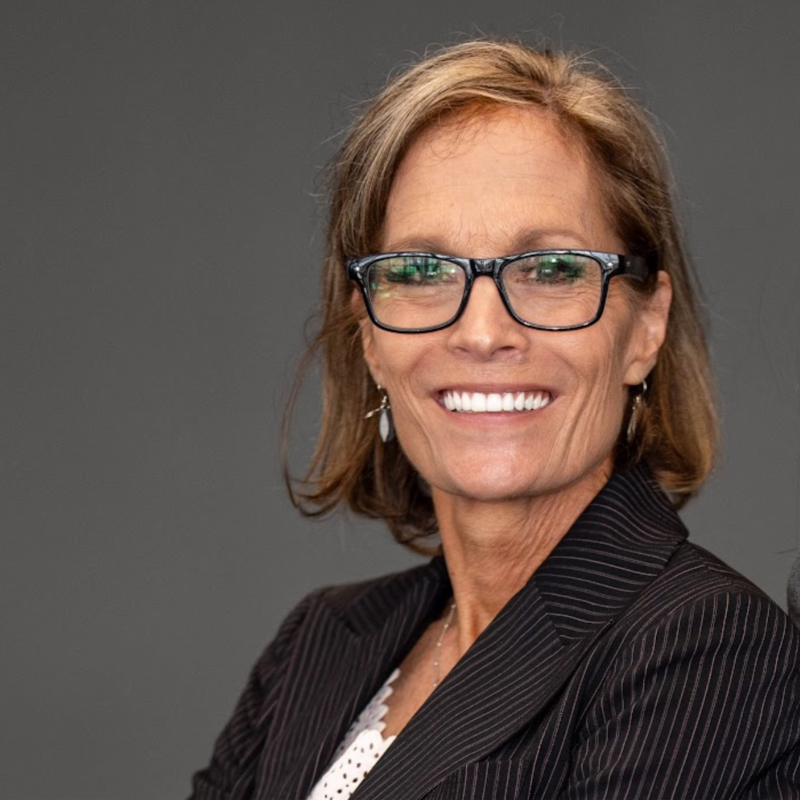
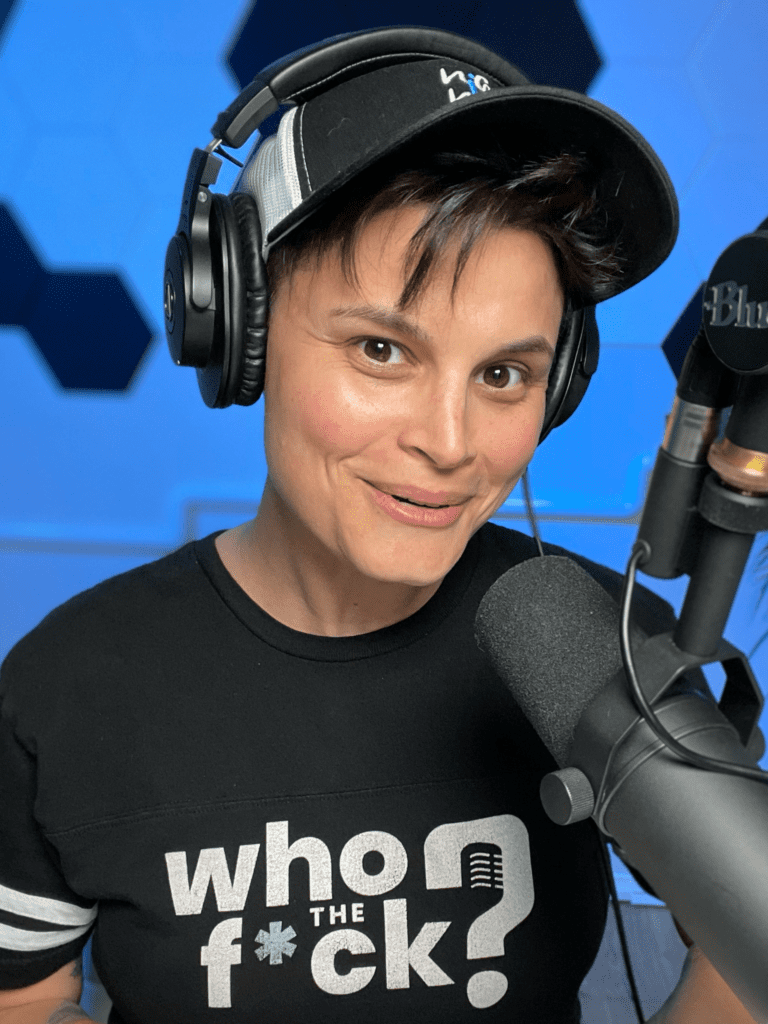
First aired April 21, 2024
My guest today told me her podcast intro calls are basically vetting sessions, because she doesn’t want boring people on her show. “Small talk is virtually non-existent,” she said. “It’s basically like, hi, how are you doing? And one of my best friends said this: I don’t care about the weather, I want to know what your deepest trauma is.” That’s Nikki LaCroce, and once we got into her deepest trauma, I understood exactly why she vets her guests. In early 2021, Nikki experienced what she calls her personal Armageddon: leaving a decade-long relationship with a covert narcissist while simultaneously losing her mother in the middle of the pandemic.
Nikki is a podcaster (Can I Just Say?) and, like me, someone who believes the most important conversations aren’t the polished ones, they’re the real ones. We talk about the difference between overt and covert narcissism (her ex was covert, which she says made the gaslighting and love bombing almost impossible to name at the time), the “pain threshold” that finally pushes someone to leave, and why one of her best friends telling her “you’re asking for the bare minimum and you’re not even getting that” was the sentence that changed everything.
We also get honest about the guilt that lingers after you leave, especially when leaving means you also lose time you’ll never get back with people you love, and the deal-breakers exercise Nikki did to rebuild her own sense of self from the ground up.
Watch this episode
In this episode
- Why covert narcissism is so much harder to spot than the “textbook” version, and why gaslighting doesn’t always look dramatic
- What the “pain threshold” is, and why it takes crossing it to finally leave an unhealthy relationship
- How gratitude helped Nikki hold onto her sense of self while she was still in the relationship, not just after
- Why regaining your sense of self, not the breakup itself, is the hardest part of leaving a narcissist
- The deal-breakers exercise Nikki used to rebuild her own standards for a relationship
- How to release the guilt and shame that linger after you leave, especially the guilt over time you can’t get back
Timestamps
- (00:01) Welcome and guest intro: meet podcaster Nikki LaCroce
- (05:38) The 2017 move to Seattle, and the toxic job that came before it
- (11:52) Starting therapy, and the therapist who said “if you’re going to do this, you commit to going weekly”
- (12:12) The “pain threshold”: what it takes before we’re willing to do the work of change
- (18:21) The intersection of gratitude, mental health, and connection
- (22:41) Covert vs. overt narcissism, and why Nikki didn’t recognize love bombing and gaslighting as they were happening
- (28:21) You deserve to be freed from the abuse, and you deserve to heal from it
- (33:19) Releasing guilt and shame after leaving an abusive relationship
- (35:53) Why it takes an average of seven tries to leave an abusive relationship
- (38:07) The deal-breakers exercise: rebuilding your own standards from scratch
About Nikki LaCroce
Nikki LaCroce was raised in the suburbs of Philadelphia and moved to the West Coast in 2017. In early 2021 she left a decade-long abusive relationship while simultaneously facing the unexpected loss of her mother amid the pandemic. She hosts the podcast “Can I Just Say?”
Listen to her show wherever you get podcasts, visit canijustsaypodcast.com, or follow her on social media at Nikki LaCroce.
Favorite quotes
“You’re asking for the bare minimum and you’re not even getting that.” —a friend’s words to Nikki LaCroce, the turning-point moment she describes
“Gratitude and anxiety can exist at the same time.” —Nikki LaCroce’s therapist, as relayed by Nikki
“The hardest part about leaving a narcissistic abusive relationship with somebody is regaining your sense of self.” —Nikki LaCroce’s therapist, as relayed by Nikki
Resources mentioned
- “Can I Just Say?”: Nikki’s podcast, available wherever you listen to podcasts
- CanIJustSayPodcast.com: Nikki’s website
Related episodes
For more on narcissistic abuse and rebuilding after it, try:
- Trauma Impact: From Codependency to Self-Mastery: Amanda Kate’s parallel story of surviving chronic narcissistic abuse and reclaiming her sense of self.
- Surviving Gaslighters and Manipulators: more on the gaslighting patterns Nikki describes living through with a covert narcissist.
Subscribe & connect
If this episode gave you something to sit with, follow Phoenix and Flame so you never miss an episode: all apps in one place, or jump straight to Apple Podcasts, Spotify, Amazon Music, or YouTube. And if it moved you, leave a review; it’s the easiest way to help another listener find the show.
Learn more about Phoenix and Flame, connect with Dana, and listen to more episodes here.
Read the full transcript
[Dana] (00:01)
Welcome to Phoenix in Flame. I’m Dana and this is my podcast on pushing through and transforming even when you feel like a pile of ash. As you’ve heard me say before, I absolutely adore podcasting because it gives me access to amazing, amazing people. Today our guest is Nikki LaCroce, and she was raised in the suburbs of Philadelphia. Nikki made a long-awaited move to the West Coast in 2017. It wasn’t long after that she realized relocating there was only one of the big changes that she needed to make. In early 2021, Nikki experienced what she now refers to as her personal Armageddon, as she left a decade-long abusive relationship and simultaneously was faced with the unexpected loss of her mother amidst the peak of the pandemic. Nikki, welcome to Phoenix in Flame.
[Nikki] (01:09)
Thank you so much for having me. I’m really excited to be here. And just in the little bit that we had before you hit record, it’s always so exciting when you hop on a podcast, especially when you’re reversing things and you’re now in the hot seat, the conversation is like instant and it’s right there and you don’t have to sweat it. It just makes all of it so much easier.
[Dana] (01:31)
That’s it, and guys, before we get into more of Nikki’s story, I was telling her, like she said before we started recording, I’m really picky about who I have on my podcast, because to be honest, and I’m a very blunt person, I’m just gonna say it, I don’t have time for boring people. I don’t want to have boring people on my podcast. I want to have people that I can connect with, that I feel like have a compelling story, and people that are willing to be real, people that are willing to go there and tell the truth and say what it’s really like. Because Phoenix and Flame is about letting everyone know that we’re all the same, that we are all crawling through crap a lot of the time, and
[Nikki] (02:18)
Yeah.
[Dana] (02:24)
learning that we’re not alone, that other people are doing that too, and what does it feel like? I personally like to hear other people describe what it feels like when they’re going through something hard, because then I’m thinking, “shoo, it’s not just me.” And then learning what helped them. So that was one of my compelling reasons for doing Phoenix in Flame, to reach out to people and say, you know what, you’re not alone, we’re all in this together. So I always want to have people that resonate with me and that are gonna be real and tell their truth, and I feel like, Nikki, I feel like you’re up to the challenge.
[Nikki] (02:54)
I like to believe so. I would say I really value the amount of transparency and authenticity that I come with, and that is the product of a lot of self-work. I think it’s a benefit that we booked this right after I had a therapy session, because I was like, I am primed and ready to go there. But in general, I really value the vulnerability of the conversations, because that vulnerability is what’s at the helm of all connection. And so many people, like you said, I don’t want boring people, I do intro calls for my show because I really want to make sure I feel like the dialogue is there, because in earlier points of my podcasting career I made some concessions that I regret making, because I thought they would be beneficial, and first of all they ended up not really being, and I also compromised sort of my integrity with what I was seeking. And it’s not that the content was bad, but I kind of knew, and I ignored that knowing, that what was coming out of the conversation wasn’t really what I had hoped for. It felt too superficial.
[Dana] (04:14)
Mm-hmm.
[Nikki] (04:14)
If there’s one thing to know about me, it’s that small talk is virtually non-existent. It’s basically like, hi, how are you doing? And one of my best friends said this, it’s like, I don’t care about the weather, I want to know what your deepest trauma is.
[Dana] (04:28)
That’s hysterical. Yeah, just let me tell you your deepest darkest secrets, let’s start there, shall we? So it’s kind of like…
[Nikki] (04:33)
Yeah, yeah. And then we can work backwards. So yeah, totally.
[Dana] (04:38)
Well, it kind of reminds me when I’m doing psychotherapy sessions, I’m listening to my patient talk and then I’m waiting, I’m watching, and I’m kind of sitting there with them, and I’m waiting for them to feel finally comfortable enough. And you could almost see them shedding the superficial stuff and really getting real. And I have this voice inside go, okay, here we go, now we’re gonna…
[Nikki] (05:04)
Oh yeah, yeah, like I’m ready to work.
[Dana] (05:05)
Now we’re getting there, now they finally feel comfortable doing that. So I just love to have this platform to provide that comfort and to say, this is what we’re doing, we’re being honest. So I’m wondering, Nikki, if you could consider taking us back to 2017, and why you made such a big move, that was a big move that you made, and then what were the big changes that you needed to make at the time, and then we can just kind of flow through all of that.
[Nikki] (05:38)
Yeah, that’s great, I think it’s a great jumping-off point because it was really a pivotal moment for me. So right before I moved to Seattle, I had lost my job about six months prior. I’d been working in tech for most of my career, I always say to people I fell ass-backwards into tech because I graduated at the peak of the recession with a film degree, and it was like, good luck with your life. And being in the States, I needed, I had this visceral feeling of, I need to have healthcare, I don’t want to have the feeling of I can’t make any money but also I don’t have health insurance if I get in a car accident on my 100-mile round-trip commute to work. So there was this feeling of, I want that security net. So I made a lot of concessions early in my career to just take the job that was there and bounce around to try to make more money. And I took this one job that was super random, and it afforded me, honestly, a lot of great opportunities. I spent a lot of time in Greece at this job because they had a headquarters there, that was such a beautiful way to spend my time and a place to spend my time. But the company was really toxic. The CEO, in retrospect, and I didn’t have the words for it then, but he was absolutely a narcissist. And the thing that I, so I ended up getting fired from that job, because to be honest with you, I was checked out, I’ll take my ownership of that, but I also felt like he didn’t know what he was doing, and he was firing people left and right too. So it was a combination of things that happened. And so when I lost that job, my mom and one of my best friends both said to me, “fight every urge you have right now to fix this right away, give yourself a minute and figure out what you’re gonna do, it’s okay for you to have unemployment for a period of time.” Because I had just bought a house, I had just traded in my car and done all this stuff, I wasn’t expecting to lose my job. And my ex at the time, we had just gotten married as well, and she wasn’t really, in all of the ways, really didn’t live up to, I don’t even want to say her potential, because it could have been my imagined potential, and that’s a story for a different part of the conversation or a later day, but she wasn’t doing much to contribute. So all of that weight fell on me. And this opportunity came up about six months into my unemployment, this is probably important to mention, between when I lost the job I took what I called at the time a “spirit quest,” and I drove on a solo road trip from Pennsylvania down to Florida. I made some stops along the way, stayed with some friends, stayed in some cities by myself, because I was like, I just need to go, I need to go be, I need to, I was overworked, I was so drained from the environment I was in. And what I didn’t recognize was such a huge part of this too, was that I was really drained by the relationship I was in. So I say all of that because I then get this call one day from a recruiter at Amazon. And having worked in tech, Amazon is definitely a company that if they’re pursuing you, you’re like, I’ll entertain this, right? And what came with that was
[Dana] (08:39)
Ha ha ha!
[Nikki] (08:42)
the opportunity to interview. I took it, got the job, I honestly didn’t think I would, I was like, worst case scenario, free trip to Seattle, great. And when I got the job and the salary was more than I’d ever made, with a relocation package to get me out to the West Coast, my entire life all I wanted was to get to the West Coast, I thought it would be California, but then there were all these fires and things and I was like, maybe not California. So Seattle became this very important moment for me to, I don’t want to say reinvent myself, but reestablish myself, because up until then most of my life was lived in a place or within a couple hour radius of places where everybody sort of knew who I was, and this version of me that wasn’t necessarily fully who I was or who I wanted to be. And when I got to Seattle, and obviously my ex came with me, I was really hopeful, I was meeting new people, and I felt really energized, knowing full well that I’m not supposed to be in a corporate job, I don’t really want to work at a company like Amazon, but it was one of those “I need the juice to be worth the squeeze” sort of moments, it got me to the West Coast, it’s giving me a salary that is much more livable than what I’ve made in the past, so I’ll take this opportunity and run with it. But about a year into that job, I was so miserable, and I was feeling a lot of the feelings I had when I was burnt out at the company prior, and the companies prior to that. So I started going to therapy because I was miserable at my job, and I’m like, I just need something that gives me purpose, I can be good at this, but I don’t care about this, and when you don’t care about something it’s very hard to be the best you can be at it. I would say I was a good product manager, was I the best? No, because I didn’t care. And as I’m saying that out loud, this is funny, I played soccer in high school and I had a coach that said to me, “you’re great because you’re athletic, you’d be the best if you cared,” and I’m like, but I don’t, you know. So this is the first time I’ve come to the moment of, oh, that’s not the first time that happened. So your therapeutic presence is just drawing it out of me. So yeah, that was a really pivotal moment for me, because I had gone to therapy very briefly before, without a lot of intention behind it, other than honestly to try to convince myself that I was in the right relationship, which was the wrong reason anyway. So when I started going to therapy in Seattle, my therapist said to me after the consult, “if you’re going to do this, you’re going to commit to going weekly.” And I was like, well, I’d rather just come when I feel like I need to have therapy, and she’s like, “no, if you’re gonna work with me, that’s not how this works.” And I was like, oh, okay. And because I really wanted answers and to change and to find what I needed, I did commit to it. And that honestly was really the catalyst for me finding the ground I needed to learn enough about myself to
[Dana] (11:27)
New.
[Nikki] (11:52)
understand that I was in an unhealthy relationship with myself, with my work, and with my spouse. So it was very much the first domino that fell, and then a lot of other events came after that gave me a lot of clarity around where I needed to go.
[Dana] (12:12)
I want to ask you this, Nikki, you mentioned commitment, and I think that is really crucial. It’s been my experience that people have to reach what we call the pain threshold before they’re willing to commit. And I’m wondering, for you, what was it that pushed you? Because most of us, to be honest, we can feel very uncomfortable and we don’t like it, but the pain threshold says before we’ll do the work of change, and make no mistake, change is work,
[Nikki] (12:42)
Right.
[Dana] (12:42)
and facing fear and all this kind of stuff, before we’re willing to do the work of change, the pain of staying the same has to be greater than the pain of change. So people have to get pushed, because we hover right under that threshold for so long, and we’re very uncomfortable, but we’re not uncomfortable enough to commit to change. So I’m wondering, in your particular situation, what was it that pushed you
[Nikki] (12:53)
Mmm. Yeah.
[Dana] (13:12)
over that pain threshold to commit to doing something, that you really, to your words, you just kind of wanted to drop in whenever you were having a hard moment or something, and I get that, I understand that. But your therapist was like, “no, that’s not how this works,” it does really require commitment, and not just a commitment of time, but a willingness to be vulnerable and show all the bits and parts and stuff that we keep tucked away, that we may not even want to see ourselves.
[Nikki] (13:21)
Yeah.
[Dana] (13:41)
What was it for you that helped you reach that pain threshold and make that commitment?
[Nikki] (13:46)
I love the question, and I also really appreciate you describing that pain threshold. And I don’t know if you’re similar to myself in this way and believe in divine timing, but I cannot explain to you how relevant this conversation is based on not just what I talked about in therapy, but what led me to talk about something in therapy yesterday, which was, my wife always says, “say the thing that you say,” and it’s that I would rather be uncomfortable in the near term for a shorter period of time than uncomfortable in perpetuity. Because I was living my life in a constant state of discomfort that you’re describing, I love the way you said it because it’s so visual for me, it’s like you’re just under the threshold, right? And I had a friend, a guest who became a friend, say to me, “you left when you could,” referring to my relationship. I feel that way about my tech career, I feel that way about leaving the East Coast, right? When the circumstances aligned and it felt like my lack of fulfillment, my lack of happiness, that is making, it’s debilitating, it’s making it so I’m not enjoying my life, and I find it unacceptable that I’m not able to enjoy my life. Now it wasn’t that cut and dry in the moment as it was happening, but there was something in me, particularly around my work life, where I was like, I cannot keep doing this. Now I will tell you, I stayed there for another three years, there were some golden handcuffs that made it real nice for me and frankly was really important, because it paid for my divorce. So there were benefits to staying in this job, but throughout that entire journey I’m going to therapy at least once a week, during what I described as my personal Armageddon twice a week, and really focusing on the fact that I’m seeing the gains, right, like we think about people going to the gym and being like, “I’m going to the gym, I’m going consistently, I’m gonna work out,” and look, now this is the before and after. I wish that we had that for therapy, I wish there was a tangible way to show the before-and-after photo of you as you’re starting therapy and the train wreck that we all are.
[Dana] (16:02)
Yes.
[Nikki] (16:05)
And then, this is where I am now. Now there’s still a little bit of, I wobble on the tracks sometimes, but we’re pretty good, we’re pretty solid heading forward. And I think for me it was, you know, I actually had this dialogue with my wife yesterday after hanging out with a friend, saying, you know, it’s frustrating, you think about why do people not go to therapy, because we’ve both really been witness to the advantages of it, and there’s a myriad of reasons that people won’t go. But at the end of the day, if you distill all of those down, my belief is that it comes down to the fact that we don’t want to, as you said, face ourselves. If we have to face ourselves and we need to acknowledge the truth, then we need to actually change, or we sit with the discomfort of knowing that we need to change and we’re not doing it, which honestly, you better cross that threshold otherwise this is just permanent misery. And so I made a comment about how, God, I don’t understand why people won’t just do the work. And then I said this, and I had to literally look at myself in the mirror, because I said, it’s sort of like when I, because I’ve had body image issues, I dealt with bulimia for a period of time when I was in high school and early college. And so there’ll be times where I feel very out of shape and I’m uncomfortable with my body and none of my clothes fit the way I want them to. And when I feel that way, I just won’t look in the mirror, I can’t handle it, I don’t want to look in the mirror. And as I’m saying this to my wife in the car, I’m like, shit, oh man, I was sitting here begrudging people for not going to therapy, not doing the work. Meanwhile, that’s probably what every one of my friends that goes to the gym consistently thinks when I’m miserable about myself, right, it’s like, then go do the work, go commit to yourself, right? And so I think it’s very easy to see that there’s a problem, whether that’s physically, mentally, emotionally, and acknowledge that, but to actually sit with it, with that awareness, and then decide that you’re going to take action to shift your mentality and change your life is a very different type of commitment. And so the consistency for me was what allowed me to commit and give myself the space and the time I needed to come to these revelations that I was unhappy in all these areas of my life.
[Dana] (18:21)
That sounds amazing and so on point. You had brought up something from a video of yours that I watched, that I was really attracted to and wanted to hear you talk more about. You mentioned the intersection of mental health, gratitude, and connection. And I feel like that’s really interesting, and there’s a lot of research behind gratitude and these types of things.
[Nikki] (18:40)
Mmm.
[Dana] (18:51)
And you and I were talking earlier before we started recording about connecting, and then we added a little bit more once the recording started, about, you know, there’s just certain people I have on my podcast that I have to feel connected, I have to feel like there’s something between us that is a connection there. Otherwise I feel it’s just a waste of time, to be honest.
[Nikki] (19:09)
Yeah, yeah, yeah. Well, because the desire, at least for me, and based on the brief conversation we had about this, it’s sort of like going to therapy, in the sense of, you’re here with the intention of, I don’t want to say it’s like there’s this desired outcome, because how you get there or what the ultimate dialogue is isn’t really the point, but if you have a show where you’re wanting people, because I’m the same way with my show, where you want people to feel a sense of being seen and heard and understood, that you are not alone, then you need people on the other side of the mic to be in that same mindset. And if all you have is somebody coming on to self-promote and talk about the thing that they do and not the life experience that led them to that, it
[Dana] (19:47)
Yes.
[Nikki] (20:06)
diminishes, I think, the relatability. Those are two different types of conversations. I think you can get really great insights and advice and sometimes very actionable tips from the types of conversations we’re having, and I’m gonna give one related to gratitude shortly, but that’s not why I’m here, it’s like, the intent is to have a conversation, to expose people to either new ideas or expand on the thoughts they already have. And the best feedback I’ve gotten from people about my show is that when they walk away, whether they’ve listened to it or even if they’re a guest, is that it really made them consider things they hadn’t considered before. And so now they’re doing some more of that deep work on themselves, which nobody’s gonna tell you to do, you don’t just do that because somebody’s demanded it of you, you do that because you’re in a place where you’re ready to evaluate that. And maybe it’s not the pinnacle where you’re like, I’m making this change today, but it’s like those little seeds that get planted, and then now what has gone from being a few seeds dashed here and there is now this really robust, beautiful, thriving garden, because you’ve sat with it and you’ve given space to it and you’ve watered it and you’ve picked the weeds out.
[Dana] (21:21)
I love that, I love that so much. There’s something, one of the reasons why I was connected to you is because you had mentioned in part of your bio about struggling through a relationship with a narcissist. And I don’t mention this much, and I’m not going to go into it a lot right now, but my mother was one of those, and my relationship with her has been
[Nikki] (21:38)
Yeah.
[Dana] (21:51)
fraught with all kinds of things, manipulations and gaslighting and all kinds of fun stuff. So I really have a heart for people who have had to weather those types of relationships. I was wondering, for you, and maybe for some listeners right now who might be in the throes of a relationship with a narcissist and they’re feeling ass over elbows and they don’t know what’s going on because of the gaslighting, the manipulating, I was wondering if you had any words of wisdom or experiences you could share with them, as they’re walking that journey and maybe trying to find a light somewhere, and feeling like they’re in a dark room, like an escape room, and they can’t find the door.
[Nikki] (22:41)
Oh yeah, that’s a great question, and thank you for sharing that with me. I recognize how challenging it can be to have the parental dynamic like that, because my best friend’s mom is just a raging narcissist, it’s the most textbook. It’s interesting, because she had been married to somebody who was an overt narcissist, her mother’s very clearly also, but then I was married to a covert narcissist. So I didn’t understand a lot of it as it was happening, and when I met my ex, I was 23 and she was 31, and I feel like this was before the dialogue about narcissism was what it is, it wasn’t, it was virtually non-existent. Gaslighting wasn’t a thing we talked about, so I didn’t understand love bombing, trauma bonding,
[Dana] (23:33)
Nope. Nope.
[Nikki] (23:36)
gaslighting early in the relationship, when if I had that information now and I knew, I feel like I would have been like, obviously that’s what’s happening right now. Maybe not, I’m an empath through and through, so I’m sure there’s still those little holes that somebody who’s very manipulative can kind of tug at you and pull you into their vortex. But to answer your question, there’s a couple of parts to this. One, I want to loop back to the comment you made about gratitude, because something that was really important for me when I was in really challenging points in that relationship, was, I am an over-thinker, I ruminate a lot, I should say I have historically ruminated a lot, it is so much better now because I’ve done therapy and I’ve left the relationship with the narcissist, so I’m not constantly in survival mode. But something she had said to me was, gratitude and anxiety can exist at the same time. So if you’re feeling really anxious, just start naming things you’re grateful for. And I think a lot of people think, okay, well I don’t have anything to be grateful for, what can I be grateful for, it’s so hard to think of something. Okay, is the sun out today? I’m grateful the sun’s out today. I’m grateful that I have sunglasses so the sun’s not beating in my eyes. I’m grateful that I have this chair to sit on so I’m not sitting on the floor. And it gets you into this mindset of, okay, there are things I can appreciate about my life. And what I hadn’t even realized was the compound effect of that, and how much that probably influenced not only the way I was able to survive in that relationship for the couple of years that followed, but even in the throes of losing my mom in the process of leaving this person, I had to anchor on, I have all these people in my life who love me, I have a job where I have some job security, I have these things that I can hold onto and see as moments or pieces of my life that are good, that bring me joy, that fulfill me, that make me feel safe. And I think when you’re with somebody who’s narcissistic, or you’re experiencing the results of narcissistic abuse in a different type of relationship, that it is so important, because gratitude for me really helped me stay attached to a sense of self at a point when it had been so greatly reduced, that one of my best friends after I left my ex said to me, “you were like a corpse.” And I was like, that’s really bad to hear, but I also appreciate it, because she said that as I was standing next to my now wife, being like, it’s such a polar opposite experience that you’re having, she felt she could acknowledge it because it was obvious that was so far removed from where I was now. Now, the impact is lasting, like literally at the end of my therapy session today, I said, I have this feeling of I want to stop talking about her, I don’t want to keep having these feelings, but I also recognize that I’m not coming from this place of aggressive resentment or just so much pain from it, there’s an objectivity to it that’s come about. And one of the things again that my therapist said, I have to give her so much credit for really helping me get to these places with seemingly simple thoughts or questions, but there was a moment where she said to me, the hardest part about leaving a narcissistic abusive relationship with somebody is regaining your sense of self. And at that point I hadn’t even really understood how much I had lost it. This podcast kept me afloat, my podcast kept me afloat for a really long time, because I had all these other connections that were so important to me. And a narcissist is going to try to isolate you, and my ex did that in ways that were more subdued because I’m inherently a connector, and you’re not gonna shut that down, it’s just not happening. So it was more like keeping me distant or keeping me trapped, but I still had all these people who were telling me their stories of resilience, their stories of leaving these toxic situations, of overcoming this adversity, and I’m like, so it’s possible, so it’s possible, so it’s possible. And so I think part of the value of a show like yours and the one that I do is that when you hear people who have been in your position saying, I get it, I was there too, and I understand it’s not cut and dry, I understand you can’t always just up and leave because you want to, I understand you’ll try to leave several times before you actually get out, but you’ll leave when you can, or you left when you could. And what I think is really important to remember is that
[Nikki] (28:21)
as much as we have our own accountability in these relationships, there is abuse there, and that is something you deserve to be freed from and you deserve to heal from. And so when it came to regaining that sense of self, one of the things that I did was, I settled for a really bad relationship because I didn’t love myself enough. And so for the first time in my life I sat down and I was like, alright, what are my wants and needs, deal breakers in a relationship, let’s do this. Not “I just want somebody to love me,” but what is it? The deal breakers were primarily things that would relate to my ex, and I was like, just hard no, never again. And then it was, okay, here’s what I’d like to have in a partner in a relationship, and then it was, what are my non-negotiables. And I think it’s really important, especially if you recently left a narcissist, to do that exercise and ask yourself those questions. If you’re in a relationship with a narcissist, ask yourself those questions, or in a relationship where you’re unhappy, doesn’t even have to be a narcissist, ask yourself if you’re getting what you need and want. And also, if a bunch of your deal breakers aren’t currently deal breakers right now, even though they would be, why are you abandoning yourself, why are you letting your own boundaries be violated? I think there’s a lot of introspection that I encourage people to have, and it’s not always easy when you’re in the midst of it, so I understand that. But when you have the clarity, when you have the space, just little by little, give yourself the opportunity to explore those parts of you. Because when you’re surrounded by someone who’s narcissistic, their entire MO is basically to erode your self-trust, and you need to gain that back to be able to have the confidence you need to live your life more fully.
[Dana] (30:11)
That’s awesome, I’m loving so much of what you’re saying and your contribution and your experience and your wisdom and your willingness to share. I also wanted to pipe in and say, sometimes for people that have been raised in a narcissistic environment, sometimes they don’t know they’re being abused.
[Nikki] (30:32)
Yeah.
[Dana] (30:32)
They don’t understand about boundaries, they don’t understand that there isn’t being space made, because sometimes we use that word narcissist a lot, but basically in a nutshell a narcissist is about him or herself, that’s it, period, full stop. And anyone who’s in a relationship with that person, the relationship is going to be about that person, and
[Nikki] (30:45)
Period, full stop.
[Dana] (30:57)
because you said you lose yourself because the relationship is always about that person. And when you’ve been raised in an environment that way, sometimes you don’t realize that’s what’s going on until you…
[Nikki] (31:09)
I mean, I didn’t realize when I was in it as the romantic relationship, so I can only imagine it’s sort of like being the fish not knowing you’re in the water, right?
[Dana] (31:17)
Yes, yes, yeah. Just as a little side note, I had to have somebody tell me that I was being emotionally abused, and I was a full-on adult with a degree in psychology and didn’t know that. So I’m just saying…
[Nikki] (31:27)
I mean, that’s fascinating. No, but I think that’s a really important point to make, Dana, because a lot of the people I know who have dealt with a narcissist, whether it’s in a familial relationship or a romantic relationship or even friends, it’s very easy to, from the outside looking in, observe it and call it out, but because of the nature of the abuse, narcissistic abuse is very insidious, even if it doesn’t present that way. Like my ex was always a victim, so a covert narcissist is very, very good, I mean, I think all narcissists are, but there’s sort of a bravado with an overt narcissist that my ex didn’t have, but it was like
[Dana] (32:05)
Yes.
[Nikki] (32:24)
always about her trauma, which, I’m like, I don’t even know if it was real or not. She was living a double life as somebody who was addicted to substances, there was a lot of stuff that didn’t add up. And through and through, I’m justifying her behavior, feeling in my body that it’s not right, but because I don’t know enough about that abuse, I’m making exceptions, I’m cutting down my own boundaries. And to your point,
[Nikki] (32:54)
a lot of people from the outside can point it out to you, but you have to be in a place where you can accept it. And I’ve said this on a lot of podcasts where I’ve guested, because it was the turning-point moment for me. It was when one of my best friends from college said to me, “you’re asking for the bare minimum and you’re not even getting that.” And I was like, well, I guess I really have to face that reality, don’t I? Because it was like, I want more, I want more, I want more, and it’s like, well, you’re never going to get that, so what? It was the most gentle way she could have said that.
[Dana] (33:19)
Hahaha, that’s it, you’re not going to, so what are you gonna do? So our time is about up, but I did want to ask you another question just to kind of wrap this. I feel like, Nikki, I think you and I could probably talk for two more hours on this, but maybe I’ll invite you back on and we’ll go part two. That’d be awesome, because I’m the Queen of Boundaries, and there’s a good reason why I’m known as that, learned that the hard effing way. So…
[Nikki] (33:38)
Oh, a hundred percent, I would love that. I’m happy to have you on my show as well, I think it would be a great conversation. But don’t most of us, I think a lot of us do. I want younger generations not to have to learn that way, but I think people who are, I would say like millennials upward and maybe late Gen Z, boundaries are something we have to now integrate into our life very consciously and intentionally. Whereas if we can raise children coming up in the world now to understand it, then it’s less of the learning curve and more just part of who you are and how you exist.
[Dana] (33:59)
Oh yeah, that’s it. And keep that in mind when I ask you this next question. When you think about boundaries and how we came around to that, and also the importance of releasing guilt and shame, because we can try to disengage ourselves from and detach ourselves from these narcissistic relationships, and we can try, and we can even pretty well succeed, but then we’re still left with this residual sludge, this sliding around in there that just kind of comes every so often about, well, maybe I should have done this, or maybe I should still be doing that, or maybe I shouldn’t have done that, shame on me. To be honest with you, Nikki, I was called all kinds of names, I was called a bitch, I was told I was hateful, I was told I was unforgiving and unkind and
[Nikki] (34:27)
Okay.
[Dana] (34:51)
you name it, I’ve been called all these things for setting boundaries, and I had to work through all of that. So I’m interested in your take, from your experience, when you think about boundaries and also how, how did you release the guilt and the shame? Especially for my listeners who, like I said, are still maybe on that path and still in the dark, still struggling with that and still get pulled back in because of the guilt and the shame.
[Nikki] (35:53)
Yeah, that’s such a great question. You’re correct that it’s very real. To be honest, I think that’s the reclaiming of the sense of self is challenging in a different way, I think that’s the hardest part in terms of your own self-actualization. But releasing the guilt and the shame is so essential. And the challenge I faced was when I was leaving, I’d made the decision to leave and then we lost my mom, and I thought, well, I might need to lean on this person or something, she couldn’t show up in the moment when I needed her the most. So it was a very clear no. But I started feeling a lot of guilt and shame because I lost time with my mom that I’m never gonna get back, I missed opportunities with people that I won’t have, I said no when I should have said yes, I kept myself in a situation I could tell wasn’t good for me, and in retrospect I look back and I’m like, why didn’t you leave, why didn’t you just leave? But the thing that’s important to remember is, first of all, when you’re in an abusive situation, it takes on average seven times to leave, so that in and of itself says a lot about the power abuse has over us. But it also speaks to the fact that the friend who said “you left when you could” was like, you probably got there a couple of times, right, and you were like, I’m going, I’m going. And what would happen in my life was, every time I was like, my foot’s out the door, something traumatic would happen and I would get sucked back in, to your point. And so I’m sitting here and I’m shaming myself about why did I stay, why did I stay, and it’s like, because this person continued to manipulate me to believe that, not even to believe that the way I was, because there’s the accountability to it, but it’s like my low self-worth, my feeling of needing, in feeling needed, I felt wanted, dictated my staying in that relationship. This person needed me, I needed to be there for them. And when I was able to extract myself from the situation and be like, okay,
[Nikki] (38:07)
she didn’t need me for the purposes I thought she needed me, she needed me as a resource. When you recognize, you know what it is, I’m sorry, I feel like I’m jumbling a little bit, there’s so many things going on right now. I think it’s that you have to be willing to sit with the discomfort of acknowledging that it’s actually abuse, to release the guilt and the shame. And you also have to be accountable for your part in not,
[Nikki] (38:38)
I don’t want to say not setting boundaries, because I tried really hard to set a lot of boundaries, but for not upholding your own boundaries, regardless of what the other person did. So I think there’s a lot of grace that you have to be able to give yourself, while also holding yourself accountable, to navigate those feelings of guilt and shame, because you’re not just gonna be like, I don’t feel guilty about it, I don’t feel shame about it, because what you’re feeling is, at least for me, looking at my past self and being like, I’m so sorry that I stayed so long, I’m so sorry that I put up with that, I’m so sorry that I wasn’t living in integrity with what was right for me, because I didn’t have enough belief in my own self-worth to release myself from the situation. And that’s really been what has helped me navigate through that, because I will never get that time back with my mom. I think to some degree I’ll always have some sense of, I don’t even know if it’s guilt anymore, I think now it’s sorrow, this pain of knowing I didn’t have that. But at the end of the day, when you leave, I think there’s so much to be celebrated when you extract yourself from the situation, that eventually the scale sort of tips to, that’s not as significant as my worth, or that’s not as significant as the goodness that my life holds now. And so as you remove it further from your life, it’s not that you’re ignoring it, it’s that you’re allowing what was to be whatever it was, and know that’s not your life anymore. And to be able to release that guilt and shame, you have to be able to be very present. And that’s where gratitude again comes into play for me. It’s like, I can look at my life now and be like, look at everything that is right here right now. That was absolutely terrible, I can’t change that. But this life that I have now, this is the good life I get to live.
[Dana] (40:27)
That’s amazing, amazing. Okay, Nikki, I know my listeners are going to want to be able to access you more and find out, oh my gosh, she’s awesome, how do I get a hold of her, where do I send them, where do they go?
[Nikki] (40:40)
Perfect, yes, so you can check out the podcast, it’s called “Can I Just Say?” and you can get that wherever you listen to podcasts. I also have a website, canijustsaypodcast.com, where you can check out more content or reach out to me. And you can follow me on social at Nikki LaCroce, which you can put in the show notes, because I’m willing to bet most people won’t spell it right.
[Dana] (41:04)
I’m definitely going to put it in the show notes, absolutely, I’m writing it down right now. Alright, Nikki, I thank you so much for your time and your energy and your willingness to be vulnerable with myself and with my listeners and meeting me today. Thank you, thank you.
[Nikki] (41:21)
Oh, thank you so much, Dana, this was just so great, and you’re absolutely right, we could talk for many more hours, and I look forward to keeping this connection going.
[Dana] (41:27)
This is awesome. Listeners, I know you have heard so many things today that you’re thinking, woohoo, I know a best friend, I know a relative, I know a coworker who absolutely needs to hear what Nikki has to say. Please take the episode and copy and paste it in text, copy and paste the link in email, put it on your favorite social media sites. Let’s get it out there, let’s grow our Phoenix and Flame community so that we can know that we are all in this together, nobody’s alone. I hope you have a wonderful rest of your day. I’m Dana on Phoenix and Flame.
Are your work boundaries supporting you—or quietly draining you?
Take my free Work Boundaries Quiz and find out where you stand.