First aired November 12, 2023
A gentle note before you dive in: this conversation touches on childhood sexual abuse. It’s okay to pause, skip ahead, or come back to this one another time.
Four years old, standing next to his closet, Marshall Zweig manages one sentence to his father: “Daddy, I feel sad.” His father’s response: “Don’t be sad, son. There are people in wheelchairs.” That single exchange, after sexual trauma at the hands of his paternal grandmother, taught a four-year-old to smile on the outside no matter what was happening on the inside, a survival skill that cost him decades and, by his own count, hundreds of thousands of dollars to undo.
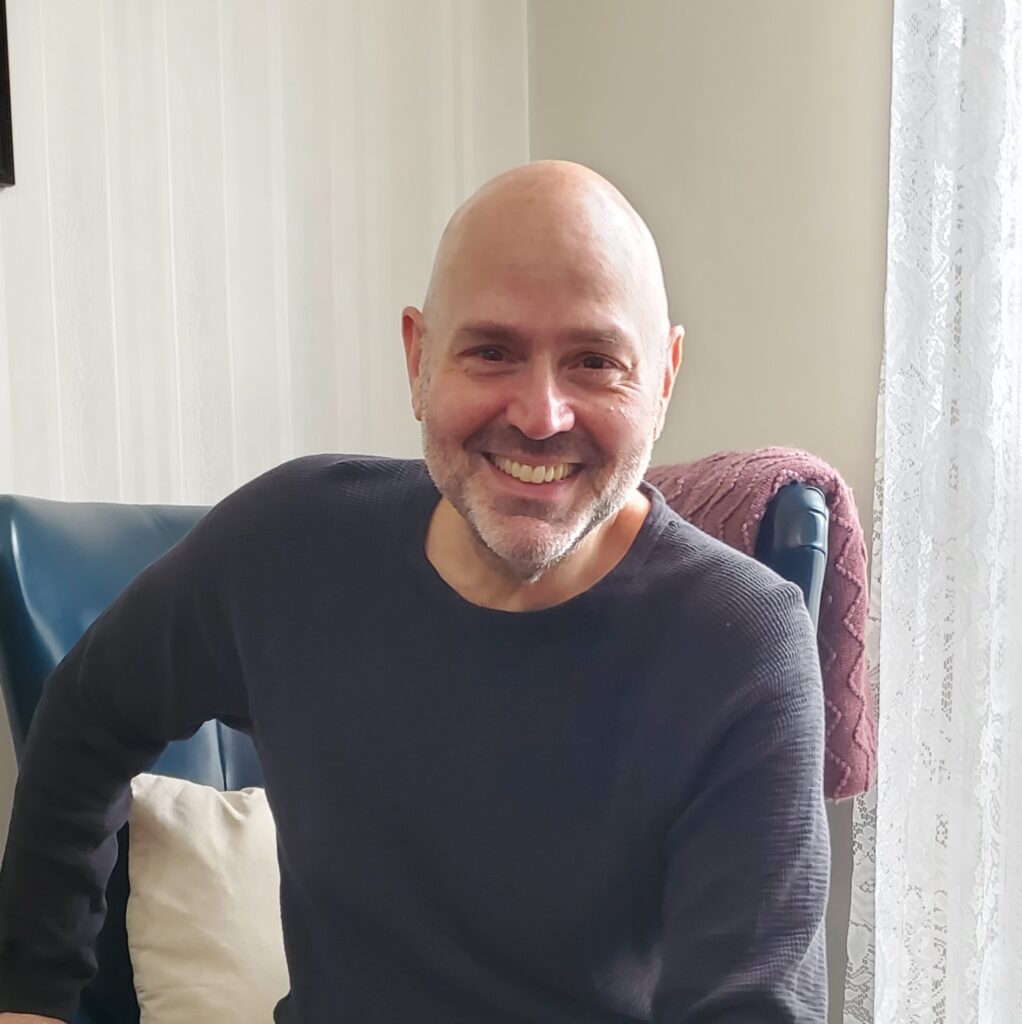
Marshall is a trauma-informed relationship coach and the creator of Truth-Empowered Relationships, a method built from his own years-long climb out of gaslighting, first with his mother, then in his marriage, into relationships he now describes as thriving. We talk about the difference between forgiveness and simply allowing someone to keep hurting you, the exact sentence, “I don’t like the way you’re talking to me,” that could have changed the trajectory of an entire family, and why he says raising your voice is really just a mistranslated way of saying “I’m angry.”
If gaslighting or a hard-to-untangle family relationship is on your mind right now, this one gives you language for it, and permission to stop tolerating what you don’t have to.
Watch this episode
In this episode
- Why “daddy, I feel sad” became the sentence that shaped decades of silence, and how Marshall finally broke it
- The real difference between forgiveness and just allowing someone to keep hurting you
- The exact sentence that can interrupt a gaslighting cycle: “I don’t like the way you’re talking to me”
- How to tell the difference between someone who won’t change and someone who’s actually receptive
- Why raising your voice is really a mistranslated way of saying “I’m angry,” and what to say instead
- How Marshall rebuilt trust with his mother after years of gaslighting, one honest conversation at a time
Timestamps
- (00:01) Welcome and meet Marshall Zweig, survivor turned trauma-informed coach
- (02:41) Truth-Empowered Relationships: why Marshall chose coaching over traditional therapy
- (06:10) Sexual trauma at four, and the father who said “don’t be sad, there are people in wheelchairs”
- (08:47) Growing up with two selves: the smiling one outside, the one underneath
- (10:44) The office stairwell moment in his early 30s that started his healing
- (13:32) The energy chiropractor session and “I reluctantly accept my incarnation”
- (15:07) How unprocessed trauma quietly reshapes your closest relationships
- (18:02) Forgiveness versus allowance: where the boundary line actually is
- (18:42) The heroic example: four hard conversations that repaired his relationship with his mother
- (25:23) Tolerance, and why being “good at tolerating” can work against you
- (29:06) Recognizing a lion by its roar, not its breath (Marshall, quoting Peter Levine)
- (35:03) Truth-Empowered Relationships as a “book of love,” and where to find Marshall
About Marshall Zweig
Marshall Zweig is a trauma-informed relationship coach and the creator of Truth-Empowered Relationships, a method for helping couples and families become “each other’s healers.” His resensitization therapy technique is a recognized modality with the International Association of Therapists. A survivor of sexual, emotional, and psychological trauma, he spent decades and, by his own account, hundreds of thousands of dollars rebuilding his ability to feel and trust again, work that transformed his relationships with both his wife and his mother.
Learn more at MarshallZweig.com.
Favorite quotes
“I don’t like the way you’re talking to me.” —Marshall Zweig, on the sentence he teaches clients to interrupt disrespect
“You recognize a lion by its roar, you’re safe. You recognize a lion by its breath, you’re lunch.” —Marshall Zweig, quoting Peter Levine
“You say ‘I’m angry’ when you’re angry, and you watch the transformation in your life.” —Marshall Zweig
Resources mentioned
- MarshallZweig.com: home to Marshall’s Truth-Empowered Relationships method
- Truth-Empowered Relationships: Marshall’s forthcoming book, described in the episode as a “book of love”
- Resensitization therapy: Marshall’s technique, a recognized modality with the International Association of Therapists
Related episodes
- Surviving Gaslighters and Manipulators: a direct companion piece on recognizing and responding to gaslighting.
- Healing From Narcissistic Abuse (Nikki LaCroce): more on rebuilding trust and boundaries after manipulation within close relationships.
Subscribe & connect
If this episode gave you something to sit with, follow Phoenix and Flame so you never miss an episode: all apps in one place, or jump straight to Apple Podcasts, Spotify, Amazon Music, or YouTube. And if it moved you, leave a review; it’s the easiest way to help another listener find the show.
Learn more about Phoenix and Flame, connect with Dana, and listen to more episodes here.
Read the full transcript
Editorial note: the source transcript for this episode is a dual-channel export in which both speakers’ microphones each independently captured most of the conversation, creating heavy word-for-word duplication and some out-of-order timestamps between the two channels. What follows is a de-duplicated reconstruction: verbatim content preserved, repeated bleed-through removed, and turns re-ordered where the duplication made the true sequence clear. See reviewer notes below; a listen-through against the original audio is recommended before publishing.
[Dana] (00:01)
Welcome to Phoenix in Flame. I’m Dana, and this is my podcast on pushing through and transforming even when you feel like a pile of ash. Well, as you all know, I adore being a podcaster because it gives me access to some amazing people, and today is absolutely no exception. Now today our guest is named Marshall Zweig. That’s as close as I can get.
[Marshall] (00:01)
You got it. As close as I can get. We already had a long conversation about this and they didn’t hear, but—
[Dana] (00:32)
I know. So Marshall, once I read through this, you’re going to understand how he hit so many of my points for who I want included in my podcast as a guest. So he is a survivor of sexual, emotional, and psychological traumas. He spent decades and hundreds of thousands of dollars learning to feel again. Along the way, he transformed his relationships with his now wife and his mother, both of whom were gaslighting him. Now that whole experience took him to the edge of sanity and beyond, but now those relationships with both of those individuals are thriving, loving, and respectful. Now, as a trauma-informed coach, Marshall supports couples and families with his method called Truth-Empowered Relationships, and his resensitization therapy technique is a recognized modality by the International Association of Therapists. Marshall, welcome to Phoenix in Flame.
[Marshall] (01:32)
Thank you. Again, we’ve been talking for seven minutes — I don’t feel like I’m meeting you. I feel like I’ve known you a long time. So I’m happy to be here.
[Dana] (01:54)
So I want you to tell us, and I’ve got tons of questions and everything, and something that I did mention earlier is that as you’re talking I will frequently look down and jot down a note or something, because things that you say are going to spark a question in me or comment in me, but I won’t want to interrupt you. So I will be kind of jotting this down while you’re talking, and then when there’s an organic pause I’ll jump in with my question or comment.
[Marshall] (01:59)
My curiosity might lead me to say, “wait, what are you writing?” But we’ll dance — we’ll dance. Okay, I’ll do it.
[Dana] (02:25)
I will tell you. So first of all, start out by telling us about this Truth-Empowered Relationships. That’s intriguing to me. And then we can work our way back around to your background and your path.
[Marshall] (02:41)
Well, you and I talked a little bit about this in the pre-interview. Truth-empowered relationships, the idea behind it: I have taken two healing paths in my life. I’ve gone to traditional therapists, many of them, in several states, and I’ve done coaching. And for me, coaching is much more effective. I’ve only had an experience personally with one therapist who was effective for me, but not in a contextually transformative way, just adequate enough to talk to. So I prefer coaching. And as a result, I believe I can help people, support people, in becoming each other’s healers. What do I mean by that? One part therapist, and the most effective part of therapy, which is a caring listener, compassionate listener, sensitive, respectful. So one part therapist, one part best friend, one part coach, one part intimate partner, and we can all be there for ourselves and each other. So my method teaches people how to support themselves and each other so that they can be self-sufficient within a relationship.
[Dana] (03:59)
So since I’m a psychotherapist myself, and I get to walk so many people down these journeys, and I’ve had some really interesting experiences of my own, I’ve got a ton of questions about that. But I would really like to kind of back up for a moment and understand your path, where you began. Because like I said before, my podcast is about a phoenix, which, burning, you know, the fire pushing through, transforming, even when you feel like a pile of ash. And so my listeners frequently are either in fire right now, or they have been, or they’re anticipating something like that. They’re anticipating just having to burn down to ash, or they might be listening right now and feel like they are just nothing but a pile of ash with no hope to do anything else. And one of the reasons why I did this podcast was that I wanted them to know that they’re not alone, that other people have been there or are there right now, and to hear people’s stories of how they’re able to push through that. And the authenticity and the credibility is when you get to hear someone who legitimately, who you listen to and you’re like, I’m going to listen to that person because I feel like they understand. They’re not just being flip. They’re not trying to compare my huge issue with their small little thing, I feel like they really get it. And so that’s why I like to have guests on my show who have been through some significant traumas and experiences and then are open and transparent to share what it felt like and how they made it through. So, as much as you feel comfortable doing, obviously everyone has their own boundaries, as I’m the queen of boundaries, so I know all about that. So share as much as you want with us about, because you mentioned being a survivor of sexual, emotional, and psychological traumas, what was that like for you? And if you’re reaching out to listeners right now who might be currently in something like you were in, what do you want them to hear from you?
[Marshall] (06:10)
Well, first of all, thank you for the question. I think about listeners on a podcast, or clients that I coach, I think about these people all the time with every interaction because I want to make a difference. So I’d be glad to answer that question. I can tell you briefly about the traumas, but what’s more important to me is describing the effect of them, because there may be people listening who will be like, that’s me. I experienced sexual trauma at the hands of my paternal grandmother. When I came home at four years old, I tried to talk to my father about it, by saying the best I could manage: “daddy, I feel sad.” I still remember standing next to my closet: “daddy, I feel sad.” His response was, “don’t be sad, son. There are people in wheelchairs.” And so for that particular trauma, for the next few decades I had to block it out, I couldn’t process it. But for the next few decades, I would see someone in a wheelchair and my penis would ache and I didn’t know why. In my house, I came to find out not only did my father survive sexual trauma as well, but he also survived it at the hands of his own mother, which is not something he talked about. He told me — I don’t know if he told anyone else. Maybe, to make it through life himself, he did not. I want to be very clear: this is a guy who dropped his briefcase when he came home and played with us for a few minutes, who spanked me one time in my life and was so uncomfortable with it he never did it again. So there were elements of him that probably people would envy as a father. And then there were also these moments where he would not tolerate anything but being happy. He would literally send me to my room when I was anything but in a good mood. And so there became two of me: the guy coming out who was not in a good mood but smiling, and the guy inside saying, I’ll pretend to be in a good mood until whatever. And eventually, as you know, you start out with a ship one quarter of an inch off course, it’s just that, but five miles down shore you won’t even see it — you know what I’m talking about. So, as a result, this is the part I was getting to. And if I’m talking to someone right now who’s hearing this, I do understand. I was unhappy and didn’t know why. I would drive down the highway, getting the impulse to drive my car into the concrete median and not know why. And I had an addiction to adult content video, not knowing why. Every time I did it I would type “help me” in the URL address browser, just unconsciously screaming for help, trying to renegotiate trauma, all those kinds of things. I feel like I don’t have a unique perspective, because I believe there are people out here who understand what I’m talking about. I believe I have a unique understanding that can help people who have been sort of gaslighted by positivity, because of that “forced to be in a good mood” kind of place. In addition, and this is the last part: I took a chance and told my dad about a disturbing fantasy that I had, an aggressive fantasy. This was when I had my first girlfriend, down in the basement of the house growing up, and my dad took that opportunity to tell me that when he was 15 or 16, he wasn’t sure which, he committed a very serious crime, a very gravely serious crime. I’m the only person he ever told. So for 30 years I kept that a secret. My now wife, I trusted her enough to share it. But what I’ve noticed in my life, the gift of that moment, was that as absolutely disturbing as it was, I realized: oh, I’m a person people like to tell the truth to. And I’ve had people confess amazing things to me. So I love to be that safe place for people to tell the truth to. Does that answer the question?
[Dana] (10:37)
It does. It’s kind of a process of where you started and then how you got to be where you are right now.
[Marshall] (10:44)
I will tell you, the one — you said where I started — this is the beginning of my healing. I was in my early thirties, and I’m walking up the stairs at work, and nothing’s working. My relationships aren’t working. And I should say, my parents, despite the way I interacted with them, things that I didn’t like, they absolutely loved each other. So it wasn’t safe to be me, but it was safe to watch love. And here I am, a relationship coach. Anyway, I’m walking up the stairs at work one day, and a woman passes me on the stairs and says, “how are you?” I don’t remember a time where I answered that question with anything other than “fine.” Dana, I said, “I’m not doing well today.” She stopped on this long staircase, and told me about this workshop, and I remember saying, “okay,” and shaking. And for three Tuesdays in a row, I made up a lie — and I’m a very honest person — I made up a lie so I didn’t have to go to this intro. The fourth one, I went to, and it changed my life. That was the beginning of my healing.
[Dana] (11:44)
You know, what I like to hear you saying there is that everyone is on their own journey, and everyone arrives in their own timing for when they’re ready to process what’s going on inside of them. And I see that so much in my work as a psychotherapist, particularly with trauma. Someone has to be ready, and when someone is ready, it’s very different across different lifespans, and how people are living their life, and what their journey is. Someone might be ready to bring it up at 24, 25 years old. There might be someone else who is holding on to it until they’re 70. It’s all on their own journey, but it’s like trying to find that safe place to be honest, and to bring that out, and to maybe even face it yourself for the first time, because you mentioned earlier something I’ve seen a lot in my work: the mind is an amazing thing, and it will take things that we’re not ready to process and put them away in a little compartment, and it will stay there sometimes for decades and we don’t even know it’s there. We have this feeling that something’s off, but we don’t know what it is.
[Marshall] (13:02)
And then somehow — and I’ve seen different people come at it from different angles — they’re ready. The mind always knows when the person is ready and when they’re not. It’s kind of amazing to watch that. That’s what I was hearing you say in your description of your journey.
[Marshall] (13:32)
My 30s is when I woke up to what happened, talked to my dad about it, and he admitted what had happened to him. He had always admitted it, from an external person, but he admitted it about his mom. And for about a year I remembered it, and then I just did not have the support system around me and I forgot it again. And I’m a guy — I can tell you name a movie from 1980 and I’ll tell you who I saw it with, what theater we were in, I’m that kind of memory. But this particular thing — I was living in LA, I saw this energy chiropractor, and he did this unique technique on me, and all of a sudden I literally said this to myself: “I reluctantly accept my incarnation.” What an interesting sentence, right?
[Dana] (14:17)
It is a very interesting sentence. Wow. So since you really ended up in a space of focusing on relationships and trying to help people find one another and work their way past gaslighting and that type of thing, I’m wondering how you feel that someone’s history of trauma, especially when they haven’t really processed it, how that might impact their current relationships?
[Marshall] (14:37)
Before I answer, I’ll just say — she’s awfully charitable asking me this, because I know she has a lot of opinions on this, as anybody who works with people would.
[Marshall] (15:07)
Treating other people the way you don’t want to be treated. Interacting with other people the way you didn’t like being interacted with. If you’re replicating generational mistreatment, disrespect, insensitivity, that’s probably a sign. If you lash out at someone and then you’re like, “I really shouldn’t have done that, but I don’t know why I did it” — that’s it, that’s sort of what you were describing. Something’s wrong, but you don’t actually know what it is. I told you I had an addiction to adult content video, and I remember driving down the street in Detroit, Eight Mile, going into video stores and looking at these people going into these adult sections thinking, “I’m not like them, why am I doing this, I’m not like them.” I was like them. I just was asleep to it, you know?
[Dana] (15:57)
It kind of reminds me of, I’m sure you’ve heard the phrase, hurting people hurt people.
[Marshall] (15:57)
Right — hurting people hurt people. And one of the main questions I had for you, I wanna make sure we have plenty of time to cover this — it’ll probably splinter off into all different kinds of topics and comments, but—
[Dana] (16:05)
When I was reading your information and how you were so successful at working past the gaslighting issues you had with your now-wife and your mom, it came out the other side with — I’m being facetious — rainbows and unicorns. But how do you handle it when the person you’re trying to reconcile with has significant issues they have no intention of either acknowledging or doing anything about, and they’re going to continue engaging in dysfunctional behavior? Let me add something to that: when you think about forgiveness, and correct me if I’m wrong, forgiveness is when someone acknowledges what they did and turns away from it. They say, “okay, I did this, I’m not going to do it anymore,” and then you can forgive it and let it go, because it’s truly in the past, because you’re going forward into a new, healthier relationship. So it really doesn’t matter what each person did, as long as they acknowledge it and say they’re not going to do it anymore. The issue that I’ve had along the way, and especially with boundaries, and why I have so much passion for boundaries, why I’m called the queen of boundaries, is—
[Dana] (18:02)
—when you’re interacting with people who either don’t even admit what they did, or maybe they know they’re doing it but they have no intention of changing it, then it’s not forgiveness that’s happening, it’s allowance. It’s like, “I’m going to allow you to continue to do this to me,” and that becomes dysfunctional, that boundary becomes dysfunctional. So I’m very curious as to your take on how you help people have relationships when one of those two people either doesn’t even acknowledge what they’re doing is hurtful, pathological, or dysfunctional, or maybe they do acknowledge it but have no intention of changing anything. Then what?
[Marshall] (18:42)
So you’re right, this can go in a lot of places. Let me give you the heroic example of my mother. Along my personal growth journey, she has listened to me. She was a person who was talked to in insensitive ways by someone in her family — I watched it, I was a witness, I know it happened, there’s no question — and she replicated it. But as I was going through my personal growth journey, she would listen to me. I remember having a spirited two-hour conversation with her once about how there’s no absolute good and bad — there might be various stages of confusion, but there is no “good.” The most evil people in the world, if you ask them, actually think in some way they’re heroic, that they’re doing a noble thing. So it’s getting past that particular perspective into a perspective beyond a person. Not everybody’s capable of that. My mother, after multiple times moving back — it’s a long, long story, I won’t tell the whole thing — but finally, after four serious conversations, I wept. We were in my backyard. And she said: “I hear what you’re saying. That sounds like me. I can believe I said those things. I don’t remember them.” Instantly, like that. That’s forgiveness. That’s it. And then she said — and you said, queen of boundaries — “I won’t do it again” is one thing. The other way is, “if I do it again, let me know.” And then I get a chance, Dana, to set the boundary that you’re talking about. So there’s a value in that. I have said to her: don’t change. But if you talk to me in a way that doesn’t work for me, be receptive to the conversation. And she’s brought it up to me multiple times, that that is what she wants to do. Well, that’s a person I can stay in a relationship with. But, for example, I can name people in my family who are not that way. They want to believe that our family is wonderful — it is a family, a family of origin — but it has people who talk to each other with insensitivity and disrespect, and that’s a statement of fact. And if I wanted to classify it, I could go to what psychologists call emotional abuse, but I’m not that kind of person — I know what’s insensitive, I know what’s disrespectful. So, for example: there’s a neighbor my wife and I have. This guy talked to me with disrespect a number of times, and the last time was at the beginning of the pandemic. My mom was coming over, 80-something years old at the time, and he took that opportunity to yell at me for wearing a mask, Dana. I tried to stop him once; he overrode my standing up for myself, twice. So I went inside and wrote a note. I said: listen, I saw what happened. Probably you were upset that I didn’t want to come over and have a beer with you, because I don’t particularly care for this person. But I said, you owe me an apology — and not just an “I’m sorry.” It’s not “I’m sorry, let’s talk about the weather.” It’s “I’m sorry, and here’s why I did it.” And if you only knew how wide my tolerance is — I’m going to come back to that word, tolerance — for acceptance, you would understand it’s safe to tell me why you did it. But short of that, I would not want to have any relationship with you. He chose to stop speaking with me. You know what I get out of that? My wife tells me, and my son tells me: we’re happier without this person in our life. If you are active about your boundaries, if you’re the prince or princess of boundaries, then you get to have a life that works the way you want it to work. Otherwise, people step on you the way they feel like, and you’re just a doormat. And I can’t tell you how long it took me — it was not quick — to realize that I deserve to speak up, because I’m a voice of sensitivity, not a voice of insensitivity. And in my family, growing up, the people who got the floor were the loudest, angriest, rudest, most disrespectful, insensitive people. Not anymore, Dana.
[Dana] (23:32)
See, I like the way you’re talking about these relationships, because this is real life. I am a very kind of cut-to-the-chase person, let’s talk about real situations that real people experience. I’m not interested in prettied-up things or vague references. You’re talking about real-life situations, and that’s one of the reasons I’m passionate about boundaries: because we cannot force anyone else to do anything. We can only say what we’re going to do. And so with your focus on relationships, and you talk about Truth-Empowered Relationships, I was just really very much intrigued to be able to talk with you and weave in and out and talk about how—
[Marshall] (24:03)
Correct.
[Dana] (24:25)
—boundaries are implicit in that, because sometimes people will say, well, to have reconciliation, because you were able to move past gaslighting and all kinds of stuff — okay, that’s great, but what if someone isn’t like your neighbor? He was not willing to behave any other kind of way, he felt like he was right. And truthfully, he does have a right to his opinion — he was obnoxious with it, but he has a right to his opinion. And he was your neighbor, literally, and he did not want to change his opinion, and he did not want to change the way he interacted with you. And so he just stopped. And I think sometimes we have those people in our lives, and sometimes they’re very close to us, sometimes they’re not some kind of distant person, sometimes they’re very close.
[Dana] (25:23)
And we want a relationship, we want to have that, but they’re not going to change — then that’s where boundaries come into play. And I was really very much intrigued as to what your take would be on how boundaries play in with that when you’re wanting to try to have a relationship with someone.
[Marshall] (25:23)
I think the answer, you know, I said I’d come back to the word tolerance. First of all, I have a sibling that I don’t speak with, and there was a long time where we were best friends. In this person’s reality, we were never friends, but I see the world very differently, and I have many people who confirm my reality. I don’t know if this person has anyone who would confirm theirs, but they’re adamant that their reality is — I mean, she had to survive her life too, she processed it very differently. I said I’d come back to the word tolerance: I think when you tolerate things — and I had to tolerate things as a child, as we all do, because we are not responsible for who puts the honey nut Cheerios in our bowl, somebody else’s, we are not responsible for the fact that there’s a roof over our heads, somebody else’s — we have to be mindful of that, it’s a survival thing. But tolerance, and being tolerant, can mean overriding the knee-jerk, reflexive reactions. Someone is yelling at us, our natural desire is to run, to fight, but freezing, fawning, all those things can happen too. And I caution people who have had to work on their “tolerance muscles” in their life, that when you have a strong ability to be tolerant, you also tolerate — and when you tolerate, that means you’re putting up with things that you might not actually want to be putting up with. So I think it’s super important — I’m a resensitization therapist, as you know — it’s about getting in touch with what you actually like and what you actually don’t like. I’m not a religious person, I’m a spiritual person, but to me that means you get wisdom from all sorts of religious texts. You want to put the New Testament into a nutshell: do unto others as you would have done unto you. You want to put the Old Testament into a nutshell: what you would not have done unto others, do not do unto you. Both of those things are true. Don’t treat other people the way you don’t want to be treated. And generational abuse is very different than, say, handing someone a cup of tea when you’re making one for yourself — they’re two different things, but both are important. And if we tolerate, we override those reactions that say, “I don’t like the way you’re treating me.” Resensitization means realizing we don’t like the way someone is talking to us or treating us, and speaking up about it, not just sitting there and tolerating it. I have a relative of my mom’s generation whose whole life would have been changed, Dana, if she had said the following sentence: “I don’t like the way you’re talking to me.” This very sweet, angelic, full-of-light person could have changed her whole life. In my view, she’s had a miserable life, but she never said that sentence. And if you say that to someone and they respond with insensitivity or disrespect — and that can include “you’re being too sensitive,” or “it’s no big deal, I was just kidding” — that’s the gaslighting. It can be subtle. And if it includes that, then be very aware — that might not be a person you want to hang out with.
[Marshall] (29:06)
As Peter Levine said: you recognize a lion by its roar, you’re safe. You recognize a lion by its breath, you’re lunch. Don’t wait till you recognize a lion by its breath. And I’m talking to the queen, so I know you know what I’m talking about.
[Dana] (29:21)
Yes, I’m so following everything that you’re saying and resonating with all of that. And it is hard — let’s just acknowledge that. When you say your words, because other people aren’t required to read our minds, and you use that phrase, “I don’t like the way you’re talking to me” — when you communicate that to someone and they respond back with phrases like, “well, you’re being too sensitive,” or “I didn’t mean that,” or “I had a rough childhood,” expecting you to just sort of put up with all the ramifications of their childhood trauma that you didn’t cause, but somehow they didn’t deal with it either, and they’re kind of dumping it on you and expecting you to say okay because they were traumatized — that can be something that is life-saving and also extremely difficult to navigate, to set that boundary with someone and say, “I’m sorry that what happened to you happened to you, but I didn’t do that, and I don’t like what’s going on right now between the two of us, and this is not okay with me.” And if they respond with something dismissive or gaslighting, like “that’s not what I meant” or “you’re overreacting, you’re too sensitive,” all those phrases basically mean they’re going to continue to do all those things, they’re not going to change, and they want you to just get over it. And when they respond that way, and you have to set that boundary and decide “I’m not going to continue to expose myself to this,” and that person happens to be very close to you, familially, it’s not easy. Making the healthy choice sometimes is extremely hard.
[Marshall] (31:17)
Yeah, I agree with you. If this person I mentioned had said that sentence, I believe the response she would have gotten was, “I don’t care if you don’t like the way I’m talking,” and then more of the disrespect. So I don’t think that alone would have been enough to get her out of that relationship. But interestingly — I was in a car with them maybe 10 years ago, and they’re still together, these two people — and this person said, “turn right, I would feel more comfortable if you turn right.” And now they’re much older, they’ve been together over 60 years. The person who talks with disrespect said, “what does it matter,” and then turned right anyway. So obviously, to this relative, speaking with respect and finally being heard mattered. Now this person who talked to her with disrespect, much older, turned right — turned the relationship into something that worked, but at what cost, Dana? At what cost? So do you really want to put up with that much, so that in the end you can get a person, after a little bit of arguing, to do what you asked them to do? I don’t think that’s intimacy. I think that’s closer to survival.
[Dana] (32:41)
Well, and I want to say, because we’re just about done here and I want to leave this on a positive note: although there are people out there with personality disorders and other such things that are not going to change, and are very difficult to deal with — those things are around, that’s true — but there are also so many situations that you have seen and I have seen where people really want to get along. They want to reach out to one another. They just don’t have the skills, they just don’t have the “how to,” but they want to. And maybe they have some bad modeling from when they were growing up, and some dysfunctional behavior patterns. They don’t know how to reach one another, but they want to. And for those individuals — and that’s the majority of individuals—
[Marshall] (33:35)
I was specifically bringing up the harder situations because people rarely talk about those, and I’ve experienced those, and I want to make sure those get representation. People don’t like to talk about them because it doesn’t get tied up with a nice bow at the end, but that’s reality. But the majority of people, if they learn the right coping strategies, if they learn the right kind of things to do with one another, their relationships can be awesome.
[Dana] (34:09)
They can be so much more improved. And so, as we’re wrapping up here, I would like for you to talk about Truth-Empowered Relationships — you say it works like a board game. So use the next minute or so to enlighten my listeners about what you have to offer, and where they can go to get more from you if they’re in a situation where they hope that if they just learned a few things, it could be so much better.
[Marshall] (34:35)
First of all, I completely agree that the majority of people fall into the category you just described, which is: they need some techniques and tools. And this may sound self-aggrandizing, but I like to think of what I have as a book of love. Dr. Spock wrote a book, and before he wrote it, there was no manual for parenting. Then he wrote a book on parenting. My method, and my book, which will be published next year, is on love and how to love each other. That means talking to each other with not just sensitivity and respect, but asking curious questions and getting to a place of intimacy. When you have intimacy with someone, you have the kind of love that all of us really want. And intimacy isn’t always easy — we all guard our hearts for one reason or another, and the key is to learn to unguard them. So first of all, I’ll tell you where people can get a hold of me. You might’ve heard Dana struggling with my last name, although she was very courteous to ask how it was pronounced before we started, but it’s Marshall with two L’s, and the last name is Z like zebra, W-E-I-G like George — that’s what I say to customer service representatives, my dad used to do that too. I’m on a number of platforms. I livestream twice a month on Ingomu, an app that’s less than a dollar a day for access to 40 or 50 coaches and hundreds of hours of on-demand content. My workshops are around $499 for one weekend, and I believe that’s worth it, but for that same price you can get 40 or 50 coaches who can really help folks who need support in work, life, wellness, all sorts of things. I’m also on a platform called Zant for students, and I coach resensitization for content moderators who pull disturbing material off the internet — they get very traumatized by that, so I work with them too. And if I could give someone a little life hack: I said it works like a board game, I like the idea of ending arguments — there’s no need for an argument. If someone raises their voice in a conversation, they’re probably not saying “I’m angry,” their voice will go up instead. You say “I’m angry” when you’re angry, and you watch the transformation in your life from those two words. “I don’t like the way you’re talking to me” is a life hack too. Say “I’m angry” when you’re angry. Watch what happens. It may feel like you’re throwing a grenade, it may feel like nobody cares, depends on your relationship with anger. But speak to your emotions versus just being your emotions. Your whole world can change.
[Dana] (37:53)
Awesome. Marshall, I appreciate you spending your time and your energy coming in here and just kind of being with me and sharing with all my listeners all of your experience and your wisdom that you’ve gained throughout the years. Thank you so much.
[Marshall] (37:55)
I had a great time. Thanks. I love being here. Thank you for inviting me.
[Dana] (38:13)
Alright, hey guys, I know you have heard something today that is amazing, so I want you to share it. I’m sure you might even be listening and thinking about some of the things that Marshall said, and say, “I have a friend, I have a coworker, I have a relative that, oh my gosh, they need to hear this.” So take this podcast episode, share it on your favorite social media platforms, copy and paste the link in text and email. Get it out, let’s grow our Phoenix in Flame community so we can reach out to one another, so we all know that we’re together in this, we’re walking together, you’re not alone. I hope you have had a wonderful day, and I hope the rest of your day goes fabulous. This is Dana on Phoenix in Flame.
Are your work boundaries supporting you—or quietly draining you?
Take my free Work Boundaries Quiz and find out where you stand.