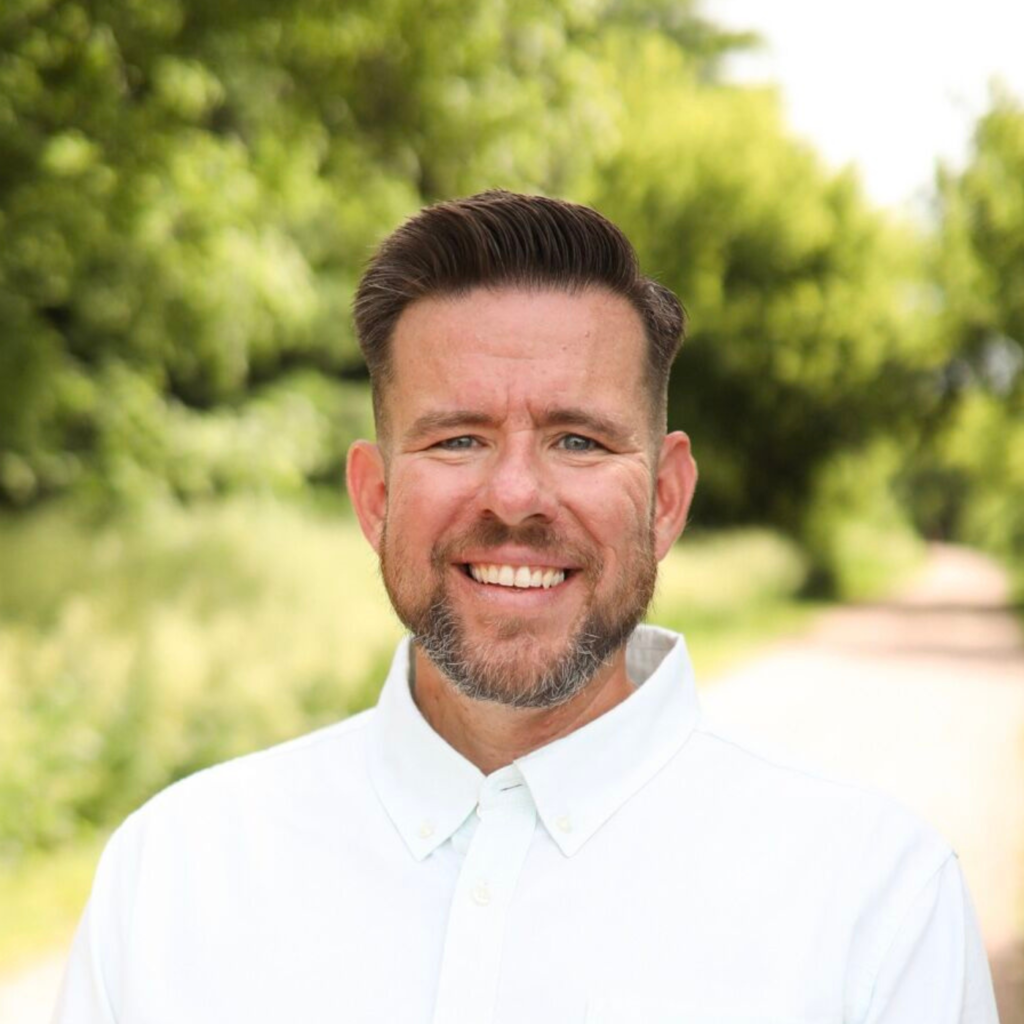
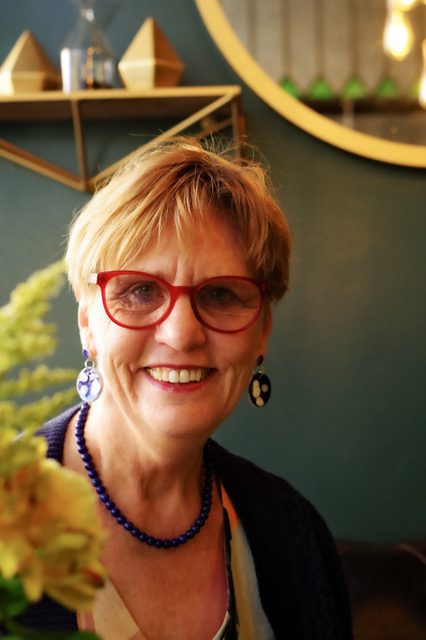
First aired September 5, 2023
Who labels a first-grader “the worst child ever”? A school diagnostician did, after testing Lois Letchford’s son Nicholas and finding he could read 10 words, had “no strengths,” and a low IQ. He wet his pants at school. He bit his fingernails. He stared into space while his teacher shouted at him. And that label, Lois told me, is exactly the kind of thing that follows a kid for life, because once “can’t learn” gets in your head, that’s all you can do. So Lois, a physical education teacher with zero training in reading instruction, decided to teach her own son herself.
What she found is the heart of this episode: her first real attempt failed too, until a friend told her to put away what wasn’t working and make learning fun. So she started writing poetry, one tiny illustrated rhyme at a time, “Mug on a Bug,” “Windmill on a Hill,” and Nicholas started smiling instead of shutting down. That poetry-first method became the foundation of Lois’s literacy work; she went on to co-found a program teaching students with dyslexia to read and write, and Nicholas went on to earn a PhD in Applied Mathematics from Oxford. We talk about the word that broke his teacher’s whole approach (“saw” has three meanings, and Nicholas only knew one), why “he’s dumb” is almost never the real diagnosis, and what Lois wishes she’d told every terrified, shut-down reader sooner: you are a future rocket scientist.
Watch this episode
In this episode
- Why a label like “the worst child ever” can follow a kid for life, and how Lois helped her son outgrow his
- The poetry trick that turned a terrified, shut-down reader into a curious one
- Why “he’s dumb, that’s why he can’t read” is almost always the wrong diagnosis
- What Lois tells every struggling child instead: “you are a future rocket scientist”
- Why Nicholas, now with a PhD, still couldn’t talk about first grade without crying 25 years later
- How to trade panic for living in the moment when your child isn’t hitting the milestones everyone else’s is
Timestamps
- (00:01) Welcome and intro: meet literacy specialist Lois Letchford
- (01:48) Who labeled her son “the worst child ever,” and why
- (03:29) The poem that changed everything: “Captain Cook”
- (05:18) “He’s the worst child I’ve seen in 20 years of teaching”
- (05:44) The word “saw,” three meanings, and why the teacher missed the real problem
- (09:26) Nicholas, now with a PhD, breaks down trying to answer one question about first grade
- (12:25) What Lois tells young teachers: “you are a future rocket scientist”
- (19:22) The instinct that transformed Nicholas’s life: solve the problem, don’t accept the label
- (20:35) On mindset: how you see your child changes what your child can become
- (22:41) Learning to live in the moment instead of panicking about the gap
- (34:03) Where to find Lois and her memoir, Reversed
About Lois Letchford
Lois Letchford trained as a physical education teacher before her son Nicholas was diagnosed with a low IQ and labeled “the worst child” his teacher had seen in 20 years of teaching. She became a literacy specialist and co-founded a program teaching students with dyslexia to read and write. Nicholas went on to earn a PhD in Applied Mathematics from Oxford University. Lois is the author of Reversed, a Memoir, available on Amazon.
Learn more, or book a free call to talk through your own child’s struggles, at LoisLetchford.com.
Favorite quotes
“You take that little child who is absolutely struggling, you pull them close to you and you say, you are a future rocket scientist.” —Lois Letchford
“When we teach, we have the power to change our children’s lives.” —Lois Letchford
“Our mindsets, how we see our children, it’s critical to their future.” —Lois Letchford
Resources mentioned
- LoisLetchford.com: Lois’s website, including a free Zoom call to talk through your child’s reading struggles
- Reversed, a Memoir by Lois Letchford, available on Amazon
Related episodes
- I Get To Be Me! The Freedom of Inclusion: more on shedding the labels other people hand you, from a different angle.
- Finding Yourself: Ascension From Childhood Dysfunction: another guest untangling who she actually is from what she was told as a kid.
- How Unresolved Trauma Is Ruling Your Life: on why Nicholas, decades later and with a PhD, still couldn’t talk about first grade without crying.
Subscribe & connect
If this episode gave you something to sit with, follow Phoenix and Flame so you never miss an episode: all apps in one place, or jump straight to Apple Podcasts, Spotify, Amazon Music, or YouTube. And if it moved you, leave a review; it’s the easiest way to help another listener find the show.
Learn more about Phoenix and Flame, connect with Dana, and listen to more episodes here.
Read the full transcript
[Dana] (00:01)
Welcome to Phoenix and Flame. I’m Dana, and this is my podcast on pushing through and transforming even when you feel like a pile of ash. I have a fantastic guest with me today. I’m so excited. Her name is Lois Letchford. Now, Lois was the co-founder of Teaching Students with Dyslexia Writing and Reading Program. But she originally trained as a physical education teacher and then became a literacy specialist after her son failed to learn to read. Her passion came after trying to remove his label of quote, “the worst child ever,” end quote, to see him achieve to a PhD level. She inspires parents and teachers and listeners to believe in themselves, to seek solutions beyond the average, so that they can achieve the impossible. Lois, I’m so excited to have you on my podcast. Welcome.
[Lois] (01:10)
Thank you, Dana. I am so excited to be here.
[Dana] (01:14)
Now you also said that you share with your listeners the power of following instincts, mindset, and the value of living in the moment. So at some point along the way, I love all of those things, and we’re going to get there, there’s so much stuff to get to. I’m just wondering right off the bat, I have to ask the question, who labeled your son the worst child ever? I have to know this.
[Lois] (01:43)
A school diagnostician, and there’s a story behind it.
[Dana] (01:48)
Please tell.
[Lois] (01:50)
My son failed first grade. I sent him to school every day for him to be shouted at by his teacher. He wet his pants, he bit his fingernails, and he stared into space. Then we test, the testing at the end of the year tells you that he can read 10 words, he’s got no strengths, and he’s got a low IQ. And that puts a child into a box: can’t learn. And the testing was done by the same lady. We are an extremely privileged family, and my husband’s a professor, so he has study leave the next year, so the family goes with him to Oxford UK, and I decided to work with Nicholas myself. I start working, doing the normal stuff, the normal stuff, and it doesn’t work. I’m getting upset, I’m getting… and a friend told me, Lois, put away what is not working and make learning fun. She gave me a chance to breathe. I start to write poetry for him, because I know he’s got to do so much. Let’s do poetry. Then we illustrate these tiny little poems, like Mug on a Bug and Windmill on a Hill, all these things. And instead of my child being terrified, he’s smiling and he’s laughing. So the poetry builds and builds and builds, until you come to double O’s, as in look, cook, and book. And I wrote the poem,
[Dana] (03:02)
Yes.
[Lois] (03:29)
Captain Cook has a notion, there’s a gap in the map, in the Great Big Ocean, and he took a look without the help of any book, hoping to find a quiet little nook. And do you know anything about Captain Cook? Captain Cook was the last of the great explorers, an incredible navigator and map maker who completed the mapping of Australia in 1770. So we’re Australian.
[Dana] (03:41)
I do not.
[Lois] (03:56)
So we’ve got that connection, and we’ve got these many connections, and we’re living in Oxford UK. While we are talking about Captain Cook, my son says two things to me. He says, can I see Captain Cook’s original maps? When he said that, I thought, this is not a question that comes from a child with a low IQ. That’s number one. And then he said to me, and who came before Captain Cook? And I said, well that’s easy Nicholas, that’s Christopher Columbus.
[Lois] (04:26)
And he said to me, and who came before Columbus? I am floored.
[Dana] (04:36)
Wow.
[Lois] (04:37)
It doesn’t matter how slow his learning of decoding was, which was still at snail’s pace, but he’s getting it. Hearing his thinking blew me away. So we return to Australia. I am over the moon. I’m excited about Nicholas and his learning, and we’ve gone from this kid who can’t do anything to asking these amazing questions. And I said to her, we’ve had such a fantastic time in the UK and Nicholas has learned all these things. She stood there, put her hands on her hips in front of me, and said, well, he’s the worst child I’ve seen in 20 years of teaching.
[Dana] (05:18)
Oh wow. Oh my goodness, because the labeling, because I know there’s listeners right now who themselves have been labeled, and or their children have been labeled, and those labels are so hard to overcome, because you get it in your head, that’s what I am.
[Lois] (05:38)
And that’s all they can do. That’s all they can do. Are you ready to hear the next bit? That very afternoon, the reading teacher sent my son Nicholas home with the word “saw,” and gave him two sentences to learn the word saw. And the first sentence was, I saw a cat climb up a tree. And the second was, I saw a man rob a bank.
[Dana] (05:44)
Yes.
[Lois] (06:04)
Nicholas is standing with this little piece of paper in front of me, and he reads, big breath because it takes a lot of effort, “I saw a cat,” and he stopped, and he went back, and he said “I was a cat,” and he shook his head, no, no, no, he said, “I was a cat,” and I said, “I saw a cat,” and he just handed me the paper. It took me a while to work out what was going on. The word saw has three meanings. He is using the concrete meaning because he’s on the autism spectrum. Kids on the autism spectrum will see the concrete, not the abstract. So when “I saw a cat,” he stopped, because that doesn’t make sense, because he cut the cat in half. That’s the problem. He knew he never “was” a cat, and the other two just don’t make sense. What has the teacher done? First up, the child is dumb, that’s why he hasn’t learned to read, excuse my language, the child is dumb, that’s why he can’t get it. Instead of saying, what have I done as the teacher, I have failed to give this child the meanings of the word, and I’ve given a sentence that he’s never seen, and God forbid all of us, I hope we never see a man rob a bank. That’s a sentence that should never have come out. And on top of that, and this is where I do start to get angry, our family had spent six months in another country, and she couldn’t find the courage to sit down with Nicholas, working with him one on one, to say, Nicholas, what did you see in England? And he would have had a different answer, a different response. And instead of the child being terrified and getting it wrong, he would have lit up, which is what he did when I taught him. That scenario, how we label and fail to teach, is what drove me. There’s a gap.
[Dana] (08:01)
There’s a huge gap, and what I’m hearing you say too is that something I’ve run into is sort of like when someone’s a hammer, everyone must be a nail. So whether it’s a teacher or a physician or fill in the blank, it’s like, this is the way I’m going to do it, and if you don’t respond well to the way I do it, the problem must be with you.
[Lois] (08:10)
Exactly. That’s it. All over. That’s exactly it. Yes. Which is why when I teach, I move heaven and earth to make sure my students understand everything they say. Because we, as confident and competent readers, don’t understand the struggles our children have.
[Dana] (08:50)
Well, and on top of that, it’s sort of like when our kids start to get emotional and they start getting upset, that, of course, being a psychotherapist, I’m going to be attuned to that, and that’s going to override, they’re going to tip in a way into fight or flight, because they’re going to feel threatened, and they’re going to get very upset, and that is going to circumvent their ability to process their thoughts.
[Lois] (09:22)
Can I tell you another story?
[Dana] (09:24)
I’d love to hear another story.
[Lois] (09:26)
Nicholas graduated with his PhD in Applied Mathematics from Oxford University in 2018. I’m with him, and I said to him, Nicholas, I don’t remember, I don’t really know what happened in first grade, could you tell me what happened? This boy is confident, he’s articulate, he’s knowledgeable. My son sat in front of me and he cried. Tears ran down his face, his tongue went round and round in his mouth, and he couldn’t get one word out.
[Dana] (10:11)
He was traumatized.
[Lois] (10:14)
Just what you’re saying.
[Dana] (10:16)
Oh my goodness. So here you have a grown man who’s trying, who has his PhD by the way, and he’s trying to answer your question about what happened to him when he was in first grade, and he was reduced to tears and couldn’t even answer your question. Was he ever able to answer your question about that?
[Lois] (10:37)
He’s been in therapy since, and I haven’t asked yet. But the interesting part is I thought, I can’t answer that now, because we didn’t deal with that when he was growing up either. As far as I’m concerned, as a mother, I didn’t have the skills, and I didn’t know the damage that had been done. And then you just shove it under the carpet and hope and pray it goes away, when it doesn’t. And I thought, Nicholas, I can’t deal with that now, but can you tell me what happened when you and I learned together? And this little boy, instead of the crying, lit up, and he said, I remember the poems you wrote. And he named the poems. This is 25 years afterwards. And then he said, the mapping and Captain Cook, and the mapping taught me to love learning and I never want to stop. And then he said, you wrote a poem about a witch’s spell. And he’s laughing, and he said, and it was just so funny. And we wrote the ingredients to the witch’s spell, and I don’t remember what that was, but it was just so funny. When we teach, we have the power to change our children’s lives.
[Dana] (11:54)
Oh, 100%. So I’m wondering, from your experience with this, if there are some young teachers out there who are still open to ideas, and they’re still malleable and curious and wanting to make a good impression and make a difference, what is something you would share with those teachers who might be listening now, or relatives or friends of teachers who might be sharing this podcast with them?
[Lois] (12:25)
The very first thing I would say is, you take that little child who is absolutely struggling, you pull them close to you and you say, you are a future rocket scientist, and teach them in that way. They’re not dumb. They see the world differently. And give them that, you’re a future rocket scientist, and it actually changes your mind. It gives you a chance to say, how am I going to teach them? Through poetry. Poetry engages the lowest to the highest. The lowest kids have to do more work, but you’re still dealing with rhyming words, you’re still dealing with phonemic awareness, but you’re putting it into a book that every child can understand, and you’ve got the repetition, you’re building the language in the child’s brain, and the child’s not being excluded, but they’re being included.
[Dana] (13:24)
Well, and as I’m listening to you describe these wonderful engaging opportunities, I’m thinking that it might be sort of like a tutoring situation, because I’ve had lots of different guests and lots of different patients, and I’ve had some wonderful teachers who have told me what their experience is like, and many times the teachers are amazing
[Dana] (13:54)
with kids, and they’re trying to do their best, and many times they don’t have the backing from the school system. And not that it’s anybody’s individual fault, but it’s just kind of a systemic thing. The teachers generally, they’re in the front lines, they’re in the trenches, and the teachers I’ve run into are very giving and very loving, and they spend so much of their own time and their own money trying to love and teach these kids. And so these things that you’re giving,
[Lois] (14:06)
Yes. Yeah. Money.
[Dana] (14:23)
I’m thinking might be an opportunity for somebody to augment what is going on in the classroom or something like that. What are your thoughts on that?
[Lois] (14:32)
What you’ve said is absolutely right. Particularly when children are coming into school for the very first time, we expect everyone at age six to have exactly the same language skills. They don’t. Here’s my son, from this high socioeconomic background, with a significant language delay, which you wouldn’t expect. And we’ve only found out recently that there is a genetic proportion in his brain where his hearing is not formed properly. Then on top of that, he had ear infections from age 8 to 18 months, and that loss of hearing leads to a loss of language. You can’t hear it, you can’t do what other children do. So you’ve got this line at age five or six as children go into school. What’s underneath that? Those that have learned to read with ease have reached this line and will fly. Those that are underneath need to have it built up, and how do you do that? Through language, through poetry, through books, and help them build the language. And that’s what we expect all the way through school really, but it really has to be built more with these children who cannot hear adequately.
[Dana] (15:51)
I understand that 100%. I actually had several tubes in my ears, three sets of tubes actually, so I can remember that. I remember my mom standing behind me talking, and I didn’t hear her. She was literally standing right behind me and I could not hear her speak, because my ears were so full of fluid that when I spoke myself, it sounded like I was deep in a barrel. And it sounded that way so much, I didn’t like the way it sounded, so I stopped talking. And I couldn’t really hear the people around me because of all the fluid, and I had three sets of tubes to drain all that fluid out. So that’s a significant issue.
[Lois] (16:40)
What I remember, when Nicholas was a tiny baby, three months old, putting him on the change table, he would never roll. I remember just being shocked that he won’t move, and that was a problem with his hearing and vestibular system that wasn’t diagnosed, wasn’t acknowledged.
[Dana] (17:05)
So much going on that you don’t know about as a parent. You’re trying your best, but you don’t know what the child is experiencing. So let me ask you this. We had mentioned earlier how you emphasize the power of following instincts, which I’m hearing coming in what you’re saying now, and also mindset and the value of living in the moment. So how do you see these things playing into a parent
[Dana] (17:36)
with a child who has some issues? What do you see is the power in these different areas?
[Lois] (17:43)
Following your instinct is acknowledging, okay, the child’s got problems, but where we are in that school setting is not working for him. What do I get upset about now? That I let my child go to school every single day to fail and be shouted at. I should have done something about that. And then when I went to teaching him, no program worked with Nicholas. My instinct was, how am I going to solve this problem?
[Lois] (18:14)
That’s the instinct I went with. And that was the one that transformed his life and mine.
[Dana] (18:20)
I want to pause for just a moment before you continue, and say I so admire, it was just kind of awe-inspiring, that instead of saying, oh well, this is the level that my child is at, my child has been tested by professionals and found to be on this very low level, I just have to learn to accept that and not expect too much from him and just kind of go with the flow, which I could totally understand if somebody were to do that, a professional came and tested him, but instead of just accepting that and moving on, you went beyond. You were like, okay, I need to find a solution. I do not accept that. I know my child. My instinct is, something’s off here. This is not right. This is not what I see in my child. And I hear you saying that you really were pushing to find solutions, even though you were told there were none.
[Lois] (19:22)
And I went beyond decoding. Yes, he has a problem with decoding, and he’s really slow with it. He had a real problem with consonant blends, PL, PR, and the difference between a word like pay and play and pray, one letter, they don’t hear it. And we didn’t get stuck in decoding, but I went with the knowledge and the thinking. And when we got to the knowledge and the thinking, these little words became so important and so powerful, and they matter. So it’s a different way of thinking. Don’t get stuck on decoding, go around it. Yes, we have to teach it, but we’ll find a way around the problem. And it happened by mistake that the poetry came first, and the poetry was what he loved, and the decoding came second. So that was my instinct, just to follow it. And when it worked, I followed it. He did it.
[Dana] (20:35)
So is that what you meant by mindset?
[Lois] (20:38)
Yes, mindset. How we see our children. Like I said before, you can look at that child and say, he’s the worst child I’ve seen in 20 years of teaching, and then say, well, he’s never going to learn because of that. But when you change the thinking around our children, we change our mindset, which allows us to say, well, this child is not stupid, how are we going to teach them? Our children are six and seven. They’re at the very beginnings of their lives.
[Lois] (21:08)
Why are we putting them in a box? I’ve taught children who were 13. My first student in Lubbock, Texas, was 13 years old. He’d spent four years in a phonics-only reading program, and it came to me like this: he couldn’t read a thing. The word “lick,” the word “like,” he would spell L-I-C-K after four years. And I taught him to read. And every year he got better, and every year he got taller, and his shoulders, you know, and it’s going from “I can’t” to “I can.” So our mindsets, how we see our children, it’s critical to their future.
[Dana] (21:52)
Absolutely.
[Lois] (21:52)
We can teach them to believe. So what do you believe about yourself and about the child? Do you believe you can teach that child? Do you believe the child is teachable? Are you able to do it, you the teacher? And when it doesn’t work, change it. When they get cranky with you or they do something, change it. There are ways around the problem.
[Dana] (22:17)
Yeah, I like that a lot. Now I’m going to ask you to talk about the value of living in the moment, because I talk about this a lot with my patients, and I’m a huge supporter of that kind of mindset. So what is your reason for wanting to point out the power of living in the moment?
[Lois] (22:41)
When we were in Oxford in 1995, inside me, working with this little boy who’s making millimeters of progress in decoding, I’m panicked. He should be doing X, Y, and Z, and he’s not. On the other side, where he’s learning about Captain Cook and asking these amazing questions, was so exciting, but I’m still terrified, because my son can’t do what other kids can do. And I think I wish I would have valued more of the positives and ignored the weaknesses, because look where we ended up. Look what we were able to do in that time, rather than panic, and I think we have to do more of just being thankful for what we’ve got and the progress that we’re making today, because we don’t know what tomorrow holds.
[Dana] (23:41)
No, we don’t. And I’m so appreciative of your willingness to acknowledge the panic, because I think sometimes when I have guests on my podcast, their tendency is to focus on all their accomplishments, the Phoenix part. But the reason I call my podcast Phoenix and Flame is because I am equally interested in the actual fire. What was the fire?
[Lois] (23:59)
and flame.
[Dana] (24:07)
And how did it make somebody feel, when they were sitting in it, when they were being burnt to ash? Because that’s what’s going to help us feel like we’ve all been there. And so what I’m hearing you say is, yes, there was that time where you were panicky, because I’m probably having listeners who are walking this leg of their life journey with their child or someone they love, and they are panicked. So what I’m hearing you say is, one of the things to help them with that panic is just to try to slow it down and stay in the moment. Slow the roll, stay in the moment. Is that what you’re saying?
[Lois] (24:45)
Yes, and love the kids. I think you have to believe that things will change, or that what you’re doing now will change tomorrow, and I don’t think I believed that enough. I have a friend who read my book, and she was with us, our children are the same age, with us as I was going through the journey. And she said to me, Lois, you underestimated in your book how much pain you were in at the time. I don’t think you told the truth.
[Lois] (25:16)
I think you are in much more pain than your book suggests. And all I can say is, you’re right. The pain when children don’t conform, it’s just unbelievable.
[Dana] (25:34)
Well, and I know that your emphasis is on the learning side and reading, and that’s your huge passion, we all have that, mine is boundaries, I’m known as the Queen of Boundaries, and we all find our passion. But I think also, as I was reading your biography and learning about you, I couldn’t help but think about the comparison, and the pain that parents have when their children do not conform, in areas other than academic. Maybe it’s social conforming, and they’re seeing on social media where everyone, their peers, their other parent-peers are posting all their pictures of their children doing this and that, and their child is not. Maybe their child is different socially, or struggling with gender identity, or there are all kinds of things out there that children are struggling with. And I was wondering, and wanted to take a moment to get your thoughts on that struggle parents have, when what that feels like as a parent, when your child is not the same as the other kids.
[Lois] (26:54)
I have three sons. Number three has this very struggle now, as an adult. What was your question again?
[Dana] (27:05)
Well, we’re talking about when our kids aren’t like everybody else’s kids seem to be. It can be that they can’t read as well, or they’re not as good athletically, or maybe they’re not good in dance class, or they’re not engaged socially, maybe they don’t have as many friends, maybe they’re not getting invited to parties, or as they get older, maybe they choose not to go to college, or their romantic interests are off the beaten path from society’s general. I think as parents, we kind of think our kids are going to be just like the run of the mill of kids in society, in our community, but that’s not always the case. And I wanted to get your
[Lois] (27:58)
always kids.
[Dana] (28:02)
take and your thoughts on that, of what it feels like as a parent, and how to help maybe some listeners out there whose parents and children are different than the common societal expectations.
[Lois] (28:18)
I need help!
[Dana] (28:22)
Ha ha ha! It’s a struggle, is it not?
[Lois] (28:31)
I wish I had answers for you, because my sons are in their 30s. I don’t have answers. My eldest son learns at the speed of light, speaks at the speed of light, thinks at the speed of light. My second son strives so hard, his mathematical ability is in the top 99%, his language speaking ability places him in the second percent. And the third one doesn’t have the social skills. And as a family, how do you negotiate this? It’s a huge challenge. So I can only live for today and be thankful for today, because you don’t know what tomorrow brings.
[Dana] (29:06)
That’s it, right? My experience, as I have three kids of my own, and my experience as a mother and a psychotherapist and just who I am as an individual, what I have learned, and what’s helpful to me, is I do not judge. I feel like everybody is put on this planet for different reasons, and we are not to say why they have been put on this planet, and to not judge ourselves or our kids or other people, and just to try to be very accepting and loving, to provide that loving place, and for our children to provide that loving nest where they can be themselves, and they can be honest, and they can tell the truth, and we just listen.
[Lois] (30:08)
I love that. Yes, that’s what we have to do. And as you talk, I think I have to do more listening and encouraging, particularly with the youngest, to do more talking with us. And we are to just accept. Just accept. And I think it’s very hard.
[Dana] (30:22)
Yeah, except it is hard, but you know what, we don’t have the answers to everything. And I think sometimes as parents we get in this mindset where we feel like we have to have the answers, but we don’t. We don’t. And we can listen and just say, gosh, that sounds really horrible, I can imagine that if I went through that, it would be awful. My heart goes out to you. That sounds,
[Lois] (30:37)
We don’t. No. Yeah.
[Dana] (30:51)
like that was a terrible experience today.
[Lois] (30:54)
I love that, and I think we as parents need to have more of these phrases in us. That was a terrible experience, and that must make you feel really bad, because it just happened recently, to my son. And stock up on knowing what to say before we talk to our children who are more difficult.
[Dana] (31:07)
Yeah, just like, I hear you, and just make that eye contact, and nod our head and go, yeah, that sounds awful. And we don’t have an answer.
[Lois] (31:20)
Yeah. And a lot of it is against my thinking. You go in as a parent, and you’re going to solve their problem, and you can’t. You can’t do it. And even with children who don’t learn to read easily, you don’t always have the answers. You can’t always find the way out. It’s not that simple, and if you don’t have funding, when you’ve got a child like Nicholas, I…
[Dana] (31:39)
Uh huh.
[Lois] (31:59)
That’s really another story. But the mental effort it takes on the part of, particularly, the mother, with children who are difficult, is huge.
[Dana] (32:01)
Mm-hmm. Yes, it is. And I’m going to throw this last comment in, and then I’m going to make sure that we get our listeners funneled to where they can find more about you and what you offer, because your website is amazing, I visited that, it’s so comforting, and you offer ways of helping people, and it’s just fantastic. Now listeners, I’ll tell you about that in just a minute. So I think lots of times, as parents, we’re looking around at
[Lois] (32:25)
Oh, thank you.
[Dana] (32:40)
other parents and what their kids seem to be doing, and we are doing the comparison thing. Let’s just be honest about that. We have to be honest, and so that’s the truth. But at the end of the day, each person is walking their own path. And furthermore, as a psychotherapist, I can tell you, sometimes I will have people come in and think that
[Lois] (32:50)
Yes. Yes.
[Dana] (33:07)
other people are doing fantastic. And I’m like, you don’t understand. I have doctors, I have lawyers, I have CEOs, I have nurse practitioners, I have all kinds of people in my office. And let me tell you something, out there walking down the sidewalk with their sunglasses on and their nice shoes, they might look like they’ve got it all together, and you might look at them and think, gosh, I wish I was like them, I wish I had my life together like they do. But little do you know, they just left my office 30 minutes ago.
[Lois] (33:16)
Get ready.
[Dana] (33:36)
Everybody is struggling with something, because we’re all human beings. So we can stop the comparison thing and recognize everyone’s different. Everyone’s walking their own path. We have our path, they have their path. We don’t have to be judgmental of anybody, and just accept. Just accept it, it is what it is. Now let me make sure I have this right. Your website
[Lois] (33:39)
something. Yes. Yes. Yes, I love that.
[Dana] (34:03)
is your name, Lois Letchford, L-E-T-C-H-F-O-R-D dot com.
[Lois] (34:09)
Perfect, yes.
[Dana] (34:11)
Okay, so is that where you want the listeners to go to find more about you, to get connected with you, to get help from you, that kind of stuff?
[Lois] (34:15)
Yes, yes, yes, easy. And I offer a Zoom call, a free Zoom call first up, so that we get to know each other and get to know where your child is, and see if I can help them. I help the vast majority. And just even for parents to talk and connect and know you’re not alone is really important. What else can you do? Do you want to work with me individually, or can you work with your child at home and then just connect with me once every so often?
[Dana] (34:28)
Fantastic. That support would be absolutely amazing, because then you’re able to calm the parent down and give the parent encouragement and support, so then they can calm down and in turn help their child and be more relaxed about it, so their anxiety doesn’t transfer to their child, and you will be able to help them do that, and that’s amazing. That’s such a gift.
[Lois] (35:09)
You said that because that’s exactly what happened when Nicholas learned to read. I was still anxious. I was calm with him, but there’s anxiety inside.
[Dana] (35:18)
That’s it. Oh, Lois, this has been so much fun talking with you. We have had a blast today. Thank you. I am so appreciative of you being willing to spend your time and your effort and energy to come on Phoenix and Flame and share your expertise with my listeners. Thank you so much.
[Lois] (35:35)
Thank you, Dana. I’m delighted. Connect with me.
[Dana] (35:39)
We will definitely do that. Now listeners, I know that you have heard multiple things today that you’re thinking, oh, this is amazing. Your book is Reversed, a Memoir. I love that. Keep that in mind, listeners: Reversed, a Memoir. Can they get that on your website?
[Lois] (35:55)
Yes. You’ve got to go to Amazon. There might be a link, I think there should be a link on my website to Amazon, but it’s available on Amazon. And get it now, because the prices are going up in June, because Kindle have upped their prices.
[Dana] (36:06)
Amazon. Okay, got it. Okay, well listeners, take this episode and share it. Share it with your friends, share it with your family, share it with your co-workers, copy and paste it in text and email, put it on your favorite social media platforms. Get the podcast episode out there. Again, I’m always encouraging us to grow our Phoenix and Flame community, so we can reach out and
[Lois] (36:21)
Yes.
[Dana] (36:46)
work with one another, support each other, be honest with one another, and know that we’re all struggling with something. It’s okay. We can come together. We can connect, and we can love each other, and know that we can get through this, and we can rise from the ashes, and transform. Thank you for listening. I hope you have a wonderful rest of your day. This is Dana on Phoenix and Flame.
Are your work boundaries supporting you—or quietly draining you?
Take my free Work Boundaries Quiz and find out where you stand.