
First aired December 28, 2025
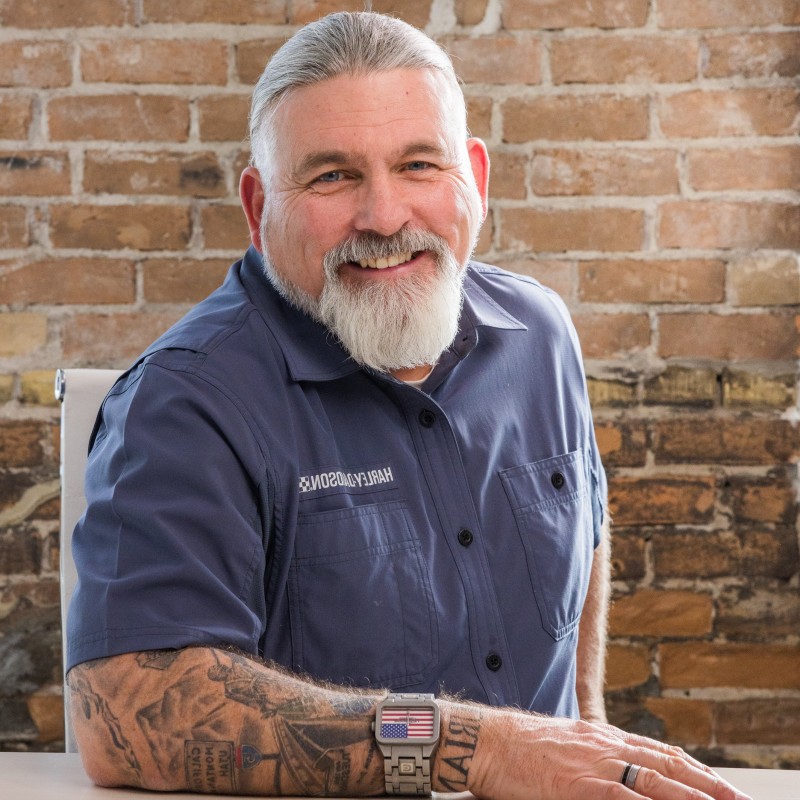
My guest today spends his days representing actors, and he kept noticing the same maddening pattern: talented people telling him how badly they wanted the job, then blowing off the audition that would have gotten it to them. Self-sabotage isn’t a character flaw, and Dr. Albert Bramante built an entire PhD dissertation, and eventually his coaching work, around figuring out what actually is. Spoiler: it’s fear wearing a very convincing disguise.
Dr. Bramante is a talent agent with more than two decades in the entertainment industry, holds a PhD in psychology from Walden University, and is a certified hypnotist and NLP practitioner. His research found that a specific personality combination, high neuroticism paired with low conscientiousness, is a recipe for self-sabotage, and he’s spent his career since helping performers (and the rest of us) recognize the fear underneath the procrastination, the perfectionism, and the “this project isn’t worth my time” excuses we make right before we quit.
We get into the science behind the two-minute power pose, what hypnotherapy actually is when it’s not a stage act, and Dr. Bramante’s own hard lesson about people-pleasing: the year he took on double the standard teaching load hoping it would buy him respect, and got cut first anyway when the budget shrank.
Watch this episode
In this episode
- The self-sabotage pattern Dr. Bramante kept seeing in his talent agency clients, and the personality research that explains it
- Why fear of success is a real, protective (if misguided) mechanism, and how to recognize when it’s quietly driving your choices
- The two-minute “power pose” habit, backed by research, that can change your nervous system before a big moment
- What hypnotherapy actually is (not the stage-quacking-like-a-chicken kind), and how it can speed up inner-child and confidence work
- The “happy file” habit for boosting self-esteem and pulling yourself out of a spiral of self-doubt
- The wake-up call that taught Dr. Bramante overcommitting at work doesn’t buy you respect, it gets you cut first
Timestamps
- (00:01) Welcome and guest intro: meet talent agent and psychologist Dr. Albert Bramante
- (01:11) From drama club to a psychology PhD: how one career became three
- (03:34) Fear of success and self-defeating behavior: the dissertation born from his own clients
- (05:34) The Big Five personality research behind self-sabotage
- (07:01) Fear as a protective mechanism, and why actors hear so many no’s
- (10:28) Rewiring identity: from “starving artist” to “professional working actor”
- (12:24) The two-minute power pose, and the research behind it
- (13:44) What hypnosis actually is (hint: not the chicken-quacking stage act)
- (18:16) Inner-child work, free will, and why hypnosis can’t make you do anything
- (23:58) The “happy file”: a self-esteem tool from his book
- (26:02) Toxic high self-esteem vs. healthy self-esteem
- (29:02) The boundaries lesson that cost him his job, and what it taught him about respect
About Dr. Albert Bramante
Dr. Albert Bramante is a talent agent with more than two decades of experience in the entertainment industry. He holds a PhD in psychology from Walden University and is a certified hypnotist and NLP practitioner. His dissertation research on fear of success and self-defeating behavior in performing artists grew directly out of patterns he noticed in his own agency clients.
Learn more at Dr. Bramante’s website, or connect with him on LinkedIn.
Favorite quotes
“If you combine high neuroticism and low conscientiousness, it’s going to be a recipe for self-sabotage.” —Dr. Albert Bramante
“There’s nothing wrong with setting boundaries. And if somebody does not want to accept those boundaries, then you have to evaluate: is this person really worth my time?” —Dr. Albert Bramante
“I didn’t get the intended outcome that I wanted, which is respect.” —Dr. Albert Bramante, on overloading himself with committee work
Resources mentioned
- Dr. Bramante’s book on fear of success and self-defeating behavior in performing artists, based on his doctoral dissertation
- The “happy file” method, from his book, for documenting wins and positive feedback to counter self-doubt
- Amy Cuddy’s power-pose research, referenced in the discussion of two-minute confidence-building poses
- BramanteArtists.com: Dr. Bramante’s talent agency and coaching website
- Dr. Bramante on LinkedIn
Related episodes
- Are You Avoiding Failure or Guaranteeing It?: pairs directly with Dr. Bramante’s research on the fear behind self-sabotaging behavior
- The Fear Trap: another deep dive into how fear disguises itself as procrastination, perfectionism, and other “problems”
- How Unresolved Trauma Is Ruling Your Life: expands on the childhood-rooted fears Dr. Bramante addresses through inner-child hypnotherapy work
Subscribe & connect
If this episode gave you something to sit with, follow Phoenix and Flame so you never miss an episode: all apps in one place, or jump straight to Apple Podcasts, Spotify, Amazon Music, or YouTube. And if it moved you, leave a review; it’s the easiest way to help another listener find the show.
Learn more about Phoenix and Flame, connect with Dana, and listen to more episodes here.
Read the full transcript
[Dana] (00:01)
Welcome friends, whether you’re out on a walk, running errands, or relaxing at home, it’s wonderful to connect with you. Joining us today is Dr. Albert Bramante. Dr. Bramante is a talent agent with more than two decades of experience in the entertainment industry. He holds a PhD in psychology from Walden University and is a certified hypnotist and NLP practitioner. Dr. Bramante, welcome to Phoenix and Flame.
[Albert] (00:30)
Thank you so much, Dana, for inviting me, I’m really happy to be here.
[Dana] (00:42)
Well, let’s just start and look at all of this. One of the things that attracted me to you, and wanted to have you as a guest on Phoenix and Flame, are all of the different talents and abilities you hold, the experiences you have. You wouldn’t necessarily put all those together. How in the world did you end up with a PhD in psychology and also being a talent agent, a hypnotist? I really want to hear your story.
[Albert] (01:11)
Yeah, well, they happened at different times in my life, some simultaneously. I’ll start from the beginning: I was always into science, the mind, and all of that, so I started reading books about the brain, the nervous system, neurology, in high school, and I really became interested in it. So I decided I was going to major in psychology during my undergrad years. Also during high school I was involved in a drama club, and then during undergrad I took some electives in theater and acting, and I really enjoyed it. So after I got my master’s degree, I was working in New York City, and I started looking to get back into the performing arts, because that’s one of the performing arts capitals in the country. So I was looking at maybe becoming an actor, doing something on the side as a hobby, and I realized it wasn’t really for me as an actor. But I loved working with actors, I love being around creative people, but I also love psychology, love the mind, the complexity of humans. So I became just obsessed with learning new things.
[Albert] (02:59)
So I said, my next level will be to go for my PhD, I already had my master’s, and I always like to have a fallback plan, even though I was starting my talent business by then. I decided to go back for a PhD, and I did it at Walden University. While I was conceptualizing my dissertation, coming up with the idea, I was trying to solve a problem I was facing with my actors: I was noticing a lot of actors self-sabotaging.
[Dana] (03:33)
Mm-hmm.
[Albert] (03:34)
And that led me to studying fear of success and self-defeating behavior in performing artists. That became my dissertation.
[Dana] (03:47)
I was going to ask if you were able to use that for your dissertation, that would have been on a platter, that would have been perfect for you.
[Albert] (03:55)
It was, and they loved it. When I received my PhD in 2015, my advisors at the time recommended that I publish somehow, and it took me several years later, but that’s where I turned it into my book, because it was based on the work I did for my dissertation.
[Dana] (04:19)
Wonderful. Now, when you were running across self-sabotage, what were some of the examples you were noticing in actors and people in the performing arts? Why do you think they were self-sabotaging?
[Albert] (04:28)
That’s why I did my dissertation, I was trying to figure out what was happening, because I was getting a disconnect. These actors were telling me how much they wanted to work, but on the other hand, I was hearing their actions were totally different. I couldn’t figure out what was really happening, why these actors’ actions weren’t matching their words, weren’t congruent with what they said. But examples would be like not showing up for auditions, not preparing for auditions, pretty much taking themselves out of the running for a job before it even began. It was like them shooting themselves in the foot, in a sense.
[Dana] (05:31)
Why do you think they were doing that?
[Albert] (05:34)
A lot of it came down to fear, fear of failure, fear of success. Also, one of the things I looked at for my dissertation was personality, and particularly the five-factor model, or the Big Five, in personality, which is the five traits that all humans share: openness, conscientiousness, extroversion, agreeableness, and neuroticism. The biggest finding I found, statistically and empirically, was that if you combine high neuroticism and low conscientiousness, it’s going to be a recipe for self-sabotage. So you take somebody who scores high on anxiety-proneness but low on discipline and focus…
[Albert] (06:36)
They’re more likely going to self-sabotage, because their fears are going to be giving them trouble.
[Dana] (06:43)
Yes, that makes a lot of sense. So you’re in a position with your knowledge and interest in that, and also working with performance artists, how were you able to apply that to help them overcome these behavioral traits?
[Albert] (07:01)
I think the first step is to realize what was happening, and to kind of bridge the understanding of fear, because if it’s not conscious, it’s hard to recognize. It might manifest itself like, “This audition isn’t going to be worth my time, I don’t like the project, I don’t agree with the project,” and what’s really happening is that it’s fear working as a protective mechanism. Fear is a helpful emotion that protects us, now it can be misguided sometimes and be overprotective, but nonetheless it’s a protective mechanism. So I look at helping the actor, or anyone dealing with this, realize it’s fear-based. And once you understand it’s fear-based, you can start to unravel and change the pattern, but it takes a lot of time, insight, sometimes working with a coach or a therapist, to recognize a subconscious pattern. There’s a lot of actors, because the feeling in this industry, there’s a lot of no’s, it’s an overly competitive industry. A lot of actors, when they’re young, come out of school, come out of getting a bachelor’s or master’s of fine arts in performing, bright-eyed and happy and excited, but multiple times you hear the word no, or not today, and it builds and builds and builds.
[Dana] (09:05)
Yeah.
[Albert] (09:13)
To a point where you start self-doubting, “What’s the point anymore of this?” So there’s a high vulnerability rate with actors, in general.
[Dana] (09:24)
I think you bring up excellent points, because I’m thinking about my listeners and what they might be experiencing on their journeys as they’re listening to you right now. You mentioned fear is a protective mechanism, protecting them against failure, and then when it happens over and over again, comes self-doubt. That happens in life, right? You jump out there, you get told no, you fail, whatever. So if you want to hover over your wisdom and experience, what you run into with your clients and people who experience multiple no’s, which they might interpret as failure, but if we also weave in a little bit of neuroplasticity…
[Dana] (10:23)
…we could also possibly reframe that kind of experience.
[Albert] (10:28)
Yeah, and that’s where NLP comes in, in rewriting mistaken programming, because it’s rewiring new connections. Part of that starts with the language you use, and this isn’t just for actors, but for anybody listening: watch how you describe yourself, take stock of how you describe yourself to other people, how you introduce yourself. A lot of actors have this romanticized notion of a starving artist or a struggling artist, and that has to change, because that’s where it starts. When you identify with it, it becomes part of your identity. So when you say “I’m a starving artist,” that means you’re saying to the world you’re poor, that you have a poor mindset. So we change that to a degree where you’re a professional working actor, or a professional. You’re not aspiring, not struggling, not starving, you’re a professional working actor. And when you start to act as if, it starts to rewire your neurology over time. So when we’re teaching somebody confidence, for instance, the first thing we might do is learn how to project confidence physically in your body. There’s a lot of research on power poses, for instance for golfers, if you look at the research with Amy Cuddy and all that, it’s about taking your neurology, in a sense, and acting as if.
[Dana] (12:24)
I love the power poses. Doesn’t the research indicate it only takes about, gosh, it’s not very long, I think it’s under five minutes.
[Albert] (12:30)
Yeah, it’s really only two minutes. You could do that before a presentation, even when you get up in the morning, take two minutes in the shower or bath, stand in a power pose for two minutes. Right before you’re about to give a presentation, or go live online, go into the bathroom, wherever it is, just do a power pose for two minutes and hold it, because you’re changing your neurology automatically, you’re changing your nervous system. And it’s so simple, but so powerful at the same time.
[Dana] (13:15)
That’s right. There’s actually, I don’t know if you ever watched Grey’s Anatomy, but there’s a surgeon character on that show who does a power pose before every surgery, I think Dr. Amelia Shepherd. That is amazing. So now let’s get woven in here, because I want to pull up…
[Dana] (13:44)
…the hypnotist, the hypnotism, where did this come into play?
[Albert] (13:50)
So initially, during my studies, I was going to study clinical psychology, and that’s what I was going to school for. I tried to roll my PhD program into psych, but to be honest, part of it wasn’t resonating with me on the clinical side. The one thing was the long focus on pathology, which, again, I understand there’s a need for that, but I would hear my professors in school say things like, “I was treating somebody with a personality disorder for eight, nine years and we’re currently making progress.” I’m thinking to myself, something’s not adding up here, eight or nine years and you’re just making progress. Now, I’m not going to trivialize personality disorders, they’re very pervasive and profound and intricate. However, I’m thinking something’s not right here. And I’m also not a big fan of labeling people right off the bat, because of the stigma that can be associated with that.
[Dana] (15:08)
Mm-hmm, true.
[Albert] (15:12)
The stigma associated with that. So hypnosis appealed to me because it’s a much more rapid approach. Now, I still think psychotherapy is helpful and important, especially for trauma, if you have childhood trauma or things back in the past, but I also see, with hypnosis, when you work with the subconscious mind…
[Albert] (15:43)
…it has a faster impact, more rapid change. Even Freud himself, from what I hear, wasn’t very good at it, couldn’t really do it well with it, but nonetheless it was even being studied as a treatment modality in the late 1800s. So I became interested, and actually I was reading an article in Psychology Today, this was during my early grad school years, and it said something about hypnotism, and I thought, “I’m interested.” So I took a video introductory course and thought, “This really resonates with me,” rapid change, I was always drawn to that. So I started studying, took some in-person classes in New York, a four-month certification class.
[Albert] (16:42)
And I became really interested in it.
[Dana] (16:46)
You know, I can see that, because I have done some inner-child work, regression work, with patients of my own, and it’s amazing how you can see someone change quite rapidly in one or two sessions by being able to access the subconscious part of our minds. So take, if you would, a few moments and explain to my listeners, who, when they hear the word hypnosis…
[Dana] (17:14)
…it brings to mind the connotation of someone walking around on stage quacking like a chicken.
[Albert] (17:21)
Yeah, I can assure you that’s not it. Although that’s entertaining, that’s not what I do, and that’s only one application of it. We go into what I’d call a flow state. If you look at the concept of flow, when you’re in a state of intense focus, your energy is really zeroing in on something, and you’re feeling like you’re on top of your game, that’s what hypnosis is, in the sense of process. It could be getting into a flow state to work on whether it’s building confidence, working on an addiction, or healing the inner child. Hypnosis does very well in that type of modality, doing inner-child work.
[Albert] (18:16)
And that’s what really attracted me to hypnotherapy, was inner-child work, actually accessing the resources we have within. One thing that especially all the humanistic psychologists, if I look at traditional psychology, I identify more with the humanistic models, is that we have all the answers we need within us, our inner guide, our intuition. So all hypnosis really is, is tapping into that. You have the answers within, and as a facilitator or a coach, which is what I call myself, I don’t really call myself a hypnotherapist, I call myself more of a coach or a facilitator, because it’s really the client that’s doing the work.
[Dana] (19:14)
Mm-hmm, right.
[Albert] (19:15)
I’m helping, we’re helping the client reach their own answers with that. And that could be going back to something that happened, and kind of reparenting in a sense.
[Albert] (19:36)
Telling that inner child within you that everything’s going to be okay, and that you’re there to protect him or her. That tends to actually help, if the client is totally aligned with it. Another misconception about hypnosis is that the truth is you can’t make anyone do anything they won’t do, you can’t change free will.
[Albert] (20:07)
That’s the one thing I will say off the bat: I can’t make someone cook a chicken, we normally wouldn’t do that, period, that’s not going to happen. I’m not going to make anyone do anything they’re morally opposed to, because free will is most important. And the same thing goes with hypnotherapy, the person has to be open or receptive to it. Even in traditional therapy, if someone’s coming in saying…
[Albert] (20:35)
“I’m here because my spouse, or my parents, or my partner, really wants me to be here,” it’s like you’re wasting your time, because you’re not going to be open to the work.
[Dana] (20:46)
You know, it’s been my experience too, corroborating what you’re saying, that in some of the regression and inner-child work, if the mind is not ready to process something, some level of trauma, some earlier experience, it simply will not happen, it doesn’t matter what you say or anything, because…
[Dana] (21:13)
…we have the power from within, and the mind is either going to do it or not, depending on if it’s ready to process it.
[Albert] (21:15)
Yeah, and they have to be, the mind is there, remember our subconscious is there to protect us. So if we don’t feel comfortable, if there’s no strong rapport between the therapist and the client, even if the client is consciously saying “I’m ready to do this,” if the subconscious is saying “not so fast,” that’s exactly what’s happening.
[Albert] (21:48)
The important thing is that we have to really talk with the client about what’s happening, what are their maybe slight fears or reservations about it, or it might not be a match between the particular therapist and the particular client.
[Dana] (22:06)
I’ve seen that too. Now, I’ve noticed, and I’m wondering if you’ve noticed as well, that it seems like the majority of significant fears are based in childhood experiences, childhood traumas, and when you’re able to do the hypnotic work, the regression, inner-child work, that helps with fears that are manifesting today, as they’re trying, as an adult…
[Dana] (22:34)
…trying to live their life as an adult, but they’re being hamstrung by these fears based in something they experienced many years ago.
[Albert] (22:43)
Yes, that’s exactly true, these fears, these experiences, even if you don’t consciously remember or think you’re affected by it, sometimes they come up. And it doesn’t necessarily have to be a significant trauma, a lot of times it could be little micro-traumas, day-in-the-life dramas, which happen with every typical childhood: your parents yell at you, your parents say something insulting because they’re mad at their own thing and take their frustration out on you for the day, or you get a teacher who…
[Dana] (23:09)
Okay.
[Albert] (23:26)
…belittles or humiliates you. You may think they’re over, but you’re really not, and you add a couple of those instances up as they compound over time.
[Dana] (23:29)
Yep, yep.
[Albert] (23:39)
So a lot of times these little life dramas, they may not be glamorized, may not be sensational, but they’re still important.
[Dana] (23:49)
Oh yes, 100%, absolutely 100%. Now, you had a concept, the “happy file,” from your book. Can you explain the happy file, and how we can use it to boost self-esteem and motivation?
[Albert] (23:58)
Sure. So, for instance, when something good happens to you, you document it, you take a journal and write it down. For my actors, if you had a great audition, someone complimented your work, you write it down, you document it. If you got a good review on something, you document it. You take all these little successes, and you’re able to pull out your file when you start feeling down, it comes in. So you pull out your happy file and remember what it is you set out to do. If you’re a speaker, every time you get a compliment about how your presentation moved somebody or made an impact, you write it down. When these moments of self-doubt come in, which happen to everybody, you pull out your file, and you can’t stay upset when you’re looking at the positive feedback, it means something.
[Dana] (25:32)
I like that. It gives us balance, because we all know that sometimes we’re going to get feedback that doesn’t feel great, but when there’s something we can also intentionally look at that’s positive, it helps balance that out and prevents us from going down into some kind of wormhole of negativity.
[Albert] (25:36)
Definitely, 100%.
[Dana] (26:02)
Now you had something else I was interested in: how do you differentiate between toxic high self-esteem and healthy self-esteem? What makes self-esteem, when it’s high, get so high that it becomes toxic?
[Albert] (26:08)
I’m not sure I can say that exactly, but if you think about it, when there’s grandiosity, when they don’t get that attention or recognition, it’s a blow, in some circles we call that the narcissistic injury, a huge blow. The difference I use is a concept known as humility, having high self-esteem while also knowing you’re not perfect, and that self-esteem can bring things up too.
[Dana] (27:20)
That makes a lot of sense. It’s really uncomfortable to be around individuals who have that fragility, they need so much attention, and they’ll frequently manipulate situations and cause drama so they can be the center of attention.
[Albert] (27:22)
Yeah, and when it comes to self-sabotage, it’s like, “I can’t be told, can’t take feedback, I’m perfect, how dare you critique me.” For actors, part of being successful, you have to be coachable, trainable. If you’re not coachable, because you believe you’re perfect, it’s a perfect recipe for self-sabotage.
[Dana] (28:06)
I find that interesting, because on the one hand you have actors who talk about how insecure they are and how scary it is to put yourself in front of a bunch of people and risk all that criticism and backlash when you feel like you’ve done your best, that’s terrifying. And then you have…
[Dana] (28:32)
…another group of actors who, maybe because of their success and the feedback they’ve gotten, maybe some money, surrounded by yes-men, sycophants, feel like everything they do is perfect. They’re not open to constructive criticism because everything they do is perfect. That’s an interesting dichotomy, I find.
[Albert] (28:44)
Yeah, it is a very interesting dichotomy, in a sense.
[Dana] (29:02)
So in the last minute or so we have left, Dr. Bramante, I’d like for you to share along your journey, have there been times you’ve experienced the benefits of setting boundaries, practicing healthy boundaries, and/or the consequences of a lack of boundaries, which some of us do?
[Albert] (29:31)
Yeah, I would have to say all of the above. One of the ideas for a book I’m proposing for myself is the martyr complex, which is the people-pleaser, and part of being a martyr, or the martyr archetype, is people-pleasing.
[Dana] (29:35)
Yeah.
[Albert] (29:55)
And that was me growing up. Most of my childhood, teenage, and early adult life was about pleasing people, wanting people to like me, and I had no boundaries. I grew up in a house with no boundaries, and it cost me a lot, in a sense, to my mental health. So I believe it’s important to set boundaries for your own sanity, which might mean not always saying yes to everything, because if you ever said yes to something when every part of your being wanted to say no, whether it’s working overtime… One of my recent full-time jobs, before owning my business, I got hired as a tenure-track community college professor, this was back in 2008 to 2013-ish. When I first started, I really loved teaching, I still do, I still teach part-time, but I loved teaching…
[Dana] (31:06)
Okay.
[Albert] (31:14)
…full-time. This was like my dream. And I didn’t even realize the problem when it was happening, but they kept asking me, “Would you like an extra class? We’re short on faculty, would you take an extra class?” And I’m like, “Sure, sure, sure.” Extra committee work? “Yeah, I love it here.” When it was finally all over, years later, I took a step back and said, “Whoa, I really spread myself too thin,” because a typical full-time load for community college faculty is five classes a semester, and most semesters I was doing between ten and twelve…
[Dana] (31:52)
Whoa.
[Albert] (31:53)
…unless I was teaching winter sessions, summer sessions, because I was under the illusion that they’d love me for it. Instead of being on one committee, which is what I was supposed to be on, I was on five. And I got burnt out, physically, mentally, emotionally, I was just done. And I learned a really harsh lesson, and the harsh lesson I learned was that I didn’t get the intended outcome that I wanted, which is respect…
[Dana] (32:30)
Interesting.
[Albert] (32:31)
…because when they announced during my fourth year that we’re going to be making cuts, we’re going to have to cut two faculty members from each department, you can guess who was the first one that was cut. And I’m not saying that would have changed the outcome if I hadn’t overcommitted, I might have still been cut, who knows, I can’t say. But it was a huge wake-up call for me, like, okay…
[Dana] (32:48)
Mm.
[Albert] (33:02)
…I went through all of that and it backfired, in a sense. And I’ve done a lot of research too, because a lot of times when people please, there’s resentment that comes up too, it’s like, “I do all this and nobody’s respecting me.” So there’s a big distinction…
[Dana] (33:17)
Uh-huh, mm-hmm.
[Albert] (33:32)
…between being a very nice and generous person while still having firm and set boundaries, whether that’s professionally or personally.
[Dana] (33:39)
Yes, 100%, yes.
[Albert] (33:47)
There’s nothing wrong with setting boundaries, and if somebody does not want to accept those boundaries, then you have to evaluate: is this person really worth my time? Because a lot of people ask me, “What if my boss yells at me for setting boundaries?” Well, then that may not be a place you really want to be working at, that sounds like it might be a toxic work environment.
[Dana] (34:11)
That’s a good point. You mentioned burnout earlier, healthy boundaries help us keep going in a place, help us stay somewhere for 5, 10, 15, 20 years, help us keep going and not burn out, not get crispy crunchy and then be out the door as a quiet quitter, because we’ve been able to set boundaries and know how not to burn ourselves out. And to be honest with you…
[Dana] (34:41)
…some of the most peaceful people I know are the ones who are very good at their boundaries. They’re very comfortable with who they are, very comfortable letting other people do whatever they want, they don’t take it personally, they don’t get defensive about it. They understand the difference between what I call their yard and their neighbor’s yard, and they’re able to keep going and stay full of energy to do what they want to do. Now, Dr. Bramante…
[Dana] (35:10)
…I want to make sure my listeners are able to get a hold of you. What I have here is your website, BramanteArtists.com, or your Instagram.
[Albert] (35:11)
Yes, I’m also on LinkedIn. What I can do is send you my link tree, which is kind of like everything, my LinkedIn, my Instagram, my website, my link to my book, so if listeners want to buy or check out my book, they can, and it’s easy to get a hold of me on those platforms.
[Dana] (35:46)
Fabulous, okay, fabulous. Well, Dr. Bramante, I really appreciate you joining me here, giving me and my listeners your time, your expertise, your wisdom, and sharing your story with us. Thank you very, very much.
[Albert] (35:57)
Yeah, I’m really happy, thank you again, Dana, for inviting me.
[Dana] (36:11)
Now listeners, I know you have heard multiple things today that you’re thinking, “This is fantastic, I know a coworker, I have a best friend, I have a family member that needs to hear exactly what Dr. Albert Bramante had to say.” Take this podcast episode, copy and paste the link, send it through text, send it through email, post it on your favorite social media sites, so we can grow our Phoenix and Flame community and let people know: you are not alone. I hope you’re having a great day, I hope the rest of your day is fantastic. I’m Dana, on Phoenix and Flame.
Are your work boundaries supporting you—or quietly draining you?
Take my free Work Boundaries Quiz and find out where you stand.