First aired October 15, 2023
Picture a fifteen-year-old boy cranking the shower scalding hot right before he gets out, on purpose, so the mirror fogs over and he never has to see himself. That was Dai Manuel’s daily trick for years, until the one morning he got rushed and looked anyway. He didn’t recognize the kid staring back. That’s the moment my guest points to as where change is possible actually started for him: not five years of weight gain undone in a flash, but an ugly, cathartic cry in front of a bathroom mirror that turned into twenty months of small, boring, unglamorous bites forward.
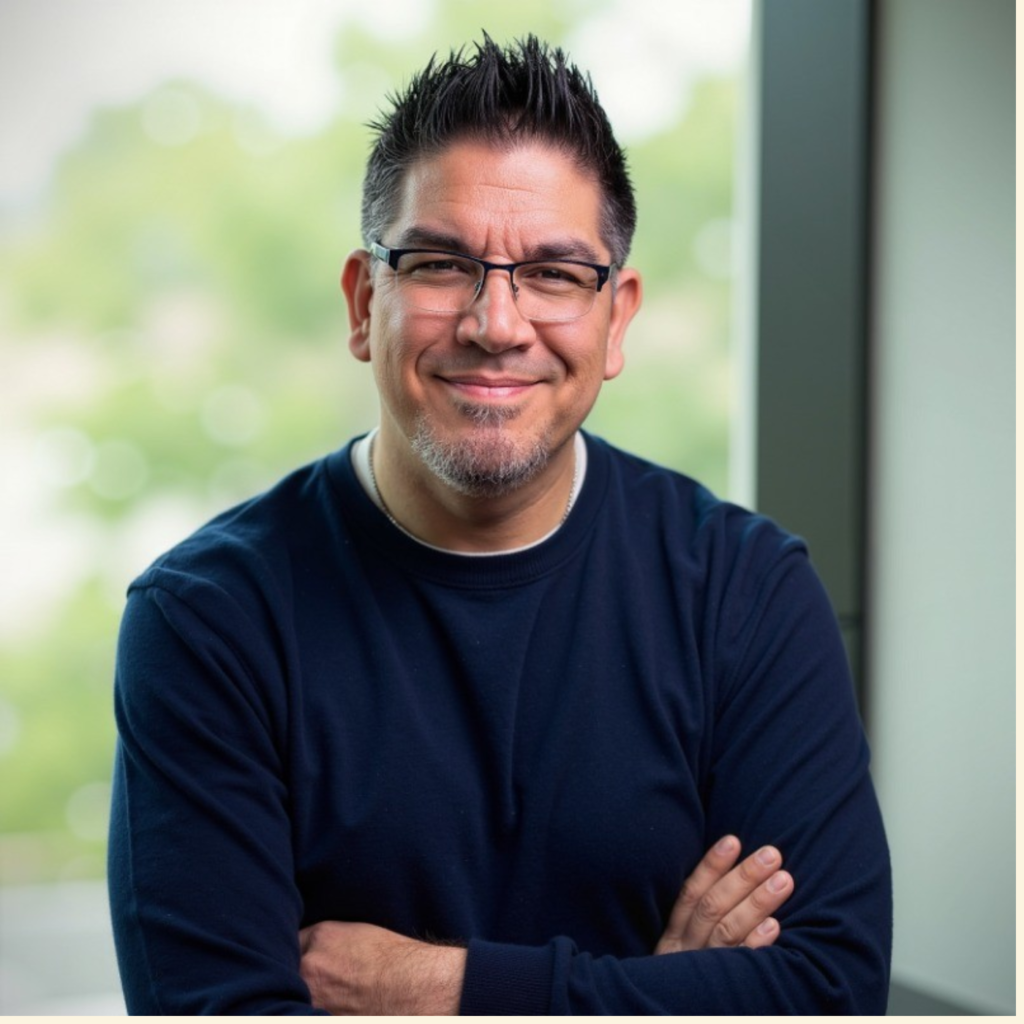
You might know Dai as “Coach Moose” in CrossFit circles, a nickname earned during a brutal intro workout that left him dry-heaving against a chain-link fence. He went on to become an award-winning speaker, author, and former partner and COO of a multimillion-dollar retail company. But the resume isn’t why he’s on Phoenix and Flame. It’s because underneath it he spent fifteen years, in his own words, “managing this emotional roller coaster with alcohol,” propping up a persona he calls “fun guy Dai,” until his wife asked him one question that ended it: “Are you being the type of man that you would want to marry your daughters?” We get into what actually gets someone through the work of real change (hint: it’s rarely dramatic), and the Five F’s, Fitness, Faith, Family, Finances, with an overarching roof of Fun, that he now uses as a filter for every yes and no in his life.
If you’ve ever wanted permission to say no without an essay of excuses attached, Dai’s got a phrase for you: “No is a complete sentence.” Stick around for how a boy who avoided cameras for years built a life, and a framework, sturdy enough to weather anything.
Watch this episode
In this episode
- Why change feels like being chased by a boulder (Dai’s Raiders of the Lost Ark metaphor), and how to stop running from it
- The brutal CrossFit test that gave Dai Manuel his “Coach Moose” nickname, and why leveling up almost always feels like hell in the moment
- How a fifteen-year-old’s foggy shower mirror led to a twenty-month, small-bites transformation
- The question his wife asked that finally got him to give up alcohol: “Are you the type of man you’d want to marry your daughters?”
- How the Five F’s, Fitness, Faith, Family, Finances, with Fun as the roof, work as filters for every decision
- Why “no is a complete sentence,” and how boundaries became the foundation of his resilience
Timestamps
- (00:01) Welcome and intro: meet Dai Manuel, aka “Coach Moose”
- (03:19) Where the “Coach Moose” nickname came from (CrossFit’s brutal intro test)
- (06:56) Why change is so hard, and the resilience skill we already have
- (09:52) Dana’s promise to never quit, and the “pain threshold” for change
- (12:27) Pain, fear, and being more afraid of staying the same
- (14:00) Roots of the weight gain: his parents’ divorce, and finding comfort in food and screens
- (16:52) The foggy shower-mirror trick, and the day he finally looked
- (18:17) “Dad, I want to get healthy”: the mountain bike and the 20-month climb
- (21:27) The struggle of the juggle: ego, drinking, and the “fun guy Dai” persona
- (26:13) His wife’s question that changed everything: “Are you the type of man you’d want to marry your daughters?”
- (29:27) Committing past year one, now in his 14th year alcohol-free
- (30:33) Sunday Funday, The Whole Life Fitness Manifesto, and the birth of the Five F’s
- (31:27) “No is a complete sentence”: boundaries as filters
- (32:51) The four-walls-and-a-roof metaphor for the Five F’s
- (34:15) Where to find Dai Manuel and his book
About Dai Manuel
Dai Manuel, known in the CrossFit world as “Coach Moose,” is an award-winning digital thought leader, author, distinguished Toastmaster, and keynote speaker. He’s a former partner and chief operating officer of a multimillion-dollar retail company, and the author of The Whole Life Fitness Manifesto, built on the Five F’s framework he developed after what he describes as “15 years of me basically managing this emotional roller coaster with alcohol.” He’s based in Vancouver, Canada.
Connect with Dai on Facebook, LinkedIn, or Instagram.
Favorite quotes
“Change, if it was really easy, we’d all just be constantly changing.” —Dai Manuel
“My family was worth me giving up alcohol 15 years ago.” —Dai Manuel
“No is a complete sentence.” —Dai Manuel
Resources mentioned
- The Whole Life Fitness Manifesto: Dai Manuel’s book, built around the Five F’s framework discussed throughout the episode
- Dai Manuel on Facebook
- Dai Manuel on LinkedIn
- Dai Manuel on Instagram
Related episodes
- Say “No” Like It’s Your Job! (Jennifer Schwytzer): another take on boundaries and saying no, from the people-pleasing side of the equation Dai talks about with his own Five F’s filters.
- Vision Boards, Comedy, and Motivational Firewood (Steve Gamlin): a fellow guest from this same season on rebuilding a life from rock bottom, with a very different but equally hard-won framework.
Subscribe & connect
If this episode gave you something to sit with, follow Phoenix and Flame so you never miss an episode: all apps in one place, or jump straight to Apple Podcasts, Spotify, Amazon Music, or YouTube. And if it moved you, leave a review; it’s the easiest way to help another listener find the show.
Learn more about Phoenix and Flame, connect with Dana, and listen to more episodes here.
Read the full transcript
[Dana] (00:01)
Welcome to Phoenix in Flame. I’m Dana, and this is my podcast on pushing through and transforming even when you feel like a pile of ash. Well, like I’ve said before, I absolutely adore having a podcast because it gives me access to so many wonderful people, and today is no exception. With us today is Dai Manuel. Now he’s also called Coach Moose, which I’m gonna find out where that came from, don’t you know? But Dai is an award-winning digital thought leader and author, distinguished toastmaster and keynote speaker. And by the way, I watched his TEDx talk, so we’ll be talking about that later as well. He is a former partner and chief operating officer of a multimillion dollar retail company and a sought after lifestyle mentor and executive performance coach. Now, let me pause and say all of that sounds fantastic, and it is. But I’m really interested in what comes next. Dai says he knows the struggle of the juggle, okay? And I know exactly, I’m feeling that in my chest right now. I know exactly what that is. And keeping his health and happiness a priority, he models his work based on five F’s: fitness, family, faith, finances, with an overarching roof of fun. And the foundation on health. Dai, welcome to Phoenix in Flame.
[Dai Manuel] (01:34)
Thank you, Dana. It’s an honor to be here. And I mean, just us jamming before we hit go, I was like, you know, every once in a while, you just meet people where you just, you know, you vibe with, but you also recognize you’ve got similar backgrounds. You know what I mean? You’ve overcome, you’ve dealt with, and you’ve learned to navigate life, even with all the suffering that seems to come our way at times, right? And yet still get around it, get through it, and overcome.
[Dai Manuel] (02:05)
And like anyone, I feel inspired by your story, because to put out content like this or to create a platform for these kinds of conversations to be captured is just amazing. And I think it’s a wonderful example of just the hero’s journey, right? After we go through our own struggles, there’s often that feel to turn around and say, hey, who wants to go next, right? And I feel that that’s what you’re doing with your platform. So yeah, it’s an honor to be here.
[Dana] (02:23)
Well, thank you very, very much. Because I feel like the listeners, you never know who is listening right now, and there’s gonna be all sorts. There’s gonna be people that are just kind of starting in something frustrating. There’s gonna be some that are right in the middle, and they feel like they have just figuratively been burnt to the ground and don’t even see the light at the end of the tunnel. And then you have others that have found some traction. So I like to try to reach my listeners wherever they are on their journey, for them to get something helpful and supportive and encouraging and worthwhile. So we are really honest and transparent and real on Phoenix in Flame. Now, first, before we go any further, you have to tell me: where does the moniker of Coach Moose, what does that mean? Where did that come from?
[Dai Manuel] (03:19)
Well, I am Canadian, so there’s a little bit of fun with that. But when I first started into what’s known as CrossFit, this sort of functional fitness sport, and it must have been around 2007, 2008. And I remember my previous company, I was a co-founder of, we sold fitness equipment. And I started bringing in very specific equipment, recognizing that there was this trend that was emerging for these sports, these functional fitness type classes under this CrossFit banner. And didn’t really know anything about it, but I knew that we were getting more inquiries for equipment. And in fact, one of the first CrossFit gyms in Canada opened up here in Vancouver, and we helped out fit them with a lot of their equipment. And I remember getting invited by the owner there to come and try it out. And I was like, I’ve been in fitness for a long time. I know what I got. I know what I’m doing. I’m just sort of a gym guy. And anyways, I decided to go in and… I’ve never been spanked like that. You know, like here I was a guy that thought I was pretty fit. And I just went in for their baseline testing or their intro to CrossFit. And I was like, whoa. And in fact, he got a picture of me up against this chain link fence outside of the gym, and I was like up against the fence, like dry heaving, you know? And there was a ball run test where you run with this 20 pound ball and you try to run a mile as quickly as you can, right?
[Dana] (04:34)
Oh my god.
[Dai Manuel] (04:41)
And I was like, okay, whatever, I’ll try it. And he started calling me Moose, right? Well, one because of my jawline, but secondly, I run like one. And then ever since then, you know, that nickname sort of stuck, because after that first day, I was like, geez, do I wanna go back to this? Man, that was tough, that was really hard. I mean, it really shifted my paradigm and my beliefs around what fitness was and my training up to that point and what I was doing, and maybe there was more effective ways of this. And so I was like, well, I gotta come back and try it again. And anyways, I’ve been going on and off back to CrossFit now since 2008. So as most people in the community know, I’m an OG. And that’s not original gangster as my kids might maintain. It means old guy. I’ve been around it for a while. So, but it’s a wonderful community and just it’s really provided me a lot of confidence when it comes to my own fitness and health.
[Dana] (05:25)
Oh god! Well, and I want to point out, and I have so many questions for you, but just that example that you just gave, basically, you know, that was a leveling up process that is so hard because then I heard you, you know, give an example, you were dry heaving, you were hanging on the fence, and I imagine at different points along the way, you kind of just wanted to be like, peace out. You know, I’m good enough, I’m good enough, I’m a healthy guy. This is crazy. I’m about to, I’m dry heaving right here about to puke up my guts. I don’t want to do this. This is not pleasant, you know, and I feel like that as we’re on our life journey, that we do reach places where we have leveling up opportunities and it sounds all nice, leveling up, but the experience of it is hell.
[Dai Manuel] (06:02)
Oh yeah. Yeah, right.
[Dana] (06:27)
And there’s many times that we just want to say, I’m not doing this anymore. I’m leaving, I’m walking away. This is crap. I don’t have to put up with this anymore. I’m good enough the way I am. And I heard you kind of going through that just in that very small example of kind of pushing through. And that’s something I would like for you to include as we talk, helping people to be able to push past that place. Any thoughts on that before I go into the next question?
[Dai Manuel] (06:56)
Well, you know, change, if it was really easy, we’d all just be constantly changing, you know? Like we always are thinking about things that we’d like to change, whether it be on our person or our profession or even social dynamics, community, connection. I mean, we’re always thinking about ways to evolve, to improve. I mean, Maslow might maintain, you know, we’re always searching for that self-actualized version of ourselves, you know? If we have the rest of the pyramid sort of set up, right? We feel safe, we got all those aspects, you know, a roof over our head, food in our belly, maybe a career that we can feel somewhat dependent on or confident that we’ll still be there tomorrow. And you know, there’s those basic things, but you know, change, if it was really easy, we’d all just be like, yeah, I’m ready for some more change, let’s bring it on. But that’s not usually the case, right? And I’m not kind of a movies buff, and you know, for those who can see maybe with my background here, I’ve got like original art prints from comic books and stuff like that, because I love the stories, right? Those heroes’ journeys that are bigger than life, but they’re so reflective of a lot of the struggles that we all go through ourselves. And that’s why it’s so relatable. But here’s this thing: if you think back to 1982, and this movie that came out, and it was called Indiana Jones and Raiders of the Lost Ark. Well, in the very first five minutes of that movie, you got Harrison Ford running like a bat out of hell, trying to run away from this massive boulder that’s chasing. That boulder is a great metaphor for change and how most of us experience change in our lives. It’s like, oh my gosh, it’s coming and I don’t know what to do except run, run and try to get away from it. But inevitably, it often catches up to us. And it’s that experience of feeling like we don’t really have any say or control or ability to influence the change. And I think that’s that thing that really creates a lot of intimidation around change. So my whole thing is like, try to shift that around and turn it upside down, because all of us have navigated a lot of change in our lives.
[Dai Manuel] (08:48)
You know, we have, and it’s a skill that we all got, and it’s called resilience. And you know, it’s like, just get out of our own way to allow that to sort of take hold and navigate us through. Because if you think about the biggest changes that we’ve gone through, and I think about all the ones I’ve gone through, the end result on getting through on the other side, it made all the suffering and work and challenge to work through the change so worth it. You know, it was worth it. It was worth the change. My family was worth me giving up alcohol 15 years ago. My life was worth it, right? Losing the weight as an obese teenager, it was worth it. Took five years to put it on, two years to take it off, but it shifted everything for me, and it was hard, but it was worth it. And so I know I can handle change, I know that. And so that’s why I don’t run away from it, you know? And Dana, I know based on some of your background and story, you’re very much of the same mindset. You know, it’s like, come on, bring it on, right? And maybe not always as warm and welcoming as that, but we do trust that we can get through.
[Dana] (09:52)
Yeah, you bring up so many excellent points, and it reminds me of when I started going on this kind of journey that I’m on right now, developing boundaries courses that I’m offering online and this kind of thing. It was very much God driven. For people that know me that listen to my podcast, I respect everyone on their journeys, and my journey, I happen to be a Christian and I believe in God, and that’s me and that’s my journey. And I felt like he was leading me a certain direction. And I told him, I said, I’ll promise you one thing, one thing: I said, I won’t quit. And I’m telling you, there have been times, because I’m being perfectly honest here, all right? There have been times when I was sobbing my guts out, there were times I was screaming, there were times I was throwing things around the room. There’s times when I was literally in a fetal position on the floor.
[Dai Manuel] (10:28)
Oh.
[Dana] (10:46)
And let me tell you something about that. Do you know when you’re laying in a fetal position on your side, on the floor, first thing that happens is your shoulder starts hurting, okay? And then you get kind of bored. You’re just laying there in a fetal position, and then you start getting hungry. And then you’re like, okay, well, how long am I gonna lay here in this fetal position? I could lay here for a long time, but I’m hungry, I’m bored, my shoulder hurts, I’m gonna get up. So it’s kind of like, then you move forward. What I heard you talking about, and I’m really interested in being able to push and reach the pain threshold, because for those that don’t know, the pain threshold is really super crucial, and it says this: before any of us will do the work of change, because change, like you were pointing out earlier, is work, and it’s hard. Before any of us are willing to do that work, the pain of staying the same has to become greater than the pain of change. It’s a threshold. And until any of us, until we reach that threshold, we’re not going to do the work of change.
[Dana] (11:44)
So I’m kind of wondering, Dai, for you, the examples that you gave earlier, like you talked about, for example, being an obese teenager and kind of going down that route, and giving up alcohol, these are significant, daunting enemies, so to say. These are things to overcome. And a lot of people are still struggling. I’m sure I have listeners right now that are right now struggling with obesity, or struggling with alcohol use, or maybe gambling, or maybe being a workaholic, or any of the things that we use to avoid issues. How were you able to meet that pain threshold to push through? How did that happen for you?
[Dai Manuel] (12:27)
Well, and you know, the pain and fear, I think, are so closely tied together. Right. I mean, pain is something that we often fear. Right. We don’t want to feel pain. I mean, it’s what we try to avoid it or numb it or anything. Right. I mean, there’s a, and so when I really think back to it, to sort of piggyback what you just said, because I think it’s so on point: for myself, it was, I was more afraid of staying as I was than any possibility of not knowing what to do or how I was gonna do it or where I was gonna end up. But I knew that staying where I was, I was more afraid of that potential future than the future of trying to do something completely different than I’d done up to that point, to get me to where I was versus to where I wanna go next. And I think it was a lot of fear, honestly, I guess what it came down to. And yeah, sure, pain plays into that too. There was actual true pain. You know, especially with the obesity, I had a lot of health complications. My social anxiety was out of control, you know, depression. I mean, we can talk about the mental health piece, because that’s very common. I mean, it’s, I hate to say it, but it’s almost a cliche, you know, when people are in that state of unhealth. Now, there’s just so much media around it. I mean, we have reality TV shows on this, we have, there’s a lot of awareness around the negative effects, both mentally, physically, emotionally, spiritually, with people in that state of unhealth.
[Dai Manuel] (14:00)
And the crazy thing is, is obesity really is a lifestyle issue. You know, it’s as much as the World Health Organization might call it a disease, it’s really a disease that we bring on ourselves, you know, and that was my case. You know, my parents divorced, or separated and ultimately divorced, when I was quite young. I was about nine years old, and that really rocked my world. And my brother and I found ourselves with a lot of autonomy, because my mom had to double down on work, went back to actually level up her education as well so she could earn more and provide for us, my brother and I, more. And my dad was a good supporter too, but we didn’t see him that often. He was very busy with his own business and working, and so the every-other-weekend visit, sometimes it would be missed, so it could be a month without seeing my dad. And my dad wasn’t very talkative. He was very just naturally quiet, introverted, you know, and not very emotive. So very stoic that way. So, you know, as a child going through all that, and listen, I’m an eighties kid, right? I was born in 76, grew up in the eighties. This is early eighties. I mean, there’s no resources, right, for kids going through that back then. And there wasn’t that thing called the internet, you know, where I could just Google and find other groups or communities to plug into. And so I found solace in something that I felt I had full control over, which was eating.
[Dai Manuel] (15:27)
And I learned very quickly that by eating certain things and drinking certain things, as well as watching certain things and playing certain things, you know, like video games and watching movies, very, very passive, right, but yet it gave me a mood uplift. You know, in the moment, I felt better. I’d even say happier, you know. But if we understand brain chemistry, it’s just, you know, a little bit of dopamine and serotonin, and I was triggering that by eating certain things as well as watching or playing video games, you know? And that became a five-year lifestyle for me. And year after year, I just kept putting on more and more weight, becoming more withdrawn. And at age 15, you know, there was just this moment. And I used to have this crazy hack where I’d have a shower, and I would turn it before I’d get out, I’d turn it really hot, because I knew inevitably by the time I’d get out of the shower, the mirror will be fully covered in condensation. This way I wouldn’t have to see myself. Like that is how bad it got. I mean, there’s like two images of me, two images. You know, I remember when we published my book, I had to go to my mom and ask her to go into her basement and try to dig up some of the old images, and we could only find two of me of when I was in that state of unhealth, because I avoided cameras. And I just think to the kids today, like my own kids, and growing up with social media and these high pixel phones in their back pockets, like whoa, I don’t know what it would have been like had I had to deal with that additional pressure, you know, so I really feel for kids today.
[Dai Manuel] (16:52)
And anyway, so long and short of it, I came out of that shower and I was being rushed, so the mirror didn’t get covered. And I turned and I looked at myself, you know, my 15-year-old self. And it was the first time I really looked and saw me. And I didn’t recognize. And I started doing the full body scan. By the time I got back up, I had to start toweling myself off again, because I just had this uncontrollable, ugly sobbing, you know, the ugly crying, like it was just uncontrollable yet cathartic at the same time, because not only was I seeing myself for the first time, but I was actually acknowledging: oh, my gosh, I got here and I know I got myself here. You know, it wasn’t like I needed an education on how did I get here. It was like, I know how I got here. I know what I was doing daily that brought me here. And I just said to myself, I wanna get healthy. I don’t wanna be like this anymore. I had ideations of what life might be like if I just wasn’t around anymore, and that scared me as well, because I love my parents, I love my family, I didn’t wanna put that on them. And also I was more afraid of the idea of dying, that finality, that unknown. And I was like, well, there’s gotta be a better option than that. And so I came out and I said to my dad, I’m like:
[Dai Manuel] (18:17)
Dad, I want to get healthy. You know, and he’s like, whoa, okay, yes. Because up to that point, you know, they’re always trying to help, parents, you know, they always want their kids to be happy, they want to help. But every time they came to me offering, hey, my mom’s like, I know my good friends are nutritionists, you know, or a dietician, you know, like we can get you a gym membership, or how about we get you into some martial arts, and you know, there’s always these things, why don’t you do this, why don’t you just… And every time they came at me with that, I was like, you just want me to change because you don’t think I’m good enough the way I am. I got that, I mean, again, that was it: you know, a pre-pubescent teenage boy, right? Like it’s just, my emotions were all over the map. And I give my parents a lot of credit for the patience that they clearly had, because as a father now of two teenage girls, I can honestly say, like, whoa, I get it. You know, and so we went out and got me a mountain bike. And that next day, I just started riding my bike every day, a little bit, just a little bit every day. And I went to the library the next week and got some books out on nutrition, you know, and started getting magazines out and just starting to try to educate myself on how to get healthy. And it took about 20 months of consistently doing a little bit of this every day. But it was remarkable, because within the first month I started to just feel so different, feel self-empowered, that, oh wow, I feel stronger, my pants are looser. You know, I used to huff and puff going up the three sets of stairs to get to my homeroom class in my high school, and I was like, I’m not huffing and puffing, in fact, I’m taking two steps at a time. I started to feel like the change was happening, but it was happening because of the daily deposits I was making. And so right then and there, I was like, wow, change isn’t only possible, but I’m making this happen, I’m accelerating this process, you know? And that’s really got me excited, and then I just doubled down, and I continued down that path. And ever since then, you know, it’s just: fitness in some way or form has always been a part of my life. It’s one of my core values. I know that when I’m regularly maintaining good fitness practices, mentally, physically, emotionally, spiritually, I’m just more present and in a better place.
[Dana] (20:24)
That’s awesome. And I like what you’re talking about, taking small bites, that you just, you picked up, you got a mountain bike and you just started riding it every day. And then you went to the library and you got a book and you started checking out some information about how to eat. So I’m hearing two things about what you just said. One of them is small bites: no matter where you are, you can start somewhere, just take some small bite. And also you said 20 months. So I think sometimes people, when they want change, they want it to happen so quickly. And if it doesn’t happen really quickly, they get frustrated and stop. And I think, just keep going, just keep taking those small bites and keep going, because 20 months, that’s almost two years. So that’s you as a kid just keeping on getting on that bike and making good food choices and continuing that, and seeing those results. So I want to ask you about, you talked about the struggle of the juggle, which that’s gonna be huge. And also I want you to have plenty of time to talk about the five F’s, how you kind of created this sort of structural idea of how to live a better life using what you call the five F’s. So take some time and bring us up to speed with that.
[Dai Manuel] (21:27)
Thanks, Dana. Well, I’ll try to answer both with the same answer, you know, because I think the two do definitely feed into themselves, even though the 5F’s became just a simpler way to articulate and share that idea, this concept with others, or process, maybe even. So, you know, that struggle with the juggle, I mean, we all deal with that. And I really started experiencing that when I started having my kids, you know, and I’ve got two daughters, they’re now 18 and 20. And my youngest actually just graduated this past week, which is just a whole nother phase of life that I’m sort of in this limbo right now, like, what am I gonna do? Like, what’s life gonna look like come the fall, you know, with no kids under our roof? And anyways, when I started having my kids, you know, at the same time, I was very career-oriented and focused on building a company I was fortunate enough to be a co-founder of. And so I felt this professional pull constantly, and this also this inner desire that was definitely feeding, it was more ego driven. I was definitely living in that space of like, I want to be the dude, I want to be the guy, I want to be successful, I want to have all the markers of what people tend to project is successful, you know, which at that point in time, you know, my mid to late 20s, I believed it was monetary gain and, you know, titles. Like just being honest here, that’s what I believed it was. But also at the same time, you know, I was drinking quite a bit, specifically. You know, when I really think back on it, what was my motivation for drinking? For me, it was just an escape, but it was also something that I had learned early on in my late teens: that if I had a few drinks, I wouldn’t feel that social anxiety. I wouldn’t feel shy and reserved and not want to engage with people. Have a few drinks, and all of a sudden I was the opposite. I could engage with anybody. In fact, people liked to engage with me. I started getting invited to hang out with certain people in certain audiences, certain crowds, certain circles, professionally and personally. And even this moniker, “fun guy Dai,” sort of emerged from that. And I quickly started to believe that people valued that person more than who I was. And so there’s all this sort of confusion or gray area as it relates to that, but constantly trying to balance this idea of who I always believed I was, and thinking about my values and how I was raised, and yet on the flip side, I was doing things that were very opposed, you know, diametrically opposed, like it was the complete polar opposites. And so internally there’s a little bit of a war going on, right? I’m this fitness personality that’s doing a lot of media, you know, I’m the face of my company as well, I’m this voice for healthy living, and on the flip side, I am doing things that are not healthy, and I’m celebrating it, you know, like it’s just so crazy when I really think back to that. And so there’s this constant pull, and this struggle with juggling these two polar opposites. And so what I would do often to deal with that overwhelm, I’d drink more, I’d avoid more, I’d procrastinate more. And I also believed that vulnerability, based on the social circles I was around, I was just emulating the other guys I was hanging out with. We never talked about our feelings, we didn’t talk about that serious stuff, we didn’t ask for help, like it was always like, whoa, machismo, let’s have a few more drinks, blow off some steam, go play some golf, maybe we’ll do some blow, you know, awful. And I just felt so bad inside, so disconnected. And so, you know, at 32, almost 33, this has been 15 years of me basically managing this emotional roller coaster with alcohol and occasionally narcotics, and other things that I’m not proud to share right now.
[Dai Manuel] (26:13)
And my wife, one day, and I’ll just sort of paraphrase, because if people want the more detailed story they can listen to the TEDx talk, but to summarize: there was one morning, you know, I don’t remember how I got home the night before, but I just remember that next day around noon, making my way to the kitchen, and my wife sat me down, and we started discussing what life was gonna look like to co-parent our kids. Because she wasn’t willing to have me continue to be this influence in our children’s lives on the day to day. And you know what? She was right to say that. We’d been together for 10 years. Our kids were both under the age of six at this time. And she asked me a question, because obviously there was a lot of tears, we both love each other, this is not the life that we envisioned together. And she asked me a question. She says, “Dai. Are you being the type of man that you would want to marry your daughters?” And Dana, I got to say, that question, when she asked me that, it was like this flood of just emotions and overwhelm, and also at the same time, clarity. I was like, no. I mean, if someone like me at that time was showing up on my doorstep, wanting to get close to the most important people in my life, I would not let them across the threshold. And yet that’s what I was modeling, that’s what I was teaching, that’s what I was mentoring, just in me doing what I was doing every day.
[Dai Manuel] (27:38)
And it was in that moment, you know, I made a commitment: go one year without drinking. And, and you know, there’s people out there like, one year, that’s it? It’s like, that’s not a big deal. I’m like, no, from age 17 to about 32, longest I’d ever done is like a month. You know, I’d done like the sober January, right, that was it. So this is a big deal. Like, say I’m gonna go one year without drinking. And I realized in the first few months, I was in trouble. Like I didn’t know what to do. I didn’t know how to function, and I didn’t know how to relate, I didn’t know how to ask for help, I didn’t know how to express what was going on internally. And now I know, after working with a psychologist, working with a therapist, you know, also a relationships counselor that my wife and I started together with, after a couple of sessions in, she’s like, you know, I think it’s better if Dai comes back on his own. And, you know, I went all in, because again, remember, I told you before, I learned early on that change is possible, and it’s possible when I apply myself to the process of change. So I was like, well, I wanna change this. I want to be the person I always envisioned myself being. I wanna be a great dad. I wanna be a great husband. I wanna be a great entrepreneur. I wanna be the person that I always believed I could be. And I went all in. And I just went all in on the work, you know? And my gosh, was it hard? It was so hard.
[Dai Manuel] (28:59)
But I was fortunate that I had my wife there to support me through that, and to give me the space and the patience and the support. And I got through that year, and we sat down and she’s like, I can’t believe you did the year. And I was like, I can’t believe I did the year. It was like, whoa. And she’s like, well, if you want to celebrate, maybe we share a glass of wine while we watch the sunset tonight, we’ll just celebrate this. And I was like, you know, Kristy, that sounds amazing.
[Dai Manuel] (29:27)
But everything has changed in this last 12 months. What if I kept going? And you know, we’re coming on, I’m in my 14th year right now, you know, since I had a drink, and everything changed. I mean, it changed drastically. And in that process, you know, I started to work with a lot of groups, like my wife and I started to create a lot of free communities to give back, to support people with change. And it started with fitness, but then it also led into other areas. But I found that fitness is the easiest common denominator to bring people together, to do something together, you know? And so we had the Sunday Funday community. People come together on Sunday mornings, we’d have upwards of 100 people showing up. And we do these bodyweight fitness classes, you know, but often partner or group oriented, so people got to know each other, and we had, you know, teenagers up to 80-year-olds. So we had the whole gamut. Anybody and everybody was welcome. And it was just amazing to see this. Now over those five years of running that community, they were basically also guinea pigs, because I was testing a lot of things.
[Dai Manuel] (30:33)
A lot of different ways of coaching and supporting people and mentoring and modeling habits and behaviors and mindsets. And from that came a book, The Whole Life Fitness Manifesto. And in it, I wanted to give people a simple framework, something simple that worked for my wife and I: what are our primary values? And being a writer, a speaker, I always sort of liked the idea of the five F’s. It’s easier to remember, alliteration and, so, fitness, faith, family, finances, with an overarching roof of fun. And filters are an easy way to get through all the information that comes at us every day. You know, we get lots of it, constantly. And how do we stay true to what’s important to us? And I think it’s important to create filters, or to really get clear on what are your primary values. And if it doesn’t align with that, it’s a no. And no is a complete sentence. N-O. Period.
[Dai Manuel] (31:27)
You know? Now, as a Canadian, I gotta say, that’s a hard one, right? Because we always wanna follow, “no, I’m sorry, but.” You know, that’s, and I think that’s just Canadian conditioning, but regardless, it was learning how to enforce the boundaries as you alluded to earlier, and I’m so happy to hear that you have online support and courses that help people with that, because that was the crucial piece that I needed to create, was the boundaries, and there was those filters, the 5F’s, that made it really easy to say, hey, dad, do you wanna do this? I’m like, well, actually, no, that’s gonna take me away from my family for three weeks, that doesn’t align with my family values. So no, I’m sorry, it’s not a fit for me right now. And so it started to feel empowered, because now I had these filters to strictly go through my own guidance, you know, when it comes to how do I wanna lead my life? How do I wanna become that vision of who I always believed I would be, and continuously evolve into that individual. Now, it’s never perfect, okay? I’m far from it, as my kids will attest. But it’s a work in progress. And those filters, those 5F’s, have been really instrumental. And I tell people, you don’t have to use my 5F’s, figure out what yours are. Maybe it’s something different, maybe it’s similar, I mean, whatever it might be. And I always like to use a little metaphor, but imagine there’s four walls and a little triangle roof over top, you know, like we’re going back to kindergarten here and how we draw a house.
[Dai Manuel] (32:51)
But each of those walls represents one of those values, and then you have a roof over top, right? And so for me, it was like, well, fitness, faith, family, finances are those four walls, overarching for fun. I’m literally the architect of my home. And the more aligned I am with those values, the more resilient this home is to deal with the external pressures, right? Like the tornadoes and the weather changes and the flash floods, but it becomes so much more. And my foundation’s always health, right? My health first, you know, specifically mental health first. I know if you have a strong mental health resiliency, you’ll be amazed at how much you can navigate in life. You know, how many challenges you can get up against and be like, huh, I know this is gonna be hard, but I’ve been through harder, you know?
[Dana] (33:20)
Yeah. The big bad wolf coming to blow your house down.
[Dai Manuel] (33:47)
And so yeah, anyways, that’s a long about way of answering both your questions. So hopefully I did that.
[Dana] (33:52)
Well, it’s a fabulous answer. I mean, very, very full of wonderful content. Now, before I let you go, I wanna make sure: where can my listeners go if they want to read your book, if they just wanna connect with you more, they wanna kinda get more from Dai, you know, and figure out what you have and how they can kinda incorporate it into their life, where do they go?
[Dai Manuel] (34:15)
Well, thanks, Dana. I’m an active guy on social media, specifically Facebook, Instagram, and LinkedIn. And so if you can spell my name, you’ll find me. Dai, it’s a Welsh name for David, so it’s D-A-I. And Manuel is Portuguese, M-A-N-U-E-L. I know, Welsh and Portuguese, what a mix. I’m just Canadian, don’t worry about it. And so regardless, it’s an easy way to find me. And there’s links, and I’ve been blogging, again, an OG in the blogging space, been blogging since 2007, and lots of content there that helps people navigate change. That’s simply the premise of the site: it’s just all free information. And the book, Barnes & Noble, Indigo if you’re in Canada, chapters, or I always say Amazon’s the safest bet, you know? But thank you for that, Dana, I really appreciate it. And this conversation has been wonderful. And again, thank you for creating a space for us all to be flies on the wall for these types of conversations. Because honestly, the world just needs more of this. I mean, every time we turn on the news, it’s awful, right?
[Dana] (35:20)
Well, we need to be just honest. I know, it’s like, but on the one hand, it’s being real about what our experience has been, and on the other hand, saying, this is what’s helped me, maybe it can help you too. And thinking, all right, and thinking there’s hope, that maybe I don’t have to stay where I am right now. Maybe there’s a way. And if I haven’t thought of it myself, that’s okay, I can listen to Phoenix in Flame and think, this helped that person, that helped that person, maybe it’ll help me too. Maybe I can hop on a mountain bike and get on it every day. Like actually yesterday when I left work, I went to play pickleball, and I love some pickleball now. So that was fun. All right, Dai, thank you so much. You really have given so much great content to the Phoenix and Flame listeners. Thank you for your time and your energy that you’ve given us today.
[Dai Manuel] (35:55)
Oh awesome! Love it, love it. Good for you. Thank you, thank you, Dana. It was an absolute pleasure, and I’m really looking forward to sharing this conversation with my own communities and networks and beyond, and just to bring more and more people to Phoenix and Flame, because people have to hear this. They really do. So thank you again.
[Dana] (36:26)
This is awesome. Thank you so much. Now listeners, I know 100% that you have heard some things today that you’re thinking, I’m going to apply that. That is wonderful. And also I know that you have friends or you have family members or you have coworkers that you’re thinking, I know the exact person that needs to hear all about Dai Manuel and what he’s doing and get in touch with him. So take this podcast episode, put it on your favorite social media platforms, even maybe copy and paste it in text, copy and paste the link in email, get it out there, let’s grow our Phoenix in Flame community. And like I said before, I’m known as the queen of boundaries and I’m offering boundaries courses. You can go to danaskaggs.com, find out more information about that. If anyone in your life really needs to be able to say, as Dai said, “no is a complete sentence,” that is a boundary. If you need some more information about there, you need some encouragement, I’ve got a bunch of free stuff, I’ve got courses, all that kind of stuff. Let’s all come together, be honest, let’s encourage each other and say we’re not alone, but together we can go so much further. I hope you have had a wonderful day, and I hope the rest of your day goes great. I’m Dana on Phoenix and Flame.
Are your work boundaries supporting you—or quietly draining you?
Take my free Work Boundaries Quiz and find out where you stand.