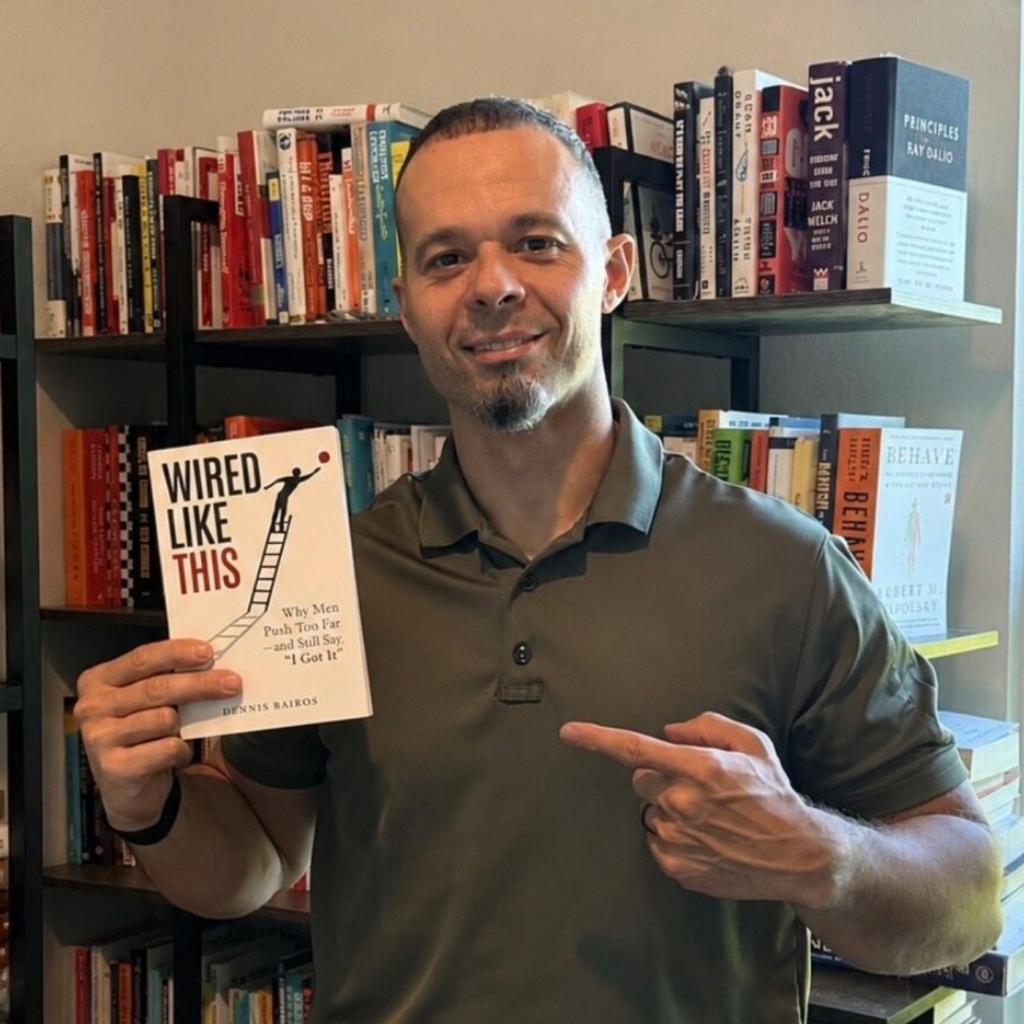
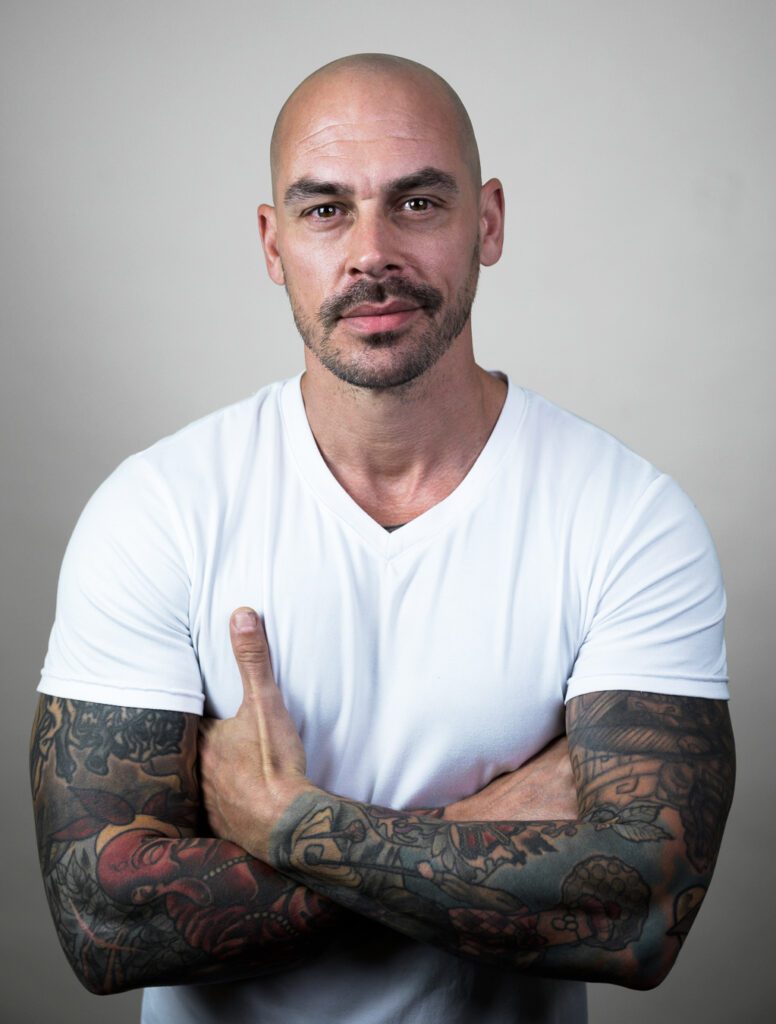
First aired January 14, 2024
What does it actually take to become a “good man”? Nico Lagan didn’t get there through comfort. He got there by hitting bottom. My guest today grew up without a present father figure, idolized the wrong men, and spent his late teens and early twenties as an addict and a drug dealer, sitting on his apartment floor mid-eviction when his mom called and asked him one question: “Are you happy?” That question is what turned his life around, and it’s why he’s now known as a men’s coach who fearlessly champions what a good man looks like. Nico moved back into his mother’s house that same day, into NA and AA meetings, and eventually into the career he has now.
Nico is an entrepreneur, author, and host of “The Nico Lagan Show,” with more than 100,000 followers and 5 to 10 million monthly views across his content, plus over 300 appearances as a guest and host, including Sean Kelly’s Digital Hour. We talk about what actually changes a person’s life (his answer: pain, not comfort), why he cut ties with nearly everyone around him to get sober, and the five virtues he now teaches men: courage, being a protector, being a provider, temperance, and faith.
Nico’s content gets called controversial, and in this conversation he explains why he doesn’t see it that way, and makes his case for the differences he believes men and women bring to a relationship. Whether or not you agree with everything he says, his own story, from an eviction notice to accountability, is worth hearing.
Watch this episode
In this episode
- How growing up without a present father led Nico to idolize the wrong men, and how that fueled six or seven years of addiction and dealing drugs
- The one question from his mom, “are you happy?”, that started a complete 180-degree life change
- Why Nico says “pain and suffering are the best of teachers,” and why comfort can be the most dangerous trap of all
- Nico’s five virtues of a good man: courage, protector, provider, temperance, and faith, and why he says courage comes first
- Why he cut ties with nearly everyone in his life to get sober, including people close to him, and how he decides who stays now
- His take on free speech, controversy, and why he’d rather know what people actually think
Timestamps
- (00:05) Welcome and guest intro: meet Nico Lagan, men’s coach and host of “The Nico Lagan Show”
- (02:45) Growing up without his father, and idolizing “the wrong men”
- (09:55) Getting evicted while still an addict and a drug dealer in his early 20s
- (10:29) The phone call from his mom: “Are you happy?”
- (12:33) The deathbed-regret study, and why pain is the best teacher
- (16:52) Why Nico says his content isn’t controversial, common sense is just rare
- (20:48) Cutting ties with the people bringing him down, including family
- (28:13) Nico’s five virtues of a good man: courage, protector, provider, temperance, faith
- (31:37) Nico’s case for the differences he sees between men and women
- (38:45) Where to find Nico Lagan and his books
About Nico Lagan
Nico Lagan is an entrepreneur, author, men’s coach, and host of “The Nico Lagan Show,” featured in Times Square, with more than 100,000 followers and content drawing 5 to 10 million monthly views. He’s appeared on TV, radio, and podcasts, including Sean Kelly’s Digital Hour, with over 300 total appearances as a guest and host.
Learn more, find his books, and follow him on social media at nicolagan.com.
Favorite quotes
“Men are not born, they’re made through trials and tribulations, through having to go through tough things in order to forge character.” —Nico Lagan
“Pain and suffering are the best of teachers.” —Nico Lagan
“I refuse categorically to live a life that others want me to live.” —Nico Lagan
Resources mentioned
- NicoLagan.com: Nico’s website, with his books and all his social media
- “The Nico Lagan Show”: Nico’s podcast, on all major platforms
Related episodes
- From Child Abuse, Drug Trafficking, and Decades in Prison to Being On Fire For Christ: Interview with Steven Snook (Part One): another guest’s road from addiction and dealing to a completely rebuilt life
- Why Traditional Masculinity Is Failing Modern Relationships: a different take on the masculinity conversation Nico raises here
- From Suicide Plans to 20 Years as Tony Robbins’ Firewalk Captain: Dave Albin’s Amazing Journey: more on the accountability and mentorship that pulls someone out of crisis
Subscribe & connect
If this episode gave you something to sit with, follow Phoenix and Flame so you never miss an episode: all apps in one place, or jump straight to Apple Podcasts, Spotify, Amazon Music, or YouTube. And if it moved you, leave a review; it’s the easiest way to help another listener find the show.
Learn more about Phoenix and Flame, connect with Dana, and listen to more episodes here.
Read the full transcript
[Dana] (00:05)
Welcome to Phoenix in Flame. I’m Dana, and this is my podcast on pushing through and transforming even when you feel like a pile of ash. Well, we have a very interesting guest with us today, and his name is Nico Lagan, and we will talk here in just a minute. Nico and I have already been talking for a few moments, and this is gonna be fun, I’m excited about this. Now, Nico has been featured in Times Square. He’s an entrepreneur, author, men’s coach, and host of the controversial podcast, “The Nico Lagan Show.” With more than 100,000 followers, his content currently has between five and 10 million monthly views, leading him to appear on TV, radio, and podcasts like Sean Kelly’s Digital Hour, with over 300 appearances under his belt.
[Dana] (01:03)
Both as a guest and as a host. Nico’s story is both inspiring and enlightening. Growing up without a masculine figure in his life, Nico idolized the wrong men. So before making the shift to who he is now, he lived a life as an addict and a drug dealer. Nico, welcome to Phoenix in Flame.
[Nico] (01:29)
Thanks for having me.
[Dana] (01:31)
Now, you are sharing that masculinity is under attack in today’s society and you fearlessly champion strong men. Now, others might see your content as blunt, unapologetic, and controversial, and that is exactly why you’re sitting here talking with me right now. Because
[Nico] (01:52)
That’s very — that’s a very polite way to say it, because that is not how people call me.
[Dana] (01:58)
Oh, wow. Well, people that know me know that I’m very direct, blunt. I just want to say things that are true and real and have honest conversations about things going on in the world. So if you wouldn’t mind, just kind of give us a backstory about what your life was like, because the nature of Phoenix in Flame is about those of us who have gone through fire, hence the flame, and I’m interested in what that was like for you. And then the transformation, when you become a phoenix and you rise out of the ashes, and what that was like for you. If you could just start there, and then we’ve got all kinds of interesting things to cover.
[Nico] (02:45)
Let’s say that it wasn’t a one-time thing. I’m going through it right now, I tend to go through very drastic changes about every 10 years. It’s almost a conscious decision — it’s not, but almost is. I can predict it, every 10 years something big is going to happen, I’m going to completely change the way I am, my views of the world will evolve, and I will start over as a phoenix would. The first time it happened, though, what you’re referring to happened to me in my early twenties. When my dad left, I was 14 years old, my parents got divorced. My dad disappeared. I saw him a handful of times by the time he died, which was, I think, when I was 29 years old. He left when I was 14, last time I saw him I was 19 or 20, so it’d almost been 10 years since the last time I saw him, and I only saw him every now and then because he basically moved out — imagine going from living in New York to going to live in Los Angeles while your kids are still in New York. That’s basically what happened. And as a man, as a boy, you need strong male figures to kind of mold you, teach you, show you what it is to be a man, which is why for the longest time we had rites of passage that were dedicated to men, run by more mature men, in a way that would make sense to boys. Because, as I always say, men are not born, they’re made, and we’re made through trials and tribulations, we’re made through having to go through tough things in order to forge character. Wisdom comes with time, and as Chris Rock says, only women, children, and dogs are unconditionally loved. Men are only loved as long as they bring something to the table. And it’s a fact, it’s okay — as a man, you need to accept this, it is the way it is. As funny as Chris Rock makes it sound, it’s not a joke. But at the same time, that just shows us that men are supposed to build up to something. We’re supposed to have virtues, we’re supposed to have morality, we’re supposed to forge a character that will bring something, and this is what I was lacking when I was that age. So at 14, when my dad left — not that he was super present prior to that, and I don’t know if you like philosophy, but this is something I’ve pondered quite often — is it worse to have a father that’s not there, or a father that’s not present? I’ve pondered that quite a bit, I don’t have an answer, it’s philosophy at this point, there’s no way for me to know which one’s better, which one’s the worst. But all to say that he wasn’t present when I was younger, and then eventually he just left. Within a year I was out of school, I was selling drugs, I was an addict, I was drinking every day, I was an alcoholic, and I was on that path for six, seven years. And it doesn’t take long for a boy
[Dana] (05:41)
Mm-hmm.
[Nico] (06:04)
without a male figure to start idolizing people, and what did I know when I was 14 years old? I had no clue what a good man was. My mother, within a year or two, found another man, one of the greatest men I’ve ever met, but it was too late, I wasn’t listening anymore, that year completely sent me on a different track where I didn’t care, I knew better,
[Dana] (06:11)
Right.
[Nico] (06:31)
I was smarter than everybody else around me, I knew what life was all about, right? And I idolized guys that sold drugs, I idolized guys that were always partying, I idolized guys that were rapping. So guess what, that’s what I did. That’s all I could concentrate on, and everything that did not have to do with this, I wasn’t interested anymore. Before you know it, I was an addict. Before you know it, I’m selling drugs. Before you know it, I’m a thief. Before you know it, I’m just not a good person. And in my early 20s, I moved out — I was 17 years old — and I was probably 20, 21 by then, sitting on my apartment floor. I was literally getting evicted again because all I did was party, so I was not the nicest tenant, let’s say — as somebody that rents, I would never have rented to me, I would never have my old self as a tenant, I can guarantee you that. And I was getting evicted, and I’m literally sitting on my floor with all my boxes around me, and my mother called me. She had no idea what was going on, she had an idea of what I was up to, but she did not know that day I was getting evicted, she had no idea what was actually going on that day. And I don’t believe in coincidences, I stopped believing in coincidences that day. She just called me asking if I was happy. And it’s an interesting question, because I was facing a decision — I was either losing my apartment, but very soon I was getting an upgrade in my life, I had been proposed a new career, instead of selling, I would have been taught how to produce it, so I was stepping up in the world as per what I saw it back then. So sitting literally at a crossroad, I’m like, what do I do? I got an opportunity to grow what I’m doing, and then on the other hand I have my mother asking a very existential question, that’s very simple when you think about it, not an easy one to answer, but it’s simple: are you happy? And then she continued by saying, if you want to come back home, you can — I can’t support you, I can’t, you’re gonna have to work, you’re gonna have to do something, you’re not gonna just sit here and do nothing, but if you want to come home, I’ll give you a roof over your head. And that same day I took a decision. I moved back to my mother’s place. Within a matter of days, I cut ties with everybody that was in my life at that point. I started going to NA meetings, to AA meetings, and within literally the last of two years, I had stopped doing drugs, I wasn’t drinking, I wasn’t smoking anymore, I had gone back to school, did my high school equivalency, did an 18-month technical college program, started working out, discovered martial arts, like it’s—
[Dana] (09:55)
Let me pause you for just a moment, because your story is amazing and I want to really kind of unpack it slowly and hover over this a moment, because I’m thinking about people that might be listening who either are in that space that you just described, or they know someone or they love someone who is in that space. I’m kind of wondering
[Nico] (10:00)
Yep, no worries.
[Dana] (10:20)
when you’re there and you were getting ready to go into the production side of drugs, right, which would be an elevation from selling, right — that’s just the truth of it. So why at that point did you decide to move back in with your mom?
[Nico] (10:29)
Yeah, accountability. This is where I was going with this, is that within the last of about two years, I completely changed my life, a complete 180. And the reason being is, when my mom asked me if I was happy, I was ready to hear it. One of the things that is not taught anymore, but is one of the universal truths, is pain and suffering are the best of teachers. They always say the comfort zone is a killer, they never explain why, they just say it. The reason the comfort zone is so dangerous is you’re not hurting enough to change, you’re still somewhat comfortable, your problems are not heavy enough to force you into a life-and-death situation.
[Nico] (11:38)
So you just are complacent and you continue doing what you’re doing, until I was faced there — I’m faced with an eviction, but I’m also faced — this is not — becoming homeless is not something that I wanted, but the hurting part is when my mom asked me such a simple question, yet an existential question. How many people do ask themselves that question? Most people do. But how many people are honest enough with themselves to answer it and to do something about it? Because most people are not happy in their lives, they just, they’re comfortable, they don’t think they can achieve more, so they just are complacent, they do whatever it is, and then they’re gonna wake up when they’re seventy years old and wonder what happened to them.
[Dana] (12:28)
Do you feel like most people don’t do anything about that because they’re not in enough pain?
[Nico] (12:33)
Yep, 100%. There’s studies that came out where they went and spoke to people on their deathbed and asked a very simple question: what’s your biggest regret? And you know what the number one regret is for the dying? Living the life others expected of them and not living the life they wanted to live. That’s number one. And I’ve known this for 20 years, and as soon as I heard this, I’m like, oh hell no, this is never gonna be me. So that’s the thing — when you’re hurting, I was already in a questioning state of mind, I was already in a place where I did not know what to do, I already knew there was something I needed to figure out. And this is when you’re ready to actually listen. When you’re hurting, you hit rock bottom, to put it into context, I wasn’t just working a nine-to-five regularly like everybody and not liking my life — no, I was a thief, I was a drug dealer, I was an addict, I was not a good person, I was an a-hole. I stole from the people that I love, I caused pain to the people around me. And having somebody like my mother approach me in a way where it was not judgmental — she did not attack me. Because my mother and I, FYI, we don’t talk anymore, her and I are on two completely different spectrums. As soon as you start pursuing what you’re supposed to be doing and you’re not gonna apologize for it, you’re gonna hurt a lot of people around you, you hurt their fragile ego. But I still — as the Bible says, you don’t have to love your parents, but you’re supposed to respect them, you’re supposed to honor your parents, and honor means you respect them. So I do respect my mother, and I’ll never forget all the things that she’s done for me, that being one of them, because the way she approached it,
[Nico] (14:45)
was not the way we’ve spoken before. She really approached it in a way where she was not preaching, she simply asked me a question and gave me a solution that I’ve never considered until that point. To me it was just, I was continuing on the path I was on because this is where I was, and I never questioned it, I never understood, I never realized that there was a different life I could live, and I was never asked, I was just at a point where I was ready to listen. And you know, to this day I’m extremely hard-headed. I was just saying this on a podcast yesterday, how if I look at my life, I’ve always had an extremely good instinct — every time I was wrong is when I did not listen
[Dana] (15:36)
Ha ha ha.
[Nico] (15:51)
to my instinct. I don’t know your audience, how they are, but I’m a Christian, so I realize it now, what it is, but for 18 years I did not realize what that was. I always thought, oh I have great instinct, I have great instinct — no, God talks to me, God has always talked to me. I’m very logical, and you don’t talk to God with your logic, you talk to God with your heart. Once your heart is open, you open a communication directly with God, and that’s what I’ve called my instinct my whole life, and now that I know it’s faith, it’s not instinct, it’s faith. But the point is, even back then I had it. So I took the decision right there. I do this all the time — I will be faced with a situation, I will take the decision on the spot, and then logically later on I will try to explain it and make sense of my decision. But my instinct that day was to simply say, you know what, go back home. That’s what I did, I didn’t question it.
[Dana] (16:50)
Well, let me ask you this in light of what you just shared. I’m curious about your path of this focus on societal views of masculinity, and also how that dovetails with why your podcast — why you describe your podcast as being controversial.
[Nico] (16:52)
Yep. You know, I’m not the one that wrote that write-up, I actually work with a marketing company, so they’re the one that wrote it. You just need to go check my comments, you’ll understand why — I don’t think that anything I’m saying is controversial, it’s just that if you live in a world where common sense is no longer common, everything you say is going to be controversial. I don’t go on purpose trying to hurt people’s feelings.
[Dana] (17:24)
I’m sorry.
[Nico] (17:41)
But if you think that I need to tiptoe around your feelings, you’re sadly mistaken. Your feelings belong to you, and guess what, there’s only one person that cares about your feelings — you. At the end of the day, nobody cares. They might pat you and feel very bad for you, but it’s all lies, they’re patting themselves on the back — “oh, I’m such a great person, I care about others” — no, absolutely not. Learn to control your emotions, because if you don’t, you’re easily controllable.
[Dana] (18:09)
Okay. Yes, yes. Okay, I’m pausing you for a moment because I am known as the queen of boundaries, and my words are just coming out of your mouth right now, because we are all responsible for our own feelings. And so we have the right, and I could easily argue the responsibility, to speak our thoughts and our feelings in a respectful way.
[Nico] (18:28)
100%.
[Dana] (18:36)
but to speak them, and to speak them directly, and how someone else feels about that is not our problem.
[Nico] (18:38)
Mm-hmm, yep. And I would go even further than that. This is one of the things I love about the US, your first amendment, free speech. Free speech does not mean that you’re free of consequences, it simply means that you are free to say whatever you want. I was reading a book, and the guy was explaining how free speech is so important that it should be everywhere, because you want to see the rise of the next Hitler — if you force people to hide what they have to say, they’ll do it behind closed doors, it’ll be secret, nobody will see it coming, and it’s extremely attractive to people to be part of something that’s secretive. But if you give people a public space, like social media, and encourage them to speak their mind, you can predict their pattern. I’ve always been a fan of giving a lot of rope for people to hang themselves. But it’s true, I’d much rather give a platform that is free speech, so you can say whatever it is you want to say, because I want to know who I’m dealing with, I want to know who I’m listening to, I want to know who and what you are, and if you have that platform, you’ll feel very comfortable to do it.
[Dana] (20:00)
Yes, and I want to pull in something you said a few moments ago, when you said — if I heard you right — you were talking about when you pursue a passion, when anybody decides to unapologetically pursue their passion, their goal, their reason for living, that sometimes that’s going to mean that there are certain people that fall away, that don’t like it, that disagree, that don’t understand,
[Nico] (20:10)
Mm-hmm, yep, yep.
[Dana] (20:26)
and they are no longer in your life, and you have to make that choice. Am I going to live my life based on what others expect me to do, or am I going to live it the way I feel like I should be living it, which might mean that other people don’t like it and they might decide not to be in a relationship with us anymore.
[Nico] (20:48)
And that’s exactly what I discovered when I was 20 years old, that’s the first time I did it. I realized that day I was not a good person. I was lied to my whole life in school that I was stupid because I did not fit into a box. And over the upcoming years I realized I’m a lot smarter than the average person, I just don’t learn the way average people do, I’m very ADD, my brain does not work like the average person, but that day it flashed into my brain, everything came at the same time: you’re not a good person, face it, your life sucks because of you, it’s your fault, you have nobody else to blame for this than you. Sure, the cards that you were given, you didn’t choose them, but I chose to play those cards the way I did. Did my mom have an impact? Of course, she should have taken more responsibility for a lot of things that happened to me, but at the end of the day it was my fault, absolutely my fault. And I realized that day, I became accountable to those things that day. If I’m very logical, and I’m good at removing my emotions from a situation and just saying, okay, let’s step back and see it for what it is — if I accept the fact that I was not a good person, that means the people I hung out with weren’t good people either, because you are the sum of the five people closest to you. So what does that mean? Can I stop doing drugs if I’m still hanging out with drug addicts? Can I stop drinking if I’m always partying, always hanging out with people that are always going out? Can I go back to school if I’m hanging out with dropouts? No, of course not. So it only made sense that I had to remove those people. And you know, in order to become selfless, you need to first be selfish, you need to think about yourself first, and then you can help others, because you will show them the strength of character it takes to become a leader. This is what it comes down to. It’s very logical for me to say, I want this, I will make a list of all the people around me, I’ll cut that page right down the middle, and I will filter all those people through that list and say, are they bringing me up, or are they bringing me down? Because at the end of the day, every single person in your life you can categorize into two simple categories: are they helping you get to where you want to go, or are they preventing you from going there? And unfortunately it’s not a 50-50 split, most people in your life are toxic for you and you don’t even realize it. And as soon as people hear “toxic,” they’re like, oh that’s so bad, I don’t have that type of people around me — yes, you do. That doesn’t make them bad people, I’m just saying they’re not a help, they’re bringing you down from achieving whatever it is you want to achieve. And how important are your goals compared to simple relationships? That’s the question most people need to ask themselves, and that was the question I asked myself 20 years ago, and I still ask myself this question all the time. Do you want to achieve? Yes or no? Yes — that’s the price, that’s one of the many prices you will pay. And unfortunately,
[Dana] (24:26)
Well, it—
[Nico] (24:42)
some of the most toxic people you have in your life are family members, and that’s unfortunate. How many times have you heard people take crap from the people in their families just because they’re family members? They would never accept that from anybody else, but because they’re family members they will accept that. That means you’re giving your power away to your family, without realizing that the energy it’s costing you, all that negativity, is affecting every single aspect of your life. And I can tell you, the more I become successful, the more I become known, the more you can see crap from the people that
[Nico] (25:42)
I used to know. People online can’t hurt my feelings, they don’t know me. But every now and then there’s people I used to hang out with that pass comments privately to me, and I’m like, really? This is what you have to say, considering you live in the same city you used to live in, hanging out with the same people you used to, 20 years ago, 10 years ago, and you’re going to hate on me for moving, but yet you’re going to support mega stars out there that you don’t even know and you don’t even have the audacity to look at yourself in the mirror instead of criticizing me. This is what I find very interesting, but this again is the cost, this is what you have to pay for.
[Dana] (26:25)
Yeah, I agree with everything you’re saying in terms of setting boundaries and deciding what you want to do with your life and saying, okay, who’s going to help me get there and who is not?
[Nico] (26:37)
And it’s your choice, and there’s no wrong answer. I’m sorry to cut you off, but when I say this, I’m making it sound extreme, but at the end of the day, what do you want? Do you want to be one of those people who will regret their lives? And I refuse to be that guy. I refuse categorically to live a life that others want me to live.
[Dana] (26:42)
That’s okay.
[Nico] (27:04)
The only thing that I listen to is my heart. I’ve developed my mind, body, and spirit connection so much over the past 10 years that I know my heart is always right. I am a moral person, I know my heart is right, I will listen to it no matter how hard the path is that it puts me on.
[Dana] (27:36)
To your point, I think sometimes when we do eliminate certain people from our lives, especially when they are family, it does seem extreme. It seems extreme sometimes to us, and sometimes it seems extreme to other people, but there’s simply no other choice to make if you want to stay healthy and achieve the goals that God has set for you to achieve, because the other person’s toxicity will pull you down and prevent you
[Nico] (27:41)
Oh boy, yep.
[Dana] (28:04)
from achieving what you need to achieve. Now I noticed that faith was one of your — you list out five virtues of a good man, and faith is one of them. I’m kind of interested in you sharing with my listeners your five virtues of a good man and why you chose those.
[Nico] (28:13)
First, let me just say, all I talk about, I’m not coming up with any of it, this does not belong to me. Those are ancient virtues and conversations that Greeks had 2,000 years ago. I’m not inventing anything here, but I’m a big fan of history, I read a lot, and I’m a big fan of stoic principles. So the virtues I’m going to talk about are based on my studies of stoic principles, I basically just took them and rebranded them in a way that would be more palatable and resonate with people today. So the five virtues of a good man are courage, being a protector, being a provider, having temperance, and having faith. I’m still debating — I’m writing my second book right now, and I had to take a break about two weeks ago because I’m having a big spiritual, mental debate right now, where I don’t know which one comes first between courage and faith. I was just talking about this with my pastor two days ago and he was stumped too. The way I’ve been explaining it is courage is the foundation to everything, it is your cellar, it’s what your house resides on. This is really what everything else is built on. You need to have the courage to do what needs to get done, when it needs to get done. You need to be able to stand up for yourself, you need to be able to believe in yourself, to have the conviction to at least dream. It all stems from there, because can you really be the protector that your family wants if you don’t have courage? Because that means you’re unpredictable — if you don’t have courage, I cannot predict the way you’re going to react in a bad situation.
[Dana] (30:18)
You know.
[Nico] (30:42)
So I can’t depend on you, I can’t really be assured that you’re dependable. No, because you’re not courageous, so like most people, you’ll check out when the situation gets tough. So I can’t depend on you. Those are the conversations I’ve had with myself, to say that courage is everything, that’s where it starts.
[Dana] (31:05)
Well, and Nico, let me ask you something, because I know we’re running out of time. But when we were first talking before I hit record, you had shared that a lot of your listeners, most of them are men, and you were kind of surprised in a way that here I was, a female, showing up wanting to have this conversation with you. And I’m wondering, just getting your brief take on
[Nico] (31:19)
Mm-hmm, yep.
[Dana] (31:32)
what has the feedback been from females? Has there been pushback? What does that look like?
[Nico] (31:37)
Of course. There’s a misconception in the world today that women believe that promoting masculinity somehow takes away from women, that somehow by me saying that men need to be strong I’m trying to denigrate women. And it baffles me, because men do not protect their women because they are weak, we protect our women because they are important to us. Like, look at my girlfriend — my girlfriend’s 110 pounds, so can whit, I’m 210 pounds, I’m literally twice her size, I have 20 years of experience in martial arts. Who do you think is the best protector between the two of us? Me. She could have the exact same experience as I do, I could still take her, because I have a hundred pounds more than her. So size, speed, bone density, I have a higher pain tolerance — those all play a massive role, not to mention testosterone — and it’s the gender roles that people don’t like today, because women are being told they can achieve everything, and it’s true, at the end of the day you can achieve whatever you put your mind to, I don’t care what sex you are, it doesn’t matter to me. But there’s a good reason why 92% of firefighters are men, about 90% of police officers are men, 85% of security agents are men — because men want to protect, that’s what we do. There’s a good reason why 95% of the 20 most dangerous jobs are done by men, not because they like it, but because they know it pays better, because there’s higher risk, and they want to provide. But somehow, by me saying this, it’s being read as saying women need to be in the house cooking meals. But studies show that women need to feel safe in order to let their emotions go, and they won’t do that if they’re not in a relationship or environment where they feel safe. So how is it that me, as a man, wanting to provide that for my wife, my kids, my girlfriend — let me provide the protection you need to feel safe, let me provide the necessities so you can teach our kids how to be emotionally intelligent, because that’s something women succeed in. There’s a good reason why 86% of nurses are women, and in Canada, per the University of Ottawa, one of the biggest universities in Canada, the studies are showing that about 70% of the medical field now, doesn’t matter, just medical, not just nurses, are women. That makes sense to me, I don’t see a problem with that. It’s the same reason 90% of engineers are men — men are extremely logical, women are extremely emotional, but that means women are more compassionate, they take care of people, that’s what women do. God made women that way, there’s a reason why you are the way you are, because it’s part of your role. I can’t create babies, I can participate,
[Dana] (35:47)
I’m going to go ahead and close the video. All right.
[Nico] (36:13)
but I cannot bear life, I really can’t.
[Dana] (36:17)
Mm-hmm. All right, Nico, I’m gonna make a comment about this, and then I’m going to make sure that we get information to my listeners so they can get more access to you. I will say that as a strong woman myself, I had to have a husband who was stronger than me. And I was stronger, not necessarily physically, but intellectually and psychologically, than most males who would approach me, like in college and elsewhere, and I would have nothing to do with them. If I felt like I could sort of emotionally shove them to the ground, then I wanted nothing to do with them. I needed someone who was stronger than me, so that I couldn’t push him around, I couldn’t manipulate him. I wanted someone who was smarter than me, who was stronger than me. That’s just my personal opinion, and I have a right to my opinion, and that’s my opinion, that’s who I wanted. I did not want someone I could mentally, figuratively shove around. That’s not what I was looking for. And so I did find my husband, who is smarter than me, who is stronger than me, and that’s what I wanted. So let me ask you what I have down here.
[Nico] (37:41)
Just before you do, I have a saying that I always say: a man is a woman’s rock, while a woman is a man’s weakness.
[Dana] (37:54)
Hmm.
[Nico] (37:56)
And this is how women and men complement each other. You can live a life on your own, not needing a man or a woman, sure, I don’t believe you need to be in a relationship to be fulfilled. But are we supposed to go with each other? Absolutely, we were designed this way, we were designed like the yin and yang, we are two sides of the same coin, we’re supposed to be polarized, we’re supposed to be different.
[Dana] (37:56)
Interesting. Mm-hmm.
[Nico] (38:25)
And it’s a beautiful thing that needs to be embraced and not criticized, because it is the way we were made. There’s a reason marriages are ending 50% of the time, there’s a valid reason for this, because we don’t embrace our differences. So yeah, go ahead, of course.
[Dana] (38:45)
And appreciate the differences. I feel like, Nico, we could sit here, we could probably talk three more hours, I feel like I could just kind of go back and forth. Unfortunately I have to wrap up the podcast for today, but what I have is Nico Lagan, N-I-C-O-L-A-G-A-N dot com.
[Nico] (38:55)
Yep, NICO. Yeah, no worries.
[Dana] (39:09)
I think I saw C and said K. Yeah, N-I-C-O-L-A-G-A-N, nicolagan.com. This is where my listeners can go if they want to find more information about what you have to offer. Is this correct?
[Nico] (39:12)
All good, yeah, all my social media is there, my books are there, everything’s there.
[Dana] (39:27)
Okay, and I will put that on my show notes as well, so no worries. Nico, thank you so much for spending your valuable time and energy, because I know you’re so busy — you had shared with me earlier today that you’ve been up since like three o’clock this morning, you have so much more to do. Thank you for spending your valuable time and energy with me, with my audience.
[Nico] (39:49)
Thanks for, you know, thank you for doing what you do. It seems like women right now — you’re the second podcast I’ve done with a woman this week, and I record about four or five a week. So I appreciate women like you reaching out, giving me an opportunity to explain this, because we love women. No man out there is consciously trying to oppress women.
[Nico] (40:19)
What we do is really just because we care. It would be so much easier to not do it, it would be so much easier not to want to do it.
[Dana] (40:29)
That is true. All right, listeners, I’ll tell you what, I know you have heard something today, many things today, that you’re thinking this is amazing and you wanna share it. Put it on your favorite social media platforms, copy and paste it in a text, copy and paste the links in your email, in your text, spread the word, get the word out about what Nico Lagan has to say. Have a wonderful rest of your day, and
[Dana] (41:00)
This is Dana on Phoenix in Flame.
Are your work boundaries supporting you—or quietly draining you?
Take my free Work Boundaries Quiz and find out where you stand.