First aired January 28, 2024
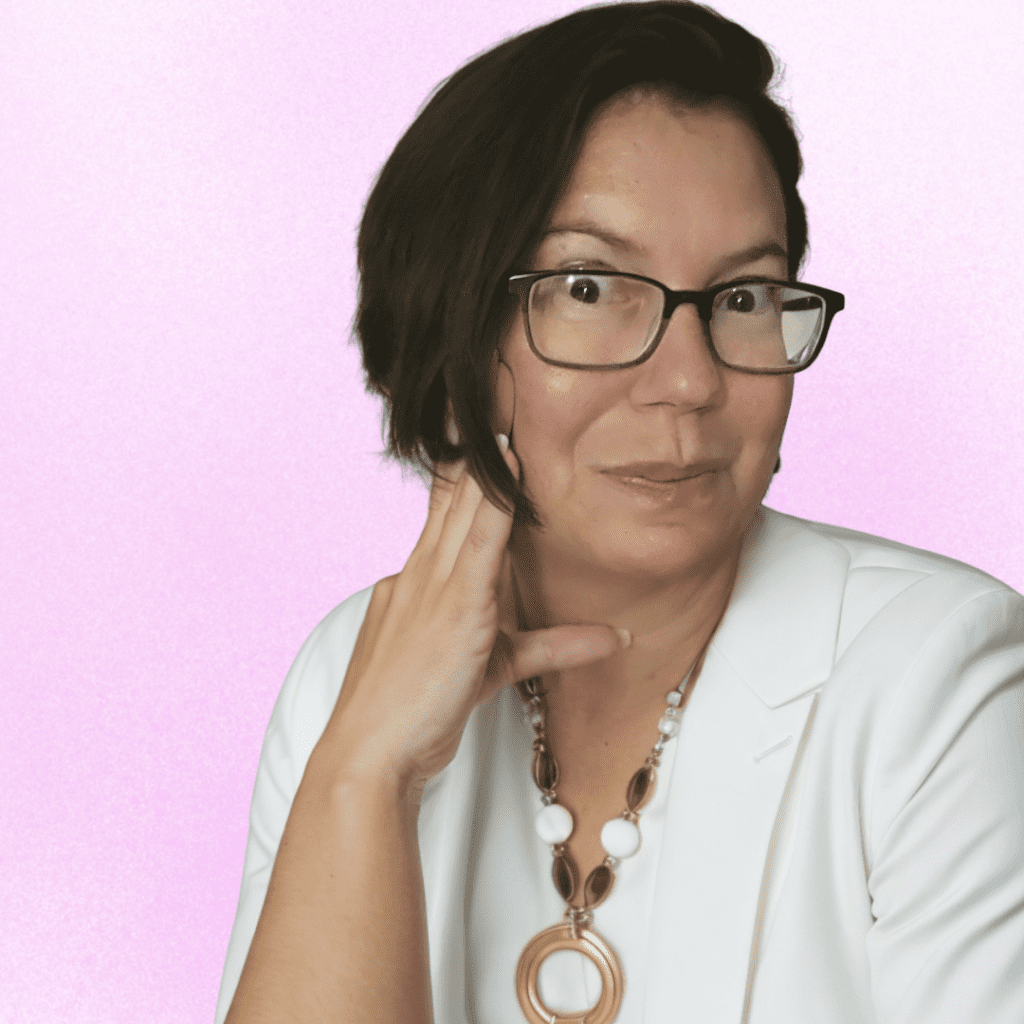
“Different is not a deficit”: that’s Katherine McCord’s blunt answer to anyone who thinks neurodiversity means something’s broken. Katherine has six invisible disabilities, including bipolar disorder, obsessive compulsive disorder, and misophonia, plus multiple physical diagnoses including a seizure disorder, and she calls neurodiversity her superpower, not in spite of any of it. She tells her own story with zero shame and a whole lot of humor, like the time an insurance company called to apologize because they thought they’d gotten her age wrong. They hadn’t: she was 26, but her file, full of diagnosis after diagnosis, read like she’d lived twice that long.
Katherine is the founder of Titan Management, a national people operations consulting firm she started in 2014, and in 2021 she designed the first fully accessible, anti-bias applicant tracking system plugin, one that hides the resume and shows company diversity instead. We talk about what it means when your parents “steer into” your differences instead of fighting them, how to tell the difference between someone who’s just uninformed and someone who’s being deliberately unkind, and the line between having a diagnosis and using it to manipulate the people around you.
Katherine also walks me through what misophonia actually feels like (spoiler: it’s not just “not liking a sound”), and the workplace study that proves accommodating how people naturally work isn’t just kind, it’s good for the bottom line.
In this episode
- What neurodiversity actually means, and why Katherine calls her six invisible disabilities her superpower
- How to respond when someone doesn’t accept your differences, and how to tell ignorance from malice
- The difference between having a diagnosis and using it to manipulate people, and how to set a boundary around either one
- What misophonia actually feels like, from the sound of kissing to a booth full of strangers at a restaurant
- Why the Hewlett-Packard study found that letting people work in ways natural to them increases productivity by over 30%
- How to tell someone they have ADHD for the first time as an adult, without making it sound like a diagnosis of doom
Timestamps
- (00:01) Welcome and guest intro: meet Katherine McCord, founder of Titan Management
- (02:18) Six invisible disabilities, and what “neurodiversity” actually means
- (03:58) The Aflac phone call: “Ms. McCord, we got your age wrong”
- (04:26) How Katherine’s parents responded when she was diagnosed with OCD at three or four years old
- (06:41) Meeting “the jerk”: Katherine’s first encounters with people who weren’t accepting
- (08:41) Choosing education over conflict, and the boundary of “not today”
- (12:28) The difference between having a diagnosis and using it to manipulate people
- (21:23) What misophonia actually feels like
- (29:09) Katherine’s three missions: integrity, innovation, and inclusion
- (33:12) Where to find Katherine, and her new nonprofit, the Neuroverse
About Katherine McCord
Katherine McCord is the founder of Titan Management, a national people operations consulting firm founded in 2014, and in 2021 she designed the first fully accessible, anti-bias applicant tracking system plugin. She lives with six invisible disabilities, including bipolar disorder, OCD, and misophonia, plus multiple physical diagnoses including a seizure disorder, and recently founded the Neuroverse, a nonprofit focused on neurodiversity, which is hosting its first “Neuro Wonderland” event in New York next year.
Learn more at her speaker website, join the Neuroverse, or find her consulting firm at TitanManagementUSA.com.
Favorite quotes
“Different is not a deficit.” —Katherine McCord
“You are not whatever this diagnosis is. This diagnosis is no different than a finger on your hand.” —Katherine McCord
“Inclusion is the ultimate expression of freedom.” —Katherine McCord
Resources mentioned
- KMcCordSpeaking.com: Katherine’s speaker website and bio
- JoinTheNeuroverse.org: Katherine’s nonprofit around neurodiversity, with free resources and upcoming events
- TitanManagementUSA.com: Katherine’s people operations consulting firm
- Loop earbuds, the noise-filtering earbuds Katherine uses to manage misophonia
- The Hewlett-Packard workplace study Katherine cites on accommodating natural working styles
Related episodes
- Why Neurodiversity is Important in the Workplace: a deeper dive into the exact topic Katherine champions here
- Queer Rights, Mental Disability, and Suicidal Ideation: Zane Landin’s Journey of Advocacy: another guest turning a disability experience into public advocacy
- Emotional Healing Laboratory: The Workplace: more on building workplaces that actually work for how people are wired
Subscribe & connect
If this episode gave you something to sit with, follow Phoenix and Flame so you never miss an episode: all apps in one place, or jump straight to Apple Podcasts, Spotify, Amazon Music, or YouTube. And if it moved you, leave a review; it’s the easiest way to help another listener find the show.
Learn more about Phoenix and Flame, connect with Dana, and listen to more episodes here.
Read the full transcript
[Dana] (00:01)
Welcome to Phoenix in Flame. I’m Dana, and we have got a fantastic guest with us today. I have to tell you, I absolutely adore podcasting, because we get access to these most amazing people who have these amazing experiences, and we get to talk to them and find out what their journey was like and what helped them and what hindered them and all these wonderful things. And so today we’re going to be talking with Katherine McCord. Now, in 2014 she founded Titan Management, a national people operations consulting firm. And then in 2021, she shook up HR tech by designing the first-ever fully accessible, anti-bias applicant tracking system plugin that hides the resume and showcases company diversity. Katherine, welcome to Phoenix in Flame.
[Katherine] (01:04)
Thank you so much for having me. And by the way, I love that in your intro you called me both fantastic and awesome, and that has just made my day. So thank you.
[Dana] (01:14)
Drop the mic, I’m done.
[Katherine] (01:17)
You did it! Success!
[Dana] (01:20)
All right girl, well there’s some other things about your history that I want to share. So you are successful with six invisible disabilities, not in spite of them. You have bipolar disorder, obsessive compulsive disorder, and misophonia, and also multiple physical diagnoses including a seizure disorder. And you say that your neurodiversity is your superpower.
[Katherine] (01:34)
That’s right. Yeah, it is.
[Dana] (01:49)
This is so interesting to me. I love diversity, I love hearing people’s walk and their journey, I’m really interested. So start to fill the listeners in and fill me in on what it has been like for you. Start wherever you would like, and we’ll just meander around and get to wherever we need to get. We will.
[Katherine] (02:01)
Sure, we’ll get there, it’ll be fine, we’ll just get there. So I do have six invisible disabilities, and actually my doctor keeps trying to tack on a few more, and I’ve told her, no ma’am, we have cut it off at six, this is the maximum allowed, you’ve just got to lump it in with something else, not having any more diagnoses, at least not for another decade.
[Dana] (02:18)
We’re done. Ha ha, yeah.
[Katherine] (02:28)
So I have multiple physical and neuro diagnoses, and neurodiversity, for anybody listening, is just a medically visible and/or diagnosable difference in how the brain and body process information and stimuli. So everything from cerebral palsy and seizure disorders, over to autism, ADHD, dyslexia, dyspraxia, on over to the mental health spectrum of OCD, bipolar, anxiety, Tourette’s, all of this type of thing. And actually Tourette’s is not
[Katherine] (02:58)
as much mental health, sorry about that, but anyway, that whole kind of spectrum is neurodiversity, and the whole concept there is that different is not a deficit, which science has finally caught up to, by the way, we’ll talk about that more here in a minute. But I have so many things going on, I don’t even know, I think I’m secretly 80 years old and just nobody told me, is what happened. Because — and this is a true story — I love Aflac, by the way, they’re great auxiliary benefits, but years ago I had them call me, when I had signed up for their benefits, and go, “Ms. McCord, we’re so sorry, we got your age wrong.” And we went through the whole process and figured out that they got my age right, but they were like, what — because all of my health conditions made it look like I was so much older.
[Dana] (03:56)
Oh my goodness.
[Katherine] (03:58)
And I was like 26 when this happened, and they were so embarrassed. I was like, no, it’s good that you checked, that’s perfectly fine, it’s okay. But they were just so embarrassed, it was hilarious. But I’ve been different since childhood. My mom first noticed it when I was about three or four years old, that I had obsessive compulsive disorder. And my parents had the most beautiful response ever, that they just steered into it.
[Dana] (04:09)
Oh.
[Katherine] (04:26)
They were like, this is who you are, cool, no problem, we’re just gonna roll with it, and it’s all right. And they taught me the strengths that go with all these different things about me, and then they taught me how to accommodate the rest of it, because neurodiversity has both the disability aspect and the benefit aspect, so it’s this kind of funky balance. And they just steered into it, as did the rest of my family, they’re just like, all right, well that’s Katherine, no problem, it’s all right. And then as the rest of it started to develop, the exact same thing happened. So I was unusually privileged in that way, to have a family that could wrap their brains around it the way that they did, and could embrace it with nothing but love and support.
[Dana] (05:10)
And yes, and acceptance and looking at the pros. So let me ask you, when you first ran into — we’ll call it the blades or the buzzsaw of the people that are not open to diversity, the ones that are more homogenous and their mindset is more set on
[Katherine] (05:14)
Yeah!
[Dana] (05:38)
what they know, and sometimes, let’s just be perfectly honest, sometimes it’s just an ignorance thing. They just have never been around something, and so they’re like, I don’t understand why you act this way, I don’t understand why you speak this way, I don’t understand why you do these things versus other people. There’s other groups of people where it’s not an ignorance thing, it’s a malicious thing, it’s a mean-spirited kind of thing. And so I’m thinking I more than likely have some listeners out there who are
[Katherine] (05:44)
It is! Yeah, right, it can be, yeah.
[Dana] (06:07)
walking the path that you have walked. And so I’d like to sort of go back there with you and maybe have you share what that was like, because you started out fortunately in such a wonderful, lovely nest of parents that were welcoming and accepting and said, hey, these are the great parts about how the neurodiversity is impacting your life. But at some point or another, you ran into these other individuals.
[Katherine] (06:09)
Yeah, I did, yeah, I ran into the jerk. I did, unintentional or otherwise, I did. So my natural setting — and I don’t know how this came to be, other than that I have other people in my family like this, so there’s just some genetic component to this — my automatic assumption, if you don’t like me, is that you are defective. And I don’t mean like you don’t like me as in we’re just not gonna be the best of friends, that’s not what I mean, I just mean, if you think that I’m wrong or bad or incorrect, you’re just defective, and I don’t know what to do with you, I’m sorry that this is your experience. So as a child, that’s how I automatically responded, it didn’t occur to me that this other person was correct, because all of the brilliant, smart people in my life said, no, you’re great, and my instincts said, yeah, you’re great. So I was like, okay, you’re just weird, whatever, and just kind of kept on going. And that’s just me, that is my unique little brain. But I was also always very defensive of my friends who were not that way, and who would become hurt, because neurodiversity attracts — we’re just like little magnets to each other, we’re just drawn into this little vacuum with one another. And I was always highly defensive of my friends who would be hurt or experience pain from that kind of rejection. My instinct there was always to reassure them that they were awesome. And my very first instinct was to be kind of, not physically but verbally, attacky toward other people when I was young, and I would shut them down, like make them cry and say, no, you’re the one that’s bad, they’re good, you’re being bad. And then I learned that’s not how you do that, that was little Katherine, that was her initial protective instinct, the tiger kind of came out. And then you learn better ways to do that as you get older, and how to actually work with that. So now adult Katherine’s response to this
[Dana] (08:30)
Yep, yeah.
[Katherine] (08:41)
whenever I run into it, even now when people respond that way to me, which does occasionally happen, not as often, not near as often, but what I do is I just respond with education now, and I teach them, because if it’s just a matter of not knowing — which is quite often the case, to your point, that is the most likely — I would say probably 97 to 98 percent of people out there who struggle to understand this, it’s just a lack of knowledge. So I share that knowledge with them, and I talk to them about it, and I let them ask all their questions, and I tell them nothing’s off-limits, you’re not going to offend me, just go — and they get so excited that they can ask all these questions and just let things come out of their mouths, ask the question they’ve always been afraid to ask, and I give them that opportunity, and that creates a lot of growth, and a lot of times you get really wonderful advocates out of that experience. But you have to be in a place where you’re ready to do that. There are a few days a year, not very many, when I’m like, not today. I would love to talk, I really want to talk to you about this, not today, let’s put a time on the calendar, because today that tiger’s going to come back out, right?
[Dana] (09:55)
Mm-hmm. I love that you’re honoring of that, kind of where you’re standing emotionally and mentally in that moment. And if you’re not ready to give them education, then you don’t just say, well, forget it, you say, let’s put a time on the calendar, let’s come back around to it, so that I can tell you later and we can have the discussion then.
[Katherine] (10:12)
No, yes, yeah, we can work on this. And that’s my choice, I choose to be an educator, I choose to be a voice. And because I’ve made that choice, I feel it is always my honor and my obligation to provide that education for other people. And for other people who don’t want to be an educator, that’s fine, there’s nothing wrong with that. But I would say, still be an ally for yourself, and still be willing to have those conversations on behalf of you that you need to have, not just with the whole public, but with people like your employer, your partner, your friends, and be willing to have those conversations to educate them, because these are the people you’ve chosen for your life, right, so you want to give them a little bit more priority. But you have to learn to respond in curiosity, not ego, both sides.
[Dana] (11:14)
That’s wonderful, I love the way you’re explaining this. And I also have a question — sometimes we run into people who have different neurodiverse situations going on with them, different diagnoses, and sometimes because of their background or their personality, they tend to take more of a victim stance, and sometimes they will kind of
[Katherine] (11:28)
Oh yeah.
[Dana] (11:41)
want to use different things to — I’ve run into people along the way, not a lot, thankfully, but I know someone very close to me who kind of would use different things that she struggled with as a manipulative ploy to say, this excuses all of this, I get all these things. So I’m really interested because I love your mindset,
[Katherine] (11:58)
Oh yes, that is very real.
[Dana] (12:06)
and I love your owning and your honoring and accepting of the neurodiverse issues that you have had. So I’m just kind of wondering what your take would be on those individuals out there that are adding in that whole victim thing, because you do not seem to be that way at all, as a matter of fact the opposite, you’re like, this is my superpower. So what is your feeling toward those that are doing the opposite?
[Katherine] (12:28)
Yeah. Part of it can be where they are, so I give a lot of grace. It could be that everybody in their life has told them that they’re broken, so they really don’t know better, and that’s just the truth. You see so much of that, their whole lives — I get messages about this relatively frequently, of, oh my God, thank you for telling me that I’m not broken, my whole life I thought I was broken, thank you, thank you, thank you. And it changes so much for them to just know the facts, that scientifically speaking, you are not broken, you are just different from other humans, and there’s tons of science behind that, we don’t have to get into it, but if anyone wants to know they can reach out. So I’ll give a lot of grace for that, or maybe they just got diagnosed and the pain has hit them, like, okay, what does this mean for me? So I give a lot of grace for both of those things. What I don’t give grace for at all is the people who choose to use this as a way to manipulate others. I want to differentiate — one thing is that there’s neurodiversities that happen, right, that’s a thing, and then there are choices that we make
[Katherine] (13:58)
to be ugly, manipulative, hurtful. And people in the disability community and the neurodiverse community are not immune from those kinds of choices, there’s no “oh we’re just so innocent over here because we have these things going on,” no, absolutely not. So there are people who choose to use it to manipulate, and these are the same people who would use anything, oh my dog died, or whatever it is that they feel is their particular tragedy. So that is its own thing, I completely separate that from their neurodiversity or their disability, whatever has gone on with them, I separate that, and this behavior, uh-uh, no. I treat it just like anybody else who would be manipulative or ridiculous, and I’ve done that with a couple of those folks, I just shut them down, like, no, that’s not it, and I just let them know.
[Dana] (15:08)
You have a stance now, you can say, because you’re experiencing so much of that, and you can say, I know what it’s like, and so I know this is not gonna roll.
[Katherine] (15:18)
But that’s not even it though, because every manifestation is different. So there’s no, just because I know somebody with autism, just because I have bipolar, just because I have obsessive compulsive disorder — now there are times I flat-out caught people like, oh no, see that’s just factually not part of that diagnosis, so either you’ve been told wrong or you’re full of it. But sometimes they’ve been told wrong, there are a lot of doctors out there that misdiagnose. But anyway,
[Katherine] (15:49)
that is very rare. Typically what you see is that it’s not about “I have the right to tell you this is the behavior I’m going to accept versus not,” and anytime somebody’s being manipulative and trying to be controlling, you have the right to stop that. And that doesn’t matter even if they have a — there are a couple of mental health concerns that can cause that type of behavior, it does not matter, you have the right to stop that and say, no thank you. And the way you can do that, and you want to make sure you’re kind of walking that line, is: I’m here to support your needs, but I also need you to be mindful and please not manipulate and please not exude this controlling behavior. So let them know, I’m here to support you, I got you, but we’re not gonna be using this manipulation tactic, no thank you to that.
[Dana] (16:48)
I love, love your explanation of that. That is so helpful, because being a psychotherapist and also in relationships personally, I’m kind of a rubber-meets-the-road kind of person, I know how real life plays out, and so I love the way you explain that, because I can see, I can imagine somebody saying that and it being very effective. I want to wrap back real briefly when you were talking about sometimes when people get
[Katherine] (16:52)
Thank you, right, mm-hmm.
[Dana] (17:16)
diagnosed, they thought there was something wrong with them, and when they finally get the diagnosis, sometimes there’s a process. It’s not unusual for me to have diagnosed someone for the very first time as an adult with ADHD, and they have been struggling so long, they thought they were stupid, they thought they were just scatterbrained, they’d been called names, they try to go through school
[Katherine] (17:20)
Yeah, oh yeah, yes, mm-hmm, yeah.
[Dana] (17:44)
and they couldn’t do what their cohorts could do sometimes, they couldn’t process, they couldn’t remember, they couldn’t do reading comprehension. And so when they were finally diagnosed, I’m like, you know what, it sounds strikingly like you have ADHD, and they just stared at me, like, what? And I’m like, let’s
[Katherine] (17:48)
Yeah, yeah, hehehe.
[Dana] (18:07)
potentially try some medication and see what it does, because the ADHD brain responds very differently to the medication than a non-ADHD brain.
[Katherine] (18:15)
Yes, yes, very differently, yes it does, a lot of people do not realize that. In fact I had to talk to a woman on Facebook who was talking about her son and how they were going to be treating his ADHD with marijuana, and I was like, no, do not do that, just the opposite, please, God, do not do that to your child, for so many reasons. But that was a whole other
[Dana] (18:39)
No.
[Katherine] (18:45)
conversation. But yes, the body responds very differently in folks with ADHD. In fact, a friend of mine and I discussed how she realized, after her diagnosis, that that’s why she behaved certain ways with alcohol — it wasn’t that she was bad or awful, but her bodily response was very different to alcohol than most people’s. And it was interesting for her to realize how all of these things played into it.
[Katherine] (19:15)
And you’re right, it does explain so much for people, a lot of times they’re like, oh, that’s what it is, and it can be a relief, or it can be a source of pain. I think a lot of it is how the provider gives the information. So when I’m speaking to doctors, nurses, psychotherapists, one of the things I tell them is, be sure that when you say it, it doesn’t have the “you have cancer” tone.
[Dana] (19:25)
Yeah, yes.
[Katherine] (19:41)
Make sure we’re not giving them a death sentence. Make sure you’re communicating both sides, the disability aspect and the benefit aspect, and talking to them very practically. Another thing I encourage people to do is let them know, remember, this isn’t actually new, you have a name for it now, but this is still just you, you are still you, and this is just a part of you, this is not you
[Dana] (20:08)
Uh-huh.
[Katherine] (20:10)
You are not whatever this diagnosis is. This diagnosis is no different than a finger on your hand, and nobody goes, I am my finger, that’s ridiculous, nobody is going to define themselves by this finger, that’d be very odd. So you want to embrace this, you want to learn to take care of it, you want to work with it, not against it, like you said, making sure you have the right treatment or medication or whatever it is that you’re going to do, and I do believe in all different types of treatment methods. You should treat, you do need to self-care no matter how you do it, and embrace all that and take care of this part of you, but also know it’s just a part, it does not define you.
[Dana] (20:57)
I love that, I love it so much. It kind of reminds me — I’ll just say this briefly because I have some other questions for you — when I’m talking to a patient who has OCD and they start going into, well, I’ve got to have the ornaments just so on my tree, it was driving me crazy, I have to — I’m like, okay, that’s the OCD, we call it the OCD loop, that’s the OCD loop,
[Katherine] (21:21)
Yeah.
[Dana] (21:23)
you have a little extra loop in your brain that’s doing that OCD loop thing, but I said, that’s not who you are, that is something you have to deal with, but that’s not who you are as a person. And so then we talk about how do you lean into that and how do you deal with that. Now, we said a diagnosis earlier that I’m not sure a lot of people know what it is, and I do because I’ve dealt with people where it frequently coexists with ADHD, and that’s misophonia.
[Katherine] (21:28)
Mm-hmm, yeah, that’s right, yeah, okay, yes, yeah, so that’s the quirky one.
[Dana] (21:52)
Would you take a moment and describe? Because I might have a listener who has that and doesn’t even know they have it.
[Katherine] (21:57)
So, okay, the way I — this is not the medical definition, I want to be very clear about this, but this is my definition — basically there are certain sounds that make my nervous system malfunction, okay, and this isn’t just like, oh, I don’t like that sound, that isn’t pleasant, it actually changes my neuro pathway, so I will feel sometimes pain or discomfort in certain areas. I get very tense, I get very aggressive in some cases, way too aggressive for what this sound is doing, it can cause me discomfort, it can cause me to not be able to keep my executive function at a certain level, because all of my neuropathways just kind of fire off and interact negatively with other things, and it’s not good. So basically certain sounds, and it’s different for different people with misophonia, will make me malfunction. What is the most — how do you feel about that definition, first of all?
[Dana] (22:47)
I love it, I love it, just keep going, I want to add something to it in just a minute, but just keep rolling.
[Katherine] (22:55)
One of the most prevalent diagnoses out there that has misophonia associated with it, that can kind of help people visualize — a lot of people, not all, but a lot of people with autism experience misophonia, and you’ll see them wear noise-canceling headphones, which is also noise sensitivity, but also certain sounds will make them go, I don’t like that, or they’ll start tapping or something when they hear certain sounds. That’s the audio malfunction we’re experiencing, but that’s what that is. And I do have earbuds, by the way, that accommodate me
[Dana] (23:28)
That’s it. Okay, there is actually — I don’t know if you’ve seen it or not — but there is a young woman who has some TikTok videos where she is trying to demonstrate. And I watched these videos a few times to try to figure out whether this was just a bunch of hooey, if she’s just making this up, or if it’s legit, because sometimes people get on social media just to get attention grabs and they’re making stuff up.
[Katherine] (23:55)
Oh yes, oh gosh yes, oh yeah.
[Dana] (23:57)
And so I’m really paying attention, because I don’t like when people do that, I want someone to be authentic, I want them to be real. So I’ve watched her, and I believe she is authentic, but her sound is styrofoam — like a styrofoam container that you’d put food in from a restaurant, she tries to move it or open it, and her whole body has a
[Katherine] (24:03)
Yes, yeah, yeah, I can get that.
[Dana] (24:23)
visceral response. She can’t even — she starts gagging and she can’t even.
[Katherine] (24:25)
Yeah, it’s like, nope, can’t do that, yeah, hehehe, yeah, that’s it. It’s a full-on neuro response to certain sounds, it’s not just not liking it, it’s that malfunction of, I can’t do this. One of the sounds for me, and this always makes people giggle, is the sound of other people kissing. I will actually, like, malfunction, like, nope, nope, I’m like, can’t do it, no, no, no.
[Dana] (24:42)
Can’t even, that’s not funny, I love it. Stop that!
[Katherine] (25:01)
Stop kissing! And it’s not that — in fact it’s so funny, because I once had a friend, I was out with some friends who were in the LGBTQIA community, and one of the couples that was new to me, they didn’t know me, started kissing, and I started doing my thing, and they were gonna say something, and my friend goes, nope, it’s a neurodiversity, it’s not what you’re thinking, no, she’s not grossed out by you, she’s just — it’s the sound, she doesn’t like the sound.
[Dana] (25:25)
It’s just the sound, right? Oh my God. It’s not funny to experience, but I’m glad we can kind of joke about it. But you pointed out — see, they assumed, and that’s why it’s important to talk, and that’s why it’s important to have these podcasts and stuff, because they were assuming, and we all assume, right, we all assume stuff. They assumed that when you had that reaction it was because they were gay or whatever, and that was not
[Katherine] (25:38)
No, it is funny, like, what? Yes, yes, yes, mm-hmm, not at all, not even close, it was the sound. Hehehe.
[Dana] (26:02)
the reason why you were reacting. It was the sound itself, it was not — and so that’s why it’s important to talk and say, hey, you know, I’m upset about this, were you reacting this way because we’re gay? And they would give you an opportunity to say, no, I don’t care about that at all, it’s the sound. And so that’s why I love that we can encourage people to be open and have transparent conversations and not feel
[Katherine] (26:16)
Like, no! Yes, yes.
[Dana] (26:26)
judged, and just feel, hey, this is kind of what’s going on with me, let’s talk about it, let’s get it out there. So okay.
[Katherine] (26:30)
Yeah, and let’s not assume, always remember that your response has a lot more to do with your experience than it does with that other human. We hear that a lot, but it’s so very true. So you have to respond in curiosity, hey, tell me about why that was your response to this. It’s the same thing — I want to say I vehemently support public breastfeeding, I’m fine with it, I have zero complaints about it, but again, the suckling sound is one of those things
[Dana] (26:45)
Uh-huh, the sound.
[Katherine] (26:58)
that, especially if I’m eating, is a big no-no for me. And so one time this poor woman was sitting behind me in a booth at another table, and she started breastfeeding, and I could hear it, and I was like, oh god, oh no, and I tried moving to the other side and I could still hear it, and I was like, oh no. So I went over to her, and I was so gentle about it, I was like, I’m so sorry, I have misophonia, and I don’t know if there’s any way you could sit on that side and I’ll sit over there, and I’ll buy you a dessert, I’m so sorry. And she was so nice to me about it, she was so sweet, and I so appreciated her, because it was also a bad day for me, a lot of times I can self-regulate, that was an off day, and I was like, okay, I can’t get it under control, and she was so sweet and kind about it, which was very lovely. But now, just for the record, for anyone out there who experiences this and wants to know,
[Dana] (27:32)
No.
[Katherine] (27:55)
I use Loop earbuds, and there’s actually one version where you can hear the conversation you want to hear but it drowns out the other noise, and that’s really super helpful, so I highly recommend checking out Loop earbuds. There’s other brands as well, but that’s just the brand I use.
[Dana] (28:05)
Oh wow, lovely. Okay, that is amazing. Now, Katherine, you had said that your missions are integrity, innovation, and inclusion, so I want to make sure you have a platform, because we have a few more minutes for you to really talk about what your missions are, and, you know, several questions about inclusion and how mental health fits into the workplace and those types of things. I’d really like for you to have an opportunity to
[Katherine] (28:20)
Yeah, hehehe, yeah, oh yeah, yeah, sure. So really and truly, one of the — integrity for me, you can’t go through life and not have — I don’t understand how people go through life and don’t have integrity. Whatever your values need to be, eat, live, and breathe at all moments, need to be uncompromisable. There is no compromising of my integrity, and that’s one thing I let all my clients know,
[Dana] (28:44)
Talk about that before we have to wrap up today.
[Katherine] (29:09)
anybody who books me to speak, anything like that — look, this is it, I was like, look, I’m flexible on so many things, but when it comes to my integrity and markers of ethics, there is no compromise. So that’s the integrity aspect. The innovation, I’ve got, that’s the neurodiversity in me, I’m always just thinking of different ways, new ways, the best way, I don’t do the “oh, this is how it’s always been done,” no, whatever the best way is, that’s what we’re gonna do, and I love to shake things up and find new ways to be helpful, which rolls into inclusion. Inclusion, I think, is a really misunderstood term, you see a lot of pushback against inclusion, which is utterly ridiculous to me because it makes no sense. One of the things I’ve kind of started saying to people, that has made some light bulbs go off, is: inclusion is the ultimate expression of freedom, and embracing freedom, because what you’re saying is, you get to be you, as long as you’re not obviously hurting another human being physically or something, you get to be you, and we will fully embrace that and embrace you working as you are, living as you are, all of this, and I get to do that too, I’m completely different from you, but I get to do that too.
[Katherine] (30:34)
And that’s what it is, so it’s this embracing of freedom, and I don’t think there’s anything more beautiful than that, embracing everyone exactly as they are, because that’s the part that we miss. We get the diversity part, right, we hire all the people or we’re friends with all the people, we got that part down, it’s the embracing them as they are that we struggle with, we’re always trying to change people, oh it’s not normal for this, it’s not normal for that — all of that is you, that is your normal, that is your healthy, that is your way to do certain things, it is different for every person. And so, just as my parents, who I think were light-years ahead in parenting, just in how they handled me, to do what they did and to say, this is who you are, great, let’s steer into it, just do that, just steer into however people are, support them being healthy, working in ways that are natural to them. And by the way, this works — if you’re in the workplace, you could tell your employer that Hewlett-Packard started a program that proved that when you embrace people working in ways that are natural to them, their productivity increases over 30%, retention goes up, they released their whole study, innovation goes up, the health of the employees goes up, hiring and so on and so forth, and eventually it increases profits as well. And that’s since been duplicated in other companies as well. So if you’re in the workplace, just tell people, look, if you support me like this, my productivity is going to go up, and here’s a study that proves it, and just pull up that Hewlett-Packard study, it’s very easily accessible, just show it to them, it works. So inclusion, to me, is about embracing freedom and about embracing people being able to live healthy lives.
[Dana] (32:36)
I love it. Katherine, I appreciate your time and your experience and transparency and your personality and your diversity and everything, it’s just been so wonderful to spend this time with you today, and I know my listeners are going to benefit so much from what you’ve shared. So I know there’s going to be listeners out there thinking, this has been like a little taste, I would like a lot more
[Katherine] (32:40)
Absolutely, hehe, thank you, thank you.
[Dana] (33:06)
of what Katherine McCord has to say. So where do they go to get more of you and more of what you have to share?
[Katherine] (33:12)
Reach out, I love to meet people, come connect with me on LinkedIn, I’m always on LinkedIn, come connect with me, reach out, we can talk about whatever’s going on with you personally, professionally, whatever, let’s just do it, let’s have a conversation. I also have a speaker website, you can see more of my bios, photos from my life, all of that, in fact some of that’s getting updated today, that’s kmccordspeaking.com. And then if you ever want me to come speak or teach at your place of business, please reach out to me, I do some pro bono work still, so if there’s a charitable organization or anything like that, don’t hesitate to reach out, and also be aware, go to the Neuroverse, joinTheNeuroverse.org, and there are a lot of wonderful resources there around neurodiversity, and we’re going to be having some great virtual events coming up. It’s a brand new nonprofit that I founded around neurodiversity, and next year we’re going to have the first-ever Neuro Wonderland in August in New York, so please feel free to follow us to keep track of that and consider coming, it’s going to be an absolute blast.
[Dana] (34:27)
That’s awesome. Now listeners, I will have all of this in the show notes. Now, Katherine, let me ask you — Titan Management USA dot com, is that still a place they can go?
[Katherine] (34:34)
Yes, oh yes, oh yeah, that’s my business site. If you want any consulting, if you want me to handle your hiring, if you want to learn more about incorporating true inclusion into your workplace, absolutely, you can go to TitanManagementUSA.com, or again, reach out to me directly on LinkedIn, either way.
[Dana] (34:53)
Okay, fabulous, Katherine, thank you so much.
[Katherine] (34:57)
Thank you so much for having me, it’s been a pleasure.
[Dana] (35:21)
So guys, I know without a doubt, unequivocally, that you have heard things today that you’re thinking, oh my gosh, this is amazing. And also you might be thinking, hey, I’ve got a friend or a coworker or a relative who this is right up their alley, they’ve been experiencing all these things, some of these things that Katherine was talking about. I want them to hear this podcast episode, then put the episode on your favorite social media platforms, copy and paste it in texting, copy and paste the link in emails, get the word out there where we can really reach out in our Phoenix and Flame community and support one another and really include and take this walk together. I hope your day has been great, I hope the rest of it goes fantastically. This is Dana on Phoenix in Flame.
Are your work boundaries supporting you—or quietly draining you?
Take my free Work Boundaries Quiz and find out where you stand.