First aired May 19, 2024
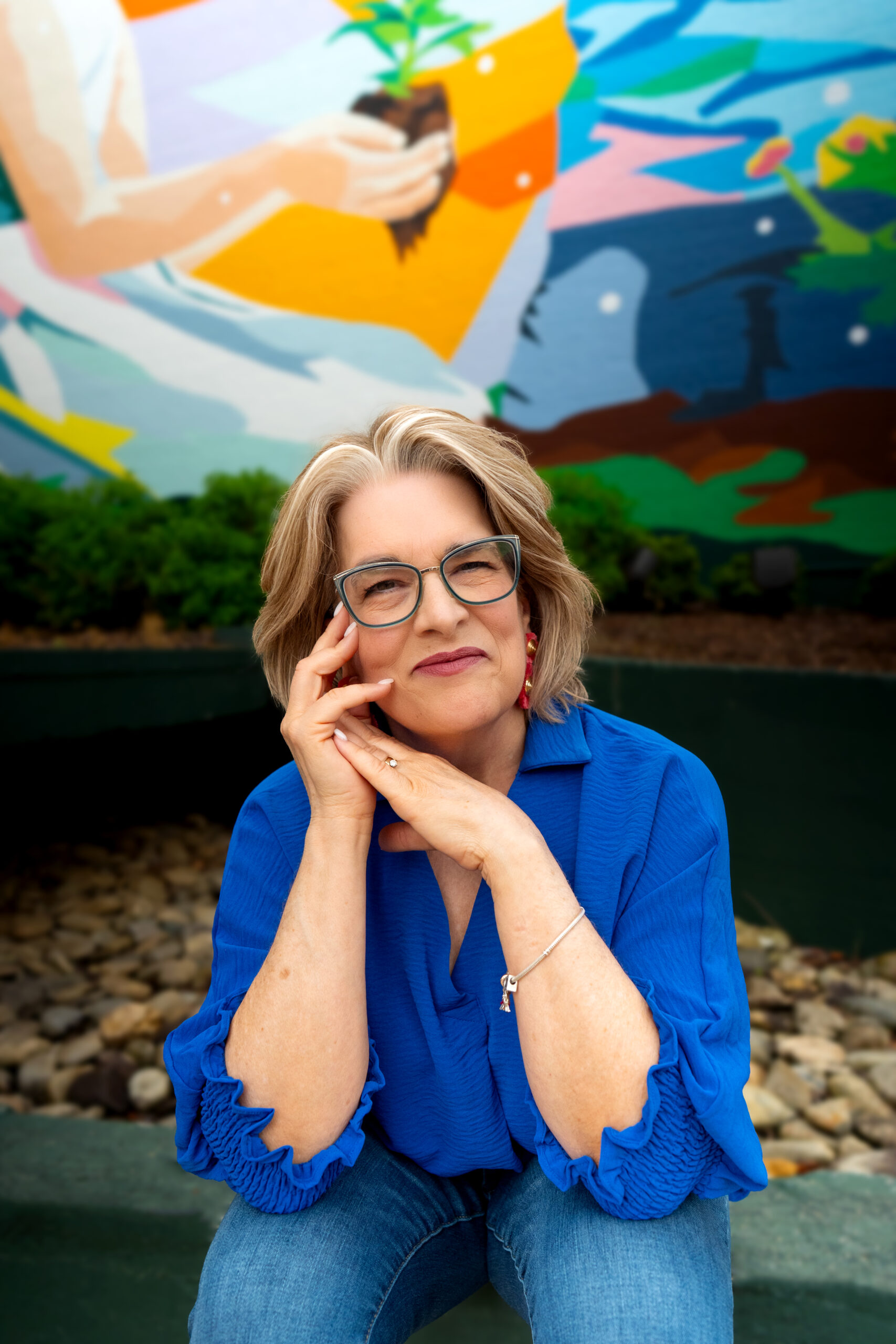
My guest today comes from a family of hairdressers and electricians, no doctors anywhere on the tree, and her own brother used to tell her she must have been swapped at birth. That joke was covering for something real: at 14, in a house gone chaotic with her brother’s older friends and her parents elsewhere, she was touched in the night by someone in that circle, more than once, and never told a soul. Dr. Cindy Starke didn’t call it trauma for another two decades. What she did instead is a masterclass in how childhood trauma hides in the body: she got out, got educated (an MD and a PhD in molecular genetics from Emory, after failing the SAT so many times she stopped counting), and built a 20-year career as a board-certified internal medicine physician without ever looking back.
Until her body made her look. Years of swallowing her own boundaries, in her marriage most of all, scarred her esophagus down from 15 millimeters to one or two: an actual, physical stricture, built one un-said “no” at a time. It took an empty COVID hospital and a year of forced stillness for her to remember what happened at 14 and finally process it. Now Dr. Starke runs “clearings,” a trauma-release process she developed to help other women (nurses, mostly, at first) find their literal voice again, the same way she found hers.
We talk about the difference between a physician and a healer, the SAT she took seven times to win a scholarship her parents couldn’t afford, and why she says the most uncomfortable thing you’ll ever do is easier than living with an unhealed wound for the rest of your life.
Watch this episode
In this episode
- Why childhood trauma can physically scar your body years later, and the esophageal stricture Dr. Starke traces straight back to a marriage full of unset boundaries
- How growing up in a house of “altered” 19-year-olds at 14 taught her to bury an abuse she wouldn’t name for 20 years
- The stubborn kind of grit it takes to fail a board exam twice and take the SAT seven times, and why she calls that resilience, not embarrassment
- What a “clearing” actually looks like, and why one client got her literal voice back within three sessions
- Why she walked away from 30 years of full-time medicine despite $210,000 in scholarships riding on the career, and how she decided she was allowed to
- Dana’s football-pads-on-a-golf-course analogy for why the defenses that protected you as a kid can wreck you as an adult
Timestamps
- (00:01) Welcome and guest intro: meet Dr. Cindy Starke, MD/PhD in molecular genetics
- (01:47) Growing up the only “enigma” in a family of hairdressers and electricians
- (02:46) The house full of her brother’s older friends, and the abuse she didn’t tell anyone about at 14
- (07:09) The board exam she failed twice, and the test anxiety she’s not embarrassed to admit
- (09:34) Taking the SAT seven times to win the scholarship her parents couldn’t afford
- (12:48) COVID, an empty hospital, and the year-long healing journey that followed
- (14:20) Realizing medicine wasn’t helping people heal, just cycling them through a revolving door
- (18:24) Inside a “clearing”: what actually gets a client’s voice back
- (21:02) The esophageal stricture, unset boundaries in her marriage, and “The Body Keeps the Score”
- (30:44) Dana’s football-pads-on-a-golf-course analogy for outgrowing childhood defenses
- (32:59) Walking away from 30 years of full-time medicine to become a boundaries coach
- (36:20) Where to find Dr. Starke: her website, book, free “spark call,” and Facebook Lives
About Dr. Cindy Starke
Dr. Cindy Starke holds both an MD and a PhD in molecular genetics from Emory University, and spent over 20 years as a board-certified internal medicine physician, with genetic research published in the Journal of Bacteriology and the Journal of Infectious Diseases. She now works part-time as a hospice medical director and runs an online program helping women process childhood trauma and set boundaries through a process she calls “clearings,” built on NLP and trauma-release techniques.
Learn more, book a free 15-minute “spark call,” or find her book at drcindystarke.com.
Favorite quotes
“I always say the trauma is not what happened to you. It’s what you tell yourself that means about you.” —Dr. Cindy Starke
“What’s more uncomfortable, living with that for the rest of your life?” —Dr. Cindy Starke, on facing a wound instead of medicating around it
“I am worthy of having a life that I want to design on my own.” —Dr. Cindy Starke
Resources mentioned
- DrCindyStarke.com: Dr. Starke’s website, with her book, a free 15-minute “spark call,” and links to her media appearances
- Dr. Cindy Starke’s award-winning book, available via this link
- “The Body Keeps the Score” by Bessel van der Kolk, referenced by Dana on how trauma lodges in the body
Related episodes
- How Unresolved Trauma Is Ruling Your Life: more on the mechanics of how old wounds keep steering your present-day choices
- Boundaries – Why Can’t I Set Them?: a deeper dive into the people-pleasing patterns Dr. Starke describes learning from her own mom
- Getting Pulled Into the Past: Our Shame Response and the Impact of Unprocessed Trauma: the psychology behind why unprocessed trauma resurfaces years later
Subscribe & connect
If this episode gave you something to sit with, follow Phoenix and Flame so you never miss an episode: all apps in one place, or jump straight to Apple Podcasts, Spotify, Amazon Music, or YouTube. And if it moved you, leave a review; it’s the easiest way to help another listener find the show.
Learn more about Phoenix and Flame, connect with Dana, and listen to more episodes here.
Read the full transcript
[Dana] (00:01)
Welcome to Phoenix in Flame. I’m Dana and we have a fabulous guest with us today. I mean, just amazing. Now, our guest’s name is Dr. Cindy Stark. She has both an MD and a PhD in molecular genetics. As a board certified internal medicine physician for over 20 years, she has cared for patients in every setting possible. from urgent care and traditional outpatient clinics to the hospital. She’s appeared on radio shows, podcasts, and has been profiled in Moxie Magazine. Her genetic research has been published in peer-reviewed national scientific journals, including Journal of Bacteriology and Journal of Infectious Diseases. Welcome to Phoenix in Flame, Dr. Stark.
[Cindy] (00:53)
Thank you so much, Dana, for having me. I’m so excited to spend my Saturday morning with you and your guests. This is so exciting.
[Dana] (00:59)
Oh, this is, and we were saying earlier listeners, Dr. Stark and I were talking and it’s just amazing. If everything I just said isn’t, just blows your mind to begin with all the things that she has accomplished and done, but what’s possibly, I don’t know, you can be the judge even more impressive is her journey of transformation. Because with Feeding Some Flame, we talk about pushing through and transforming even when you feel like a pile of ash. And I was very much drawn to Dr. Stark and her journey through that. So Dr. Stark, I’m going to kind of just sort of turn this over to you and let you begin wherever you would like. We’ll just kind of go organically through and just flow back and forth and we’ll try to cover it all.
[Cindy] (01:47)
Okay, that sounds great. I think one of my stories that I didn’t even realize until much later in life could really help people with stuff they might be going through is kind of what led me to become a physician. And so I’d like to start there. Okay. So it was most of the people in my medical class, you know, I went to Emory University in Atlanta, Georgia, most everybody. I mean, I’m…
[Dana] (02:06)
Fabulous.
[Cindy] (02:16)
at least 90% were from families of doctors, you know, and it was just kind of expected for them to be a doctor or there were people that were doing it for the money. I don’t really understand that. What led me there, there’s no doctors in my family. I come from a family of hairdressers. All the women are hairdressers and all the men are electricians. And I am just like this kind of enigma and no one really understood.
[Dana] (02:40)
Oh wow.
[Cindy] (02:46)
My brother always told me I was swapped at birth. And I believe that. I totally believe that because it just doesn’t, you know, I just, I really don’t fit in my family of upbringing. And so as I tell this story, I want people to understand that no matter what you come from and no matter how bad things get, you can decide. And I say with the power of God, I think, I think he kind of like led me down this path. I don’t see how all this stuff that I’m about to say would have opened up to me. without some sort of source, universe, intelligent guidance. I really don’t know how I got so fortunate just to be gifted with this brain and then all these opportunities that came up for me in my family. But, so when I was 14, I was the baby of the family. My brother was five years older. My sister was four years older. And my brother had been struggling with drugs and alcohol. And unfortunately, You know, it’s true, birds of a feather flock together and all of his friends that he brought over were also doing drugs and alcohol. And so I was in this house with all these 19 year old boys when I was 14 and they were altered and I didn’t understand that. You know, I didn’t understand what they were doing. I didn’t under, I still to this day, I don’t really care to know what they were doing. Um, but I just knew it was altered. They were making some poor decisions and, and then couple that with this. really unfortunate thing that my mother and father decided to do around that time, which was go hang out at their friend’s house up the street all the time. And you can just imagine, it’s not a great scenario in my home where I was. And things started happening to me as the parties would get crazier and I was trying to go to sleep. And some things would happen to me in my bedroom. I never thought it was sexual abuse. I knew that much, but I never would have considered it rape because I didn’t know exactly. It was more just like touching instead of, you know, rape, rape. And I never knew rape was any kind of sexual touching done against your will. I would not have preferred that to be done to my body in the middle of the night. And I don’t know how many times it happened, Dana. I don’t know why I didn’t tell my mom and dad, but all I knew… And I always say the trauma is not what happened to you. It’s what you tell yourself that that means about you. And I told myself for the rest of my life, I wasn’t worthy of love. I wasn’t worthy of protection. I wasn’t good enough. And I said, number one, I’m getting the crap out of this city and this family and this house. And so education was like the surefire way out because nobody got educated in my family. Everybody stayed in this little five mile radius of my house. Everybody did exactly what their moms, you know, my sister did what my mom did. My brother did what my dad did and they just stayed right there. And so I got out of there. And then I realized when I was around that college environment, that everybody around me was becoming a doctor. And I had at the time thought I might be a nurse. I knew I liked taking care of people. But that’s what led me into being a physician is just keep… getting more and more education and more and more degrees behind my name to get away from my childhood. And sadly, it’s really sad, but it worked. And I never got around it again. And, you know, there’s that that’s how that’s how it happened.
[Dana] (06:08)
It worked. Wow, what a wonderful story and you to be gifted like you said earlier to with a brain that would allow you to do that and to go to the classes and make the grades and to pass the tests and pass the entrance tests and all the things and go through residency and all of that. I mean that required a lot of intelligence and so for you to have that to be able to use that as an outlet and you said earlier that you felt like you had been a physician for all these years.
[Cindy] (06:26)
Yeah. Right.
[Dana] (06:45)
but that you also feel like you have transformed and you’re a healer. And that is really this wonderful part of your journey. So tell us about that part. So this awful things happened to you that you didn’t have any control over and you were struggling with feeling worthy and you needed to escape. So when did you start feeling differently about yourself and how did that happen?
[Cindy] (07:09)
Yeah, oh goodness. Okay, so I did want to say one other thing about being a doctor and you know, you saying all those exams, it just triggered something, a memory in me that I also want to share with your listeners. And then I’ll come right back to that question. But I’m not a good test taker, okay? I’m really good at studying, standardized test taker. I’m really good at studying material and writing things out. but you put me in front of an eight hour exam with multiple choice, I get really panicked, kind of like a little bit of a test anxiety. And I just wanted your listeners to know that, and you too, that it’s really embarrassing to admit, but I don’t mind sharing my story because again, it’s like, I’m not perfect. I’m not brilliant. I just am a person who doesn’t give up fighting and I failed. There were these cutoffs, right? It was like, let’s just say zero to a thousand was the possible scores on the test and 580 and above is passing. Well, not once, but twice in all these 40 years of taking tests, I’ve failed that test. It’s like they make you take this test every two years, that every 10 years and twice I’ve made like 570 if the cutoff was 580 and I’m like. Dang it, I had to start studying all over again and take it again, but it doesn’t matter because they give you, they give, they let you spend another six months training and thousand dollars on the test and you can sit again. And I always pass it the second time once I get rid of that test anxiety. Um, but I just wanted people to know that too. I mean, it’s just, it’s been a struggle, but I was so bound and determined to do it. I was going to do whatever it took, you know?
[Dana] (08:53)
See, to me, that’s even better because you were resilient, your resiliency and your grit in the face of literal failure. And you’re like, oh my gosh. And instead of just curling in on yourself and thinking, I can’t do it, I’m just a big failure, the whole imposter syndrome thing, I just thought I was smart enough to do this, but I was wrong. You’d…
[Cindy] (08:59)
Mm-hmm. Mm-hmm. Yeah. Who am I really?
[Dana] (09:18)
Yeah, who am I to do this? I’m, you know, I thought I was one of those people, but I’m not. I’m really nobody and I’m not smart enough and I can’t do it. Rather than letting all of that just suck you under the wheels, you kept going. To me, that’s, that’s amazing. That’s even better than just passing it the first time.
[Cindy] (09:34)
Yeah, thank you. I, um, unfortunately my daughter has, uh, she inherited this test taking, um, we call it anxiety. I don’t, I mean, it’s not, it’s, I don’t know what it is. It’s just like, you show me all those thoughts and I freak out. Her dad does the same thing and she, she has developed, she inherited that from us. And so tests are really hard for her to, I took, I always tell people I had to take the SAT seven times to get a high enough math and a high enough verbal. to get the scholarship because my parents couldn’t afford me to go to school. They couldn’t afford to pay for me to go to school. And so I had to get a scholarship and I took that SAT. So it started in high school. I had to take it seven times. Again, I was bound and determined, I’m gonna go to college. I’m gonna get that scholarship. And so I’m not gonna stop after one, two, three, four, five, six, and seven. My kids cannot believe when they, it was time for them to take the SAT a couple years ago and during COVID. They said, you did this seven times? I’m like, mm-hmm. Most people just take it once.
[Dana] (10:34)
I just find that amazing because think about it this way. And this reminds me of this adage that I ran into when I was first podcasting. And they said, right when you feel like giving up, if you push through that, that’s when you’re going to sail. And so for you, I can imagine looking back, knowing what we know now, after you’ve taken the test like five or six times, I can imagine…
[Cindy] (10:49)
Oh yeah.
[Dana] (10:59)
People would say, oh my gosh, this is ridiculous. What am I even doing? I don’t have what it takes. I’m not going to keep wasting my money and wasting my time paying for tutoring or studying. This isn’t going to happen for me. But you did not quit. You were not going to quit. You were not going to accept that. And you kept going. And for me, I mean, from a psychological standpoint, that is freaking amazing. And this speaks so much to your character and your grit.
[Cindy] (11:25)
Thank you. Yeah, it’s again, I hear you, but the way I was looking at it is I’ve got to get out of this city and I’ve got to get out of this family and they don’t have enough money to send me. And I had to get a 1200 was the coveted number, highest math and highest verbal. And I, the way I was thinking about it at the time, little 17 year old baby Cindy is you keep giving me enough of these tests. I’m going to score. I’m going to get a good math. test, a good math score, and I’m going to get an easier verbal score and they’re going to add up to that magic number I needed. I don’t know why I never thought of just getting a loan or something like that. I just wanted to get that scholarship. It’s a little bit stubbornness too, but that’s okay. It really taught me a lot of skills that have served me really well for the rest of my life.
[Dana] (12:20)
Well, and it’s an absolute crucial part of your journey. It’s part of your story, it’s part of your journey, it’s part of your testimony for your life, and it’s different. I mean, look at it this way. What if you had gotten alone? Look at all of this that you would not have gone through because the whole time you were doing that, your character was being transformed. You were going through the fire, and so something was happening within you going through that. So…
[Cindy] (12:40)
So true.
[Dana] (12:47)
Awesome, awesome. I’ll stop interrupting you.
[Cindy] (12:48)
Thank you. Yeah, no, no. So now I’m going to answer your question you asked me. So you said, you said what, what happened to make me transform kind of from what I would call a physician to a true healer. So, so really that I would, I would attribute that to COVID happening. I had a lot of time on my hands. I don’t know what you asked me what neck of the woods I live in, but I didn’t hear where you live. Where do you live?
[Dana] (13:14)
I’m in East Tennessee, about an hour and a half east of Knoxville, like about an hour from Asheville, North Carolina.
[Cindy] (13:20)
Okay, so you’re not too terribly far from me. So, you know, different areas of the country, they were calling hot spots for COVID. And, you know, it was terrifying to work in a hospital setting back then. And all I remember is that they took away all the support staff at the hospital. You know, most of us physicians, we have like one or two mid-levels underneath us, a PA, a nurse practitioner, physician assistant.
[Dana] (13:26)
Yes.
[Cindy] (13:50)
And they furloughed all of them and put them all on unemployment. And they left us doctors there in the hospital. They canceled all of the elective surgeries. And we were just sitting there. Like, I just remember, I just had this feeling of, I am ready for this. It just deluge, you know, it’s influx of patients with COVID to come in. And it never happened. Like we were considered a hotspot. It never happened. And so we were sitting there, I had six patients a day. I’m used to taking care of 25.
[Cindy] (14:20)
And so I had a lot of time on my hands. And that is when I feel like, again, I was gifted with the ability to turn inward and realize like medicine had not been satisfying me for a really long time, really since about 2016. I was feeling like I wasn’t really helping people heal. They were just kind of stuck in a revolving door. I would get them a little bit better in the hospital. I’d send them out to their own, you know, ways and they’d come right back in a month later. And, And it was so frustrating. And everybody, now it’s even worse than it was then, but everybody’s coming in with a lot, doing a lot of drugs and being almost like catatonic and in a coma and, and, uh, cause they’ve just done so many drugs. They’re just all trying to like check out of life. And I said, this is just not what I want to be doing. I want to be working with the living. I’m just like feeling like I’m working with the dying. I mean, medicine is great when you need it. Don’t hear me wrong. I’m so fortunate for chemo and surgery and antibiotics and all that. But to see that every day, like so many times a day, it was getting to me. Then COVID happened and I just have all this time on my hands to think about it. And I started this really long journey. It was a year long journey of healing myself. And I remembered that that is when I remembered I had blocked all that away, that stuff that happened to me, that sexual trauma at 14. And I was able to remember it again. And I went through a healing program to help me heal my inner children is how I call it. You bring up 14 year old Cindy, you bring up 30 year old Cindy, had a lot of stuff happen to her. You bring up 33 year old Cindy and you resource all of them. It’s kind of, and you may do some of this. It’s like through NLP and it’s a trauma release method. You literally repattern and rewire your subconscious mind. You get rid of your limiting beliefs. And I realized,
[Dana] (15:56)
Mm-hmm. Yes.
[Cindy] (16:16)
This whole time I have been living my life based on this limiting belief that I’m not worthy and I’m not worthy of love, worthy of protection. And so I developed a program and I got some volunteers to come through my program and then I started getting clients, a bunch of nurses in the hospital. and I helped them also heal from their journeys and so from whatever it is that they’ve gone through. And I sat there and watched women go from hoarding and, you know, really bad relationships with her significant other and being kind of dumped on at work and not feeling worthy of standing up for herself or even living in a clean house to completely blossoming. and she became an author and she’s standing up for herself at work and she’s, she cleaned out all the hoarding. And so it’s been amazing to, for me to facilitate the healing that I went through with other people. And, and now I feel like I’m not, I’m finally a healer. I’d never felt like a healer when I was a physician, Dana. You know what I’m saying? I just kind of covered up stuff. This is truly making these women a new person. So that’s what I’m doing now.
[Dana] (17:30)
Yeah. Wow. That sounds so, so rewarding. And of course, being a psychotherapist, I’m privileged with, I’m one of the rare few people that I love my job. I mean, love it, love it. It’s a privilege to do it. You get blessed and to see people do what you’re talking about. And I’ve done trauma work with people before with internal family systems, which is kind of what you’re talking about, the younger children. I mean, it’s the real deal. I mean, listeners, if you feel like you’ve been…
[Cindy] (17:48)
Yes.
[Dana] (18:07)
you know, you’ve got trauma from younger selves and it’s kind of stuck there, then you can, you don’t have to be stuck with it, you know, like Dr. Stark is saying, you can process it through. What do you find that the people that you were dealing with were most responsive to?
[Cindy] (18:24)
Well, you know, so we would do the one-on-one, I call them clearings. You know, we clear these influences, any person, place or thing that influenced them. And then we clear the limiting beliefs and we clear the emotions. And within the first three clearings, they look like a completely different person. This one woman, literally even I could hear she got her voice back. Her voice was really gravely when I first met her. And… And she had gone through some abuse from her father. And they seem like they’re most responsive to the clearings. They’re two hours long each. And we get in there and bring up everybody and kind of take all the inner children and then the influence that is having this negative influence on them. Again, this one was her father. And just to be able to… bring up that version of the person who kind of perpetrated you and then also your little version of you and I don’t, I don’t claim to understand just how healing it is and how it can make someone get their voice back, but it was just amazing to watch over and over again. So yeah, I think they’re most responsive to the clearings. Yeah.
[Dana] (19:40)
awesome and I love the way you’re pointing out that we’re a whole person and I like when people come to see me I’m always asking them about nutrition, what they’re doing, is there consistent physical activity, I don’t know who’s their primary care person because we are a whole person. Whatever’s going on with us spiritually, emotionally, physically, mentally, it is all wrapped up together and so it’s not unusual for our emotions and our traumas to come out and see them manifested physically. whether it’s like you said, in their throat, like they can’t speak or gastrointestinal issues like GERD or ulcerative colitis, irritable bowel syndrome, these kinds of things, they’re so connected.
[Cindy] (20:20)
Big one. Yes, irritable bowel syndrome and you know, I believe too, there is a woman that does this out in Colorado. What does she call it? It’s some sort of trauma that’s held in our feminine reproductive tissues and you will hold on to, you know, you’re supposed to be able to clear things, clear pathogens, clear this, that or the other. And when you have this cervical dysplasia, you can, you can, It can be tied in there from the energy of these old wounds. I mean, the body keeps the score, bottom line, you know?
[Dana] (20:57)
Yes, Bessel van der Kolk. Have you read the book The Body Keeps the Score? I mean, I’ve read it like twice. It’s an amazing book. It does keep the score. That is…
[Cindy] (21:02)
Yes. Yeah, I need to read it again. Yeah. Yeah. And so, yeah, I’ve always wanted to encourage people and I’d like to take this opportunity to tell your guests if you are struggling with, yeah, you just said GERD, like reflux esophagitis, people, you go to a regular doctor, they’re going to be, oh, yeah, you have reflux esophagitis and here, take this Protonix every day for the rest of your life. You never heal the thing that caused it in the first place. I myself had an esophageal stricture. My esophagus is supposed to be 15 millimeters. It had scarred down to about one or two. And I just didn’t even, I knew that I was having some difficulty swallowing certain things. It was really low down in my esophagus. But it was that I needed to exert my. power in my marriage and speak up for myself and put stronger boundaries up. Yes, I had to get the dilation, right? So my food could pass again, but what I had to do was speak up to my husband. And no doctor ever even thinks about what the inciting wound was way back when. It might be 10 years ago, 40 years ago. They just give you a medicine to heal it, but it’ll just come right back the minute you stop taking the medicine. So, Please look at yourself as a holistic person. Listen to me and Dana.
[Dana] (22:25)
Oh my gosh, I mean, Dr. Stark, this is, it’s amazing. It reminds me of something that I sometimes tell my patients. It’s like, imagine if you have a garden, beautiful garden, and there’s this large nasty weed that’s growing your garden. Well, if you go out with a pair of scissors or some kind of knife or something and you cut the weed right at the mulch level, but you leave the root ball in the soil, it might look good for maybe a week. But then it’s going to start growing back. You have to go in and dig under the soil and get the feeder system, the root ball. Otherwise, that weed is still going to keep growing and growing and growing and growing. And so I know sometimes people are resistant to doing that because yes, it is uncomfortable. Let’s just be brutally honest about that. Facing pains from the past, facing traumas, facing those feelings.
[Cindy] (23:14)
Yes.
[Dana] (23:19)
It’s not comfortable, but like, what’s the…
[Cindy] (23:19)
But what’s more uncomfortable living with that for the rest of your life? Like this, you know, you know when they’re doing a remodel in your house and it just looks busted up and terrible, you know the beauty’s coming, but you gotta dig that stuff up and be okay that it’s gonna look ugly for a month or two, six months, maybe, maybe a year. But the stuff at the other end is gonna be beautiful for the rest of your life. if you’ll just do that work. I think people don’t want to see the demolition.
[Dana] (23:53)
Yes, that is huge. I’m sure you’ve seen this as well. Just the fear of being uncomfortable, the fear of what am I going to find? And it’s just, and you mentioned earlier, I can’t let this pass because I’m known as the queen of boundaries. And so that is, that is huge. I, and I, and I’m that way because not only do I have a personal story about that, about why I have my own trauma, about why I know so much about that, but professionally, I saw so many people coming into my office and no matter what they were telling me, I found myself listening from the analytical standpoint and thinking, okay, our first step has got to figure out what if all of this actually belongs to my patient and what if all of this belongs to somebody else? Because people get that reversed. They end up focusing so much on other people’s issues and ignoring their own. They get it backwards. And so if they can learn to let go of other people’s opinions, other people’s thoughts, other people’s disappointments, other people’s actions, other people’s approval, if they can learn to let go of those things and focus on their own thoughts of themselves, and if they view, if they think that they are less than or unworthy, then accept that and address that, okay? I do think I’m unworthy, okay? That’s curious, why is that? Where did that come from? Because I guarantee you, you didn’t feel that way when you were a toddler. Which means something happened, right? Which means that wasn’t factory direct. You know, that feeling that you’re not worthy isn’t factory direct. It happened to you afterwards. And so let’s figure out, let’s like deconstruct that and figure out where that came from. And that process has to start with boundaries though, because if you’re not dividing out what belongs to you and what does not belong to you, then you’re kind of…
[Cindy] (25:22)
Mm-mm. Mm-hmm.
[Dana] (25:48)
dead in the water.
[Cindy] (25:50)
You’re so right and you know just hearing you say all that is making me know I think one of the most powerful things I learned Dana and you know I have a 19 and a 21 year old son and daughter so I realize that you’re not born knowing this kind of stuff right but when you get angry and when you get sad and when you are so afraid of something Those emotions are there for you. Don’t push them away and shove them down. They are trying to tell you a boundary just got crossed. You know, my daughter will have an, really, she’ll get really angry with her dad and it’s cause he crossed a boundary and it’s, she had to speak up for herself and say, you’re not gonna say that about me or about my friends or about this whole, you know, piece of the population. And, but so many people just say, we just gotta keep that other person happy.
[Dana] (26:21)
Yes.
[Cindy] (26:49)
And then you’re not ever keeping yourself happy. We could talk for a whole day on people-pleasing.
[Dana] (26:54)
Oh my gosh, Dr. Stark, we could, oh my goodness, we could for hours because, okay, let’s just say the truth of the matter is we cannot please other people to be honest with you because their pleasure is technically in their brain, right? Where is their pleasure? It’s in their brain. We don’t have access to their brain. So we might do something. See, that’s what I’m talking about.
[Cindy] (27:12)
do. Good.
[Dana] (27:22)
what I call it what’s in our yard versus what’s across the fence in our neighbor’s yard. It’s like we get to look at what’s in our yard and examine our behavior. Were we obnoxious? Were we yelling and screaming? Were we spewing profanity at somebody? If we were, then we get to own that. But how someone else hears us, that’s not, we can’t control that. If someone is.
[Cindy] (27:38)
If we were.
[Dana] (27:44)
is pleased or they’re peaceful or trying to keep the peace. Oh my gosh, how many times I’m like, oh I’m just trying to keep the peace. I’m like, really? Do you see where you’re sitting right now? You’re sitting in front of me. You’re sitting in a psychotherapist office. How peaceful do you feel right now? It’s like, it doesn’t, those are misnomers. It doesn’t work that way. So I just, I was very glad to hear you mention for yourself,
[Cindy] (27:53)
Mm.
[Dana] (28:08)
in learning the boundaries and learning to be assertive and knowing that you have that power to speak up to your husband or to coworkers or whoever, as part of that journey, that’s amazing.
[Cindy] (28:11)
Yeah. Yeah. Sometimes I feel as women, especially if we’re married with kids and we work, which I feel like, you know, all the people that I attract into my life are those three things. If we don’t have good enough boundaries with our kids, you know, my son was being a jerk to me on Easter, you know, I was like, I had invited him to this beautiful thing and he was criticizing me while I was trying to prepare a dinner. because I live alone now and I like to say things out loud so that I don’t forget things. And he was saying, mom, we’re over here trying to play a game. Can you please stop reading out the directions? I’m like, okay, excuse me, Wyatt. I’m over here preparing something for y ‘all and I need to make sure that I don’t get it wrong. And this is what I do. And he’s like, and I let him know he crossed the boundary. He said, I’m sorry. I’m just not used to being around you while you’re cooking. I’m like, yeah, we don’t live together anymore. And this is how I cook. So zip it. If you want food, you just shut up. I’m letting you sit over there and play a game. But, um, but yeah, like you, you have to teach your kids, your coworkers, your boss and your husband. Um, how, how, what’s okay with you? Cause otherwise we just let everybody do whatever they want to do. And we’re just a pile of mush. I mean, who are we even? We’re just.
[Dana] (29:26)
Yes. Yes.
[Cindy] (29:38)
a shape-shifter, whatever they wanted, you know, and all you are, you just build up resentment all the time. And resentment is not a good thing, Dana. I think that’s what gave me this stricture. And I mean, like it was right there in my solar plexus, you know, like my powerhouse right underneath my chest there. I just, I was a major people pleaser and I learned it at the hands of my mom. Yeah. I come by it very naturally and it has been, I’m in therapy every week trying to get rid of these tendencies because It maybe served me good when I was, it served me well, you know, when I was younger, but does not serve me any, any, anymore now. I’m so glad that you help people in your life.
[Dana] (30:17)
Oh, I love it. It’s my passion. I’m creating courses and things, I’m doing keynotes on boundaries, and it’s just because it’s just a huge, huge passion of mine. But I wanted to make one comment, and then I’ve got a question for you. Based on what you just said about things that sometimes served us when we were kids, because we had to deal with traumatic situations, we were not in control, that sometimes don’t serve us now, an analogy that…
[Cindy] (30:32)
Yes.
[Dana] (30:44)
I use is like imagining that you’re on a football field and you’re playing football and you have to have a helmet and you need to have pads, right? Because if you don’t, what’s going to happen? If you don’t have your pads, that’s it. You’re going to break a bone. You’re going to get a concussion. All these horrible things are going to happen on the football field. You need to have the pads. Now imagine for a moment that you walk off the football field onto a golf course, but you leave all of your pads and your helmet on and you’re trying to play golf.
[Cindy] (30:54)
You’re gonna break a bone.
[Dana] (31:14)
See, that’s what we do when we when we’re children. We have these pads in this helmet because we need it because we’re trying to protect ourselves. But when we grow up into an adult and we are now no longer on the football field, we’re on the golf course and we’re trying to play golf. We’re trying to live our adult life, but we’re still wearing all the stuff from our childhood. It obstructs our ability to behave like a functioning healthy adult. because we still have all of the defense mechanisms from when we were a kid. And so that’s why we honor that and we understand why we had to have that when we were a kid. We needed it, but we’re not in that chapter anymore. We’re not on that landscape anymore. And so it’s…
[Cindy] (31:57)
But I think the good thing is, is, but now that we’re on the golf course and now that we are adults, we need different kinds of boundaries. So get rid of all the football helmet stuff and pads, but get something else that will appropriately in, in on the golf course, you know, protect you so that people aren’t sitting there walking all over you, you know, but you don’t need all that fluffy stuff anymore, you know?
[Dana] (32:25)
Mm-hmm.
[Cindy] (32:25)
That’s a great analogy and I would have never thought about it that way because yeah, it serves you on the football field perfectly, but you don’t need that in the golf course. Yeah, that’s good.
[Dana] (32:31)
Mm-hmm. No. It’s it’s addressed in where you are in life. So I was going to ask you what challenges taught you the most about yourself? You’ve explained a lot of things today and you’ve shared a lot of things with us. What would you pick out as something that really taught you the most about who you are?
[Cindy] (32:59)
Well… I think that is a really, really good question. That is hard to choose one, but I’m just gonna say the thing that made me put my proverbial foot down and say, I am not going to keep doing full-time medicine. Like I’ve been a full-time doctor for 30 years. I had all these scholarships, you know, I let this narrative. tell me I was gonna have to do this until the day I died or until 74 or whenever people are able to retire without people judging them. But you know, I had gotten all these scholarships that Emory had invested $210,000 in my education. I let my husband tell me, you know, it’s all about the income. Like you can’t leave full-time medicine because it’s a good stable, you know. job and I’m like, but it’s not making me happy and I’m not, I don’t feel like I’m making an impact on people’s life. I don’t mind doing it a little bit each month. I know I still work four days a month. Um, and I’m a hospice medical director now too, which is very fulfilling, but, but I don’t want to do it 25 days a month. Like I was doing it for 14 hours a day and to be able to stand up for myself and put my foot down no matter what. I felt like society was saying, how can you do this? You’ve been doing it for 30 years. Don’t you just want to become another type of full-time daughter? No, I don’t. I want to run an online course for women to help them with their boundaries, to help them deal with their childhood trauma, to help them forgive themselves for what happened to them in the past. And I want to be able to do it from wherever I want to do it. I don’t want to go into a physical building anymore. And it’s okay. I’m allowed. I’m allowed to love myself enough. and do something different with this MD and PhD than most people do. And it was just so, it was such a challenge to stick up for myself and say, enough is enough. I’ve given this profession 30 years of my life, full time, and it’s time for me to do what I want to do now. And that was just really bold, Dana. Like I just, I thought I was betraying everybody. It was almost like Survivor’s Guild, like. Gosh, I don’t want to go back into the hospital only working four days a month because I’m I left all my guys all my friends in the trenches But I just had to let that go if they want to stay in the trenches they can do that That is what they want to do. It serves them. Well fine. It was not serving me. Well, I was suffering and and I am worthy of Having a life that I want to design on my own
[Dana] (35:29)
There you go. Yeah. I love that.
[Cindy] (35:43)
It took four years, Dana, though, I’m telling you, I had to do it little bit by little bit and I had to get a financial planner and a CPA to prove to me and I probably blow up their phone way too much. So they had to prove to me, you’re okay, you’re, you know, to transition from a full time one job to, you know, I do a lot of 1099 work now. I mean, they, they had to prove to me that I was going to be safe because security is a big need for me. But I’m just so excited that it’s, yeah, it is right. I mean,
[Dana] (36:09)
Yes, as it is for a lot of people.
[Cindy] (36:13)
Nobody wants to be left out on the right without a house or food.
[Dana] (36:20)
That’s it. That’s it. Now, Dr. Stark, I know that there are multiple things that you’ve said today that people are, they’re going to want to get to know you more. They’re going to want to know more about you. I know there’s a book that you’ve written that’s award-winning. So tell us, how can people get a hold of you? Where do they go? That kind of thing.
[Cindy] (36:39)
Yeah, well, I like to send people to my website and you’ll have it in the show notes and my name is written right there. It’s just that name right there, Dr. Cindy Stark, but without the dot. It’s just, you know, drcindystark.com and they can, one thing I’d like to give to your audience is there’s a Calendly link. They can book 15 minutes with me just to see if anything I can do to help them kind of sort out maybe what’s holding them back in their life. And it’s a spark call. And it’ll be right there on my website. They’ll see it. And then my book is there and anything, it’s speaking that I’ve done or podcasts I’ve been on or magazine articles. And I feel like I most prefer the social media of Facebook. So if anyone wants to follow me over there too, that’s where I’m most active. And I shoot a lot of video from the hospital because… Something will trigger me or I shouldn’t say trigger, that’s a negative word, a negative connotation. Something will inspire me like that I have a major passion that I need to talk to my people after I see things in the emergency room and I will just leave the emergency room and I’ll just go on this really long walk and I’ll just like talk into my phone and tell people, you know, in an appropriate professional way what I just saw and what you could learn from what I just experienced. You see some crazy stuff in the ER. And so yeah, I love people following me on Facebook because I go live, you know, every week that I work and I love to interact with people there. Thank you. Thank you.
[Dana] (38:15)
Well, that’s awesome. Dr. Stark, thank you so much. I appreciate you giving us your time and your willingness to be so open and transparent and sharing with us some of the journey that you went through. Thank you so much.
[Cindy] (38:27)
Oh, you’re welcome. Thank you for the opportunity to be here with you this morning. I really appreciate it.
[Dana] (38:32)
This is awesome. Okay, guys, I know you have heard numerous things today. You’re thinking, oh my goodness, I have a best friend. I have a coworker. I have a relative that has got to hear what Dr. Stark has to say. Then share this podcast episode on your favorite social media websites or copy and paste the link in text or an email. Let’s really expand and grow our Phoenix and Flame community so we can reach out and connect with one another and let us everyone know that you’re not alone. I hope you’ve had a great day. I hope the rest of your day goes wonderfully. I’m Dana.
[Cindy] (38:38)
You
[Dana] (39:01)
on Phoenix in Flame.
Are your work boundaries supporting you—or quietly draining you?
Take my free Work Boundaries Quiz and find out where you stand.