First aired February 12, 2024
Deanna Moffitt’s father tucks her arm through his and asks, “You ready for this?” and she says yes out loud, though she’s already living the kind of story she’d spend the next decade learning to rewrite. In her head, she’s thinking something else entirely: “Divorce won’t be that hard to get.” That’s Deanna, five years before she’d actually get that divorce, and it’s exactly the kind of story she now helps other people rewrite for a living. As an adoptee raised in a chaotic home with an abusive sibling, Deanna grew up with two core stories running the show: “I am alone” and “I am a burden.” Those stories made her fiercely self-sufficient, landed her in leadership roles she used as a shield, and, at 36, sent her out of a senior project manager job and into 11 years of improv comedy in Chicago.
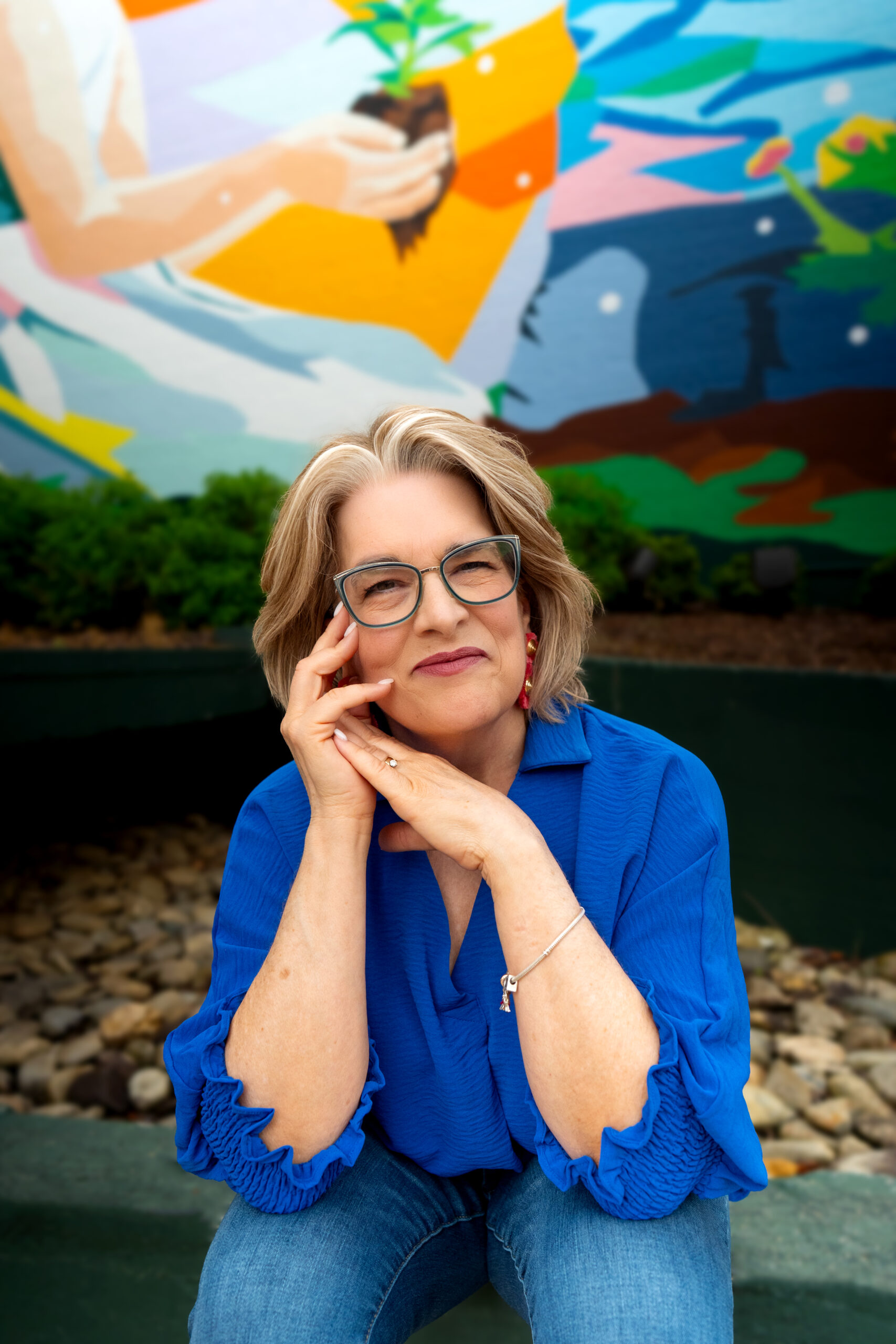
Deanna is a coach, speaker, and author of “The Rewrite: Change Your Life One Story at a Time,” and in this conversation she walks me through how the stories we tell about ourselves get written in childhood, whether or not there’s a dramatic trauma behind them, and why we keep acting them out long after we’ve rationally outgrown them. We talk about setting boundaries with yourself before you can ever set them with anyone else, and why she says real change moves more like a loaded 787 Dreamliner than a helicopter: it takes runway.
If you’ve ever caught yourself repeating a pattern you swore you’d broken, or wondered why knowing better hasn’t changed your behavior, this episode is for you.
Watch this episode
In this episode
- What a “core wound story” is (like “I am alone” or “I am a burden”) and how it forms in childhood, with or without a single dramatic event behind it
- Why setting boundaries with yourself has to come before you can set them with anyone else
- The 787 Dreamliner analogy for why real change takes longer than a helicopter takeoff
- How 11 years of improv comedy taught Deanna that all of us are already improvising, all the time
- Why she stayed in a relationship for 14 years without getting married, and what finally changed
- How to tell the difference between one person’s story about you and the truth
Timestamps
- (00:01) Welcome and guest intro: meet Deanna Moffitt, author of “The Rewrite”
- (02:40) The two core wound stories Deanna grew up with: “I am alone” and “I am a burden”
- (04:07) How Deanna’s first weeks as an adopted infant shaped a story she didn’t know she was carrying
- (08:34) Why leadership can be a way of staying detached, and how to “collect new data” to prove a new story
- (12:22) Discovering “The Power of Positive Thinking” at 12, and surviving abuse from her brother
- (17:34) The wedding day: saying “yes” out loud, and “divorce won’t be that hard” in her head
- (19:51) Fourteen years in a relationship without getting married, and what finally changed
- (22:55) Finding improv comedy in her 30s, and why every conversation you have is already improvised
- (28:42) The 787 Dreamliner analogy: why rewriting your story takes longer than flipping a switch
- (36:24) Where to find Deanna Moffitt and book a free coaching call
About Deanna Moffitt
Deanna Moffitt is a coach, speaker, and author of “The Rewrite: Change Your Life One Story at a Time.” She left a senior project manager role in corporate America at age 36 to perform improv comedy in Chicago for 11 years, then moved to Los Angeles to dive into coaching and leadership development.
Learn more, read her book, or book a free 30-minute conversation at DeannaMoffitt.com.
Favorite quotes
“We are 787 Dreamliners with a full belly of luggage and a full passenger list. We’re gonna take three miles to get off the ground.” —Deanna Moffitt
“None of us have scripts in this life.” —Deanna Moffitt
“The first time we practice it is like, oh my God, are you still gonna like me?” —Deanna Moffitt, on speaking your truth for the first time
Resources mentioned
- “The Rewrite: Change Your Life One Story at a Time”: Deanna’s book on identifying and rewriting your core wound stories
- “The Power of Positive Thinking”: the book a 12-year-old Deanna read that first showed her she could be aware of her own thoughts
- DeannaMoffitt.com: Deanna’s website, with a free 30-minute coaching call
Related episodes
- Journey from Trauma to Value: Interview with Danielle Bernock: another guest on rewriting the narrative trauma leaves behind
- “Sigh, See, Start”: The ShouldStorm Antidote: more tools for catching and rewriting the negative stories running in your head
- Getting Pulled Into the Past: Our Shame Response and the Impact of Unprocessed Trauma: the deeper mechanics of how childhood stories keep running the show
Subscribe & connect
If this episode gave you something to sit with, follow Phoenix and Flame so you never miss an episode: all apps in one place, or jump straight to Apple Podcasts, Spotify, Amazon Music, or YouTube. And if it moved you, leave a review; it’s the easiest way to help another listener find the show.
Learn more about Phoenix and Flame, connect with Dana, and listen to more episodes here.
Read the full transcript
[Dana] (00:01)
Welcome to Phoenix in Flame. I’m Dana, and we have a very funny and resilient guest with us today. Deanna Moffitt is her name, and to give you a little bit of information about Deanna: as an adoptee, Deanna was raised in a chaotic home with an abusive sibling. Now, as most people do, she created a story about who she was because of that upbringing. Her two core stories were, I am alone, and I am a burden. Now, these stories made her incredibly self-sufficient and often put her in leadership positions. Her journey took a significant turn when, at age 36, she left her role as a senior project manager in the corporate world and moved to Chicago, where she performed improv comedy for 11 years. Deanna, I’m so excited to have you on Phoenix in Flame.
[Deanna] (01:15)
Ha ha ha! At the tender age of 36 I started that, could you believe it?
[Dana] (01:22)
Oh my God. Everything I’ve said so far, I already have comments and questions for you, and I want to hear more of your story. But there’s a little bit more information here that I think is gonna be very helpful for my listeners, is that you learned the value of being fully present, listening deeply, and the power of “yes, and,” which we are gonna be — I’ve got that bolded on my notes, we are gonna be getting back to so much stuff here. I have here that you moved to Los Angeles and then took a deep dive into coaching and leadership development and understanding the power of our stories. And I really want to emphasize, at some point we’re going to make plenty of time here, because you say people tell stories about themselves that shape their lives and rarely go back to do an edit or a rewrite. And that’s why you wrote your book, which we’ll have plenty of time to get into, because your book is called “The Rewrite: Change Your Life One Story at a Time.” As a psychotherapist, I’m so excited to hear all about this. Deanna, fill us in, oh my gosh, just jump in wherever you want and let’s go from there.
[Deanna] (02:40)
I love it, Dana, can I just start? I already love your energy, you have such great energy on this call, so excited to be here with you. Yeah, you know, like a lot of us, we have a growing up that we don’t have any control over, right, and through it, you know this as a psychotherapist, your clients probably come to you all the time with what happened in their childhood.
[Dana] (02:44)
Cough.
[Deanna] (03:06)
We process those things through the lens of the mind of a child versus an adult mind. We can look at it as an adult and go, okay, they were doing the best they could, and, boy, they didn’t really have the tools. But as a child, you don’t know that, and you make everything about yourself. And so I think that’s where our core wound stories are created, these stories that we create, like I said, I’m alone, or I’m a burden. And I think that story of I’m a burden — you know, as an adoptee, I think there’s that understanding of the person who was forming you, right, is your birth mother, and then they’re not there. And I think we do have an understanding now of a child’s brain and consciousness, right, even though we may not have memories of that, there are brain connections forming during that time. And so
[Deanna] (04:07)
I recognized that, okay, I’m not going to be with that birth mother. Then I went, as an infant, into a childcare center here in California for six weeks, where I was not taken good care of. My mom said that when she was introduced to me, adopted me, my eyes were matted shut, I had tear ducts that had been clogged and no one was tending to that. All of that to say, we get these stories of I’m a burden or I’m alone, not necessarily out of reality, but out of our processing of our experiences. But gosh, you can imagine what someone going around the world with a story of I’m a burden, how they might act out, right, that’s the thing, these stories, we’re acting them out whether we know why or not. And so I think it’s important for us to become aware of our repetitive behaviors, the things we continue to do, and what’s at the core of that,
[Dana] (04:51)
Yes.
[Deanna] (05:06)
so that we can go ahead and do the lifelong work. And dare I say, I think it is lifelong work to rewrite that story.
[Dana] (05:15)
Well, I agree with you 100%, obviously I’m biased as a psychotherapist. But as you’re talking, I’m thinking about the narratives that we create, that are birthed — the origin is when we’re growing up. And the thing of it is, we can understand rationally what happened, and as an adult we can say,
[Deanna] (05:19)
I’m not a fan of that. Mm-hmm, mm-hmm.
[Dana] (05:44)
I get it, but we still have that child part of us inside that has that narrative, has that child narrative, like yours was I’m alone and I’m a burden. So then it’s like, okay, what do we do with that? Because it’s either do something with that, or just live your whole life with, oh my gosh, I’m a burden, I’m alone, like you said, carrying that forward.
[Deanna] (05:52)
Yeah. You know, I worked with a coach, and we were working through this, and I wasn’t even conscious really of this story, but she walked me through a process of taking me back into a childhood experience, and I go, oh, I’m a burden. And we talked about that, and consciously I don’t believe that, but I’m certainly acting that out — not asking for help, over-pleasing, doing way too much to prove that I’m not a burden, certainly not asking for help. And we talked for a while, and she said, what would happen if you had a different story? And how does it feel for you to think, or even begin to believe, that you are a blessing? And I was like, whoa. And even just trying that on — not saying I was converted immediately — but just trying like the sweater of “I’m a blessing” versus “I’m a burden” allowed me to open up and feel so much more spaciousness in my body. And then the idea of what would happen if I got to walk around the earth believing that story.
[Dana] (07:31)
So Deanna, let me ask you this. I have two questions, and you can decide which one you want to answer first. One of them is, do you feel that going through a lot of these pathological, dysfunctional experiences as children causes us to be sometimes pathologically independent, difficulty accepting help, difficulty trusting that people will actually help us? And really, how do we get to the point where we can believe that we’re not a burden? Because somebody can say it and we can understand it rationally, but
[Deanna] (08:20)
Hmm.
[Dana] (08:26)
what was your experience with making that transition, and also the comment about being pathologically independent?
[Deanna] (08:34)
Yeah, I totally agree with you, and I can see how that played out in my own life. When I said I often found myself in leadership positions, that was putting myself there, and I think that other story of I’m alone, there’s a separation that happens when you’re a leader in a situation versus being among the group. I like that position, I don’t know that I knew how to actually function well in a group, so I gravitated toward the place where I didn’t have to be in the group, I could just be the leader. So definitely I had that exact same experience of a detachment to believing that people will be able to come in and help me. And honestly, for me personally, I just really started to take a look at my life and say, I’m not really liking the result I’m getting here, I don’t really like what’s happening here, I would like to try something different. And when I said this whole rewriting-of-the-story thing, I really do think for a lot of us it is a lifetime experience. I can still say today there are aspects of my life where this continues to show up, where it’s difficult to ask for help, or not believing that it will show up. So I’m constantly in the practice of acting in new and different ways, knowing that I have to get different data, right, so I can prove a different story. And when I’m not asking for help, that just affirms the story of I’m a burden or I’m alone, because I’m not asking for help and so no one’s showing up. So I actually have to consciously practice a different way of behaving, so I can get different results that will help me support a new and different story.
[Dana] (10:38)
I really like that. What I’m hearing you say is trying new things, being willing to be vulnerable and to trust someone that we don’t naturally want to trust, because our past taught us that we can’t really trust people, we can’t really rely on other people. And so to be vulnerable so that
[Dana] (11:09)
to use your phrasing, which I loved, was to collect new data, to get that new information, because we can’t create a new story unless we have that new data to be able to do it with.
[Deanna] (11:22)
Yeah, we can certainly try it on, but if I don’t see the outcome of this different story, I’m just going to go back to what feels normal and comfortable for me, which is this much smaller, limiting story that I’ve been telling myself.
[Dana] (11:39)
Well, let’s go back for just a moment, for listeners out there who possibly experienced what you described experiencing, being an adoptee and then being in a situation where it was difficult, you had, like you said, an abusive sibling, the home was chaotic. If we have some listeners out there who went through that, or maybe they know someone who went through that, what would you say, what words would you have for them in terms of relating to what that situation was like and how you were able to be resilient and move forward from that?
[Deanna] (12:22)
You know, I think for me, I felt like I was very much an observer of my life as a young person, and not a full participant. I don’t know if that was the detachment part, but I could very much look at my family and think, oh, I don’t want to recreate this. Like, I’m involved in this and I’m watching this, but I don’t want to recreate this. And that was one of the reasons I actually wrote “The Rewrite,” for people who might be in a situation where they know they want something different and they don’t know how. It is certainly kind of a primer of the idea of being aware, listening to your thoughts, not necessarily attaching to your thoughts, but at least listening to them and questioning them. And part of it was, because at an early age — I think I was 12 years old — I was a voracious reader, and my mom, my mom and dad were going through a divorce, and my mom had the book “The Power of Positive Thinking.” Now, we were not religious at all, but I read that book, and I had to navigate around a lot of things in the book that I didn’t necessarily understand or believe in at the time. But for me it was like, oh, this idea, I can be aware of my thoughts, right? And it was kind of a little lightbulb for me to think, I
[Deanna] (13:48)
can really not necessarily relive this, I don’t need to do this again. I can really look at my life differently and see the good in the bad, and there’s bad in the good. I’m now much more of a Taoist in my thinking, of, everything comes in and everything goes out, there’s nothing in the world that, if we just allow the experience to happen, learn from it if we need to, and allow it to roll off, that just allows us to move through life so much easier. And for anyone else who’s had that experience — and mine was sexual abuse from my brother, that was really tough — but as you said, I really got very resilient, and I didn’t want to stay trapped in a mentality of victimhood. I was already victimized, and so I really wanted to learn how do I step out of that and see what I can create from that. And for me it really was a much higher level of empathy, a much higher level of understanding that people have different things happen behind closed doors that we may never know about. I was a pretty popular kid, I was a cheerleader and school vice president, but no one really knew what was going on, I hid a lot. So for me, I wanted to take a look at, I had this experience, I can’t change it, so what do I want to create because of it, or in spite of it, how do I want to live my life differently without this attachment, this anchor behind me?
[Deanna] (15:46)
And my brother, I have to say, I have a lot of empathy toward him, we lived in the same house but we had two completely different childhoods. So
[Dana] (15:56)
that, yeah, I hear that quite a bit. And I’m kind of wondering, you said something about wanting something different from your chaotic childhood, and I do hear that a lot from my patients, and wondering your thoughts on — because I’m known as the queen of boundaries, and I see that everywhere, I’ve really developed a whole thing
[Deanna] (15:59)
Mm-hmm, mm-hmm, hmm.
[Dana] (16:25)
around it, because I’ve experienced a lot of issues myself, I had some dysfunction in my upbringing as well. And I’ve walked with many, many patients through their situations and kept seeing the boundary issues just kept popping up. I’m kind of wondering, from your perspective, wanting something different from your chaotic childhood, and then rewriting, you know, rewriting your story in your mind,
[Deanna] (16:51)
Mm-hmm.
[Dana] (16:56)
was there a time where having to set different boundaries with people you were in relationships with came about because you were creating a new story? You were not going to keep reading from the same script that was handed to you when you were young, you were creating a brand new script for yourself, which involves interacting with other people in a new way, with a brand new script. So I’m interested in your thoughts on how that played out, your new story, your new narrative, and also with boundaries with these people.
[Deanna] (17:34)
I love this question, Dana. And I actually love that you are the queen of boundaries, because they actually didn’t show up for me until much later in life. I was married — well, I knew I didn’t want to get married to this man. I knew when my dad put his arm in my arm to walk me down the aisle, and he said, well, you ready for this? And I said the words yes, but in my head I said, divorce won’t be that hard to get.
[Deanna] (18:04)
Like, I knew, but everybody else wanted us to get married, everybody else in our lives wanted us to get married, I sure didn’t want to get married to him. But five years later, that worked itself out. And then I met someone else who was such a nice man, but again, he chose me. And what I found in my long-term relationships is they chose me, and I guess that was well enough, that was gonna be okay, like I didn’t have the agency to say, I’m not that interested in this, okay, thanks, let’s move on. So for me it actually took the end of that relationship, after 14 years, in kind of a tumultuous way, for me to really start thinking, what do I need to do differently? Because I’ve now repeated this twice, and I know from improv, if I do it a third time it’s a pattern, and I don’t need a pattern here. So what do I need to do, how do I need to look at myself? No matter what happened, and however he wanted to end it, I was 100% in that as well, so I needed to look at what I was contributing here. And the part I was contributing was, I was not speaking my truth from the very beginning. If I had, I would not have been in the relationship for 14 years, from when he asked me to marry him — we never got married — but when he asked me to marry him, I said, oh God, okay, yeah, I’ll do it, as long as — I want to say yes, is that an answer? Of course, 14 years later we were still not married. So the sad thing is when he found someone else, which, okay, that makes
[Dana] (19:36)
Ha ha ha.
[Deanna] (19:51)
a lot of sense when you have someone who’s not fully in it in the first place. It was a bit of a tumultuous timing and breakup, but I also felt like, yeah, I get it, buddy, I totally get it. I have to now take a look at me and say, how did I help create this experience? And I could see, I didn’t have any boundaries. I had boundaries in other areas of my life, in work and things, where I felt like I could do that, but in my most intimate personal relationships
[Deanna] (20:21)
I surely did not. So I spent a lot of time and work looking at how do I speak from my authentic truth, my stomach, even when it feels so anxious to do this. When we’ve never practiced this, the first time we practice it is like, oh my God, are you still gonna like me? Is this still gonna be okay? Am I gonna be lovable? And it’s just been practice over time in my relationships. And fortunately I have amazing friends, which was probably the first time I really got to practice it. If I had a disruption, I could just come to them and say, hey, I’m noticing this is happening, can we talk about it, and they would be great. And those were kind of the first steps into the water of speaking my truth and setting a boundary around how I wanted to be treated. And my relationship with my mom has transformed, I think by being able to be much more clear and speak my truth, and that is a boundary for me. I don’t know how you define boundaries, but my boundary is now, I want to speak as authentically as I can in all my situations, staying in integrity with who I am. And it doesn’t always hit well with everybody, but for those who resonate with me, it gives them the freedom to do the same.
[Dana] (21:44)
And Deanna, I was thinking about your 11 years in improv comedy, and I had a comment and a question. My comment is, oh my gosh, the guts it must have taken to do improv comedy, because I try to put myself in the shoes of my guests and what that must’ve felt like. And I’m really interested in your opinions and experiences of what that was like. And also my question is the role of humor in dealing with things that are hard. And did you find that people were receptive, did they get upset, all that kind of stuff?
[Deanna] (22:26)
And I love that. Yeah, I definitely have a lens of humor, I think for a lot of people who grew up in a chaotic home, that resilience comes through the humor of just looking at what’s going on in your life. Well, that’s a real shitshow, sorry, I don’t know if you can swear on here, sorry about that, Dana. And so for me, I didn’t see an improv show until I was
[Dana] (22:46)
So that’s fine, that’s fine.
[Deanna] (22:55)
in my thirties, I never saw it in college, I didn’t know what it was. And someone had told me, Deanna, I think you should go to this, I think you’d be great at this. I was a project manager at the time, and one of the guys on my team had seen some improv in Portland, Oregon. And the first time I saw a show I was like, oh, I am immediately doing this, because to me they just looked like grown adults playing like kids, and I used to do that kind of stuff all the time, I’d play
[Deanna] (23:25)
a Broadway singer on the lawn of my neighbors, or played teacher for hours. So for me I was like, oh, this feels like it’s in my wheelhouse. And I immediately loved it, even though I was really terrible in the beginning. You think you could just go up there and be funny, but there are some frameworks and rules around it that allow you some freedom to play within. But
[Deanna] (23:55)
I loved it immediately. And I have to tell you, Dana, I just want you to know, you’ve been improvising this whole conversation. You’re improvising all the time, all of us are, none of us have a script for how this conversation is gonna go. And I think we forget just how creative we are as humans, we think creativity is artistry, painting or sculpting, but you are creating
[Dana] (24:06)
Good point.
[Deanna] (24:24)
amazing conversations every time you sit down with someone, which is a completely improvisational act, because none of us have scripts in this life.
[Dana] (24:36)
And I love that, because that really dovetails right into rewriting your story. Because if you think about the role of improv, that we are all improvising, there’s no set — we’re just kind of winging it, all of us are, let’s be perfectly blunt about that. We’re trying to do the best that we can, but we’re all just kind of winging this, we don’t really know, we’re trying, but we’re improvising. And so if that’s the case, if we’re in fact improvising,
[Deanna] (24:52)
I’m totally.
[Dana] (25:04)
then why can’t we be creative and rewrite some things? You know what I’m saying?
[Deanna] (25:09)
That’s totally right, right? Because so often we’re handed down these stories. Catherine Woodward Thomas always says, we create our stories in relationship to other people, so we have to rewrite our stories in relationship with other people, right? We don’t come out of this world with a story
[Dana] (25:11)
Cough.
[Deanna] (25:35)
without anyone else’s impact, right? My impact, if I’m a burden — I had a mother who was not there once she gave me up for adoption, I’m in a care home where obviously they aren’t caring for me, then I go into a chaotic home where I’m watching and observing all these things going on. And all of these experiences, through my child’s mind, I’m interpreting and creating stories. So it’s really important, I think, for us to be in relationships with a good therapist, a good coach, good friends, with family we can share our experiences with, and help us recreate our stories. I don’t know if we can do it alone, I think we have to have people beside us helping us along the way.
[Dana] (26:17)
Yeah, I would agree, it’s so much easier that way, and sometimes we can’t really get out of our own narrative without someone else providing a different point of view. And you bring out something really important, that those original stories were created from a child’s point of view, and so that child only has a very finite understanding of the whole scenario. And so when we as adults get to go back and challenge that and give grace to our child self,
[Deanna] (26:22)
Mm-hmm, yeah.
[Dana] (26:46)
and say, honey, I understand why you thought that, I understand why you interpreted it that way, that makes perfect sense, but I want to add a few other pieces that maybe you weren’t aware of because you were just a little thing, but I’m an adult now, let me add a few other pieces to the story here, and let’s create some — let’s do something together, my child self and myself, let’s create a new story. And I think that’s what you’re doing, this rewrite.
[Deanna] (27:12)
Yeah, yeah, that’s beautiful. And I didn’t go too deep into the core wound stories, I broke the book into three different sections, and I talk about the core wound stories, and I’m a coach, so along the way there’s questions I invite people to take on if they’re ready. And then I talk about our present-day stories, those emotional experiences that get us hooked, that we’re screaming on the freeway or arguing with a complete stranger in the grocery store, we don’t understand why, but it’s those experiences, our body is flooded, and we have emotions, and we’re supporting those emotions with our thoughts, that whole cycle. And then I talk about our future stories, and the stories that oftentimes people either have no story, they’re just adrift a bit, or they have catastrophic stories. But what happens when we create a story of our future, or a relationship with our future self, that almost pulls us into a future we want to be living? I think that relationship with our future self can be really powerful.
[Dana] (28:25)
Yeah, that’s amazing. Now I’ve got a question I wanted to ask you. In your experience, what are some common misconceptions people have about rewriting their beliefs and narratives?
[Deanna] (28:42)
I think once they learn they have some old, outdated stories, the first one is they think they should be able to rewrite it immediately, like, oh, I don’t want this story, I should be able to just flip the switch. And I think people don’t realize, we’ve been telling this story for as long as you’ve been alive or longer, it’s ingrained, our brain really has this one on lockdown. So we have to first identify what’s the new story we want to be, and creating that — like, I’m a blessing, right — but part of it is uncoupling those connections in our brain to begin a new connection, and that is not something that happens overnight. I give an analogy where I think people think that change happens like we’re helicopters, and we just flip the switch and we’re off, we’re up in the air, and then we start flying. But my friends, we are 787 Dreamliners, with a full belly of luggage and a full passenger list, and we’re gonna take three miles to get off the ground. And it just takes an understanding, and I think some compassion is really required, some self-compassion to ourselves, just as you were talking about that small inner child of all of us, just some compassion and grace as we begin kind of
[Dana] (29:32)
Bye!
[Deanna] (29:59)
uncoupling, and what I like to call unfolding into this more true, fuller version of ourselves. I think also people carry some sort of shame around having these stories, and the truth of the matter is I think most of us have them at some level, and they may not even have been created in childhood, it can happen through a disruption in a relationship, or a complete uptail in a career, they don’t necessarily need to happen in one instance as a child, they can happen in multiple little dings you have during your life, and all of a sudden these external experiences, I’m believing them to mean something about myself that makes me feel smaller, or makes me feel like I can’t live fully in integrity with who I am, because this external world is telling me something about myself. And we’ve got a really
[Deanna] (30:59)
challenge those thoughts, I think the world wants to keep us small, I think the external world wants to keep us in a place of compliance. And I say that in a big generic way, I’m not saying anything in particular, but it’s a little bit of an opening to a more truthful voice that I think is really internal. But there is an external voice that can sit on top of that, that isn’t necessarily yours, but it is the experiences, the world, the things you’ve gone through, that are carrying a voice that isn’t yours. I come from an understanding that your internal voice speaks in love, and if it’s not that, then it’s not your voice. And so we’ve got to really figure out what that voice is.
[Dana] (31:57)
I like that, I like that a lot. So what I’m hearing you say, and what I resonate with so much, is getting to a place where we give ourselves permission to tell our truth, where we drop shame away, we just let it go, and we step into our own and tell our truth. And along with that, when we do that, because I’ve done this
[Deanna] (32:12)
Yeah, mm-hmm.
[Dana] (32:25)
and that’s one of the reasons I’m the queen of boundaries, is because once you tell your truth, there are other people who will accuse you of being things. I’ve been accused of being unforgiving, hateful, unkind, mean, a bitch, I could go on. And so I had to get to a point, like you said a few moments ago, kind of challenging
[Deanna] (32:47)
Yeah.
[Dana] (32:54)
those accusations and sitting with those and asking myself, am I in fact unforgiving? I wanted to be able to answer that question myself, not letting someone else decide that for me, but they were hurling that at me, and I had to make a decision, well, am I? Am I unforgiving? Am I mean? I have to be honest, I can be a bitch sometimes, that’s totally true.
[Deanna] (33:14)
Yeah.
[Dana] (33:22)
So I had to give them that one, I gave them that one, you know, you have to just accept the stuff, we’re not all little angels walking around, so I can be a bitch sometimes, that’s totally true. But the other stuff about, am I this mean, hateful, unforgiving, unkind person, I just kind of sat with that for a while, and then I decided, no, in fact
[Deanna] (33:22)
Great awareness, great awareness. Thank you. You’re welcome. Mm.
[Dana] (33:50)
I’m not, because those characteristics, those accusations, actually only came out in a relationship with one person, and when I asked myself, did I see those characteristics being manifested in my other relationships in my life, the answer was no. So if I was all those things, I would see those characteristics in virtually every relationship in my life, and it was not, it was only with one person.
[Deanna] (33:58)
Hmm.
[Dana] (34:18)
And then when I set those boundaries, all those accusations got hurled at me. So I love the way that you’re really encouraging people to drop shame away and step into their truth and ask themselves, have that loving, graceful, gracious inner part say, okay, what are we,
[Deanna] (34:39)
Yeah. Dana, when you said that, what came up for me was, you were actively looking for more true and full data, because you were getting one data point that was telling you, you’re all this, that you’re angry, hateful, you’re a bitch, and all this stuff. And when that comes from a place of someone we think is on our side, or we think loves us, we can put more importance on that. But I loved, my friend, that you stepped away from that and looked at the whole field of possibilities of data that are out there, and realized, oh no, no, that’s just one point, I can see all these other places where this isn’t true, and I have completely different relationships with these people. What if I paid more importance to that data set, is that more true for me? And I just think sometimes we can’t see the whole field of possibilities of data, and we start focusing on one data point and think that is true because it’s coming from someone we think loves us, we think we should be listening to, when in reality, if we look at our coworkers, our friends, even strangers, they’re not having that interaction with us. So what is happening here?
[Dana] (35:59)
Exactly. So Deanna, I’m just loving everything you’re sharing, and I want to make sure my listeners have a means to get access to you, if they’re wanting more help rewriting their story, they feel like, oh my gosh, I love everything she’s saying and I want to be able to do that, but I’m not really sure what the next steps are. What I have is DeannaMoffitt.com, is that where you would like for them to go?
[Deanna] (36:24)
That is correct, and they can go right on top of there, there’s a little yellow button, if they want to have a free 30-minute conversation with me. And we can just — I don’t do discovery calls, I like to do coaching, so if someone wants to come in and have a real coaching call, I’m happy to have a call with that. It’s a lot of double letters, Dana, two N’s, two F’s, two T’s, you’ll find me.
[Dana] (36:49)
Yeah, and guys, I will have this in the show notes, so don’t worry, it’s gonna be all in there. Deanna, thank you so much for gifting us with your time and your experience and your wisdom,
[Deanna] (37:02)
Yes, yes, perfect. Mm.
[Dana] (37:17)
and really sharing and blessing my Phoenix and Flame listeners with your presence with us today. Thank you so much.
[Deanna] (37:25)
Thank you for having me on, I knew it was gonna be a great conversation, I just knew it. Thank you for my time.
[Dana] (37:31)
Awesome. Okay guys, I know you’ve heard things today that you’re thinking, this is absolutely amazing, and I know a friend, a family member, a coworker who absolutely needs to know what Deanna had to say. So take this podcast episode and put it on your favorite social media platforms, copy and paste the link in texting and email, just get the word out there, get the information that Deanna is sharing out to other people, grow our Phoenix and Flame community, so we can reach out and really connect with each other and help each other on this walk of life that we’re doing. I hope you’ve had a wonderful day, and I hope the rest of your day goes fantastically. I’m Dana on Phoenix and Flame.
Are your work boundaries supporting you—or quietly draining you?
Take my free Work Boundaries Quiz and find out where you stand.